Adult Education Center Bad Kissingen: Discover Courses & Workshops
Adult Education Center, Workshops & Courses in Bad Kissingen: How to Learn Something New
Do you want to learn something new in Bad Kissingen – practical, affordable, and in a group where you quickly feel comfortable? The Adult Education Center (VHS) is one of the most reliable places for this: from languages to health to digital and consumer knowledge. This guide helps you find the right offer for the coming months and register correctly.
Which Courses You Typically Find at the VHS in Bad Kissingen
Adult education centers are municipal educational institutions. Their program is regularly updated and deliberately broad so that people with different life situations (job, family, retirement, new beginnings) can find suitable learning paths.
Program Areas You Will Often Find Next Semester
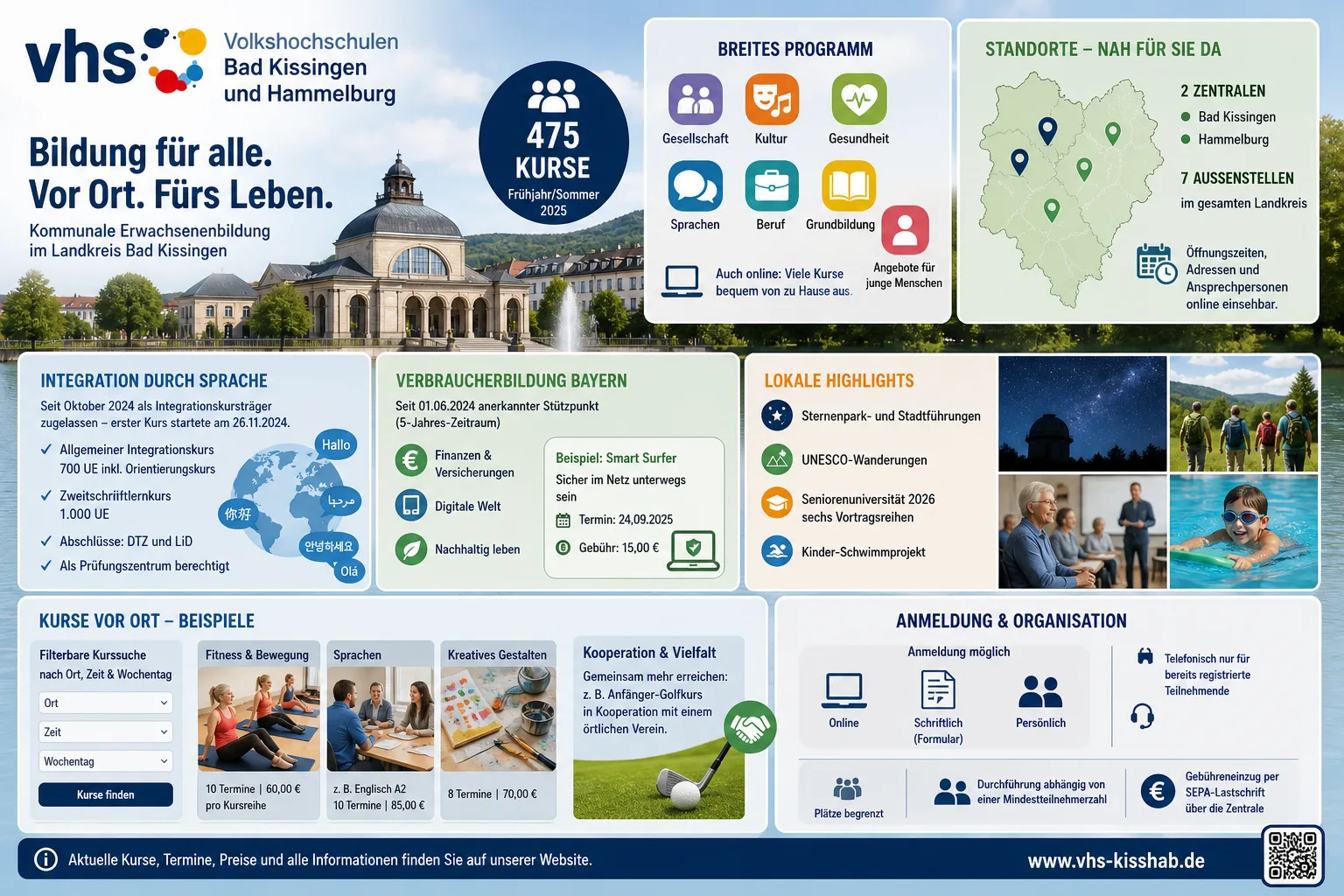
- Society & Culture: Lectures, discussions, local topics, possibly guided tours and learning formats outside the seminar room
- Creativity: Painting, drawing, writing, photography, music – often as a course series or weekend workshop
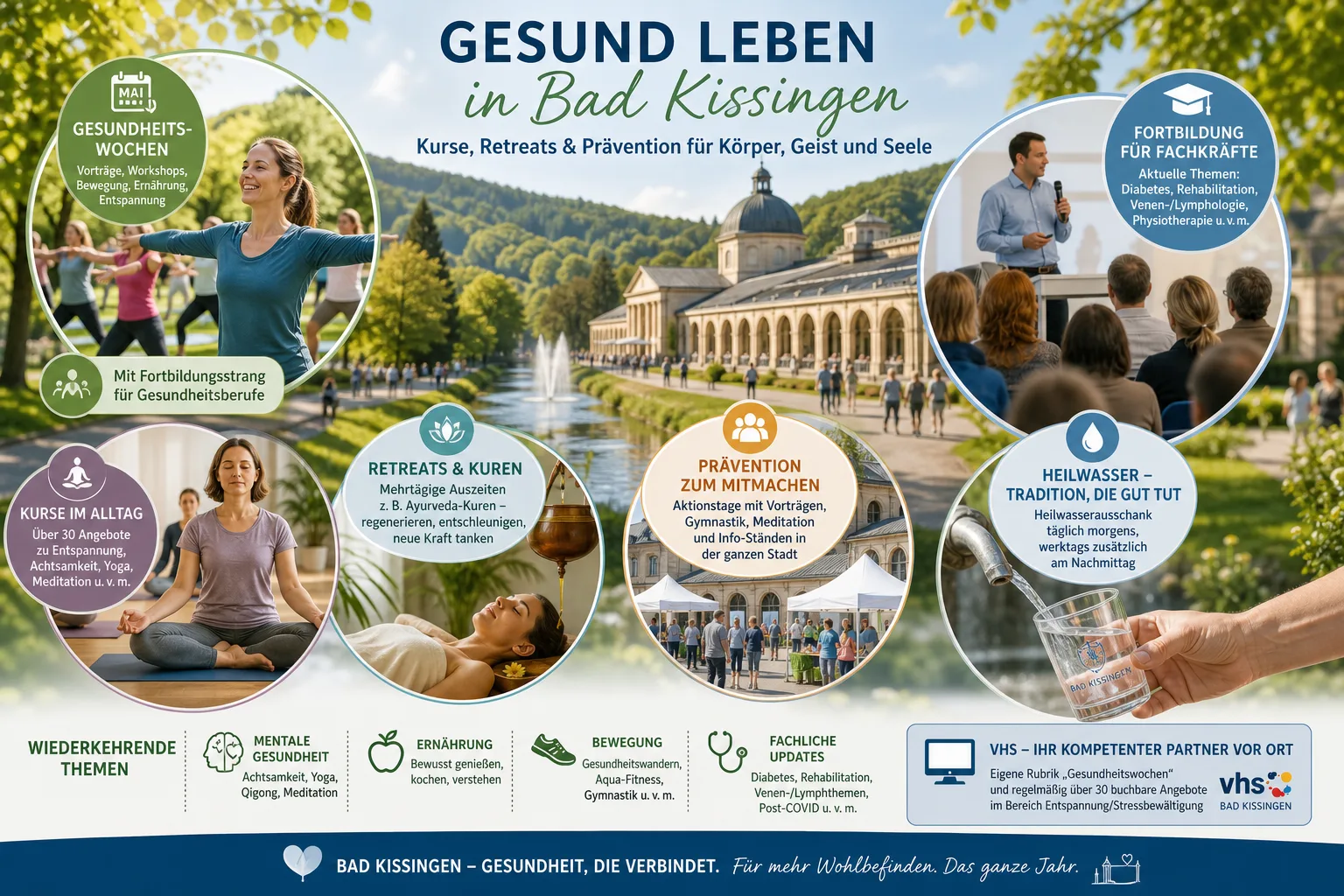
- Health & Exercise: Relaxation, fitness, prevention, body awareness
- Languages: German as a foreign language, English, and other languages – depending on demand, also less common languages
- Career & Digital: Office applications, basic digital skills, practical workshops
- Basic Education: Offers around reading, writing, arithmetic, or learning strategies
- Offers for Young People: Holiday formats, project courses, and creative workshops (depending on the program)
Many adult education centers supplement in-person sessions with online or hybrid formats. This can be especially practical for you if you want to reduce travel or plan learning times more flexibly.
Formats: Course, Workshop, Lecture – What Fits Your Everyday Life?
A good match between format and everyday life often determines whether you stick with it. These rules of thumb help with selection:
- Course Series (multiple sessions): Ideal if you want to practice continuously (e.g., language, exercise, photography).
- Workshop (compact): Good if you want to try a topic in a short time or achieve a concrete result (e.g., smartphone basics, writing workshop).
- Lecture / Discussion: Useful to get an overview before diving deeper (e.g., consumer or digital topics).
If you are unsure, start with a trial or beginner format. After that, you can switch more specifically to an advanced group.
Languages & Integration Courses: Learning Goals, Levels, Qualifications
Language courses are one of the classics at adult education centers – and are usually very practical: regular practice, clear learning goals, and lots of speaking in the group.
Understanding Levels (A1 to C2)
Many language courses are based on the Common European Framework of Reference for Languages (CEFR). This helps you choose the right level – from beginner (A1/A2) to advanced courses (B2/C1 and above).
Integration Courses: What You Typically Can Expect
If you want to systematically learn German for everyday life, work, and dealing with authorities, integration courses can be a suitable path. Content and framework are structured nationwide by guidelines (e.g., course sections, language and orientation part, exams).
- Language Course: Building vocabulary, grammar, and communication skills
- Orientation Course: Basic knowledge of legal system, history, culture, and life together in Germany
- Exams: e.g., German Test for Immigrants (DTZ) and "Life in Germany" test – depending on course type and framework
Important: Whether and which participation requirements apply depends on your personal situation and current regulations. Reliable details can be found at official agencies (see sources at the end).
Consumer Education & Digital Competence: Making Safe Decisions in Everyday Life
Many people only realize in everyday life how valuable solid consumer and digital knowledge is: understanding contracts, checking subscriptions, recognizing scams, using passwords correctly, or safely handling online government services.
Typical Topics That Will Remain Relevant in Upcoming Course Programs
- Finances & Contracts: Basic contract logic, cost traps, insurance principles, household budget
- Digital Security: Secure passwords, recognizing phishing, securing devices and accounts
- Everyday Digital Skills: Smartphone settings, online appointments, video calls, data organization
- Sustainable Consumption: Evaluating information sources, recognizing quality, considering long-term costs
A good VHS course on consumer or digital topics is characterized by explaining with examples, clarifying terms, and allowing enough time for questions. When reading the course description, check whether concrete learning goals are mentioned (e.g., "safely recognize phishing emails" instead of just "safe on the internet").
Health & Exercise: Choose Sensibly, Set Realistic Expectations
Health courses can help you bring movement into your daily life, reduce stress, and build new routines. These selection criteria help you find the right offer:
- Level of Intensity: Beginner, moderate, intensive – choose so that you can participate regularly.
- Goal: Mobility, strength, relaxation, posture, endurance – the clearer your goal, the easier the decision.
- Framework: Course length, time, location, required materials.
- Notes in the Announcement: Serious offers state the target group and possible restrictions.
Note: VHS health offers do not replace medical diagnosis or therapy. If you have pre-existing conditions, pain, or acute complaints, clarify participation with your doctor beforehand.
Registration, Fees & Participation: Step-by-Step Guide
To get into your desired course without stress, it's best to proceed as follows:
- Check the Program: Read the course goal, level/requirements, dates, location, and material notes.
- Choose the Right Level: Especially for languages, a self-assessment or placement test is worthwhile.
- Register: Depending on the offer, usually possible online, in writing, or in person.
- Clarify Payment: Fees, payment method, and possible discounts are usually stated in the terms of participation.
- Pay Attention to Start Information: Some courses have notes on things to bring or access data for online sessions.
Also keep in mind that courses usually only take place if enough registrations are received. If you are really interested in an offer, it's better to register early.
7 Tips to Really Stick With a Course
- Set a Mini-Goal: e.g., "attend 8 sessions" instead of "become perfect".
- Block the Date in Your Calendar like a doctor's appointment – including travel buffer.
- Prepare for 10 Minutes: For languages, e.g., repeat vocabulary; for digital topics, write down questions.
- Make it Social: Arrange to meet someone from the course or stay for a short chat after the session.
- Choose Realistic Times: The "best course" is the one you can attend regularly.
- Ask for Alternatives: If the level doesn't fit, switching is often better than dropping out.
- Transfer It to Everyday Life: 5 minutes of practice per day beats sporadic learning marathons.