
Christoph Peters
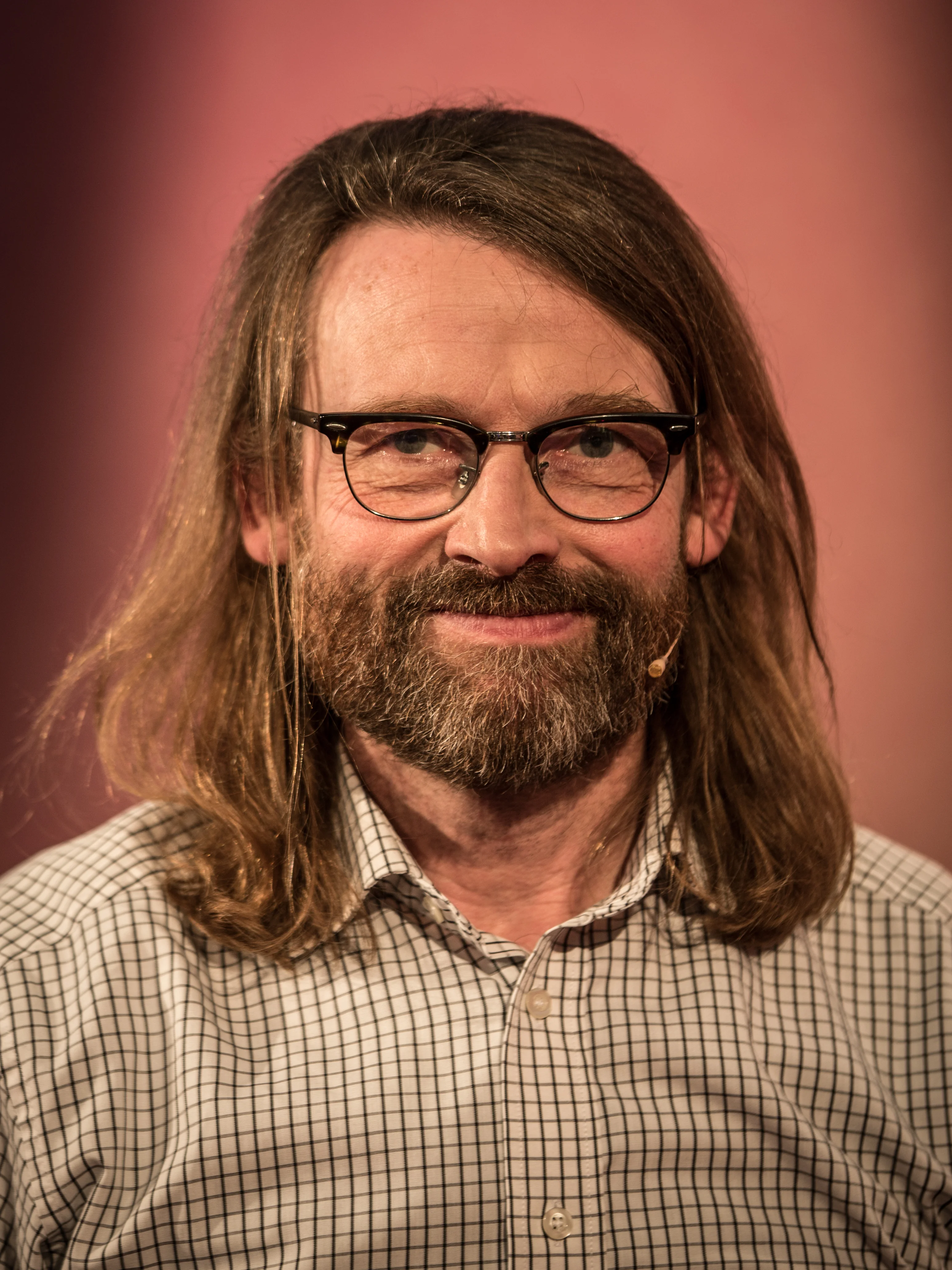
Image from Wikipedia
Image from Wikipedia
Christoph Peters – the precise chronicler of contemporary German literature
An author between observational sharpness, literary elegance, and contemporary diagnosis
Christoph Peters, born on October 11, 1966, in Kalkar, is one of the most distinctive voices in contemporary German literature. He currently lives in Berlin and has built a reputation as an author through novels and collections of stories that illuminate societal tensions, cultural frictions, and psychological nuances with extraordinary accuracy. His books combine clear language with stylistic control and a strong preference for complex constellations between private life, public space, and political arena. ([penguin.de](https://www.penguin.de/autoren/christoph-peters/69573?utm_source=openai))
Biography: From the Lower Rhine to literary public life
Peters was born in the Lower Rhine, a region that resonates in many ways with the quiet counterpoint to the nervous dynamics of the big city found in his texts. His later move to Berlin fits well with his work: there, his themes become denser, and he observes milieus, ambitions, and conflicts with the precision of an author who not only describes social surfaces but also dissects them. The official publisher's biography categorizes him as the author of numerous novels and collections of stories, whose literary development has always been focused on precision and societal relevance. ([penguin.de](https://www.penguin.de/autoren/christoph-peters/69573?utm_source=openai))
His debut novel Stadt Land Fluss garnered attention and was awarded the aspekte prize for the best German-language literary debut according to Penguin Random House. This early recognition not only marked a successful start but also set the tone for a career consistently focused on literary quality, thematic independence, and formal sovereignty. Since then, Peters has been writing prose aimed not at effect, but at accuracy and psychological depth. ([penguinrandomhouse.com](https://www.penguinrandomhouse.com/authors/59827/christoph-peters/?utm_source=openai))
Career: Between novel, story, and literary continuity
Over the course of his career, Peters has produced a broad body of work that includes novels as well as collections of stories and essayistic approaches. Titles such as Heinrich Grewents Arbeit und Liebe, Mitsukos Restaurant, Herr Yamashiro bevorzugt Kartoffeln, and Der Arm des Kraken showcase the range of his writing: at times satirical, at times grounded in cultural history, and at other times as tension-filled contemporary prose with clear investigative energy. Publishers and press describe him as an author who shapes literature from observation while maintaining a distinct and unmistakable tone. ([penguin.de](https://www.penguin.de/buecher/christoph-peters-heinrich-grewents-arbeit-und-liebe/taschenbuch/9783442730643?utm_source=openai))
His more recent books reveal a particularly strong focus on broad societal images. Der Sandkasten, Krähen im Park, and Innerstädtischer Tod engage in a critically acknowledged dialogue with Wolfgang Koeppen’s work, translating its grand motifs into the present. Das Blaue Sofa refers to Der Sandkasten and Krähen im Park as the first two parts of a trilogy inspired by Koeppen; the FAZ describes Innerstädtischer Tod as an adaptation of Tod in Rom for contemporary times. This showcases Peters' literary signature, which seeks dialogue with literary history without losing its relevance to the present. ([das-blaue-sofa.de](https://das-blaue-sofa.de/programm/das-blaue-sofa-open-books-2024/autorinnen/christoph-peters/?utm_source=openai))
Current projects: Contemporary novels with political and social frictions
Recently, Luchterhand published Innerstädtischer Tod (2025), which has been announced as the final part of a trilogy inspired by Wolfgang Koeppen. The publisher's information and literary coverage clearly place the novel within the political and cultural present: it revolves around Berlin, gallery operations, new societal conflicts, and the tensions between public spheres, art, and power. At the same time, the publisher points out readings and discussions scheduled for 2025 and 2026, underscoring the author’s ongoing presence in the literary scene. ([penguin.de](https://www.penguin.de/autoren/christoph-peters/69573?utm_source=openai))
Contemporary reception also highlights the public impact of Innerstädtischer Tod. The FAZ reported in 2024 and 2025 on legal disputes regarding the book, while also making it clear that the novel is understood as a literary engagement with contemporary issues. This is significant for the positioning of Peters’ work: his books resonate not only in literary circles but also in societal discourse, as they illuminate real power dynamics, milieus, and conflict zones. ([faz.net](https://www.faz.net/aktuell/feuilleton/buecher/johann-koenig-klagt-gegen-den-roman-innerstaedtischer-tod-110282310.html?utm_source=openai))
Discography? No – a literary oeuvre with distinct milestones
Since Christoph Peters is a writer and not a musician, there is no discography in the traditional sense. Instead, his phases of work and major literary titles serve as significant milestones in his oeuvre. These include, alongside the debut Stadt Land Fluss, Heinrich Grewents Arbeit und Liebe, Sven Hofestedt sucht Geld für Erleuchtung, Mitsukos Restaurant, Herr Yamashiro bevorzugt Kartoffeln, Der Arm des Kraken, Der Sandkasten, Krähen im Park, and Innerstädtischer Tod. ([penguin.de](https://www.penguin.de/buecher/christoph-peters-heinrich-grewents-arbeit-und-liebe/taschenbuch/9783442730643?utm_source=openai))
These books mark different registers of his writing: satire, societal novels, cultural political diagnosis of the present, and formal variations on literary models. Particularly in recent novels, his compositional skill is highlighted as Peters works with parallel narratives, societal observations, and precisely crafted characters. His prose emphasizes structure, rhythm, and a cool, controlled approach to the material. ([penguin.de](https://www.penguin.de/buecher/christoph-peters-heinrich-grewents-arbeit-und-liebe/taschenbuch/9783442730643?utm_source=openai))
Critical reception: Awards, press reviews, and authority in the literary scene
Christoph Peters has received numerous awards. The publisher's biography lists the Wolfgang Koeppen Prize (2018), the Thomas Valentin Literature Prize from the city of Lippstadt (2021), the Lower Rhine Literature Prize (1999 and 2022), and the Schubart Literature Prize (2025). These awards document a literary career that has not only been continuous but also relevant for decades. ([penguin.de](https://www.penguin.de/autoren/christoph-peters/69573?utm_source=openai))
The press also praises his literary precision. For Heinrich Grewents Arbeit und Liebe, Penguin quoted press reviews with statements like “A masterful storyteller” from the Frankfurter Allgemeine Zeitung, while Der Arm des Kraken was described as “cleverly composed, precisely observed, and very sarcastic.” Such voices illustrate how strongly Peters is perceived in the German-speaking critique as an author who combines linguistic control with a keen eye for social mechanics. ([penguin.de](https://www.penguin.de/buecher/christoph-peters-heinrich-grewents-arbeit-und-liebe/taschenbuch/9783442730643?utm_source=openai))
The current debate surrounding Innerstädtischer Tod reinforces this impression. When a novel is not only read but also legally challenged and publicly discussed, it demonstrates the significance of its subject matter. Peters writes literature that engages with the present rather than isolating itself from it, and this is a part of his authority. ([faz.net](https://www.faz.net/aktuell/feuilleton/buecher/themen/oberlandesgericht-weist-beschwerde-ueber-buch-von-christoph-peters-ab-110366666.html?utm_source=openai))
Style and thematic signature: Observation, irony, societal tension
Stylistically, Christoph Peters works with clarity, precision, and a remarkable ability to condense. His texts often oscillate between irony and seriousness, between psychological study and societal panorama. Notably, he has a preference for characters who live in transitional zones: between cultures, between social backgrounds, between private desires and public roles. ([penguin.de](https://www.penguin.de/buecher/christoph-peters-sven-hofestedt-sucht-geld-fuer-erleuchtung/taschenbuch/9783442744190?utm_source=openai))
Content-wise, many of his books revolve around art, urban power structures, cultural translations, and the fragility of contemporary life concepts. Mitsukos Restaurant and Herr Yamashiro bevorzugt Kartoffeln negotiate cultural encounters with a Japanese reference, while more recent novels use the Berlin space as a stage for social and political upheavals. Peters shows how literature not only mirrors the contemporary but also organizes and makes it legible. ([penguin.de](https://www.penguin.de/buecher/christoph-peters-mitsukos-restaurant/taschenbuch/9783442741595?utm_source=openai))
Cultural influence: An author with clear contemporary relevance
Christoph Peters is among the authors who shape German contemporary literature not through volume but through accuracy. His work connects literary tradition with a view on current social and political constellations, which has secured him a stable position in literary discussions and the book market. His presence on major literary stages like Das Blaue Sofa and the publication of new novels with significant resonance attest to his lasting cultural relevance. ([das-blaue-sofa.de](https://das-blaue-sofa.de/programm/das-blaue-sofa-open-books-2024/autorinnen/christoph-peters/?utm_source=openai))
His books are suited for readers who seek literary substance, stylistic control, and societal analysis. Peters does not provide quick answers but offers precise observations that leave a lasting impact. In this lies the tension of his work: it demands engagement without overwhelming and opens up spaces for discussions about literature, art, and the present. ([faz.net](https://www.faz.net/aktuell/feuilleton/buecher/rezension-von-christoph-peters-roman-innerstaedtischer-tod-110005972.html?utm_source=openai))
Conclusion: Why Christoph Peters remains worth reading
Christoph Peters is compelling because he describes contemporary Germany with literary discipline, cultural historical depth, and a keen sense for conflicts. His novels are carefully composed seismographs for societal tensions, artistic ambitions, and human weaknesses. For those seeking contemporary literature with attitude, precision, and intellectual friction, he offers an author of extraordinary contour. If the opportunity arises to experience Christoph Peters live, it is worth it: his readings and discussions broaden the perspective on a work that, in its calmness, is precisely why it is so impactful. ([penguin.de](https://www.penguin.de/autoren/christoph-peters/69573?utm_source=openai))
Official channels of Christoph Peters:
- Instagram: No official profile found
- Facebook: No official profile found
- YouTube: No official profile found
- Spotify: No official profile found
- TikTok: No official profile found
Sources:
- Penguin Random House – Christoph Peters (Author): all books + profile
- Penguin Random House – Christoph Peters
- FVA – Christoph Peters
- Das Blaue Sofa – Christoph Peters
- FAZ – Review of Christoph Peters' novel “Innerstädtischer Tod”
- FAZ – Higher Regional Court dismisses complaint regarding Christoph Peters' book
- Wikipedia – Christoph Peters
Upcoming Events
Reading with Christoph Peters: Withdrawal
Reading with Christoph Peters
KonTexte: Christoph Peters reads from "Withdrawal"
Christoph Peters: Withdrawal