
Deutsche Kammerphilharmonie Bremen
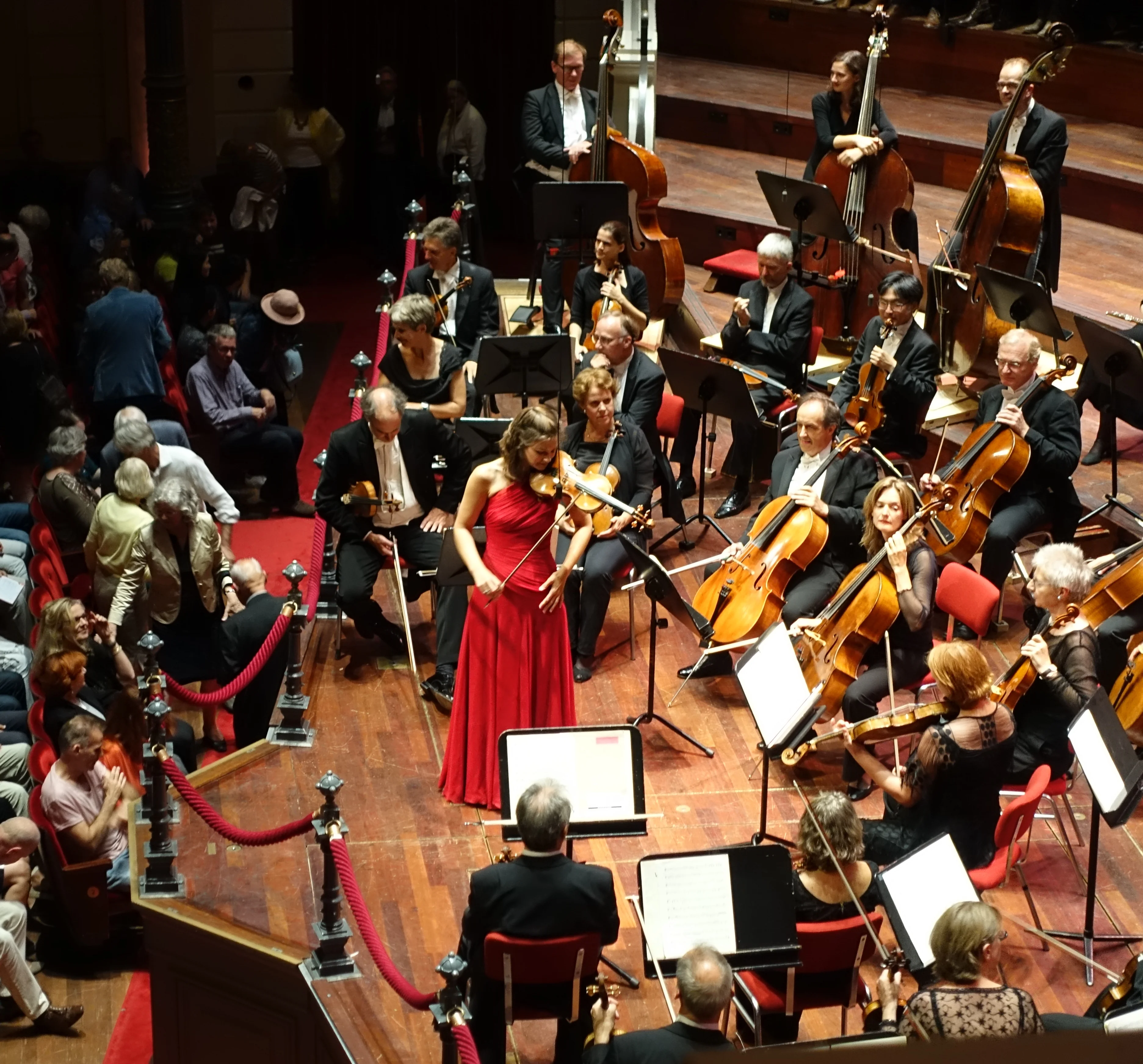
Image from Wikipedia
Image from Wikipedia
The Deutsche Kammerphilharmonie Bremen – An Orchestra of World-Class Ranking Bridging Precision, Passion, and New Beginnings
A Musical Body with Integrity: A Portrait of the Deutsche Kammerphilharmonie Bremen
The Deutsche Kammerphilharmonie Bremen is one of the most prominent appearances in the international classical music scene. Based in Bremen and organized as a non-profit GmbH, the ensemble has evolved since its founding in 1980 from the context of the Junge Deutsche Philharmonie into a globally influential orchestra. Under the artistic direction of Paavo Järvi, who has shaped the ensemble since 2004, it combines musical excellence with a distinctive artistic concept that extends far beyond traditional orchestral ideas.
What makes this orchestra particularly exciting is the combination of chamber music sensitivity, entrepreneurial thinking, and social responsibility. The Deutsche Kammerphilharmonie Bremen not only works on the fine articulation of timbres, phrasing, and ensemble balance but also on new forms of cultural interaction. This is what gives it a special stage presence: a vibrant, highly concentrated, and surprisingly immediate orchestral sound.
From Founding Idea to International Top Ensemble
The history of the Deutsche Kammerphilharmonie Bremen begins as an ideal project by young musicians seeking to create their own space for artistic freedom. From an initiative of music students, an ensemble emerged that early on distinguished itself through stylistic curiosity and an open approach to the repertoire. Rather than limiting itself to a rigid tradition, the orchestra relied on varying conductors and a working method that takes different eras and their respective sound languages seriously.
This openness became a central driving force in its artistic development. The journey from being a little-known tip from the feuilletons to one of the world’s leading orchestras involved significant stages with guest conductors such as Mario Venzago, Heinrich Schiff, and Jiří Bělohlávek. In 1995, Thomas Hengelbrock took over as the first artistic director; the real musical breakthrough came later under Daniel Harding. Since 2004, Paavo Järvi has been at the helm of the artistic work, shaping a highly differentiated orchestral identity in collaboration with the musicians.
Paavo Järvi and the Art of Interpretative Refinement
Collaboration with Paavo Järvi is one of the decisive chapters in recent orchestral history. Since his appointment, the Deutsche Kammerphilharmonie Bremen has become a laboratory for analytical precision, rhythmic energy, and sonic transparency. Järvi and the ensemble have particularly made interpretative history with cycles of Beethoven, Schumann, and Brahms, establishing themselves in a repertoire field that is especially highly contested in the classical concert world.
The collective approach focuses on structural clarity and emotional tension at the same time. The elaboration of the scores displays a high degree of awareness of detail: transitions, articulation, dynamic gradations, and the internal architecture of the movements gain exceptional presence in the playing of the chamber philharmonic. This very connection between discipline and expressiveness is what defines the unique appeal of the orchestra and explains why it regularly appears as a reference ensemble in the international music press.
The Rehearsal Hall as a Model: Bremen-Ost and the Future Laboratory
Another key to success lies in the orchestra’s special embedding in the city of Bremen. In 2007, the Deutsche Kammerphilharmonie Bremen moved into rehearsal spaces at the Gesamtschule Bremen-Ost in Osterholz-Tenever. This step was much more than a logistical relocation: Through its proximity to the school operations and the neighborhood, the award-winning future laboratory was created, which connects musical education, social participation, and artistic practice.
The future laboratory is considered a model project because it understands music not as a finished high culture but as a societal process. Here, projects that promote individual growth through music emerge, where orchestra work, pedagogy, and community work mutually enrich one another. This form of cultural embedding gives the Deutsche Kammerphilharmonie Bremen an authority that extends beyond its concert activities: The ensemble represents a contemporary, responsible, and highly professional understanding of musical culture.
Discography, Recordings, and Artistic Signature
The orchestra's discography is closely tied to its stylistic development. Under Paavo Järvi, groundbreaking recordings have emerged that have sharpened the ensemble's profile internationally. Notably, the cycles of Beethoven, Schumann, and Brahms have received much attention and are regarded as interpretative milestones. Additionally, the recordings of the London Haydn Symphonies No. 101 and 103 have earned the orchestra another "Orchestra of the Year" award in 2024.
The recordings are characterized by clear lines, chamber-music transparency, and a high degree of dramatic organization. Instead of opulent mass effects, differentiation often takes center stage: woodwinds gain definition, strings articulate precisely, and the blocks of the orchestra interlock as in a finely crafted score. This makes the discography of the Deutsche Kammerphilharmonie Bremen equally interesting for lovers of both historically informed and modern interpretations.
Awards, Recognition, and International Presence
The list of accolades underscores the artistic authority of the orchestra. The official website highlights that the Deutsche Kammerphilharmonie Bremen and Paavo Järvi were again awarded "Orchestra of the Year" in 2024, marking their eleventh Opus Klassik or Echo Klassik success. The Gramophone Award as "Orchestra of the Year" also marks the international recognition of a musical body that has firmly established itself at the forefront of the world.
Moreover, the strong presence on the world's major concert stages reflects this. The orchestra has performed at venues such as the Wiener Musikverein, Concertgebouw Amsterdam, and Carnegie Hall in New York. It has also appeared at the BBC Proms, Salzburg Festival, Rheingau Music Festival, and Schleswig-Holstein Music Festival. These stations indicate that the Deutsche Kammerphilharmonie Bremen is not only a leading German ensemble but a globally sought-after interpretative partner with high renown.
Current Projects and Artistic Presence
Even in the present, the orchestra remains project-oriented and programmatically vibrant. The official website promotes subscription concerts and special programs for the 2026 season, indicating ongoing active concert and publication work. Furthermore, the official communication refers to further awards and the sustainable cooperation with Paavo Järvi, which continues to serve as the artistic driving force of the ensemble.
The orchestra also remains closely linked to educational and outreach formats. Projects from the context of the future laboratory, new forms of concerts, and collaborations with schools and neighborhoods clearly demonstrate that the Deutsche Kammerphilharmonie Bremen does not limit its role as an institution to the classical concert hall. This connection between top art and social openness contributes to its special relevance.
Style, Sound Culture, and Cultural Influence
The style of the Deutsche Kammerphilharmonie Bremen can be described as a combination of precision, agility, and analytical depth. The ensemble works with chamber music transparency without losing symphonic power. In practice, this means: clear voice leading, flexible tempos, precise dynamics, and a conscious approach to both historical and contemporary work fidelity.
The cultural influence of the orchestra extends far beyond Bremen. Through the future laboratory, the academy for young musicians, and collaborations with schools, a model has been created that makes cultural education tangibly experiential. At the same time, the Deutsche Kammerphilharmonie Bremen represents a modern form of orchestral management where excellence, organization, and social responsibility do not appear as opposites but rather reinforce each other.
Conclusion: An Orchestra That Envisions Music as a Model for the Future
The Deutsche Kammerphilharmonie Bremen captivates because it combines musical excellence with integrity. It is an orchestra that not only plays but shapes: with fine sound consciousness, interpretative independence, and a strong social compass. Anyone who experiences this ensemble immediately senses that one of the most exciting German musical careers is being written in a collective format.
In live performance, this formation reveals its full grandeur. The energetic stage presence, the precision of the interplay, and the artistic tension between tradition and new beginnings make every concert evening an event. Those who listen to the Deutsche Kammerphilharmonie Bremen experience not only an orchestra of world-class stature but also a vision of how classical music can sound and resonate today.
Voices of the Fans
The public response to the Deutsche Kammerphilharmonie Bremen is characterized by great appreciation for its sound culture, disciplined ensemble work, and creative programming. Official channels show an audience that values the stylistic clarity, energy, and distinctive character of the orchestra. Especially the combination of top performance, Bremen roots, and social openness maintains sustained attention and high esteem.
Official Channels of Deutsche Kammerphilharmonie Bremen:
- Instagram: https://www.instagram.com/dkambremen
- Facebook: https://www.facebook.com/TheDeutscheKammerphilBremen
- YouTube: https://www.youtube.com/user/kammerphilharmonie
- Spotify: no official profile found
- TikTok: no official profile found
Sources:
- The Deutsche Kammerphilharmonie Bremen – Official Website
- Musik Information Center (miz) – Institution Portrait
- The Deutsche Kammerphilharmonie Bremen – Short Portrait
- Wikipedia: Deutsche Kammerphilharmonie Bremen
- The Deutsche Kammerphilharmonie Bremen – Paavo Järvi
- The Deutsche Kammerphilharmonie Bremen – Musician Portrait
- Program Brochure/Publication – Season 2024/25