
Frank-Walter Steinmeier
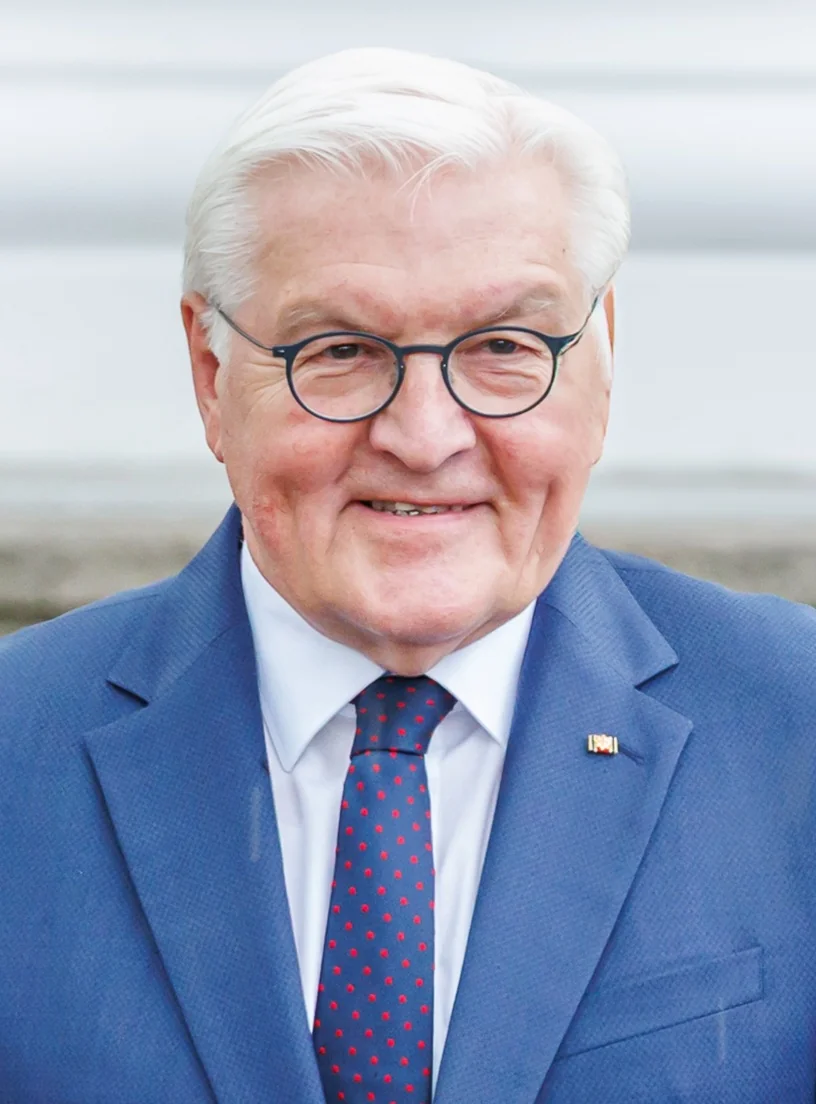
Image from Wikipedia
Image from Wikipedia
Frank-Walter Steinmeier: Statesman, Speaker, and Influential Voice of German Politics
A Federal President with Experience, Integrity, and Political Insight
Frank-Walter Steinmeier embodies continuity, diplomatic experience, and a sober yet empathetic political language like few others. Born on January 5, 1956, in Detmold, he evolved from a lawyer and administrative expert to one of the key figures in post-war German politics. Since March 19, 2017, he has served as the Federal President of the Federal Republic of Germany; he was re-elected for a second term on February 13, 2022, which will end on March 18, 2027. ([bundespraesident.de](https://www.bundespraesident.de/SharedDocs/Reden/DE/Frank-Walter-Steinmeier/Reden/2025/02/250224-Jahrestag-Krieg-Ukraine.html?utm_source=openai))
Early Years and Political Rise
Steinmeier's political career is closely linked to the Social Democracy. Before his time in the highest state office, he shaped federal policy for many years through central government functions. From 1999 to 2005, as head of the Federal Chancellery, he led the government headquarters under Gerhard Schröder and gained the administrative precision that has significantly shaped his subsequent career. ([bundespraesident.de](https://www.bundespraesident.de/EN/federal-president/curriculum-vitae/curriculum-vitae_node.html?utm_source=openai))
This phase marked the transition from party strategist to state political coordinator. Steinmeier worked at the intersection of government, parliament, and international relations, becoming a politician who masterfully navigates processes as well as protocol and mediation. His biography illustrates a path characterized less by staging and more by institutional responsibility. ([bundespraesident.de](https://www.bundespraesident.de/EN/federal-president/curriculum-vitae/curriculum-vitae_node.html?utm_source=openai))
Foreign Policy, Vice-Chancellorship, and Domestic Leadership
From 2005 to 2009, Steinmeier served as Foreign Minister in the Merkel I cabinet; from 2007, he also held the position of Vice-Chancellor. In this role, he distinguished himself as a diplomatic politician who negotiated international conflicts, alliance politics, and European interests with sober language and great persistence. He served a second term as Foreign Minister from 2013 to 2017 in the Merkel III cabinet. ([bundespraesident.de](https://www.bundespraesident.de/EN/federal-president/curriculum-vitae/curriculum-vitae_node.html?utm_source=openai))
After losing as the SPD's chancellor candidate in the 2009 federal elections, he took responsibility as the leader of the SPD parliamentary group and thereby as the opposition leader. This role made it clear that Steinmeier stands not only for governmental action but also for parliamentary stability. His political biography combines executive experience, faction work, and international representation in a rarely coherent way. ([bundespraesident.de](https://www.bundespraesident.de/EN/federal-president/curriculum-vitae/curriculum-vitae_node.html?utm_source=openai))
The Office of the Federal President
His election as the twelfth Federal President on February 12, 2017, initiated a term aimed at reconciliation, democratic resilience, and societal dialogue. Steinmeier has been in office since March 19, 2017; his re-election in 2022 underscores the trust in his representational and moral authority. The Federal President uses his office to prioritize democratic values, international solidarity, and societal cohesion. ([bundespraesident.de](https://www.bundespraesident.de/EN/federal-president/curriculum-vitae/curriculum-vitae_node.html?utm_source=openai))
Steinmeier's presidency is characterized by speeches, travels, and public signals. Whether discussing Europe, Ukraine, the aftermath of the pandemic, or German-Polish responsibility, his tone remains factual, precise, and focused on understanding. This makes him a Federal President who relies less on pathos and more on reliability. ([bundespraesident.de](https://www.bundespraesident.de/SharedDocs/Reden/DE/Frank-Walter-Steinmeier/Reden/2025/05/250506-DAAD-100Jahre.html?utm_source=openai))
Political Style and Public Impact
Steinmeier's style is marked by a rare blend of restraint and clarity. He does not speak in political clichés but in sentences that unite institutions, historical responsibility, and civic understanding. Especially in times of crisis, this language acts as a counter-model to polarization and constant agitation. ([bundespraesident.de](https://www.bundespraesident.de/SharedDocs/Reden/EN/Frank-Walter-Steinmeier/Reden/2025/250224-anniversary-war-against-Ukraine.html?utm_source=openai))
His approach is also reflected in how he engages with digital public spheres. As early as 2019, the Federal President emphasized on Instagram the desire to stay in dialogue with citizens and advocate for a respectful culture of dialogue online; the presidential website also references Facebook and YouTube as communication channels of the office. This presence is not for self-promotion but for communicating governmental work to a broader public. ([bundespraesident.de](https://www.bundespraesident.de/SharedDocs/Pressemitteilungen/DE/2019/02/190211-Instagram.html?utm_source=openai))
Current Tasks and Public Agenda
In 2024 and 2025, Steinmeier remains active with a dense public agenda. In 2025, the Federal President traveled to Saudi Arabia, Jordan, and Turkey, speaking about the repercussions of the Corona period and sending foreign policy signals in support of Ukraine. Such engagements reflect an office focused on international relations, societal self-reflection, and political orientation. ([bundespraesident.de](https://www.bundespraesident.de/SharedDocs/Berichte/DE/Frank-Walter-Steinmeier/2025/02/250202-05-Reise-SDA_JOR_TUR.html?utm_source=openai))
The official website of the Federal President also continuously documents his speeches, reports, and visits. This creates a very clear profile: Steinmeier acts as a mediating head of state, stabilizing the Federal Republic internally and representing it externally. His political work is less about spectacle and more about effectiveness, less about noise and more about long-term impact. ([bundespraesident.de](https://www.bundespraesident.de/?utm_source=openai))
Public Perception and Cultural Context
Steinmeier represents a type of political authority that emerges from experience, language, and institutional composure. At a time when political attention often thrives on escalation, his profile intentionally stands out: binding, measured, and historically informed. This is precisely what makes him significant for the political culture of Germany. ([dw.com](https://www.dw.com/en/german-president-steinmeier-calls-out-toxic-social-media-debates/a-48617060?utm_source=openai))
His role can also be seen as a cultural translation task. He speaks about democracy not in abstract terms but as a lived experience grounded in respect, education, memory, and responsibility. Those who follow his speeches recognize a politician who takes the office of the Federal President seriously as a moral and communicative challenge. ([bundespraesident.de](https://www.bundespraesident.de/SharedDocs/Reden/DE/Frank-Walter-Steinmeier/Reden/2025/05/250506-DAAD-100Jahre.html?utm_source=openai))
Assessment of His Career So Far
Frank-Walter Steinmeier's career combines governance, foreign policy, faction leadership, and state representation into a coherent body of work. From head of the Chancellery to Foreign Minister to Federal President, he demonstrates a politician whose strength lies in institutions and processes. This continuity makes him one of the most reliable political figures in the Federal Republic. ([bundespraesident.de](https://www.bundespraesident.de/EN/federal-president/curriculum-vitae/curriculum-vitae_node.html?utm_source=openai))
For political observers, Steinmeier remains compelling because he views power not as a pose but as a responsibility. His career stands for diplomatic discipline, democratic experience, and the art of providing orientation in complex moments. Anyone seeking to understand contemporary German history cannot overlook Frank-Walter Steinmeier. ([bundespraesident.de](https://www.bundespraesident.de/?utm_source=openai))
Conclusion
Frank-Walter Steinmeier is intriguing because he fills the office of the Federal President with seriousness, dignity, and political substance. His biography speaks of responsibility in government and opposition, of foreign policy experience, and of a clear commitment to democratic culture. Those who experience him live during a speech, a state act, or a public event see a politician who not only represents Germany but also explains it. ([bundespraesident.de](https://www.bundespraesident.de/EN/federal-president/curriculum-vitae/curriculum-vitae_node.html?utm_source=openai))
Official Channels of Frank-Walter Steinmeier:
- Instagram: https://www.instagram.com/bundespraesident.steinmeier/
- Facebook: https://www.facebook.com/BundespraesidentSteinmeier/
- YouTube: no official profile found
- Spotify: no official profile found
- TikTok: no official profile found
Sources:
- The Federal President - Curriculum Vitae
- The Federal President - Press Releases - Federal President Steinmeier on Instagram
- The Federal President - Press Releases - Federal President Steinmeier Invites Discussion on the Impact of Corona
- The Federal President - Reports - Trip to Saudi Arabia, Jordan, and Turkey
- DW - German President Steinmeier calls out 'toxic' social media debates
- Wikipedia: Frank-Walter Steinmeier