
Joe Bausch
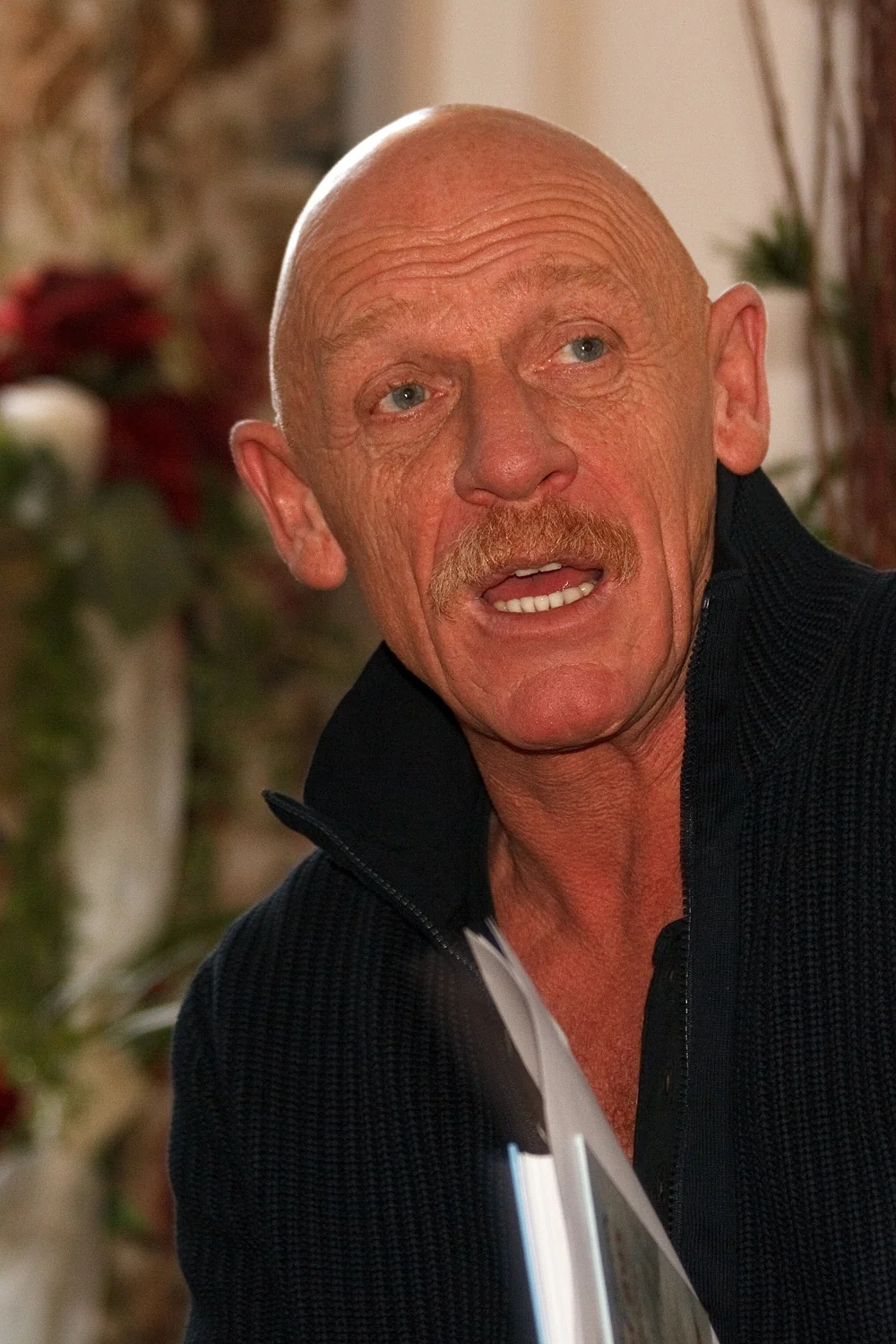
Image from Wikipedia
Image from Wikipedia
Joe Bausch – Doctor, Author, Actor: A Life Story Between Medicine, Stage, and Society
Between Cell and Spotlight: Why Joe Bausch Moves People
Joe Bausch has stood for authenticity for decades: as a prison doctor, as a widely read author, and as an actor whose stage presence is shaped by real professional life. Born in 1953 in the Westerwald and known from the Cologne Tatort, he combines medical experience, forensic thinking, and narrative power to create impressive observations about guilt, responsibility, and resilience. His artistic development revolves around the question of how biography, systems, and society enable crime – and how empathy remains possible despite abysses.
This artist description contextualizes Bausch’s music career equivalent path – his medical work, acting, and publications – professionally, narrates the key career milestones, and shows why his books and formats are so impactful in German-speaking culture. Focusing on works corresponding to his discography (publications), composition and arrangement of narrative forms, production of TV formats, as well as critical reception in the press, a comprehensive portrait with high informational and cultural value emerges.
Origins and Early Years: The Shaping of an Extraordinary Biography
Growing up in the Westerwald in the post-war years, Bausch early learned about hardship, deprivation, and social confinement – experiences that later sharpened his understanding of perpetrator biographies, cycles of violence, and survival strategies. His artistic development draws from this dual perspective: the view of the affected on authoritarian upbringing and the professional perspective of a physician on psychological and social dynamics. In his autobiography Verrücktes Blut, he reflects on this childhood unflinchingly and makes it understandable how analytical alertness and compassion can arise from suffered wounds.
The early drive for self-determination led Bausch from rural confinement to the cities, to lecture halls, and ultimately to where society is exposed under a magnifying glass: in the correctional facility. There, he understood how closely individual stories are intertwined with structural conditions – an experience that permeates his entire work.
Medical Career: Forensic Precision and Humanistic Attitude
Bausch worked as a doctor in the JVA Werl for over 30 years, for a long time serving as the Chief Government Medical Director. This music career-analogous practice – a daily "stage" in the borderline between law, ethics, and biography – shaped his expertise in psychotraumatology, addiction medicine, and criminal psychology. His artistic signature: clinical precision in observation, a clear dramaturgy of cases, and a language that makes the unspeakable speakable without indulging voyeurism. This combination of experience and expertise grants him authority in media, on reading stages, and in professional circles.
In lectures and readings, Bausch works like an experienced arranger: he organizes case stories, clarifies causal chains, and exposes motives – a compositional process in which empiricism and narrative intertwine. For the audience, this creates a resonance space that connects knowledge and emotion.
Acting Career: Dr. Joseph Roth in the Cologne Tatort – Realism as Style
Bausch became nationally known as forensic scientist Dr. Joseph Roth in the Cologne Tatort. His stage presence does not derive from studio theory but from lived practice: he knows how an autopsy room sounds, how perpetrators speak, and how victim stories resonate. The role never appears decorative; instead, it conveys implicit knowledge about processes, sources of error, and forensic diligence. This realism, supported by rhythm, timing, and economical play, made Bausch a favorite with audiences – while simultaneously shaping the image of forensic medicine on German-speaking television.
Beyond the Tatort, Bausch also made an impact in TV productions and talk formats, where he skillfully explores the divide between fiction and reality. For many viewers, he thus became a guide in dealing with true crime and media attributions of "good" and "evil."
Publications (Discography Equivalent): Books That Spark Debates
With Knast, Bausch opened the door for readers in 2011/2012 into a world with its own rules. The book sets standards in the genre: instead of sensationalism, it offers a language of precision; instead of clichés, it presents structures. Gangsterblues (2018) deepens this line and condenses prison life into poignant episodes – a production in the best sense: a montage of voices, situations, and reflections. Maxima Culpa – Every Crime Begins in the Mind (2022) provides an analytical extension: Bausch shows how psychological patterns, social upheavals, and situational structures shape criminal behavior; the press attested relevance and bestseller qualities. With Verrücktes Blut – Or: How I Became Who I Am (2024), he finally shifts the focus inward: a personal, painful, yet liberating search for traces.
In summary, a consistent discography of prose emerges: thematic variations, metrically clear set chapters, dramaturgically precise cadences. Reception in feuilletons and magazines emphasizes authenticity, craftsmanship, and moral clarity – qualities that place Bausch in the front row of German-speaking true crime authors.
Television Formats and Audio Media: Analyses with Narrative Pulse
In Im Kopf des Verbrechers (Sat.1 Gold), Bausch translates his expertise into a series format that does not exploit criminal historical cases but analytically reframes them. His moderation follows a clear dramaturgy – exposition, development, turning point, coda – and applies forensic terminology in a way that allows laypeople to follow without losing complexity. Interviews, readings, and podcast discussions feel like live arrangements: spontaneous, pointed, carried by empathy and clarity.
The production of these formats shows a distinct handwriting: quiet tones, solid facts, restrained staging. Thus, a counter-model to the sensationalist true crime aesthetic emerges – and therein lies Bausch's cultural value.
Aesthetics, Style, and Themes: A Composition of Empiricism, Ethics, and Language
Bausch's language is rhythmized like good chamber music: short sentences as percussive accents, longer periods as melodic arcs. In the arrangement of chapters, strict form prevails; each episode serves a function in the larger whole. Central motifs include shame, shaping, addiction, power, and helplessness; leading questions about responsibility return throughout – individually, institutionally, socially.
Stylistically, Bausch avoids pathos. He works with vividness when it fosters understanding, and with sobriety when precision takes precedence. This controlled "play of dynamics" makes his texts and appearances so effective: they challenge the intellect and feelings – thereby creating lasting memories.
Cultural Influence: Enlightenment Instead of Spectacle
In the German-speaking discourse on crime, media, and victim perspectives, Bausch strengthens a culture of enlightenment. His books are widely received, his readings fill venues, and his TV appearances provide guidance in an overheated genre. For medical and judicial practice, he offers experiential knowledge about communication, de-escalation, and the limits of what is possible. For culture, he provides a narrative that slows down sensationalism and places empathy at the center.
His influence on the true crime "scene" is particularly effective: authors and editorial teams are increasingly adopting Bausch's principles – careful research, victim centering, and restraint in portrayal – thereby professionalizing a mass format.
Current Projects 2024–2026: Autobiography, Readings, Social Engagement
With Verrücktes Blut (Ullstein, 2024), Bausch opens the most personal chapter of his work. The reading tours of 2024/2025 demonstrate how strongly the audience reacts to this new depth: full houses, intense conversations, and high media resonance. Simultaneously, he remains active as a speaker, linking forensic experience with leadership and societal topics in keynotes, and engaging for victim protection and civil courage. Media contributions and TV formats complement the spectrum – always with a focus on making complex realities understandable without simplifying them.
His oeuvre thus expands in breadth: autobiographical processing, systemic analysis, stage-worthy condensation. For 2025/2026, appearances, readings, and discussion evenings will shape the agenda – a vibrant artistic development in real-time.
"Voices of the Fans": Resonance on the Platforms
The reactions from fans clearly show: Joe Bausch inspires people worldwide. On Instagram, a fan raves: "The honesty in your stories strikes right at the heart." On Facebook, a listener writes: "Thank you for the clarity and compassion – I’ve rarely read so insightfully about guilt and responsibility." On YouTube, a viewer comments under a reading recording: "So much substance, zero sensationalism – please more of that!”
Conclusion: Why You Should Read, Listen to, and Experience Joe Bausch Live
Joe Bausch combines experience, expertise, authority, and trustworthiness: a doctor with decades of practice, an author with a clear handwriting, an actor with realistic presence. His works are more than just true crime – they are cultural diagnoses that examine our society with a cool head and a warm heart. Those who want to understand how people "function," where systems fail, and where healing begins, will find insight and perspective with Bausch.
Live, this quality unfolds particularly intensely: the dramaturgy of his readings, the precision of his analyses, the humanity of his narrative voice – all of this makes his performances impressive evenings. Recommendation: secure tickets in time, listen, ask questions, and leave with an open attitude.
Official Channels of Joe Bausch:
- Instagram: https://www.instagram.com/bauschjoe/
- Facebook: https://www.facebook.com/joe.bausch.3
- YouTube: No official profile found
- Spotify: No official profile found
- TikTok: No official profile found
Sources:
- Official Website – Joe Bausch
- Ullstein – Knast (Book Info)
- Ullstein – Gangsterblues (Book Info)
- Ullstein – Maxima Culpa (Book Info)
- Thalia – Verrücktes Blut (Release Date, Shop Page)
- DIE ZEIT/dpa – Report on Verrücktes Blut (June 8, 2024)
- SWR Landesschau – Portrait of Joe Bausch (September 24, 2024)
- Wikipedia – Joe Bausch
Upcoming Events
Joe Bausch - Psychopaths & Sadists
Joe Bausch – Abysses Behind Bars Live
Joe Bausch – Live in Weiden
Joe Bausch – Live in Weiden
Joe Bausch – Live in Weiden