
Sonat Vox
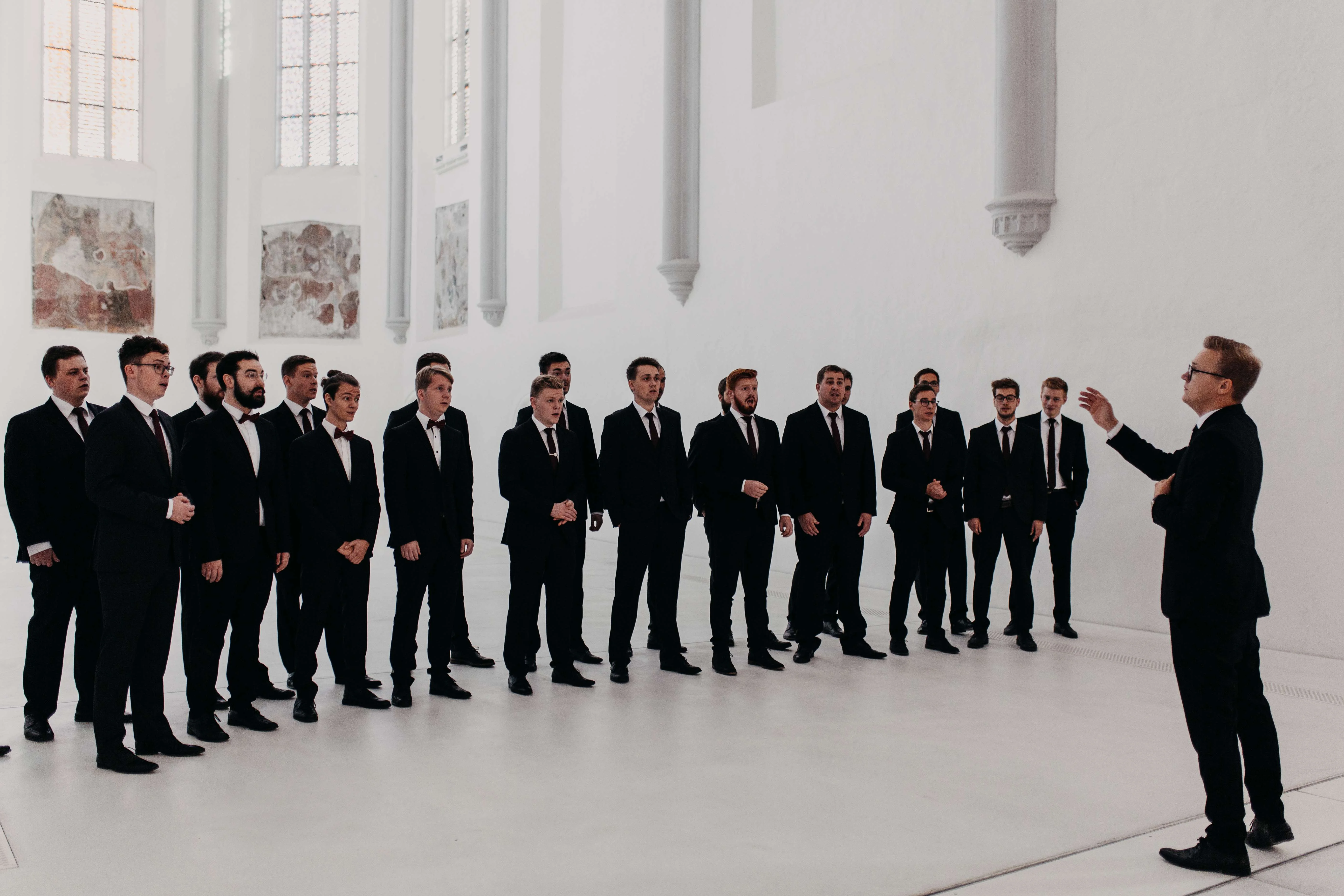
Image from Wikipedia
Image from Wikipedia
Sonat Vox – Male Voices Connecting History and Present
An Ensemble that Opens Sound Spaces: Sonat Vox Enthralls with Precision, Warmth, and Artistic Development
Sonat Vox stands for a rounded, buoyant choral sound that connects the depths of basses with a bright, slender timbre of upper voices. Rooted in Ansbach, the male voice ensemble was founded in 2015 by conductor Justus Merkel and primarily brings together former singers from the Windsbacher Knabenchor. With its rare variety of voices, including tenors, basses, and altus voices, the choir interprets repertoire ranging from the Renaissance to modernity – a cappella, chamber music-focused, and with a stage presence that makes both sacred and secular works shine equally. Competition wins, critically acclaimed albums, and a steadily growing project network mark a musical career that has swiftly gained authority in both German and international choral life.
Foundation, Training, Sound Ideal
The artistic DNA of Sonat Vox stems from a shared tradition of training: Many singers developed phrasing culture, intonation confidence, and text interpretation as boy sopranos before transitioning to male voice parts. This transition continues to shape the ensemble today: Breath control, legato culture, and trained diction form the foundation for wide dynamic arcs and the homogeneity of the registers. Conductor Justus Merkel, himself an alumnus of Windsbacher Knabenchor (class of 1996), has molded a stylistically flexible aesthetic that excels in the Romantic male choir literature as well as in polyphonic compositions of the Renaissance and in contemporary soundscapes.
Career Milestones and Competitions: From First Prize to Signature
Sonat Vox made striking statements early on. After claiming first place at the Men's Choir Festival in Limburg (2016), they won the German Choir Competition in Freiburg in 2018 – an award that confirms both artistic excellence and stylistic breadth. In 2022, the ensemble secured first prize and several special awards at the International Chamber Choir Competition Marktoberdorf (Category B: Equal Voices), including the Noël Minet Prize for the best interpretation of a Romantic choral work and the BMCO Prize for the compulsory piece. These competition successes have been duly noted by the professional scene and solidified the choir's reputation as a reference for male voices on an international level. (Sources: Wikipedia; International Chamber Choir Competition Marktoberdorf)
Recordings, Production, Discography
The discography reflects the artistic development: With "Ubi caritas et amor deus ibi est" (2017), Sonat Vox presented a focused collection of sacred works. "Lasst uns lauschen" (2019) gathers artfully arranged Christmas and winter literature with the signature of a highly precise ensemble sound. In 2023, "Klang der Verbundenheit" followed – a worldly-accentuated program focusing on Romanticism that explores the lyrical-epic side of the male choir repertoire. Accompanying singles and EPs, including "Die Nacht," "Waldeinsamkeit," "Gondelfahrer," and "Gesang der Geister über den Wassern," demonstrate editorial care, sonic balance, and a recording aesthetic that combines transparency with warmth. (Sources: Wikipedia; Apple Music)
Repertoire and Stylistic Signature
At the core of Sonat Vox is a curated repertoire arc that, placed in a music-historical context, makes audible the development of male choir aesthetics between text interpretation, sound color dramaturgy, and harmonic densification. Renaissance motets (Tallis, Schütz) benefit from precise intonation and slender upper voice arrangement; Romanticism (Schubert, Reger, Mendelssohn) is characterized by breathing phrasing and a careful balance between main and internal voices. In contemporary pieces – such as floating chord clusters or modal textures – the ensemble impresses with a noise-reduced approach, controlled overtone saturation, and a production that utilizes the space as a sound-forming instrument. This stylistic analysis explains the impression of many listeners: Transparency without coldness, warmth without heaviness.
Artistic Development and Project Culture
Sonat Vox operates as a "Music. Culture. Collective." and expands its profile beyond pure a cappella performances. The variable instrumentation – male choir, chamber choir, own chamber orchestra – allows for dramaturgically diverse programs. Projects range from Baroque festive music to Romantic tableaux and thematic concert cycles, such as cantata evenings that intertwine liturgical architecture with contemporary performance practice. The artistic development is also evident in interdisciplinary collaborations (e.g., video production, historically informed practice, crossover formats) that position the ensemble as a curating entity in the cultural sector. (Sources: Sonat Vox – Website, Team and Timeline Pages)
Conducting, Leadership, Expertise
The hallmark of Justus Merkel influences the composition, arrangement selection, and rehearsal aesthetics of the choir. His training with renowned choral directors and a master's program with Hans-Christoph Rademann sharpen his professional expertise in intonation, text clarity, and historical performance practice. Under his direction, Sonat Vox demonstrates an elastic articulation culture in live acoustics, from sacred to secular. The ensemble's consistent receipt of awards and special recognitions underscores the authority of this conductorship – and the trust of juries, media, and concert series. (Sources: Sonat Vox – Team; International Chamber Choir Competition Marktoberdorf)
Press Voices and Reception
The music press and regional cultural sections repeatedly honor Sonat Vox: Judgments range from "pristine, perfect sound" to "voices full of precision," placing the ensemble among the leading male choirs in Germany. Concert reports highlight the emotional density, careful text interpretation, and dynamic range – from the finest pianissimo to room-filling forte. An extensive portrait by NDR Kultur focused on the sound ideal, the repertoire structure, and previous albums in 2024; additionally, competition reports and concert summaries confirmed the high artistic quality. (Sources: Sonat Vox – Website/Quotes; NDR Kultur; Klassik Deluxe; VDKC)
Current Projects, Concerts, and Collaborations
The latest phase of their musical career was marked by concert highlights in 2025 – including their Pirna debut as part of "Klassik Deluxe" for the "Instrument of the Year: The Human Voice" – and a festive anniversary weekend with the choir "vox nova" in the context of "100 Years VDKC." For 2026, further concerts in Franconia and beyond are scheduled, combining romantic core literature with stylistically accurate placements of male choir classics. Simultaneously, the ensemble maintains its network with guest musicians, realizes recordings, and works on dramaturgically focused programs that harmonize repertoire, space, and resonance. (Sources: Concert Overview Sonat Vox; Klassik Deluxe; VDKC)
Discography – Work Blocks, Highlights, Formats
• 2017: “Ubi caritas et amor deus ibi est” – Sacred male choir works; sound architecture between linearity and vertical density, recording in cooperation with Bauer Studios.
• 2019: “Lasst uns lauschen” – Advent/Christmas repertoire; colorful palette of traditional pieces and newer arrangements, with a special focus on legato breathing and text warmth.
• 2023: “Klang der Verbundenheit” – Secular Romanticism, with a focus on Schubert; additional singles/EPs like “Die Nacht,” “Waldeinsamkeit,” “Gondelfahrer,” and “Gesang der Geister über den Wassern,” profiling the unique Sonat Vox sound in track format. (Sources: Wikipedia; Apple Music)
Cultural Influence and Placement
Sonat Vox occupies a pivotal role in the German-speaking choral ecosystem: the ensemble transfers the boy choir socialization into a professional male choir aesthetic, making it accessible to contemporary listening habits. In doing so, it not only enhances the visibility of the male choir genre but also sets impulses for the amateur and professional scenes in program design, production, and communication. Competition victories act as door openers, but crucial remains the continuous work on homogeneity, sound color, and text proximity – criteria that are newly communicated through a variety of digital publishing paths (albums, singles, video productions).
Fan Voices
The reactions from fans clearly show: Sonat Vox captivates people worldwide. On Instagram, listeners praise the "crystal-clear intonation" and the "warming sound cover" in romantic pieces. YouTube comments highlight that "the true wonder of this choir lies in the silence after the last chord." On Facebook, concert attendees appreciate "precise lines that remain both breathing and human." This resonance underscores why Sonat Vox creates an impact beyond the concert hall, even digitally.
Conclusion: Why Experience Sonat Vox Now?
Sonat Vox combines stylistic expertise, historically informed sensitivity, and a contemporary language that connects immediately. The ensemble sets standards with its artistic development: in intonation, mixing, text design, and dramaturgy. Those who experience how dynamic waves unfold in space will understand the core of this choir – music as lived connectivity. Recommendation: Mark the upcoming concert dates, experience the round ensemble sound in sacred spaces and chamber music halls – and discover the discography as a sonic travel diary through epochs, themes, and keys.
Official Channels of Sonat Vox:
- Instagram: https://www.instagram.com/sonat_vox/
- Facebook: https://www.facebook.com/sonatvox/
- YouTube: https://www.youtube.com/c/SonatVox
- Spotify: https://open.spotify.com/intl-de/artist/1TuXJ3JKJFeEa2yHoIWFnj
- TikTok: No official profile found
Sources:
- Sonat Vox – Official Website
- Sonat Vox – Concerts
- Sonat Vox – Timeline (History)
- Sonat Vox – Team & Choir Leadership
- International Chamber Choir Competition Marktoberdorf – Results 2022
- Klassik Deluxe – Concert Report "Zeitgeist" (May 25, 2025)
- Association of German Concert Choirs – Triple Anniversary 2025
- Apple Music – Sonat Vox (Albums, Singles, EPs)
- NDR Kultur – Choral Music: The Young Male Choir Sonat Vox (Broadcast from February 11, 2024)
- Wikipedia: Sonat Vox – Image and Text Source
Upcoming Events
Easter Joy
Sonat Vox: Easter Jubilee – Festive Cantatas
Sonat Vox Choir Concert
Sonat Vox & Ansbacher Kammerorchester Concert
Sonat Vox and the Ansbach Chamber Orchestra