
Bad Kissingen
Kapellenpfad 7, 97688 Bad Kissingen, Deutschland
Liebfrauensee Bad Kissingen | Photos & History
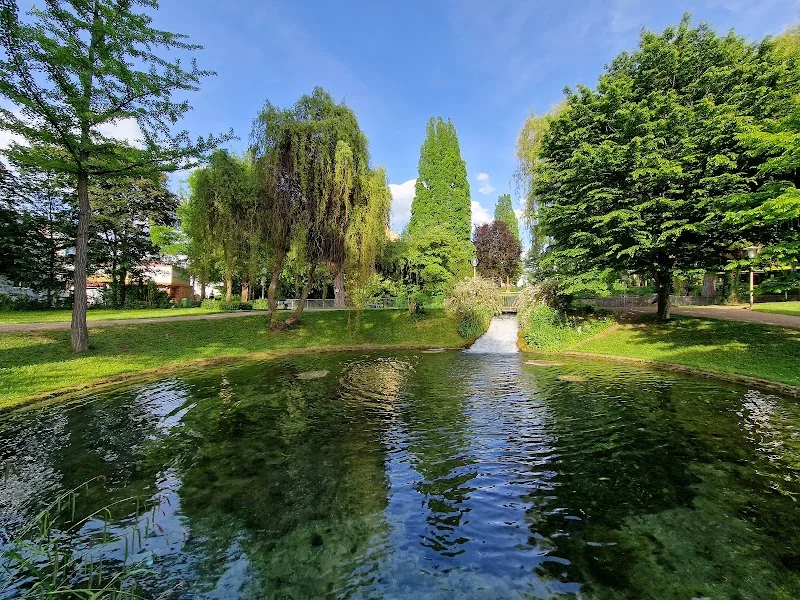
The Liebfrauensee in Bad Kissingen is not a loud crowd-puller, but a place for quiet impressions, short walks, and strong images. Those searching for liebfrauensee bad kissingen or liebfrauensee photos are usually looking for this mix of historical backdrop, calm water, sacred environment, and a piece of city history that cannot be exhausted in a single glance. The city of Bad Kissingen lists the site in its green space directory as Liebfrauenseeanlage, and the tourist information connects it with the baroque Marienkapelle and the adjacent chapel cemetery. This is precisely what creates the special effect of this place: a small lake, a well-maintained green area, a building ensemble with a long history, and a location that is anchored in the historical fabric of the old town. For visitors, this is ideal because here, photo motifs, cultural sites, and short breaks can be easily combined. At the same time, the official city history shows that the stream and the spring in the area of today's Liebfrauensee were already important for settlement development early on. The place is therefore not only beautiful to look at but also a piece of Bad Kissingen's origin story. ([badkissingen.de](https://www.badkissingen.de/media/www.badkissingen.de/org/med_32684/117464_gruenanlagensatzung_anlage_1_gruenanlagenverzeichnis.pdf))
The effect of the Liebfrauensee arises from contrasts: water and masonry, green and stone, legend and documented history, everyday life and monument preservation. Such contrasts make it interesting for photos. Unlike large park lakes or expansive waterfront areas, the Liebfrauensee thrives on the proximity of the elements to each other. The Marienkapelle is located in a small park with the lake, the chapel cemetery is directly adjacent, and the paths are so short that the perspective almost presents itself. Those who take their time discover not just a motif but an entire historical scene. The official tourism presentation emphasizes the quiet location directly at the Liebfrauensee and simultaneously categorizes the Marienkapelle as a popular place for weddings and other occasions. This makes it understandable why this place is more than just a mere water surface for locals and guests. It is an identity-forming, well-perceived part of the urban landscape that does not impose itself but remains long in memory. ([badkissingen-erleben.de](https://badkissingen-erleben.de/sehenswuerdigkeiten/marienkapelle-mit-kapellenfriedhof/))
Photos, Atmosphere, and First Impressions at Liebfrauensee
Those looking for photos of the Liebfrauensee should first consider the overall composition. The special thing about this place is not a spectacular individual motif but the interplay of water, pavilion, Marienkapelle, and the historical structures of the surroundings. The city archive of Bad Kissingen even documents the lake with a historical photograph from around 1900, showing that the place has long been perceived as worthy of being depicted. For today's visitors, this means: The Liebfrauensee is a photographic motif with depth of field in a cultural sense. It tells a lot about the city in a small space, and that is what makes taking pictures here interesting. Particularly appealing is the change of perspectives. Sometimes the water is in the foreground, sometimes the chapel, sometimes the path, sometimes the greenery of the area. This results in photos that do not appear artificially staged but honestly reflect the atmosphere of the place. This fits well with a search interest like liebfrauensee photos, as many people are less interested in large image galleries and more in authentic impressions of a place they wish to visit later. ([badkissingen.de](https://www.badkissingen.de/bildung-und-soziales/stadtarchiv/legenden/44069.Erscheinung-am-See.html))
The atmosphere is clearly characterized by tranquility. The Liebfrauensee is small enough to feel almost intimate and yet open enough to be perceived as a public urban space. This is a rare combination. In practice, this means that the lake is very suitable for short stays: arrive, walk around, look, photograph, move on. The pavilion by the shore provides an additional anchor point. According to the city bulletin, it has long been a landmark of the site, and after its renovation in 2014, it could be used safely again. Such details bring photos of the Liebfrauensee to life because not only water and trees become visible, but also the care and continuity of the place. Those coming with an eye on social media, travel research, or content production will find no over-staged hotspot here, but a credible, historically charged imagery. This is often more valuable than spectacular effects because the images appear calmer, more genuine, and more enduring. ([badkissingen.de](https://www.badkissingen.de/media/www.badkissingen.de/org/med_17787/75486_stadtblatt_ausgabe_vi_dezember_2014.pdf))
The surroundings also help with image composition. The Marienkapelle is located in a small park with the Liebfrauensee, and the adjacent chapel cemetery is itself a monument with many historical tombs. This means for photos: There is not just one motif but an ensemble. Those who choose a wide shot can show the relationship between the lake and architecture; those who get closer will find structures, details, reflections, and small sightlines. Especially in places like this, it is worthwhile to photograph not only the front but also the edges and transitions. The Liebfrauensee thus does not appear as an isolated point on the map but as a natural part of the historical urban landscape. This embedding also explains why the place keeps appearing in tourist materials and city history. It is not a random body of water but part of a developed spatial and cultural context. ([tourismus.bayern](https://tourismus.bayern/wp-content/uploads/2026/01/Bad-Kissingen_Erlebnisfuehrer_2026.pdf))
Marienkapelle and Chapel Cemetery: the Historical Framework
The Liebfrauensee is hardly understandable without the Marienkapelle and the chapel cemetery. The official tourism site describes the Marienkapelle as documented since 1348, with a long history of construction and restoration, and categorizes it as a station of the Franconian Mary Way since 2002. The adjacent chapel cemetery is also mentioned in writing in 1348; it was first expanded in 1855 and became a battlefield in 1866 due to its strategic location in the Austro-Prussian War. These historical layers make the place much more than just a beautiful backdrop. It is a testament to religious, urban, and military history. At the same time, the site today has a quiet and dignified effect. This is remarkable because places with such a burdened past often appear heavy or museum-like. Here, however, monument character combines with accessibility. The tourism presentation also emphasizes that the richly decorated Marienkapelle, due to its idyllic location directly at the Liebfrauensee, is a popular address for weddings and other occasions. The place is therefore not frozen but actively used. ([badkissingen-erleben.de](https://badkissingen-erleben.de/sehenswuerdigkeiten/marienkapelle-mit-kapellenfriedhof/))
For visitors, it is important that the ensemble is not only historically significant but also practically accessible. The tourist presentation explicitly does not mention an entrance fee for the Marienkapelle. This facilitates spontaneous visits and makes the place attractive for a short stop during a city walk. Furthermore, the official cultural site of the city refers to guided tours of the chapel cemetery and the Marienkapelle. There, historical figures, tomb inscriptions, and the special role of the cemetery park are explained. So, those who come via the Liebfrauensee can not only perceive the surroundings superficially but enter a multifaceted realm of thought. This connection of freely accessible site, sacred architecture, and historical memory strengthens the attractiveness of the entire area. It is also a good example of how Bad Kissingen does not present its historical places as isolated monuments but as living parts of the urban fabric. This is precisely why search queries like marienkapelle bad kissingen and kapellenfriedhof bad kissingen fit so closely with the Liebfrauensee. ([badkissingen-erleben.de](https://badkissingen-erleben.de/sehenswuerdigkeiten/marienkapelle-mit-kapellenfriedhof/))
The history of the chapel itself is also important for the perception of the lake. The current baroque form goes back to a new building from the 18th century, planned by Balthasar Neumann and equipped by Benedikt Lux. The fact that the site has been restored multiple times later shows how continuously it has been cared for and preserved in the urban landscape. In connection with the lake, the ensemble thus does not appear accidental but precisely composed. The water area of the Liebfrauensee is so to speak the calm forecourt of a historical architecture that does not dominate the landscape but frames it. This is more attractive to many visitors than a monumental building because the place allows for lingering. The significance of the chapel cemetery as a former cemetery park with monumental graves complements this mood. From a tourist perspective, this creates a very dense cultural motif: water, memory, architecture, and sacred history in a comparatively small area. ([badkissingen-erleben.de](https://badkissingen-erleben.de/sehenswuerdigkeiten/marienkapelle-mit-kapellenfriedhof/))
History, Legend, and the Role of the Lake for Bad Kissingen
The best-known narrative about the Liebfrauensee is the legend of the apparition at the lake. In the official legend of the city, the city archive describes how a young man wanted to drown himself in the Liebfrauensee below the Marienkapelle because the miller's daughter had rejected him. When the Virgin Mary appeared, the course of the story changed; the young man got the girl, and the lake received its name. This legend is more than a pretty anecdote. It shows how strongly the place is anchored in local memory and how closely water, Marian devotion, and identity are intertwined. Additionally, there is the second tradition of the sleeping giant, who lies at the bottom of the lake and could flood the city if he awakens. Such legends make it clear that the lake has always been perceived by the population as a place of mystery. So, those searching for geschichte liebfrauensee or sage liebfrauensee do not encounter a random fairy tale but a piece of lived local tradition that is still maintained today. ([badkissingen.de](https://www.badkissingen.de/bildung-und-soziales/stadtarchiv/legenden/44069.Erscheinung-am-See.html))
Equally important is the historical reality behind the romantic overlay. The city history of Bad Kissingen points out that along the stream that flowed from today's Liebfrauensee into the Saale, the first agricultural homesteads of the servants and craftsmen were located. This makes the lake a reference point for very early settlement development. In a later city bulletin, the city also explains that the spring at Liebfrauensee used to supply Bad Kissingen's drinking water and that today the main spring is located on Kapellenstraße. This is central to the classification of the place: The Liebfrauensee was not only a romantic backdrop but part of the urban infrastructure. It was a water reservoir, supply location, and part of a network that reached into the Mühlbach and thus into the inner city. This technical background makes the site even more interesting because it connects the poetic surface with a tangible function. Such double meanings characterize good SEO texts because they engage seekers both emotionally and informatively. ([badkissingen.de](https://www.badkissingen.de/m_77669))
The historical depth of the place is further emphasized by the fact that the lake did not arise as a natural body of water but as a concrete basin where the water of an adjacent spring collects. This information from the city bulletin is particularly important because it corrects a false romantic notion. The Liebfrauensee looks like a natural water surface but is technically contained and is regularly cleaned. This mixture of natural effect and technical facility explains its character so well. The city documents that the beauty of the place is not accidental but is maintained through care, upkeep, and historical continuity. For interested parties, this provides an exciting glimpse behind the scenes: The lake is a symbol of Bad Kissingen itself, a spa town where nature, history, water, and human design have belonged together for centuries. ([badkissingen.de](https://www.badkissingen.de/media/www.badkissingen.de/org/med_33567/122380_stadtblatt2_2021_web.pdf))
Access, Location, and Parking around Kapellenstraße
The location of the Liebfrauensee is very pleasant for visitors because it is centrally located in the city area and can be easily incorporated into a walk through Bad Kissingen. The official tourism site places the site in the vicinity of the Marienkapelle, and the city announcement from 2026 shows that Kapellenstraße up to Liebfrauensee is a clearly defined inner-city area. For travel, this means: The lake is not on the edge of the city but in a historically grown core area. This is precisely why it is particularly attractive as a destination for pedestrians, city explorers, and short visits. Those arriving by car should check the current situation in the city center, as the city also orders short-term work and parking bans in this area. For an SEO description, it is therefore important not to make false promises. There is no officially designated large parking lot directly at the lake in the checked sources; however, there is a clear statement that the area is accessible via Kapellenstraße and is located within the urban fabric. This sober information is often more helpful than blanket parking promises. ([badkissingen.de](https://www.badkissingen.de/stadt/pressemitteilungen-aktuelles/48458.Stadt-untersucht-die-Kanaele.html))
Practically speaking, this is an advantage. Those visiting Bad Kissingen usually do not want to just target a single destination but connect several places. The Liebfrauensee is very suitable for this because it is in close proximity to the chapel cemetery, Marienkapelle, and the historical structures of the old town. This reduces distances and makes orientation easy. The current city announcement regarding canal work also shows that the city regularly monitors and works on this area. This can be cautiously interpreted to mean that the Liebfrauensee is not isolated but lies within a functioning inner-city network. For visitors, this means: Before arriving, it is worth checking the traffic situation, especially if coming by car. On foot, however, the site is a very rewarding destination because one perceives the historical context much more intensively. The paths, sightlines, and transitions work much better at a slow pace than when passing by. This is precisely where the charm of this place lies. ([badkissingen.de](https://www.badkissingen.de/stadt/pressemitteilungen-aktuelles/48458.Stadt-untersucht-die-Kanaele.html))
Those searching for anfahrt liebfrauensee or park bad kissingen should therefore plan realistically: more city center, shorter distances, more walking than a travel destination with its own infrastructure. This also corresponds to the character of the place. The Liebfrauensee is a site that thrives on slow approaches. Precisely because there is no huge visitor operation, the atmosphere remains calm. This is an advantage for photos and for culture-historically interested guests. One does not have to navigate in mass streams but can explore the surroundings in peace. Ideally, one combines the visit with the Marienkapelle, the chapel cemetery, and a walk through the historic city center. This transforms a single point on the map into a small, content-rich excursion. And this is often the greatest benefit of a precise location description for people who inform themselves in advance. ([badkissingen-erleben.de](https://badkissingen-erleben.de/sehenswuerdigkeiten/marienkapelle-mit-kapellenfriedhof/))
Green Space, Water, Care, and the Pavilion at Liebfrauensee
The city's classification as Liebfrauenseeanlage is important because it confirms the public and well-maintained character of the place. In the city's green space list, the site is explicitly listed alongside other inner-city green spaces such as the Rosengarten and the cemetery park chapel cemetery. This shows that the lake is not just a water surface but part of the municipal green system. This is a helpful classification for search queries like grünanlage liebfrauensee or pavillon am liebfrauensee. The site stands for tranquility, care, and small quality of stay in a central location. This is also felt in that the city regularly documents maintenance and cleaning measures. The Liebfrauensee is therefore not a static monument but a lively, cared-for urban space. This care is necessary because the lake is repeatedly affected by algae growth, which diminishes water quality, according to the city bulletin. Therefore, those wanting to see a clear, calm water surface on site should know that the site is intentionally maintained and regularly cleaned. This makes the visit even more interesting because one experiences a historical object in a well-kept present. ([badkissingen.de](https://www.badkissingen.de/media/www.badkissingen.de/org/med_32684/117464_gruenanlagensatzung_anlage_1_gruenanlagenverzeichnis.pdf))
Particularly enlightening is the technical description of the water body. The city explains that the Liebfrauensee is not a naturally occurring lake but a concrete basin where water from an adjacent spring collects before it becomes the Mühlbach. This spring at Liebfrauensee even used to supply Bad Kissingen's drinking water; today it feeds the city's non-potable water network and supplies, among other things, fountain water and irrigation water. This is an exceptionally practical background for a place that many people initially perceive only as an aesthetic green space. The lake thus fulfills not only a visual but also a historical water management function. This connection of design and supply is typical for Bad Kissingen, where water has always had a double meaning: as a source of healing and life on the one hand, and as a designed element of the city on the other. Those interested in urban development will therefore find in the Liebfrauensee a small teaching example of how infrastructure can become invisible or visible. ([badkissingen.de](https://www.badkissingen.de/media/www.badkissingen.de/org/med_33567/122380_stadtblatt2_2021_web.pdf))
The overall picture also includes the pavilion by the shore. The city bulletin from 2014 vividly describes that rain, snow, and wind had taken their toll on the wooden pavilion, necessitating a renovation. During this, the wood structure, anchoring, cover strips, and benches were renewed, the roof cleaned and repainted. Since then, the pavilion has shone again in new splendor and can be used by park visitors. This is important for the perception of the place because the pavilion is described as a landmark of the site. It creates a classic park idyll without overwhelming the lake. Together with the green space function and water technology, a very balanced picture emerges: nothing is random, but nothing is over-staged either. This makes the site appealing. It appears carefully maintained, historically anchored, and yet practical for everyday use. For visitors, this means that a short stay is just as meaningful as a longer stop with a photo or reading break. ([badkissingen.de](https://www.badkissingen.de/media/www.badkissingen.de/org/med_17787/75486_stadtblatt_ausgabe_vi_dezember_2014.pdf))
Walk, World Heritage, and Suitable Angles for Visitors
The Liebfrauensee is particularly well suited as part of a walk through historic Bad Kissingen. The adjacent Marienkapelle has been part of the Franconian Mary Way since 2002, the chapel cemetery is a listed cemetery park with a long history, and the site is located in the midst of an urban environment characterized by the old town, monuments, and green spaces. Even though the lake itself is small, the surroundings have great content density. Those experiencing Bad Kissingen as a spa and cultural city will find at the Liebfrauensee exactly that quiet, concentrated atmosphere that characterizes many historical places. The lake is not a place for loud programs but for attention. This is an advantage because it allows for a very conscious perception of the combination of nature, history, and architecture. Especially in a city known for its historical development and well-maintained spaces, the Liebfrauensee fits perfectly into the overall picture. It does not complement the large venues by being louder but by being quieter. ([badkissingen-erleben.de](https://badkissingen-erleben.de/sehenswuerdigkeiten/marienkapelle-mit-kapellenfriedhof/))
For practical use as a travel destination, this means: The Liebfrauensee is ideal for people who are not looking for an extensive day attraction but a short yet substantial stop. One can grasp the site in a few minutes but should therefore bring a little more time to see the details. The view of the lake, the relationship to the chapel, the proximity to the cemetery, and the historical foundation of the city history make the place a good example of micro-experience tourism. Such places are often underestimated because they are not loudly marketed. However, in Bad Kissingen, their strength lies in being embedded in a larger narrative. So, those who inform themselves about liebfrauensee bad kissingen likely want to know not only the pure location but also understand why the place is relevant. The answer is: because it is beautiful, historically significant, freely accessible, and unmistakable through its water and legend world. This mixture makes it a worthwhile destination for photos, short visits, and cultural-historical discoveries. ([badkissingen.de](https://www.badkissingen.de/bildung-und-soziales/stadtarchiv/legenden/44069.Erscheinung-am-See.html))
In the end, the Liebfrauensee remains a place where the qualities of Bad Kissingen are particularly condensed. There is the historical narrative, the well-maintained green space, the religious and monument-protected environment, the technical water function, and the emotional imagery. For SEO, this is valuable because seekers encounter different intentions with the same place: photos, history, location, parking, Marienkapelle, chapel cemetery, pavilion, and walk. Those who think of all these aspects together receive a complete picture. And this picture is not overloaded but clear. The Liebfrauensee is not a place to check off; it is a place to perceive. This makes it interesting for visitors, content editors, and local information sites alike. It is small but significant. Quiet but not insignificant. Historical but not museum-like. And therein lies its lasting charm. ([badkissingen.de](https://www.badkissingen.de/media/www.badkissingen.de/org/med_32684/117464_gruenanlagensatzung_anlage_1_gruenanlagenverzeichnis.pdf))
Sources:
- City of Bad Kissingen - City Archive, Legend of the Apparition at the Lake
- Bavaria Tourism - Experience Guide Bad Kissingen 2026
- City of Bad Kissingen - City Bulletin June 2021, Spring Cleaning at Liebfrauensee
- City of Bad Kissingen - City Bulletin December 2014, Pavilion at Liebfrauensee
- City of Bad Kissingen - Green Space Directory
- City of Bad Kissingen - Press Release from 13.02.2026: City Investigates the Canals
- Experience Bad Kissingen - Marienkapelle with Chapel Cemetery
Mehr anzeigenWeniger anzeigen
Liebfrauensee Bad Kissingen | Photos & History
The Liebfrauensee in Bad Kissingen is not a loud crowd-puller, but a place for quiet impressions, short walks, and strong images. Those searching for liebfrauensee bad kissingen or liebfrauensee photos are usually looking for this mix of historical backdrop, calm water, sacred environment, and a piece of city history that cannot be exhausted in a single glance. The city of Bad Kissingen lists the site in its green space directory as Liebfrauenseeanlage, and the tourist information connects it with the baroque Marienkapelle and the adjacent chapel cemetery. This is precisely what creates the special effect of this place: a small lake, a well-maintained green area, a building ensemble with a long history, and a location that is anchored in the historical fabric of the old town. For visitors, this is ideal because here, photo motifs, cultural sites, and short breaks can be easily combined. At the same time, the official city history shows that the stream and the spring in the area of today's Liebfrauensee were already important for settlement development early on. The place is therefore not only beautiful to look at but also a piece of Bad Kissingen's origin story. ([badkissingen.de](https://www.badkissingen.de/media/www.badkissingen.de/org/med_32684/117464_gruenanlagensatzung_anlage_1_gruenanlagenverzeichnis.pdf))
The effect of the Liebfrauensee arises from contrasts: water and masonry, green and stone, legend and documented history, everyday life and monument preservation. Such contrasts make it interesting for photos. Unlike large park lakes or expansive waterfront areas, the Liebfrauensee thrives on the proximity of the elements to each other. The Marienkapelle is located in a small park with the lake, the chapel cemetery is directly adjacent, and the paths are so short that the perspective almost presents itself. Those who take their time discover not just a motif but an entire historical scene. The official tourism presentation emphasizes the quiet location directly at the Liebfrauensee and simultaneously categorizes the Marienkapelle as a popular place for weddings and other occasions. This makes it understandable why this place is more than just a mere water surface for locals and guests. It is an identity-forming, well-perceived part of the urban landscape that does not impose itself but remains long in memory. ([badkissingen-erleben.de](https://badkissingen-erleben.de/sehenswuerdigkeiten/marienkapelle-mit-kapellenfriedhof/))
Photos, Atmosphere, and First Impressions at Liebfrauensee
Those looking for photos of the Liebfrauensee should first consider the overall composition. The special thing about this place is not a spectacular individual motif but the interplay of water, pavilion, Marienkapelle, and the historical structures of the surroundings. The city archive of Bad Kissingen even documents the lake with a historical photograph from around 1900, showing that the place has long been perceived as worthy of being depicted. For today's visitors, this means: The Liebfrauensee is a photographic motif with depth of field in a cultural sense. It tells a lot about the city in a small space, and that is what makes taking pictures here interesting. Particularly appealing is the change of perspectives. Sometimes the water is in the foreground, sometimes the chapel, sometimes the path, sometimes the greenery of the area. This results in photos that do not appear artificially staged but honestly reflect the atmosphere of the place. This fits well with a search interest like liebfrauensee photos, as many people are less interested in large image galleries and more in authentic impressions of a place they wish to visit later. ([badkissingen.de](https://www.badkissingen.de/bildung-und-soziales/stadtarchiv/legenden/44069.Erscheinung-am-See.html))
The atmosphere is clearly characterized by tranquility. The Liebfrauensee is small enough to feel almost intimate and yet open enough to be perceived as a public urban space. This is a rare combination. In practice, this means that the lake is very suitable for short stays: arrive, walk around, look, photograph, move on. The pavilion by the shore provides an additional anchor point. According to the city bulletin, it has long been a landmark of the site, and after its renovation in 2014, it could be used safely again. Such details bring photos of the Liebfrauensee to life because not only water and trees become visible, but also the care and continuity of the place. Those coming with an eye on social media, travel research, or content production will find no over-staged hotspot here, but a credible, historically charged imagery. This is often more valuable than spectacular effects because the images appear calmer, more genuine, and more enduring. ([badkissingen.de](https://www.badkissingen.de/media/www.badkissingen.de/org/med_17787/75486_stadtblatt_ausgabe_vi_dezember_2014.pdf))
The surroundings also help with image composition. The Marienkapelle is located in a small park with the Liebfrauensee, and the adjacent chapel cemetery is itself a monument with many historical tombs. This means for photos: There is not just one motif but an ensemble. Those who choose a wide shot can show the relationship between the lake and architecture; those who get closer will find structures, details, reflections, and small sightlines. Especially in places like this, it is worthwhile to photograph not only the front but also the edges and transitions. The Liebfrauensee thus does not appear as an isolated point on the map but as a natural part of the historical urban landscape. This embedding also explains why the place keeps appearing in tourist materials and city history. It is not a random body of water but part of a developed spatial and cultural context. ([tourismus.bayern](https://tourismus.bayern/wp-content/uploads/2026/01/Bad-Kissingen_Erlebnisfuehrer_2026.pdf))
Marienkapelle and Chapel Cemetery: the Historical Framework
The Liebfrauensee is hardly understandable without the Marienkapelle and the chapel cemetery. The official tourism site describes the Marienkapelle as documented since 1348, with a long history of construction and restoration, and categorizes it as a station of the Franconian Mary Way since 2002. The adjacent chapel cemetery is also mentioned in writing in 1348; it was first expanded in 1855 and became a battlefield in 1866 due to its strategic location in the Austro-Prussian War. These historical layers make the place much more than just a beautiful backdrop. It is a testament to religious, urban, and military history. At the same time, the site today has a quiet and dignified effect. This is remarkable because places with such a burdened past often appear heavy or museum-like. Here, however, monument character combines with accessibility. The tourism presentation also emphasizes that the richly decorated Marienkapelle, due to its idyllic location directly at the Liebfrauensee, is a popular address for weddings and other occasions. The place is therefore not frozen but actively used. ([badkissingen-erleben.de](https://badkissingen-erleben.de/sehenswuerdigkeiten/marienkapelle-mit-kapellenfriedhof/))
For visitors, it is important that the ensemble is not only historically significant but also practically accessible. The tourist presentation explicitly does not mention an entrance fee for the Marienkapelle. This facilitates spontaneous visits and makes the place attractive for a short stop during a city walk. Furthermore, the official cultural site of the city refers to guided tours of the chapel cemetery and the Marienkapelle. There, historical figures, tomb inscriptions, and the special role of the cemetery park are explained. So, those who come via the Liebfrauensee can not only perceive the surroundings superficially but enter a multifaceted realm of thought. This connection of freely accessible site, sacred architecture, and historical memory strengthens the attractiveness of the entire area. It is also a good example of how Bad Kissingen does not present its historical places as isolated monuments but as living parts of the urban fabric. This is precisely why search queries like marienkapelle bad kissingen and kapellenfriedhof bad kissingen fit so closely with the Liebfrauensee. ([badkissingen-erleben.de](https://badkissingen-erleben.de/sehenswuerdigkeiten/marienkapelle-mit-kapellenfriedhof/))
The history of the chapel itself is also important for the perception of the lake. The current baroque form goes back to a new building from the 18th century, planned by Balthasar Neumann and equipped by Benedikt Lux. The fact that the site has been restored multiple times later shows how continuously it has been cared for and preserved in the urban landscape. In connection with the lake, the ensemble thus does not appear accidental but precisely composed. The water area of the Liebfrauensee is so to speak the calm forecourt of a historical architecture that does not dominate the landscape but frames it. This is more attractive to many visitors than a monumental building because the place allows for lingering. The significance of the chapel cemetery as a former cemetery park with monumental graves complements this mood. From a tourist perspective, this creates a very dense cultural motif: water, memory, architecture, and sacred history in a comparatively small area. ([badkissingen-erleben.de](https://badkissingen-erleben.de/sehenswuerdigkeiten/marienkapelle-mit-kapellenfriedhof/))
History, Legend, and the Role of the Lake for Bad Kissingen
The best-known narrative about the Liebfrauensee is the legend of the apparition at the lake. In the official legend of the city, the city archive describes how a young man wanted to drown himself in the Liebfrauensee below the Marienkapelle because the miller's daughter had rejected him. When the Virgin Mary appeared, the course of the story changed; the young man got the girl, and the lake received its name. This legend is more than a pretty anecdote. It shows how strongly the place is anchored in local memory and how closely water, Marian devotion, and identity are intertwined. Additionally, there is the second tradition of the sleeping giant, who lies at the bottom of the lake and could flood the city if he awakens. Such legends make it clear that the lake has always been perceived by the population as a place of mystery. So, those searching for geschichte liebfrauensee or sage liebfrauensee do not encounter a random fairy tale but a piece of lived local tradition that is still maintained today. ([badkissingen.de](https://www.badkissingen.de/bildung-und-soziales/stadtarchiv/legenden/44069.Erscheinung-am-See.html))
Equally important is the historical reality behind the romantic overlay. The city history of Bad Kissingen points out that along the stream that flowed from today's Liebfrauensee into the Saale, the first agricultural homesteads of the servants and craftsmen were located. This makes the lake a reference point for very early settlement development. In a later city bulletin, the city also explains that the spring at Liebfrauensee used to supply Bad Kissingen's drinking water and that today the main spring is located on Kapellenstraße. This is central to the classification of the place: The Liebfrauensee was not only a romantic backdrop but part of the urban infrastructure. It was a water reservoir, supply location, and part of a network that reached into the Mühlbach and thus into the inner city. This technical background makes the site even more interesting because it connects the poetic surface with a tangible function. Such double meanings characterize good SEO texts because they engage seekers both emotionally and informatively. ([badkissingen.de](https://www.badkissingen.de/m_77669))
The historical depth of the place is further emphasized by the fact that the lake did not arise as a natural body of water but as a concrete basin where the water of an adjacent spring collects. This information from the city bulletin is particularly important because it corrects a false romantic notion. The Liebfrauensee looks like a natural water surface but is technically contained and is regularly cleaned. This mixture of natural effect and technical facility explains its character so well. The city documents that the beauty of the place is not accidental but is maintained through care, upkeep, and historical continuity. For interested parties, this provides an exciting glimpse behind the scenes: The lake is a symbol of Bad Kissingen itself, a spa town where nature, history, water, and human design have belonged together for centuries. ([badkissingen.de](https://www.badkissingen.de/media/www.badkissingen.de/org/med_33567/122380_stadtblatt2_2021_web.pdf))
Access, Location, and Parking around Kapellenstraße
The location of the Liebfrauensee is very pleasant for visitors because it is centrally located in the city area and can be easily incorporated into a walk through Bad Kissingen. The official tourism site places the site in the vicinity of the Marienkapelle, and the city announcement from 2026 shows that Kapellenstraße up to Liebfrauensee is a clearly defined inner-city area. For travel, this means: The lake is not on the edge of the city but in a historically grown core area. This is precisely why it is particularly attractive as a destination for pedestrians, city explorers, and short visits. Those arriving by car should check the current situation in the city center, as the city also orders short-term work and parking bans in this area. For an SEO description, it is therefore important not to make false promises. There is no officially designated large parking lot directly at the lake in the checked sources; however, there is a clear statement that the area is accessible via Kapellenstraße and is located within the urban fabric. This sober information is often more helpful than blanket parking promises. ([badkissingen.de](https://www.badkissingen.de/stadt/pressemitteilungen-aktuelles/48458.Stadt-untersucht-die-Kanaele.html))
Practically speaking, this is an advantage. Those visiting Bad Kissingen usually do not want to just target a single destination but connect several places. The Liebfrauensee is very suitable for this because it is in close proximity to the chapel cemetery, Marienkapelle, and the historical structures of the old town. This reduces distances and makes orientation easy. The current city announcement regarding canal work also shows that the city regularly monitors and works on this area. This can be cautiously interpreted to mean that the Liebfrauensee is not isolated but lies within a functioning inner-city network. For visitors, this means: Before arriving, it is worth checking the traffic situation, especially if coming by car. On foot, however, the site is a very rewarding destination because one perceives the historical context much more intensively. The paths, sightlines, and transitions work much better at a slow pace than when passing by. This is precisely where the charm of this place lies. ([badkissingen.de](https://www.badkissingen.de/stadt/pressemitteilungen-aktuelles/48458.Stadt-untersucht-die-Kanaele.html))
Those searching for anfahrt liebfrauensee or park bad kissingen should therefore plan realistically: more city center, shorter distances, more walking than a travel destination with its own infrastructure. This also corresponds to the character of the place. The Liebfrauensee is a site that thrives on slow approaches. Precisely because there is no huge visitor operation, the atmosphere remains calm. This is an advantage for photos and for culture-historically interested guests. One does not have to navigate in mass streams but can explore the surroundings in peace. Ideally, one combines the visit with the Marienkapelle, the chapel cemetery, and a walk through the historic city center. This transforms a single point on the map into a small, content-rich excursion. And this is often the greatest benefit of a precise location description for people who inform themselves in advance. ([badkissingen-erleben.de](https://badkissingen-erleben.de/sehenswuerdigkeiten/marienkapelle-mit-kapellenfriedhof/))
Green Space, Water, Care, and the Pavilion at Liebfrauensee
The city's classification as Liebfrauenseeanlage is important because it confirms the public and well-maintained character of the place. In the city's green space list, the site is explicitly listed alongside other inner-city green spaces such as the Rosengarten and the cemetery park chapel cemetery. This shows that the lake is not just a water surface but part of the municipal green system. This is a helpful classification for search queries like grünanlage liebfrauensee or pavillon am liebfrauensee. The site stands for tranquility, care, and small quality of stay in a central location. This is also felt in that the city regularly documents maintenance and cleaning measures. The Liebfrauensee is therefore not a static monument but a lively, cared-for urban space. This care is necessary because the lake is repeatedly affected by algae growth, which diminishes water quality, according to the city bulletin. Therefore, those wanting to see a clear, calm water surface on site should know that the site is intentionally maintained and regularly cleaned. This makes the visit even more interesting because one experiences a historical object in a well-kept present. ([badkissingen.de](https://www.badkissingen.de/media/www.badkissingen.de/org/med_32684/117464_gruenanlagensatzung_anlage_1_gruenanlagenverzeichnis.pdf))
Particularly enlightening is the technical description of the water body. The city explains that the Liebfrauensee is not a naturally occurring lake but a concrete basin where water from an adjacent spring collects before it becomes the Mühlbach. This spring at Liebfrauensee even used to supply Bad Kissingen's drinking water; today it feeds the city's non-potable water network and supplies, among other things, fountain water and irrigation water. This is an exceptionally practical background for a place that many people initially perceive only as an aesthetic green space. The lake thus fulfills not only a visual but also a historical water management function. This connection of design and supply is typical for Bad Kissingen, where water has always had a double meaning: as a source of healing and life on the one hand, and as a designed element of the city on the other. Those interested in urban development will therefore find in the Liebfrauensee a small teaching example of how infrastructure can become invisible or visible. ([badkissingen.de](https://www.badkissingen.de/media/www.badkissingen.de/org/med_33567/122380_stadtblatt2_2021_web.pdf))
The overall picture also includes the pavilion by the shore. The city bulletin from 2014 vividly describes that rain, snow, and wind had taken their toll on the wooden pavilion, necessitating a renovation. During this, the wood structure, anchoring, cover strips, and benches were renewed, the roof cleaned and repainted. Since then, the pavilion has shone again in new splendor and can be used by park visitors. This is important for the perception of the place because the pavilion is described as a landmark of the site. It creates a classic park idyll without overwhelming the lake. Together with the green space function and water technology, a very balanced picture emerges: nothing is random, but nothing is over-staged either. This makes the site appealing. It appears carefully maintained, historically anchored, and yet practical for everyday use. For visitors, this means that a short stay is just as meaningful as a longer stop with a photo or reading break. ([badkissingen.de](https://www.badkissingen.de/media/www.badkissingen.de/org/med_17787/75486_stadtblatt_ausgabe_vi_dezember_2014.pdf))
Walk, World Heritage, and Suitable Angles for Visitors
The Liebfrauensee is particularly well suited as part of a walk through historic Bad Kissingen. The adjacent Marienkapelle has been part of the Franconian Mary Way since 2002, the chapel cemetery is a listed cemetery park with a long history, and the site is located in the midst of an urban environment characterized by the old town, monuments, and green spaces. Even though the lake itself is small, the surroundings have great content density. Those experiencing Bad Kissingen as a spa and cultural city will find at the Liebfrauensee exactly that quiet, concentrated atmosphere that characterizes many historical places. The lake is not a place for loud programs but for attention. This is an advantage because it allows for a very conscious perception of the combination of nature, history, and architecture. Especially in a city known for its historical development and well-maintained spaces, the Liebfrauensee fits perfectly into the overall picture. It does not complement the large venues by being louder but by being quieter. ([badkissingen-erleben.de](https://badkissingen-erleben.de/sehenswuerdigkeiten/marienkapelle-mit-kapellenfriedhof/))
For practical use as a travel destination, this means: The Liebfrauensee is ideal for people who are not looking for an extensive day attraction but a short yet substantial stop. One can grasp the site in a few minutes but should therefore bring a little more time to see the details. The view of the lake, the relationship to the chapel, the proximity to the cemetery, and the historical foundation of the city history make the place a good example of micro-experience tourism. Such places are often underestimated because they are not loudly marketed. However, in Bad Kissingen, their strength lies in being embedded in a larger narrative. So, those who inform themselves about liebfrauensee bad kissingen likely want to know not only the pure location but also understand why the place is relevant. The answer is: because it is beautiful, historically significant, freely accessible, and unmistakable through its water and legend world. This mixture makes it a worthwhile destination for photos, short visits, and cultural-historical discoveries. ([badkissingen.de](https://www.badkissingen.de/bildung-und-soziales/stadtarchiv/legenden/44069.Erscheinung-am-See.html))
In the end, the Liebfrauensee remains a place where the qualities of Bad Kissingen are particularly condensed. There is the historical narrative, the well-maintained green space, the religious and monument-protected environment, the technical water function, and the emotional imagery. For SEO, this is valuable because seekers encounter different intentions with the same place: photos, history, location, parking, Marienkapelle, chapel cemetery, pavilion, and walk. Those who think of all these aspects together receive a complete picture. And this picture is not overloaded but clear. The Liebfrauensee is not a place to check off; it is a place to perceive. This makes it interesting for visitors, content editors, and local information sites alike. It is small but significant. Quiet but not insignificant. Historical but not museum-like. And therein lies its lasting charm. ([badkissingen.de](https://www.badkissingen.de/media/www.badkissingen.de/org/med_32684/117464_gruenanlagensatzung_anlage_1_gruenanlagenverzeichnis.pdf))
Sources:
- City of Bad Kissingen - City Archive, Legend of the Apparition at the Lake
- Bavaria Tourism - Experience Guide Bad Kissingen 2026
- City of Bad Kissingen - City Bulletin June 2021, Spring Cleaning at Liebfrauensee
- City of Bad Kissingen - City Bulletin December 2014, Pavilion at Liebfrauensee
- City of Bad Kissingen - Green Space Directory
- City of Bad Kissingen - Press Release from 13.02.2026: City Investigates the Canals
- Experience Bad Kissingen - Marienkapelle with Chapel Cemetery
Liebfrauensee Bad Kissingen | Photos & History
The Liebfrauensee in Bad Kissingen is not a loud crowd-puller, but a place for quiet impressions, short walks, and strong images. Those searching for liebfrauensee bad kissingen or liebfrauensee photos are usually looking for this mix of historical backdrop, calm water, sacred environment, and a piece of city history that cannot be exhausted in a single glance. The city of Bad Kissingen lists the site in its green space directory as Liebfrauenseeanlage, and the tourist information connects it with the baroque Marienkapelle and the adjacent chapel cemetery. This is precisely what creates the special effect of this place: a small lake, a well-maintained green area, a building ensemble with a long history, and a location that is anchored in the historical fabric of the old town. For visitors, this is ideal because here, photo motifs, cultural sites, and short breaks can be easily combined. At the same time, the official city history shows that the stream and the spring in the area of today's Liebfrauensee were already important for settlement development early on. The place is therefore not only beautiful to look at but also a piece of Bad Kissingen's origin story. ([badkissingen.de](https://www.badkissingen.de/media/www.badkissingen.de/org/med_32684/117464_gruenanlagensatzung_anlage_1_gruenanlagenverzeichnis.pdf))
The effect of the Liebfrauensee arises from contrasts: water and masonry, green and stone, legend and documented history, everyday life and monument preservation. Such contrasts make it interesting for photos. Unlike large park lakes or expansive waterfront areas, the Liebfrauensee thrives on the proximity of the elements to each other. The Marienkapelle is located in a small park with the lake, the chapel cemetery is directly adjacent, and the paths are so short that the perspective almost presents itself. Those who take their time discover not just a motif but an entire historical scene. The official tourism presentation emphasizes the quiet location directly at the Liebfrauensee and simultaneously categorizes the Marienkapelle as a popular place for weddings and other occasions. This makes it understandable why this place is more than just a mere water surface for locals and guests. It is an identity-forming, well-perceived part of the urban landscape that does not impose itself but remains long in memory. ([badkissingen-erleben.de](https://badkissingen-erleben.de/sehenswuerdigkeiten/marienkapelle-mit-kapellenfriedhof/))
Photos, Atmosphere, and First Impressions at Liebfrauensee
Those looking for photos of the Liebfrauensee should first consider the overall composition. The special thing about this place is not a spectacular individual motif but the interplay of water, pavilion, Marienkapelle, and the historical structures of the surroundings. The city archive of Bad Kissingen even documents the lake with a historical photograph from around 1900, showing that the place has long been perceived as worthy of being depicted. For today's visitors, this means: The Liebfrauensee is a photographic motif with depth of field in a cultural sense. It tells a lot about the city in a small space, and that is what makes taking pictures here interesting. Particularly appealing is the change of perspectives. Sometimes the water is in the foreground, sometimes the chapel, sometimes the path, sometimes the greenery of the area. This results in photos that do not appear artificially staged but honestly reflect the atmosphere of the place. This fits well with a search interest like liebfrauensee photos, as many people are less interested in large image galleries and more in authentic impressions of a place they wish to visit later. ([badkissingen.de](https://www.badkissingen.de/bildung-und-soziales/stadtarchiv/legenden/44069.Erscheinung-am-See.html))
The atmosphere is clearly characterized by tranquility. The Liebfrauensee is small enough to feel almost intimate and yet open enough to be perceived as a public urban space. This is a rare combination. In practice, this means that the lake is very suitable for short stays: arrive, walk around, look, photograph, move on. The pavilion by the shore provides an additional anchor point. According to the city bulletin, it has long been a landmark of the site, and after its renovation in 2014, it could be used safely again. Such details bring photos of the Liebfrauensee to life because not only water and trees become visible, but also the care and continuity of the place. Those coming with an eye on social media, travel research, or content production will find no over-staged hotspot here, but a credible, historically charged imagery. This is often more valuable than spectacular effects because the images appear calmer, more genuine, and more enduring. ([badkissingen.de](https://www.badkissingen.de/media/www.badkissingen.de/org/med_17787/75486_stadtblatt_ausgabe_vi_dezember_2014.pdf))
The surroundings also help with image composition. The Marienkapelle is located in a small park with the Liebfrauensee, and the adjacent chapel cemetery is itself a monument with many historical tombs. This means for photos: There is not just one motif but an ensemble. Those who choose a wide shot can show the relationship between the lake and architecture; those who get closer will find structures, details, reflections, and small sightlines. Especially in places like this, it is worthwhile to photograph not only the front but also the edges and transitions. The Liebfrauensee thus does not appear as an isolated point on the map but as a natural part of the historical urban landscape. This embedding also explains why the place keeps appearing in tourist materials and city history. It is not a random body of water but part of a developed spatial and cultural context. ([tourismus.bayern](https://tourismus.bayern/wp-content/uploads/2026/01/Bad-Kissingen_Erlebnisfuehrer_2026.pdf))
Marienkapelle and Chapel Cemetery: the Historical Framework
The Liebfrauensee is hardly understandable without the Marienkapelle and the chapel cemetery. The official tourism site describes the Marienkapelle as documented since 1348, with a long history of construction and restoration, and categorizes it as a station of the Franconian Mary Way since 2002. The adjacent chapel cemetery is also mentioned in writing in 1348; it was first expanded in 1855 and became a battlefield in 1866 due to its strategic location in the Austro-Prussian War. These historical layers make the place much more than just a beautiful backdrop. It is a testament to religious, urban, and military history. At the same time, the site today has a quiet and dignified effect. This is remarkable because places with such a burdened past often appear heavy or museum-like. Here, however, monument character combines with accessibility. The tourism presentation also emphasizes that the richly decorated Marienkapelle, due to its idyllic location directly at the Liebfrauensee, is a popular address for weddings and other occasions. The place is therefore not frozen but actively used. ([badkissingen-erleben.de](https://badkissingen-erleben.de/sehenswuerdigkeiten/marienkapelle-mit-kapellenfriedhof/))
For visitors, it is important that the ensemble is not only historically significant but also practically accessible. The tourist presentation explicitly does not mention an entrance fee for the Marienkapelle. This facilitates spontaneous visits and makes the place attractive for a short stop during a city walk. Furthermore, the official cultural site of the city refers to guided tours of the chapel cemetery and the Marienkapelle. There, historical figures, tomb inscriptions, and the special role of the cemetery park are explained. So, those who come via the Liebfrauensee can not only perceive the surroundings superficially but enter a multifaceted realm of thought. This connection of freely accessible site, sacred architecture, and historical memory strengthens the attractiveness of the entire area. It is also a good example of how Bad Kissingen does not present its historical places as isolated monuments but as living parts of the urban fabric. This is precisely why search queries like marienkapelle bad kissingen and kapellenfriedhof bad kissingen fit so closely with the Liebfrauensee. ([badkissingen-erleben.de](https://badkissingen-erleben.de/sehenswuerdigkeiten/marienkapelle-mit-kapellenfriedhof/))
The history of the chapel itself is also important for the perception of the lake. The current baroque form goes back to a new building from the 18th century, planned by Balthasar Neumann and equipped by Benedikt Lux. The fact that the site has been restored multiple times later shows how continuously it has been cared for and preserved in the urban landscape. In connection with the lake, the ensemble thus does not appear accidental but precisely composed. The water area of the Liebfrauensee is so to speak the calm forecourt of a historical architecture that does not dominate the landscape but frames it. This is more attractive to many visitors than a monumental building because the place allows for lingering. The significance of the chapel cemetery as a former cemetery park with monumental graves complements this mood. From a tourist perspective, this creates a very dense cultural motif: water, memory, architecture, and sacred history in a comparatively small area. ([badkissingen-erleben.de](https://badkissingen-erleben.de/sehenswuerdigkeiten/marienkapelle-mit-kapellenfriedhof/))
History, Legend, and the Role of the Lake for Bad Kissingen
The best-known narrative about the Liebfrauensee is the legend of the apparition at the lake. In the official legend of the city, the city archive describes how a young man wanted to drown himself in the Liebfrauensee below the Marienkapelle because the miller's daughter had rejected him. When the Virgin Mary appeared, the course of the story changed; the young man got the girl, and the lake received its name. This legend is more than a pretty anecdote. It shows how strongly the place is anchored in local memory and how closely water, Marian devotion, and identity are intertwined. Additionally, there is the second tradition of the sleeping giant, who lies at the bottom of the lake and could flood the city if he awakens. Such legends make it clear that the lake has always been perceived by the population as a place of mystery. So, those searching for geschichte liebfrauensee or sage liebfrauensee do not encounter a random fairy tale but a piece of lived local tradition that is still maintained today. ([badkissingen.de](https://www.badkissingen.de/bildung-und-soziales/stadtarchiv/legenden/44069.Erscheinung-am-See.html))
Equally important is the historical reality behind the romantic overlay. The city history of Bad Kissingen points out that along the stream that flowed from today's Liebfrauensee into the Saale, the first agricultural homesteads of the servants and craftsmen were located. This makes the lake a reference point for very early settlement development. In a later city bulletin, the city also explains that the spring at Liebfrauensee used to supply Bad Kissingen's drinking water and that today the main spring is located on Kapellenstraße. This is central to the classification of the place: The Liebfrauensee was not only a romantic backdrop but part of the urban infrastructure. It was a water reservoir, supply location, and part of a network that reached into the Mühlbach and thus into the inner city. This technical background makes the site even more interesting because it connects the poetic surface with a tangible function. Such double meanings characterize good SEO texts because they engage seekers both emotionally and informatively. ([badkissingen.de](https://www.badkissingen.de/m_77669))
The historical depth of the place is further emphasized by the fact that the lake did not arise as a natural body of water but as a concrete basin where the water of an adjacent spring collects. This information from the city bulletin is particularly important because it corrects a false romantic notion. The Liebfrauensee looks like a natural water surface but is technically contained and is regularly cleaned. This mixture of natural effect and technical facility explains its character so well. The city documents that the beauty of the place is not accidental but is maintained through care, upkeep, and historical continuity. For interested parties, this provides an exciting glimpse behind the scenes: The lake is a symbol of Bad Kissingen itself, a spa town where nature, history, water, and human design have belonged together for centuries. ([badkissingen.de](https://www.badkissingen.de/media/www.badkissingen.de/org/med_33567/122380_stadtblatt2_2021_web.pdf))
Access, Location, and Parking around Kapellenstraße
The location of the Liebfrauensee is very pleasant for visitors because it is centrally located in the city area and can be easily incorporated into a walk through Bad Kissingen. The official tourism site places the site in the vicinity of the Marienkapelle, and the city announcement from 2026 shows that Kapellenstraße up to Liebfrauensee is a clearly defined inner-city area. For travel, this means: The lake is not on the edge of the city but in a historically grown core area. This is precisely why it is particularly attractive as a destination for pedestrians, city explorers, and short visits. Those arriving by car should check the current situation in the city center, as the city also orders short-term work and parking bans in this area. For an SEO description, it is therefore important not to make false promises. There is no officially designated large parking lot directly at the lake in the checked sources; however, there is a clear statement that the area is accessible via Kapellenstraße and is located within the urban fabric. This sober information is often more helpful than blanket parking promises. ([badkissingen.de](https://www.badkissingen.de/stadt/pressemitteilungen-aktuelles/48458.Stadt-untersucht-die-Kanaele.html))
Practically speaking, this is an advantage. Those visiting Bad Kissingen usually do not want to just target a single destination but connect several places. The Liebfrauensee is very suitable for this because it is in close proximity to the chapel cemetery, Marienkapelle, and the historical structures of the old town. This reduces distances and makes orientation easy. The current city announcement regarding canal work also shows that the city regularly monitors and works on this area. This can be cautiously interpreted to mean that the Liebfrauensee is not isolated but lies within a functioning inner-city network. For visitors, this means: Before arriving, it is worth checking the traffic situation, especially if coming by car. On foot, however, the site is a very rewarding destination because one perceives the historical context much more intensively. The paths, sightlines, and transitions work much better at a slow pace than when passing by. This is precisely where the charm of this place lies. ([badkissingen.de](https://www.badkissingen.de/stadt/pressemitteilungen-aktuelles/48458.Stadt-untersucht-die-Kanaele.html))
Those searching for anfahrt liebfrauensee or park bad kissingen should therefore plan realistically: more city center, shorter distances, more walking than a travel destination with its own infrastructure. This also corresponds to the character of the place. The Liebfrauensee is a site that thrives on slow approaches. Precisely because there is no huge visitor operation, the atmosphere remains calm. This is an advantage for photos and for culture-historically interested guests. One does not have to navigate in mass streams but can explore the surroundings in peace. Ideally, one combines the visit with the Marienkapelle, the chapel cemetery, and a walk through the historic city center. This transforms a single point on the map into a small, content-rich excursion. And this is often the greatest benefit of a precise location description for people who inform themselves in advance. ([badkissingen-erleben.de](https://badkissingen-erleben.de/sehenswuerdigkeiten/marienkapelle-mit-kapellenfriedhof/))
Green Space, Water, Care, and the Pavilion at Liebfrauensee
The city's classification as Liebfrauenseeanlage is important because it confirms the public and well-maintained character of the place. In the city's green space list, the site is explicitly listed alongside other inner-city green spaces such as the Rosengarten and the cemetery park chapel cemetery. This shows that the lake is not just a water surface but part of the municipal green system. This is a helpful classification for search queries like grünanlage liebfrauensee or pavillon am liebfrauensee. The site stands for tranquility, care, and small quality of stay in a central location. This is also felt in that the city regularly documents maintenance and cleaning measures. The Liebfrauensee is therefore not a static monument but a lively, cared-for urban space. This care is necessary because the lake is repeatedly affected by algae growth, which diminishes water quality, according to the city bulletin. Therefore, those wanting to see a clear, calm water surface on site should know that the site is intentionally maintained and regularly cleaned. This makes the visit even more interesting because one experiences a historical object in a well-kept present. ([badkissingen.de](https://www.badkissingen.de/media/www.badkissingen.de/org/med_32684/117464_gruenanlagensatzung_anlage_1_gruenanlagenverzeichnis.pdf))
Particularly enlightening is the technical description of the water body. The city explains that the Liebfrauensee is not a naturally occurring lake but a concrete basin where water from an adjacent spring collects before it becomes the Mühlbach. This spring at Liebfrauensee even used to supply Bad Kissingen's drinking water; today it feeds the city's non-potable water network and supplies, among other things, fountain water and irrigation water. This is an exceptionally practical background for a place that many people initially perceive only as an aesthetic green space. The lake thus fulfills not only a visual but also a historical water management function. This connection of design and supply is typical for Bad Kissingen, where water has always had a double meaning: as a source of healing and life on the one hand, and as a designed element of the city on the other. Those interested in urban development will therefore find in the Liebfrauensee a small teaching example of how infrastructure can become invisible or visible. ([badkissingen.de](https://www.badkissingen.de/media/www.badkissingen.de/org/med_33567/122380_stadtblatt2_2021_web.pdf))
The overall picture also includes the pavilion by the shore. The city bulletin from 2014 vividly describes that rain, snow, and wind had taken their toll on the wooden pavilion, necessitating a renovation. During this, the wood structure, anchoring, cover strips, and benches were renewed, the roof cleaned and repainted. Since then, the pavilion has shone again in new splendor and can be used by park visitors. This is important for the perception of the place because the pavilion is described as a landmark of the site. It creates a classic park idyll without overwhelming the lake. Together with the green space function and water technology, a very balanced picture emerges: nothing is random, but nothing is over-staged either. This makes the site appealing. It appears carefully maintained, historically anchored, and yet practical for everyday use. For visitors, this means that a short stay is just as meaningful as a longer stop with a photo or reading break. ([badkissingen.de](https://www.badkissingen.de/media/www.badkissingen.de/org/med_17787/75486_stadtblatt_ausgabe_vi_dezember_2014.pdf))
Walk, World Heritage, and Suitable Angles for Visitors
The Liebfrauensee is particularly well suited as part of a walk through historic Bad Kissingen. The adjacent Marienkapelle has been part of the Franconian Mary Way since 2002, the chapel cemetery is a listed cemetery park with a long history, and the site is located in the midst of an urban environment characterized by the old town, monuments, and green spaces. Even though the lake itself is small, the surroundings have great content density. Those experiencing Bad Kissingen as a spa and cultural city will find at the Liebfrauensee exactly that quiet, concentrated atmosphere that characterizes many historical places. The lake is not a place for loud programs but for attention. This is an advantage because it allows for a very conscious perception of the combination of nature, history, and architecture. Especially in a city known for its historical development and well-maintained spaces, the Liebfrauensee fits perfectly into the overall picture. It does not complement the large venues by being louder but by being quieter. ([badkissingen-erleben.de](https://badkissingen-erleben.de/sehenswuerdigkeiten/marienkapelle-mit-kapellenfriedhof/))
For practical use as a travel destination, this means: The Liebfrauensee is ideal for people who are not looking for an extensive day attraction but a short yet substantial stop. One can grasp the site in a few minutes but should therefore bring a little more time to see the details. The view of the lake, the relationship to the chapel, the proximity to the cemetery, and the historical foundation of the city history make the place a good example of micro-experience tourism. Such places are often underestimated because they are not loudly marketed. However, in Bad Kissingen, their strength lies in being embedded in a larger narrative. So, those who inform themselves about liebfrauensee bad kissingen likely want to know not only the pure location but also understand why the place is relevant. The answer is: because it is beautiful, historically significant, freely accessible, and unmistakable through its water and legend world. This mixture makes it a worthwhile destination for photos, short visits, and cultural-historical discoveries. ([badkissingen.de](https://www.badkissingen.de/bildung-und-soziales/stadtarchiv/legenden/44069.Erscheinung-am-See.html))
In the end, the Liebfrauensee remains a place where the qualities of Bad Kissingen are particularly condensed. There is the historical narrative, the well-maintained green space, the religious and monument-protected environment, the technical water function, and the emotional imagery. For SEO, this is valuable because seekers encounter different intentions with the same place: photos, history, location, parking, Marienkapelle, chapel cemetery, pavilion, and walk. Those who think of all these aspects together receive a complete picture. And this picture is not overloaded but clear. The Liebfrauensee is not a place to check off; it is a place to perceive. This makes it interesting for visitors, content editors, and local information sites alike. It is small but significant. Quiet but not insignificant. Historical but not museum-like. And therein lies its lasting charm. ([badkissingen.de](https://www.badkissingen.de/media/www.badkissingen.de/org/med_32684/117464_gruenanlagensatzung_anlage_1_gruenanlagenverzeichnis.pdf))
Sources:
- City of Bad Kissingen - City Archive, Legend of the Apparition at the Lake
- Bavaria Tourism - Experience Guide Bad Kissingen 2026
- City of Bad Kissingen - City Bulletin June 2021, Spring Cleaning at Liebfrauensee
- City of Bad Kissingen - City Bulletin December 2014, Pavilion at Liebfrauensee
- City of Bad Kissingen - Green Space Directory
- City of Bad Kissingen - Press Release from 13.02.2026: City Investigates the Canals
- Experience Bad Kissingen - Marienkapelle with Chapel Cemetery
Frequently Asked Questions
Reviews
No reviews found