
Bad Kissingen
Balthasar-Neumann-Promenade, 97688 Bad Kissingen, Deutschland
Rosengarten Bad Kissingen | Musical Water Games & Parking
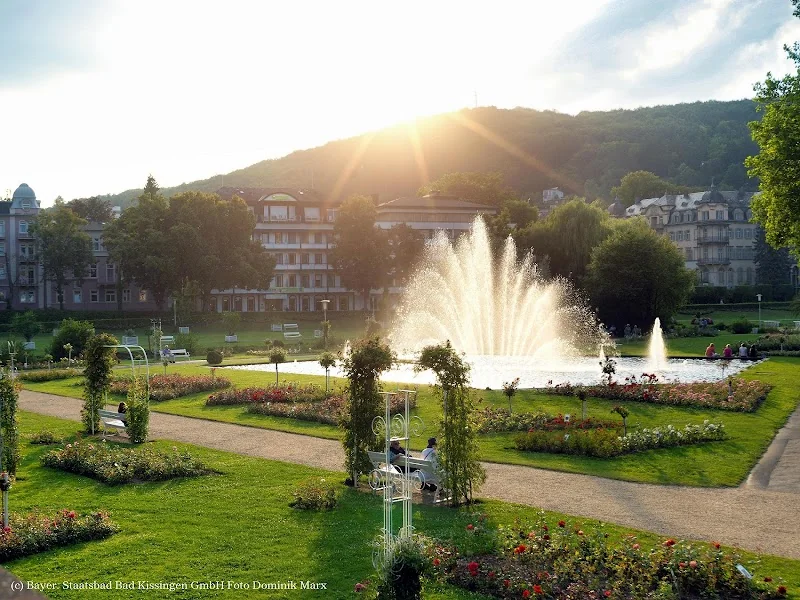
The Rosengarten in Bad Kissingen is one of those places where the cityscape, spa history, and daily use almost seamlessly overlap. When you arrive here, you are not faced with just any green space, but with a deliberately designed park that should provide a worthy forecourt to the northern front of the Regentenbau. The design comes from Friedrich Dessauer and shows how closely Bad Kissingen links its architecture, garden art, and identity as a traditional spa town. Today, the Rosengarten appears as an open entrance to this world: with sightlines, flower beds, fountains, and an urban space that invites slow walking, looking, and lingering. Particularly defining is the fan fountain, which was added in 1959 and quickly became one of the city's most famous landmarks. Those who know the place only as a photo motif miss the actual charm: the interplay of historical placement, well-kept garden architecture, and vibrant everyday life on the edge of the Regentenbau. ([welterbe.badkissingen.de](https://welterbe.badkissingen.de/welterbe-bad-kissingen/sehenswuerdigkeiten/41627.Rosengarten.html?utm_source=openai))
History and Regentenbau at the Rosengarten
The most important key to understanding the Rosengarten is its connection with the Regentenbau. The Regentenbau in the classicizing Art Nouveau style is the newest of the Kissinger spa buildings and was designed by Max Littmann to fit seamlessly into the environment with the arcade building. Its curved facades, monumental columns, and high-quality interior design show that this was not just built, but staged. The Rosengarten fits precisely into this urban planning concept: as a quiet, open forecourt that does not compete with the grandeur of the building but prepares for it. This makes the outdoor stay itself part of the experience. Standing between the facade, paths, and beds, one experiences a carefully coordinated sequence of space, view, and movement. The fact that the Regentenbau was extensively restored between 2003 and 2005 further underscores how seriously Bad Kissingen takes its historical building substance. The Rosengarten thus does not appear museum-like, but current and well-maintained, without losing its historical aura. ([welterbe.badkissingen.de](https://welterbe.badkissingen.de/welterbe-bad-kissingen/sehenswuerdigkeiten/41607.Regentenbau.html))
The design of the Rosengarten itself also deserves attention. The facility was commissioned by the city to organize and enhance the forecourt to the northern front of the Regentenbau. The fan fountain was added in 1959 and became a prominent point in the public memory of the city. During a later redesign, the flower beds were restored to their original geometric shape, which makes the character of the facility appear particularly clear and strict today. It is precisely this mixture of form, color, and water that makes the Rosengarten so attractive for a short visit, but also for a longer walk. It is not just a backdrop for the Regentenbau, but a standalone place with recognition value. For visitors, this creates a very typical Bad Kissingen feeling: cultivated aesthetics, historical depth, and an atmosphere that is neither loud nor overloaded. Those who want to understand the city should start here, as the Rosengarten vividly shows how spa architecture and open space planning were conceived together. ([welterbe.badkissingen.de](https://welterbe.badkissingen.de/welterbe-bad-kissingen/sehenswuerdigkeiten/41627.Rosengarten.html?utm_source=openai))
Musical Water Games and Multimedia Fountain in the Rosengarten
The Rosengarten is not only a historical place but also a stage for water performances. Officially, it is referred to as the multimedia fountain in the Rosengarten, and the city of Bad Kissingen uses it for various projector and music shows. The projector show Magic of the Rose gives the previous show on the fountain a new shine by combining imaginative images, bright colors, and atmospheric music. Particularly important for the visit is the viewing direction: the official recommendation names Ludwigstraße at the height of the Regentenbau as the best location. It is precisely there that the effect of distance and closeness unfolds most strongly, as one perceives water, light, and architecture in a common frame. The shows are therefore not random programs but a consciously curated experience space in the public urban space. In the evenings, the Rosengarten becomes a place where the calm garden area transforms into an atmospheric light experience. ([badkissingen.de](https://www.badkissingen.de/kultur/veranstaltungskalender?ev%5Bid%5D=131167&utm_source=openai))
Particularly well-known are the musical water games, where dancing water fountains and music pieces of different genres come together in harmonious choreographies in the fountain basin. According to official event information, they usually take place daily at 9, 12, 15, and 18 o'clock starting from April 19, with additional performances at 21 o'clock in the summer. There are also changing themes such as Geometry, Portal, or Bad Kissingen Sounds, which show that the multimedia fountain is not just a single spectacle but a changeable format. This is important for SEO and even more important for visitors: those specifically searching for programs, times, or shows will find a reliable point of contact for recurring experiences in the Rosengarten. At the same time, the facility remains seasonal and flexible, so that the visit always retains a slight element of surprise. This interplay of reliability and staging is one of the reasons why the Rosengarten is so often associated with events, evening moods, and photographic impressions. It offers no sensory overload but a finely tuned form of urban wonder. ([badkissingen.de](https://www.badkissingen.de/kultur/veranstaltungskalender?ev%5Bid%5D=137385&utm_source=openai))
Access and Parking around the Rosengarten
For many guests, the Rosengarten does not begin with the first view of the flower beds but with the question of access. The city of Bad Kissingen provides its own page for parking and refers to a parking overview for the entire city area. It explains that drivers can find the nearest parking option or the direct route to the city center. The municipal parking concept is important here: it was created to calm the city center, improve parking options, and reduce the burden of exhaust fumes and noise. For visitors to the Rosengarten, this means that the city center can be comfortably reached by car, but at the same time, one benefits from a clearly organized traffic structure. Especially if one wants to combine a visit to the Rosengarten with a stroll through the spa facilities or a visit to the Regentenbau, it is sensible to orient oneself to the official parking information. This allows for better planning of the stay and a more stress-free experience. ([badkissingen.de](https://www.badkissingen.de/information/parken/36452.Parken-in-Bad-Kissingen.html?utm_source=openai))
The official information mentions around 700 free parking spaces located about 10 to 15 minutes on foot from the city center on weekdays, as well as around 500 low-cost parking spaces in close proximity to the city center. Additionally, the city mentions other tariff zones and a parking concept with short-term and long-term options. This is especially practical for the Rosengarten because it is located in the urban core area, making it easy to integrate into a city center visit. Therefore, those searching for access to Bad Kissingen or parking in Bad Kissingen should not only look at the direct road space but at the entire urban offer. Another advantage: the city provides a route map with parking options for cars, coaches, and electric vehicles for download. This is particularly helpful for groups, tour operators, or visitors arriving with multiple people. Thus, the question of parking becomes a clearly structured start to the stay. ([badkissingen.de](https://www.badkissingen.de/information/parken/36452.Parken-in-Bad-Kissingen.html?utm_source=openai))
Accessibility and Toilets at the Rosengarten
The Rosengarten is not only beautifully located in Bad Kissingen but also integrated into practical visitor structures. The city points out that with individually bookable city tours, people with mobility restrictions can also discover the city center, the Rosengarten, and the spa facilities. Additionally, wheelchair spaces are offered for many concerts and theater performances, which is important for the entire event location. For the Rosengarten itself, local infrastructure is crucial: the city mentions a toilet at the Rosengarten under the wine shop at Ludwigstraße 1, with access from the Rosengarten. The toilet is accessible, a changing table is available, and the opening hours are generous during the day. This makes the place suitable not only for a short photo stop but also for a longer walk or an evening visit during the fountain show. For families, older guests, and people with limited mobility, this is a relevant added value, as the facility remains not only representative but truly usable. ([badkissingen.de](https://www.badkissingen.de/information/barrierefreiheit/barrierefreie-stadt?utm_source=openai))
Particularly helpful is that the accessible toilet at the Rosengarten is specifically named and well-documented for easy finding. The opening hours from 8 to 18 o'clock, from April to October until 21 o'clock, match the typical stay times in the park and the evening fountain experiences. The city also mentions other accessible toilets in the vicinity, including at the Ludwigsbrücke and at the entrance to the Rosengarten. For visitor logic, this means: those who stay in the Rosengarten do not have to leave the facility prematurely but can comfortably extend their stay. Especially in a spa town where movement, stay, and deceleration are so closely linked, such infrastructure is an important quality feature. Searches like accessible Bad Kissingen or toilet Rosengarten are thus clearly answered. The Rosengarten functions not only as a beautiful backdrop but as a well-accessible and well-equipped part of the public urban space. ([badkissingen.de](https://www.badkissingen.de/information/barrierefreiheit/barrierefreie-stadt?utm_source=openai))
Events, Tours, and Walking Paths around the Rosengarten
Those who visit the Rosengarten experience not only a park facility but also a starting point for tours and small discovery trips. The city offers barrier-free e-mobility tours from the Rosengarten to the Upper Saline. During this tour, the path through Bad Kissingen's salt and spa history is explained, including the Lower Saline, graduation tower, round fountain, and Upper Saline Museum. According to the event description, the tour starts and ends in front of the Seniorenwohl store in the Rosengarten at Balthasar-Neumann-Promenade 16. This is a very concrete indication for visitors that the Rosengarten in Bad Kissingen is not isolated but part of a larger pathway system. The official view of the city's history becomes tangible here: from the Rosengarten, the development of Bad Kissingen into a world spa can be vividly narrated. For this reason, the place is excellent for guests who want to see not only a beautiful facility but also experience city history while walking. ([badkissingen.de](https://www.badkissingen.de/kultur/veranstaltungskalender?ev%5Bid%5D=136732&utm_source=openai))
The Salinenpromenade is also closely connected to the Rosengarten. The official World Heritage site describes it as a route that leads from the Rosengarten or continues from Theresienstraße to the Upper Saline after nearly three kilometers. It is also mentioned there that the course of the route has remained unchanged since the 1840s, and some of the trees planted back then still stand today. This makes the walk particularly appealing for guests, as one does not just go from A to B but experiences a historically transmitted path experience. The Rosengarten is thus also a hub for themes such as history, spa, water, and movement. Even smaller actions, such as test drives with electric vehicles or information offers for seniors, use the place as a visible address at the edge of spa activities. This versatility strengthens its SEO relevance: Rosengarten, events Bad Kissingen, Balthasar-Neumann-Promenade, and history intersect here. Therefore, anyone looking for a place suitable for both a walk and a thematic tour is right in the Rosengarten. ([welterbe.badkissingen.de](https://welterbe.badkissingen.de/welterbe-bad-kissingen/sehenswuerdigkeiten/41631.Salinenpromenade.html?utm_source=openai))
Frequently Asked Questions about the Rosengarten Bad Kissingen
How do I describe the Rosengarten in one sentence? The Rosengarten is the historically designed park facility in front of the Regentenbau in Bad Kissingen, which complements the spa architecture of the city with fan fountains, flower beds, and fountain performances. ([welterbe.badkissingen.de](https://welterbe.badkissingen.de/welterbe-bad-kissingen/sehenswuerdigkeiten/41627.Rosengarten.html?utm_source=openai))
Is the Rosengarten more of a park or an event space? Both are correct, but the focus is on the park facility. At the same time, the multimedia fountain and the musical water games are used for regular shows, so the place also functions as an outdoor event space. ([badkissingen.de](https://www.badkissingen.de/kultur/veranstaltungskalender?ev%5Bid%5D=131167&utm_source=openai))
Which keywords are most relevant to the Rosengarten? Particularly relevant are Rosengarten Bad Kissingen, Regentenbau, multimedia fountain, musical water games, fan fountain, parking Bad Kissingen, access Bad Kissingen, accessible Bad Kissingen, and Balthasar-Neumann-Promenade. These terms cover the most important search intentions related to visit, orientation, and experience. ([badkissingen.de](https://www.badkissingen.de/information/parken/36452.Parken-in-Bad-Kissingen.html?utm_source=openai))
Where exactly is the Rosengarten located? The Rosengarten is located in Bad Kissingen at Balthasar-Neumann-Promenade in the vicinity of the Regentenbau. Its location makes it a central transition between the city center, spa facilities, and historical architecture. ([badkissingen.de](https://www.badkissingen.de/kultur/veranstaltungskalender?ev%5Bid%5D=112918&utm_source=openai))
Can you combine a walk with a visit to the Rosengarten? Yes, very well. The Salinenpromenade begins or connects at the Rosengarten and leads towards the Upper Saline; thus, the visit can be combined with a longer walk through the spa and landscape axes of the city. ([welterbe.badkissingen.de](https://welterbe.badkissingen.de/welterbe-bad-kissingen/sehenswuerdigkeiten/41631.Salinenpromenade.html?utm_source=openai))
Sources:
Mehr anzeigenWeniger anzeigen
Rosengarten Bad Kissingen | Musical Water Games & Parking
The Rosengarten in Bad Kissingen is one of those places where the cityscape, spa history, and daily use almost seamlessly overlap. When you arrive here, you are not faced with just any green space, but with a deliberately designed park that should provide a worthy forecourt to the northern front of the Regentenbau. The design comes from Friedrich Dessauer and shows how closely Bad Kissingen links its architecture, garden art, and identity as a traditional spa town. Today, the Rosengarten appears as an open entrance to this world: with sightlines, flower beds, fountains, and an urban space that invites slow walking, looking, and lingering. Particularly defining is the fan fountain, which was added in 1959 and quickly became one of the city's most famous landmarks. Those who know the place only as a photo motif miss the actual charm: the interplay of historical placement, well-kept garden architecture, and vibrant everyday life on the edge of the Regentenbau. ([welterbe.badkissingen.de](https://welterbe.badkissingen.de/welterbe-bad-kissingen/sehenswuerdigkeiten/41627.Rosengarten.html?utm_source=openai))
History and Regentenbau at the Rosengarten
The most important key to understanding the Rosengarten is its connection with the Regentenbau. The Regentenbau in the classicizing Art Nouveau style is the newest of the Kissinger spa buildings and was designed by Max Littmann to fit seamlessly into the environment with the arcade building. Its curved facades, monumental columns, and high-quality interior design show that this was not just built, but staged. The Rosengarten fits precisely into this urban planning concept: as a quiet, open forecourt that does not compete with the grandeur of the building but prepares for it. This makes the outdoor stay itself part of the experience. Standing between the facade, paths, and beds, one experiences a carefully coordinated sequence of space, view, and movement. The fact that the Regentenbau was extensively restored between 2003 and 2005 further underscores how seriously Bad Kissingen takes its historical building substance. The Rosengarten thus does not appear museum-like, but current and well-maintained, without losing its historical aura. ([welterbe.badkissingen.de](https://welterbe.badkissingen.de/welterbe-bad-kissingen/sehenswuerdigkeiten/41607.Regentenbau.html))
The design of the Rosengarten itself also deserves attention. The facility was commissioned by the city to organize and enhance the forecourt to the northern front of the Regentenbau. The fan fountain was added in 1959 and became a prominent point in the public memory of the city. During a later redesign, the flower beds were restored to their original geometric shape, which makes the character of the facility appear particularly clear and strict today. It is precisely this mixture of form, color, and water that makes the Rosengarten so attractive for a short visit, but also for a longer walk. It is not just a backdrop for the Regentenbau, but a standalone place with recognition value. For visitors, this creates a very typical Bad Kissingen feeling: cultivated aesthetics, historical depth, and an atmosphere that is neither loud nor overloaded. Those who want to understand the city should start here, as the Rosengarten vividly shows how spa architecture and open space planning were conceived together. ([welterbe.badkissingen.de](https://welterbe.badkissingen.de/welterbe-bad-kissingen/sehenswuerdigkeiten/41627.Rosengarten.html?utm_source=openai))
Musical Water Games and Multimedia Fountain in the Rosengarten
The Rosengarten is not only a historical place but also a stage for water performances. Officially, it is referred to as the multimedia fountain in the Rosengarten, and the city of Bad Kissingen uses it for various projector and music shows. The projector show Magic of the Rose gives the previous show on the fountain a new shine by combining imaginative images, bright colors, and atmospheric music. Particularly important for the visit is the viewing direction: the official recommendation names Ludwigstraße at the height of the Regentenbau as the best location. It is precisely there that the effect of distance and closeness unfolds most strongly, as one perceives water, light, and architecture in a common frame. The shows are therefore not random programs but a consciously curated experience space in the public urban space. In the evenings, the Rosengarten becomes a place where the calm garden area transforms into an atmospheric light experience. ([badkissingen.de](https://www.badkissingen.de/kultur/veranstaltungskalender?ev%5Bid%5D=131167&utm_source=openai))
Particularly well-known are the musical water games, where dancing water fountains and music pieces of different genres come together in harmonious choreographies in the fountain basin. According to official event information, they usually take place daily at 9, 12, 15, and 18 o'clock starting from April 19, with additional performances at 21 o'clock in the summer. There are also changing themes such as Geometry, Portal, or Bad Kissingen Sounds, which show that the multimedia fountain is not just a single spectacle but a changeable format. This is important for SEO and even more important for visitors: those specifically searching for programs, times, or shows will find a reliable point of contact for recurring experiences in the Rosengarten. At the same time, the facility remains seasonal and flexible, so that the visit always retains a slight element of surprise. This interplay of reliability and staging is one of the reasons why the Rosengarten is so often associated with events, evening moods, and photographic impressions. It offers no sensory overload but a finely tuned form of urban wonder. ([badkissingen.de](https://www.badkissingen.de/kultur/veranstaltungskalender?ev%5Bid%5D=137385&utm_source=openai))
Access and Parking around the Rosengarten
For many guests, the Rosengarten does not begin with the first view of the flower beds but with the question of access. The city of Bad Kissingen provides its own page for parking and refers to a parking overview for the entire city area. It explains that drivers can find the nearest parking option or the direct route to the city center. The municipal parking concept is important here: it was created to calm the city center, improve parking options, and reduce the burden of exhaust fumes and noise. For visitors to the Rosengarten, this means that the city center can be comfortably reached by car, but at the same time, one benefits from a clearly organized traffic structure. Especially if one wants to combine a visit to the Rosengarten with a stroll through the spa facilities or a visit to the Regentenbau, it is sensible to orient oneself to the official parking information. This allows for better planning of the stay and a more stress-free experience. ([badkissingen.de](https://www.badkissingen.de/information/parken/36452.Parken-in-Bad-Kissingen.html?utm_source=openai))
The official information mentions around 700 free parking spaces located about 10 to 15 minutes on foot from the city center on weekdays, as well as around 500 low-cost parking spaces in close proximity to the city center. Additionally, the city mentions other tariff zones and a parking concept with short-term and long-term options. This is especially practical for the Rosengarten because it is located in the urban core area, making it easy to integrate into a city center visit. Therefore, those searching for access to Bad Kissingen or parking in Bad Kissingen should not only look at the direct road space but at the entire urban offer. Another advantage: the city provides a route map with parking options for cars, coaches, and electric vehicles for download. This is particularly helpful for groups, tour operators, or visitors arriving with multiple people. Thus, the question of parking becomes a clearly structured start to the stay. ([badkissingen.de](https://www.badkissingen.de/information/parken/36452.Parken-in-Bad-Kissingen.html?utm_source=openai))
Accessibility and Toilets at the Rosengarten
The Rosengarten is not only beautifully located in Bad Kissingen but also integrated into practical visitor structures. The city points out that with individually bookable city tours, people with mobility restrictions can also discover the city center, the Rosengarten, and the spa facilities. Additionally, wheelchair spaces are offered for many concerts and theater performances, which is important for the entire event location. For the Rosengarten itself, local infrastructure is crucial: the city mentions a toilet at the Rosengarten under the wine shop at Ludwigstraße 1, with access from the Rosengarten. The toilet is accessible, a changing table is available, and the opening hours are generous during the day. This makes the place suitable not only for a short photo stop but also for a longer walk or an evening visit during the fountain show. For families, older guests, and people with limited mobility, this is a relevant added value, as the facility remains not only representative but truly usable. ([badkissingen.de](https://www.badkissingen.de/information/barrierefreiheit/barrierefreie-stadt?utm_source=openai))
Particularly helpful is that the accessible toilet at the Rosengarten is specifically named and well-documented for easy finding. The opening hours from 8 to 18 o'clock, from April to October until 21 o'clock, match the typical stay times in the park and the evening fountain experiences. The city also mentions other accessible toilets in the vicinity, including at the Ludwigsbrücke and at the entrance to the Rosengarten. For visitor logic, this means: those who stay in the Rosengarten do not have to leave the facility prematurely but can comfortably extend their stay. Especially in a spa town where movement, stay, and deceleration are so closely linked, such infrastructure is an important quality feature. Searches like accessible Bad Kissingen or toilet Rosengarten are thus clearly answered. The Rosengarten functions not only as a beautiful backdrop but as a well-accessible and well-equipped part of the public urban space. ([badkissingen.de](https://www.badkissingen.de/information/barrierefreiheit/barrierefreie-stadt?utm_source=openai))
Events, Tours, and Walking Paths around the Rosengarten
Those who visit the Rosengarten experience not only a park facility but also a starting point for tours and small discovery trips. The city offers barrier-free e-mobility tours from the Rosengarten to the Upper Saline. During this tour, the path through Bad Kissingen's salt and spa history is explained, including the Lower Saline, graduation tower, round fountain, and Upper Saline Museum. According to the event description, the tour starts and ends in front of the Seniorenwohl store in the Rosengarten at Balthasar-Neumann-Promenade 16. This is a very concrete indication for visitors that the Rosengarten in Bad Kissingen is not isolated but part of a larger pathway system. The official view of the city's history becomes tangible here: from the Rosengarten, the development of Bad Kissingen into a world spa can be vividly narrated. For this reason, the place is excellent for guests who want to see not only a beautiful facility but also experience city history while walking. ([badkissingen.de](https://www.badkissingen.de/kultur/veranstaltungskalender?ev%5Bid%5D=136732&utm_source=openai))
The Salinenpromenade is also closely connected to the Rosengarten. The official World Heritage site describes it as a route that leads from the Rosengarten or continues from Theresienstraße to the Upper Saline after nearly three kilometers. It is also mentioned there that the course of the route has remained unchanged since the 1840s, and some of the trees planted back then still stand today. This makes the walk particularly appealing for guests, as one does not just go from A to B but experiences a historically transmitted path experience. The Rosengarten is thus also a hub for themes such as history, spa, water, and movement. Even smaller actions, such as test drives with electric vehicles or information offers for seniors, use the place as a visible address at the edge of spa activities. This versatility strengthens its SEO relevance: Rosengarten, events Bad Kissingen, Balthasar-Neumann-Promenade, and history intersect here. Therefore, anyone looking for a place suitable for both a walk and a thematic tour is right in the Rosengarten. ([welterbe.badkissingen.de](https://welterbe.badkissingen.de/welterbe-bad-kissingen/sehenswuerdigkeiten/41631.Salinenpromenade.html?utm_source=openai))
Frequently Asked Questions about the Rosengarten Bad Kissingen
How do I describe the Rosengarten in one sentence? The Rosengarten is the historically designed park facility in front of the Regentenbau in Bad Kissingen, which complements the spa architecture of the city with fan fountains, flower beds, and fountain performances. ([welterbe.badkissingen.de](https://welterbe.badkissingen.de/welterbe-bad-kissingen/sehenswuerdigkeiten/41627.Rosengarten.html?utm_source=openai))
Is the Rosengarten more of a park or an event space? Both are correct, but the focus is on the park facility. At the same time, the multimedia fountain and the musical water games are used for regular shows, so the place also functions as an outdoor event space. ([badkissingen.de](https://www.badkissingen.de/kultur/veranstaltungskalender?ev%5Bid%5D=131167&utm_source=openai))
Which keywords are most relevant to the Rosengarten? Particularly relevant are Rosengarten Bad Kissingen, Regentenbau, multimedia fountain, musical water games, fan fountain, parking Bad Kissingen, access Bad Kissingen, accessible Bad Kissingen, and Balthasar-Neumann-Promenade. These terms cover the most important search intentions related to visit, orientation, and experience. ([badkissingen.de](https://www.badkissingen.de/information/parken/36452.Parken-in-Bad-Kissingen.html?utm_source=openai))
Where exactly is the Rosengarten located? The Rosengarten is located in Bad Kissingen at Balthasar-Neumann-Promenade in the vicinity of the Regentenbau. Its location makes it a central transition between the city center, spa facilities, and historical architecture. ([badkissingen.de](https://www.badkissingen.de/kultur/veranstaltungskalender?ev%5Bid%5D=112918&utm_source=openai))
Can you combine a walk with a visit to the Rosengarten? Yes, very well. The Salinenpromenade begins or connects at the Rosengarten and leads towards the Upper Saline; thus, the visit can be combined with a longer walk through the spa and landscape axes of the city. ([welterbe.badkissingen.de](https://welterbe.badkissingen.de/welterbe-bad-kissingen/sehenswuerdigkeiten/41631.Salinenpromenade.html?utm_source=openai))
Sources:
Rosengarten Bad Kissingen | Musical Water Games & Parking
The Rosengarten in Bad Kissingen is one of those places where the cityscape, spa history, and daily use almost seamlessly overlap. When you arrive here, you are not faced with just any green space, but with a deliberately designed park that should provide a worthy forecourt to the northern front of the Regentenbau. The design comes from Friedrich Dessauer and shows how closely Bad Kissingen links its architecture, garden art, and identity as a traditional spa town. Today, the Rosengarten appears as an open entrance to this world: with sightlines, flower beds, fountains, and an urban space that invites slow walking, looking, and lingering. Particularly defining is the fan fountain, which was added in 1959 and quickly became one of the city's most famous landmarks. Those who know the place only as a photo motif miss the actual charm: the interplay of historical placement, well-kept garden architecture, and vibrant everyday life on the edge of the Regentenbau. ([welterbe.badkissingen.de](https://welterbe.badkissingen.de/welterbe-bad-kissingen/sehenswuerdigkeiten/41627.Rosengarten.html?utm_source=openai))
History and Regentenbau at the Rosengarten
The most important key to understanding the Rosengarten is its connection with the Regentenbau. The Regentenbau in the classicizing Art Nouveau style is the newest of the Kissinger spa buildings and was designed by Max Littmann to fit seamlessly into the environment with the arcade building. Its curved facades, monumental columns, and high-quality interior design show that this was not just built, but staged. The Rosengarten fits precisely into this urban planning concept: as a quiet, open forecourt that does not compete with the grandeur of the building but prepares for it. This makes the outdoor stay itself part of the experience. Standing between the facade, paths, and beds, one experiences a carefully coordinated sequence of space, view, and movement. The fact that the Regentenbau was extensively restored between 2003 and 2005 further underscores how seriously Bad Kissingen takes its historical building substance. The Rosengarten thus does not appear museum-like, but current and well-maintained, without losing its historical aura. ([welterbe.badkissingen.de](https://welterbe.badkissingen.de/welterbe-bad-kissingen/sehenswuerdigkeiten/41607.Regentenbau.html))
The design of the Rosengarten itself also deserves attention. The facility was commissioned by the city to organize and enhance the forecourt to the northern front of the Regentenbau. The fan fountain was added in 1959 and became a prominent point in the public memory of the city. During a later redesign, the flower beds were restored to their original geometric shape, which makes the character of the facility appear particularly clear and strict today. It is precisely this mixture of form, color, and water that makes the Rosengarten so attractive for a short visit, but also for a longer walk. It is not just a backdrop for the Regentenbau, but a standalone place with recognition value. For visitors, this creates a very typical Bad Kissingen feeling: cultivated aesthetics, historical depth, and an atmosphere that is neither loud nor overloaded. Those who want to understand the city should start here, as the Rosengarten vividly shows how spa architecture and open space planning were conceived together. ([welterbe.badkissingen.de](https://welterbe.badkissingen.de/welterbe-bad-kissingen/sehenswuerdigkeiten/41627.Rosengarten.html?utm_source=openai))
Musical Water Games and Multimedia Fountain in the Rosengarten
The Rosengarten is not only a historical place but also a stage for water performances. Officially, it is referred to as the multimedia fountain in the Rosengarten, and the city of Bad Kissingen uses it for various projector and music shows. The projector show Magic of the Rose gives the previous show on the fountain a new shine by combining imaginative images, bright colors, and atmospheric music. Particularly important for the visit is the viewing direction: the official recommendation names Ludwigstraße at the height of the Regentenbau as the best location. It is precisely there that the effect of distance and closeness unfolds most strongly, as one perceives water, light, and architecture in a common frame. The shows are therefore not random programs but a consciously curated experience space in the public urban space. In the evenings, the Rosengarten becomes a place where the calm garden area transforms into an atmospheric light experience. ([badkissingen.de](https://www.badkissingen.de/kultur/veranstaltungskalender?ev%5Bid%5D=131167&utm_source=openai))
Particularly well-known are the musical water games, where dancing water fountains and music pieces of different genres come together in harmonious choreographies in the fountain basin. According to official event information, they usually take place daily at 9, 12, 15, and 18 o'clock starting from April 19, with additional performances at 21 o'clock in the summer. There are also changing themes such as Geometry, Portal, or Bad Kissingen Sounds, which show that the multimedia fountain is not just a single spectacle but a changeable format. This is important for SEO and even more important for visitors: those specifically searching for programs, times, or shows will find a reliable point of contact for recurring experiences in the Rosengarten. At the same time, the facility remains seasonal and flexible, so that the visit always retains a slight element of surprise. This interplay of reliability and staging is one of the reasons why the Rosengarten is so often associated with events, evening moods, and photographic impressions. It offers no sensory overload but a finely tuned form of urban wonder. ([badkissingen.de](https://www.badkissingen.de/kultur/veranstaltungskalender?ev%5Bid%5D=137385&utm_source=openai))
Access and Parking around the Rosengarten
For many guests, the Rosengarten does not begin with the first view of the flower beds but with the question of access. The city of Bad Kissingen provides its own page for parking and refers to a parking overview for the entire city area. It explains that drivers can find the nearest parking option or the direct route to the city center. The municipal parking concept is important here: it was created to calm the city center, improve parking options, and reduce the burden of exhaust fumes and noise. For visitors to the Rosengarten, this means that the city center can be comfortably reached by car, but at the same time, one benefits from a clearly organized traffic structure. Especially if one wants to combine a visit to the Rosengarten with a stroll through the spa facilities or a visit to the Regentenbau, it is sensible to orient oneself to the official parking information. This allows for better planning of the stay and a more stress-free experience. ([badkissingen.de](https://www.badkissingen.de/information/parken/36452.Parken-in-Bad-Kissingen.html?utm_source=openai))
The official information mentions around 700 free parking spaces located about 10 to 15 minutes on foot from the city center on weekdays, as well as around 500 low-cost parking spaces in close proximity to the city center. Additionally, the city mentions other tariff zones and a parking concept with short-term and long-term options. This is especially practical for the Rosengarten because it is located in the urban core area, making it easy to integrate into a city center visit. Therefore, those searching for access to Bad Kissingen or parking in Bad Kissingen should not only look at the direct road space but at the entire urban offer. Another advantage: the city provides a route map with parking options for cars, coaches, and electric vehicles for download. This is particularly helpful for groups, tour operators, or visitors arriving with multiple people. Thus, the question of parking becomes a clearly structured start to the stay. ([badkissingen.de](https://www.badkissingen.de/information/parken/36452.Parken-in-Bad-Kissingen.html?utm_source=openai))
Accessibility and Toilets at the Rosengarten
The Rosengarten is not only beautifully located in Bad Kissingen but also integrated into practical visitor structures. The city points out that with individually bookable city tours, people with mobility restrictions can also discover the city center, the Rosengarten, and the spa facilities. Additionally, wheelchair spaces are offered for many concerts and theater performances, which is important for the entire event location. For the Rosengarten itself, local infrastructure is crucial: the city mentions a toilet at the Rosengarten under the wine shop at Ludwigstraße 1, with access from the Rosengarten. The toilet is accessible, a changing table is available, and the opening hours are generous during the day. This makes the place suitable not only for a short photo stop but also for a longer walk or an evening visit during the fountain show. For families, older guests, and people with limited mobility, this is a relevant added value, as the facility remains not only representative but truly usable. ([badkissingen.de](https://www.badkissingen.de/information/barrierefreiheit/barrierefreie-stadt?utm_source=openai))
Particularly helpful is that the accessible toilet at the Rosengarten is specifically named and well-documented for easy finding. The opening hours from 8 to 18 o'clock, from April to October until 21 o'clock, match the typical stay times in the park and the evening fountain experiences. The city also mentions other accessible toilets in the vicinity, including at the Ludwigsbrücke and at the entrance to the Rosengarten. For visitor logic, this means: those who stay in the Rosengarten do not have to leave the facility prematurely but can comfortably extend their stay. Especially in a spa town where movement, stay, and deceleration are so closely linked, such infrastructure is an important quality feature. Searches like accessible Bad Kissingen or toilet Rosengarten are thus clearly answered. The Rosengarten functions not only as a beautiful backdrop but as a well-accessible and well-equipped part of the public urban space. ([badkissingen.de](https://www.badkissingen.de/information/barrierefreiheit/barrierefreie-stadt?utm_source=openai))
Events, Tours, and Walking Paths around the Rosengarten
Those who visit the Rosengarten experience not only a park facility but also a starting point for tours and small discovery trips. The city offers barrier-free e-mobility tours from the Rosengarten to the Upper Saline. During this tour, the path through Bad Kissingen's salt and spa history is explained, including the Lower Saline, graduation tower, round fountain, and Upper Saline Museum. According to the event description, the tour starts and ends in front of the Seniorenwohl store in the Rosengarten at Balthasar-Neumann-Promenade 16. This is a very concrete indication for visitors that the Rosengarten in Bad Kissingen is not isolated but part of a larger pathway system. The official view of the city's history becomes tangible here: from the Rosengarten, the development of Bad Kissingen into a world spa can be vividly narrated. For this reason, the place is excellent for guests who want to see not only a beautiful facility but also experience city history while walking. ([badkissingen.de](https://www.badkissingen.de/kultur/veranstaltungskalender?ev%5Bid%5D=136732&utm_source=openai))
The Salinenpromenade is also closely connected to the Rosengarten. The official World Heritage site describes it as a route that leads from the Rosengarten or continues from Theresienstraße to the Upper Saline after nearly three kilometers. It is also mentioned there that the course of the route has remained unchanged since the 1840s, and some of the trees planted back then still stand today. This makes the walk particularly appealing for guests, as one does not just go from A to B but experiences a historically transmitted path experience. The Rosengarten is thus also a hub for themes such as history, spa, water, and movement. Even smaller actions, such as test drives with electric vehicles or information offers for seniors, use the place as a visible address at the edge of spa activities. This versatility strengthens its SEO relevance: Rosengarten, events Bad Kissingen, Balthasar-Neumann-Promenade, and history intersect here. Therefore, anyone looking for a place suitable for both a walk and a thematic tour is right in the Rosengarten. ([welterbe.badkissingen.de](https://welterbe.badkissingen.de/welterbe-bad-kissingen/sehenswuerdigkeiten/41631.Salinenpromenade.html?utm_source=openai))
Frequently Asked Questions about the Rosengarten Bad Kissingen
How do I describe the Rosengarten in one sentence? The Rosengarten is the historically designed park facility in front of the Regentenbau in Bad Kissingen, which complements the spa architecture of the city with fan fountains, flower beds, and fountain performances. ([welterbe.badkissingen.de](https://welterbe.badkissingen.de/welterbe-bad-kissingen/sehenswuerdigkeiten/41627.Rosengarten.html?utm_source=openai))
Is the Rosengarten more of a park or an event space? Both are correct, but the focus is on the park facility. At the same time, the multimedia fountain and the musical water games are used for regular shows, so the place also functions as an outdoor event space. ([badkissingen.de](https://www.badkissingen.de/kultur/veranstaltungskalender?ev%5Bid%5D=131167&utm_source=openai))
Which keywords are most relevant to the Rosengarten? Particularly relevant are Rosengarten Bad Kissingen, Regentenbau, multimedia fountain, musical water games, fan fountain, parking Bad Kissingen, access Bad Kissingen, accessible Bad Kissingen, and Balthasar-Neumann-Promenade. These terms cover the most important search intentions related to visit, orientation, and experience. ([badkissingen.de](https://www.badkissingen.de/information/parken/36452.Parken-in-Bad-Kissingen.html?utm_source=openai))
Where exactly is the Rosengarten located? The Rosengarten is located in Bad Kissingen at Balthasar-Neumann-Promenade in the vicinity of the Regentenbau. Its location makes it a central transition between the city center, spa facilities, and historical architecture. ([badkissingen.de](https://www.badkissingen.de/kultur/veranstaltungskalender?ev%5Bid%5D=112918&utm_source=openai))
Can you combine a walk with a visit to the Rosengarten? Yes, very well. The Salinenpromenade begins or connects at the Rosengarten and leads towards the Upper Saline; thus, the visit can be combined with a longer walk through the spa and landscape axes of the city. ([welterbe.badkissingen.de](https://welterbe.badkissingen.de/welterbe-bad-kissingen/sehenswuerdigkeiten/41631.Salinenpromenade.html?utm_source=openai))
Sources:
Upcoming Events
Beamer Show "Portal"
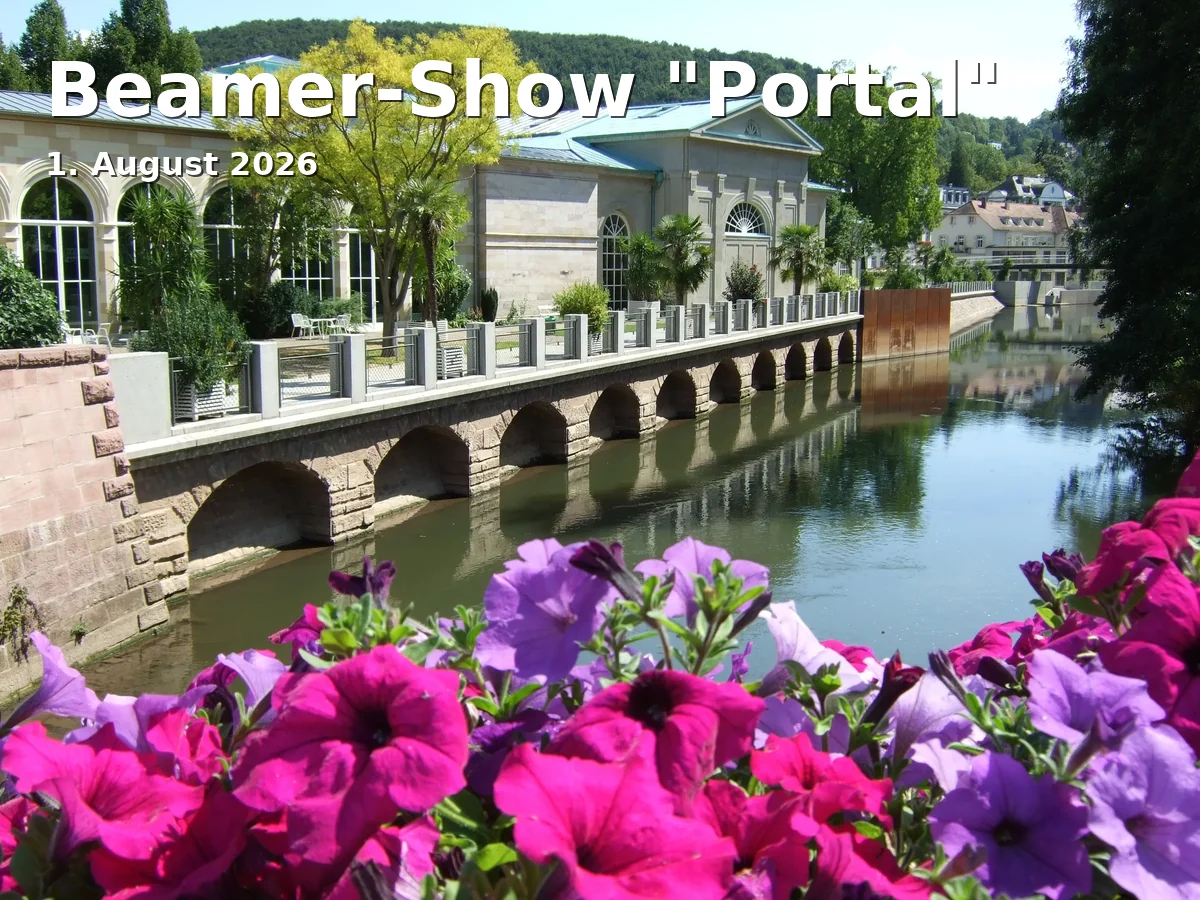
Experience the magical Beamer Show "Portal" at the Rosengarten in Bad Kissingen. Free admission.
Beamer Show 'Portal' in the Rosengarten
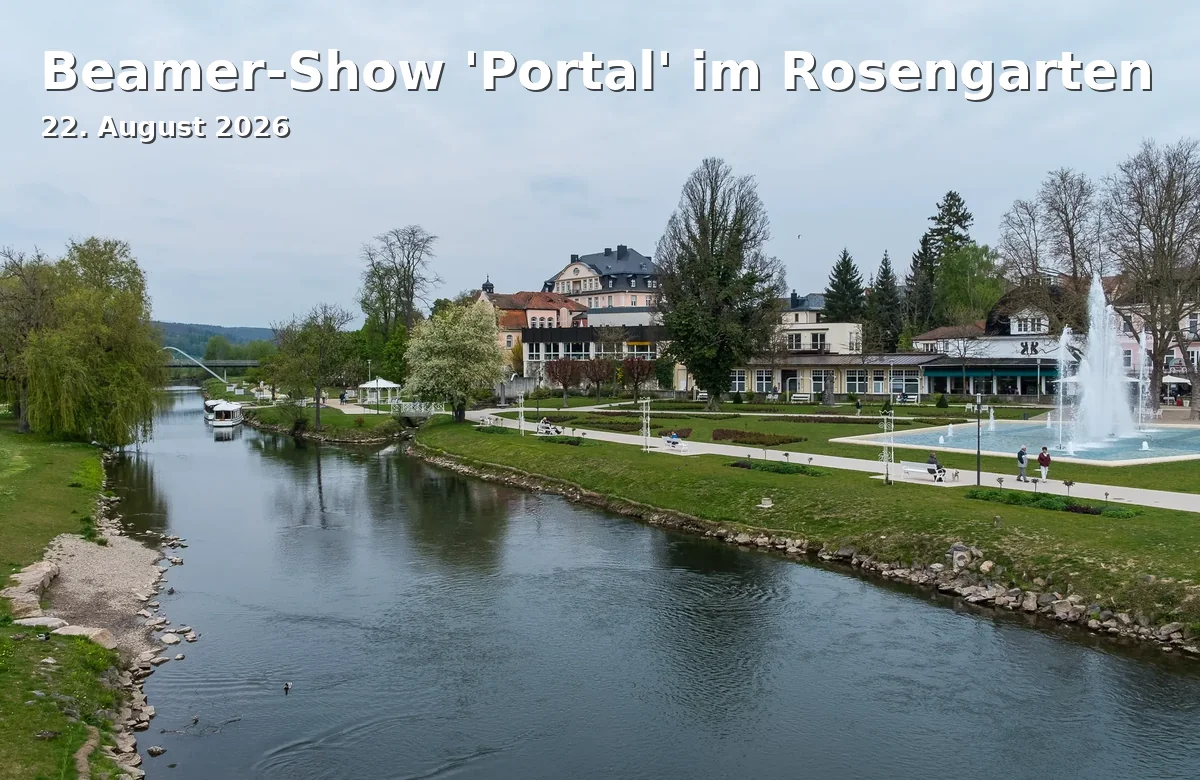
Don't miss the fascinating Beamer Show 'Portal' on August 22, 2026, in the Rosengarten. A journey through mystical worlds awaits you!
Beamer Show "Geometry"
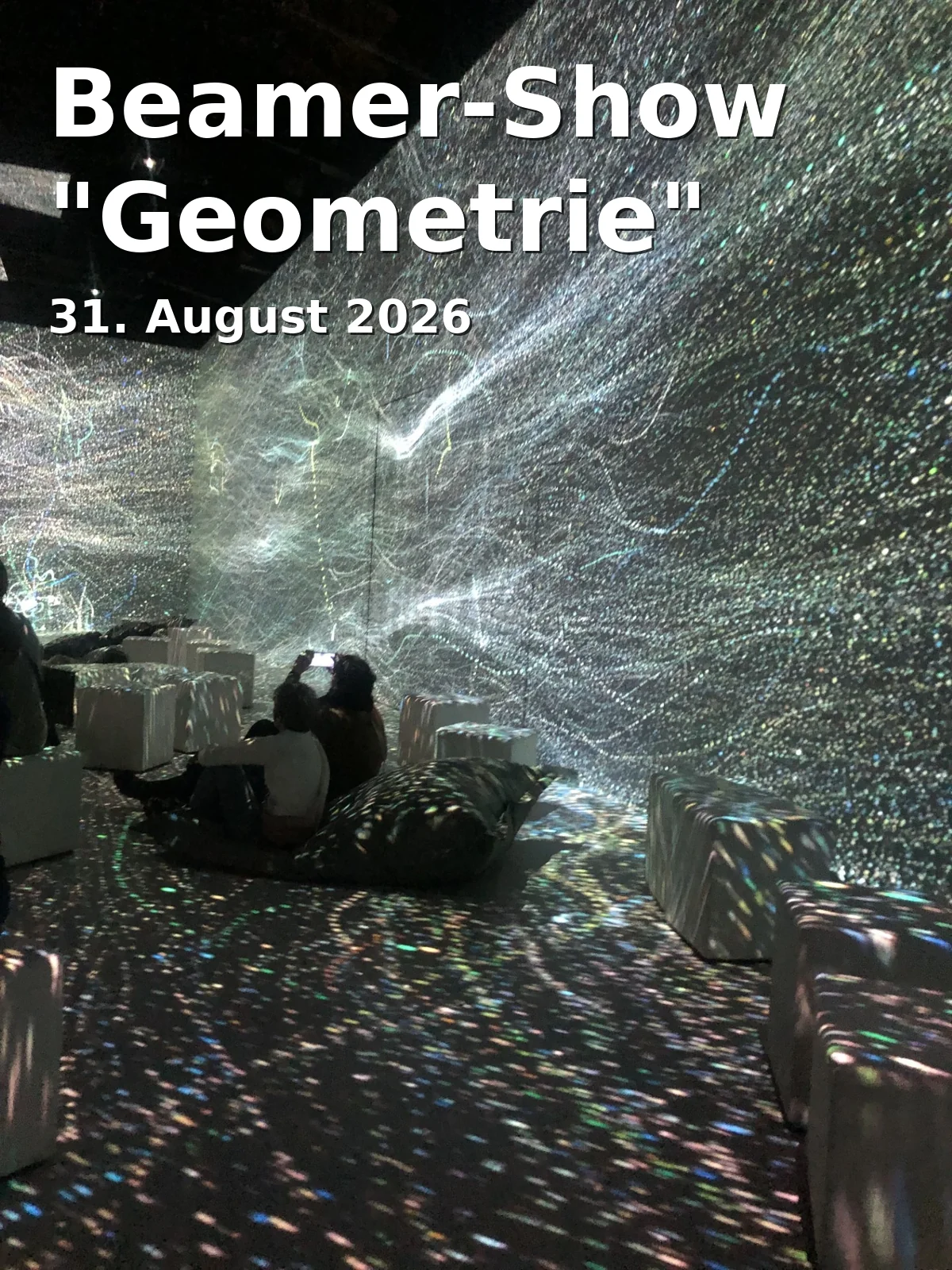
Experience the fascinating Beamer Show "Geometry" with light and music in the Rosengarten in Bad Kissingen. Admission free.
Frequently Asked Questions
Reviews
FAB
18. August 2025
Very nice garden, well kept and managed, nice people, mostly elderly because of many rehabilitation centers in the area.
Daniel O
24. July 2025
A large fan-shaped fountain and a very large park with many roses. On one side cafes and on the other the river. Very pretty.
Mariana Sánchez
10. July 2018
Amazing walk, relaxing. During the walk you can enjoy a nice view of the city. And so many different types of roses. The fountain makes it more beautiful. There are some restaurants and coffee shops on the side to sit and enjoy the view. There's a special boat ride along the park, very romantic.
Rudy Howard
26. March 2024
Beautiful park with many benches. Public bathroom was clean.
dimitar georgiev
8. March 2026
Beautiful little town.