Adjiri Odametey
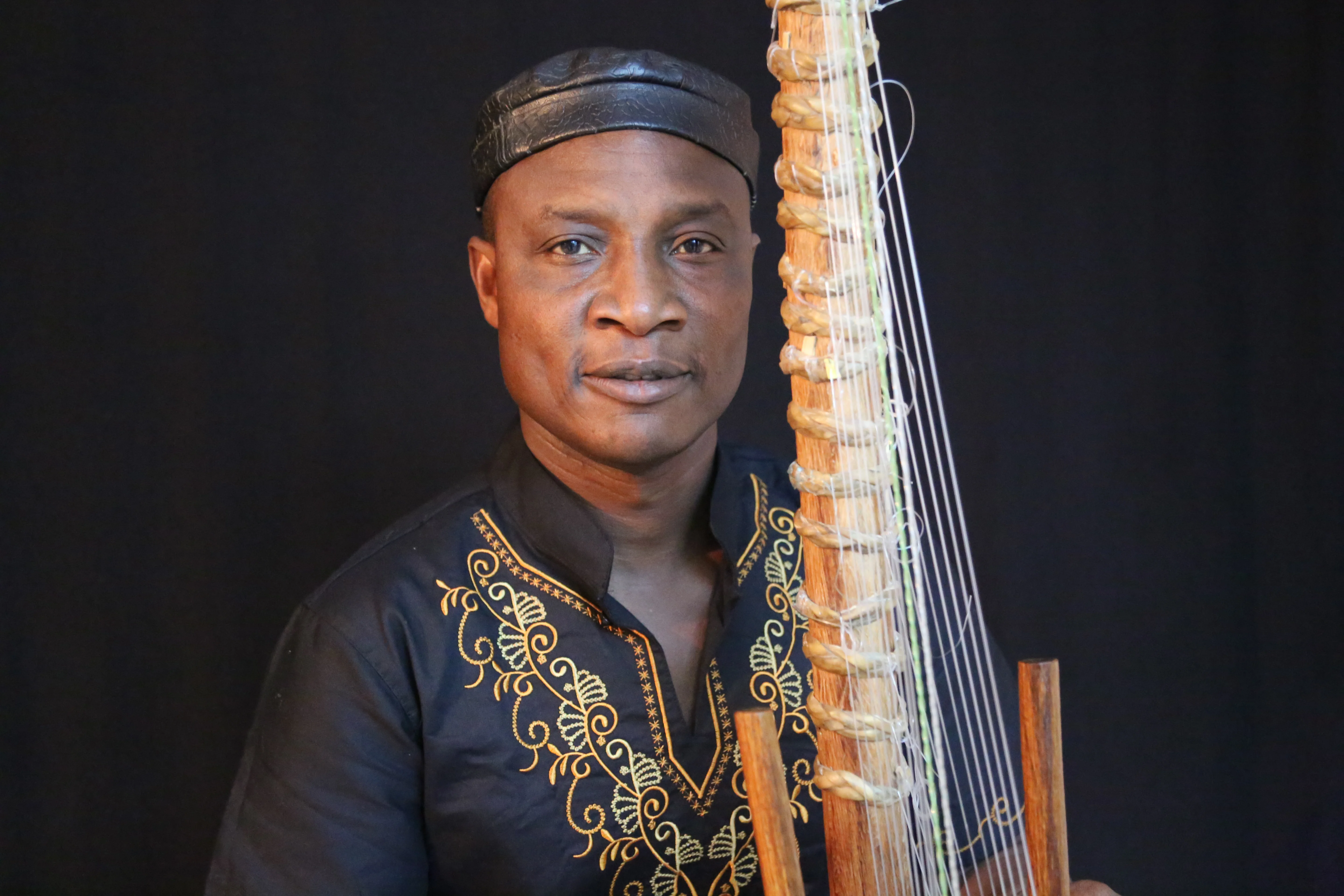
Image from Wikipedia
Image from Wikipedia
Adjiri Odametey – Ghana's Lyrical Soul of World Music
Like a Warm Wind from West Africa: The Sound World of the Multi-Instrumentalist
Born in 1963 in Accra (Ghana), Adjiri Odametey is regarded as one of the most impressive representatives of authentic African world music. His musical career connects deep roots in West African traditions with an open, contemporary sound language. As a singer, songwriter, and multi-instrumentalist with a distinctly warm, earthy voice, he unfolds an artistic development that has captivated audiences and critics for years. Using the Kora, Balafon, Mbira, and Kalimba, as well as guitar and percussion, he creates melodies and grooves that oscillate between contemplative elegance and pulsating joy of life – music as a bridge between continents.
Early Years in Accra: Tradition as Foundation
Growing up in the vibrant metropolis of Accra, Odametey discovered his love for sound and rhythm early on. He studied traditional music at the Arts Council of Ghana – a formative cornerstone for his later compositional thinking, arrangements, and his still palpable stage presence. The combination of structured learning culture and everyday practice of West African percussion shaped his timing, sense of melody, and the fine articulation of polyrhythms. From this school, he developed a refined understanding of ensemble sound that continues to define his own production and live arrangements today.
Ensembles, Tours, Awards: The International Horizon
Before emerging as a solo artist, Odametey gained experience in renowned formations. He played in the Pan African Orchestra, whose debut album “Opus 1” was released on Peter Gabriel's label Real World – a historically significant milestone in African orchestral culture. Other stops included the Ghana Dance Ballet, Tarantula, the Kalifi Dance Ensemble, and Kyirem; with the latter ensemble, he won the ECRAG Award twice in Ghana. International tours have taken him to Japan, Canada, Russia, Alaska, and numerous European countries. These global impressions are reflected in his sound language: Odametey integrates influences without diluting his origins – he thinks African and arranges with a global outlook.
From LASU to His Own Band: The Step to Artistic Authorship
In 1993, he founded his first own band, LASU, an important step towards a clearly defined artist identity. Since 2003, he has presented world music concerts with his own ensemble, continuously refining his repertoire between song forms, instrumental miniatures, and danceable patterns. The concerts thrive on changes in dynamics, the dialogic interplay of voice and string instruments, as well as a dramaturgically wisely structured percussion architecture. This authorship – composition, arrangement, and performance from a single hand – provides the live experience with high coherence and emotional depth.
Instrumentation and Sound Architecture: Kora, Balafon, Mbira, Kalimba
Odametey's discography and stage work are characterized by a consciously acoustic, organic sound design. The Kora, a West African harp, provides arpeggiated patterns and singable lines; the Balafon – with gourds as resonators – structures the groove in warm wooden timbres. Mbira and Kalimba contribute glassy, repetitive figures that enter into call-and-response with the vocal melody. Guitar and light percussion add harmonic texture and fine details. Thus, a production is created that does without excessive studio technology but appears very precisely composed in the balance of overtone spectrum, transients, and reverberation spaces.
Discography: Milestones Between Debut and Maturity
His debut album “Mala” (2006, africmelo records) defined the lyrical core of his songwriting and brought the title track forward as a signature track. With “Etoo” (2008, Galileo Music), he opened the palette towards groove-oriented arrangements and melodic expansiveness. In the same year, he released the didactic work “Teach yourself: Gigbo – Waka – Kpanlogo,” which makes traditional rhythm concepts accessible – evidence of his expertise and educational ambition. In 2014, “Dzen” (africmelo records) followed – “Dzen” means “world” – as an artistically closed album with elegant interweaving of vocals, Kora figures, and Balafon-driven rhythms. 2019 marked “Rhythm For Life,” which offered a percussion-focused perspective, while “Ekonklo” (2021) is regarded as a mature panorama of his sound language: concentrated in grooves, melodically suggestive, finely balanced in arrangement.
Singles, Formats, Distribution: Between Studio Album and Teaching Material
In addition to studio albums, Odametey has released standalone tracks such as “Fire Fire” (2020) and single releases from “Dzen.” The availability of his works on international platforms – including Apple Music, Amazon Music, and Spotify – has increased visibility in curated playlists and enabled continuous listener engagement beyond classical album cycles. This hybrid release strategy of long players, individual tracks, and a teaching material supports both reception and knowledge transfer – a synthesis of art and education.
Composition, Arrangement, Production: Craftsmanship and Handwriting
Musically, Odametey prefers pentatonically influenced melodies and cyclical rhythm structures, which he intertwines with modal harmonics and delicate counter-melodies. In production, he always keeps the voice as the primary bearer of emotion in focus. The arrangements work with layering but never with overloading: bass function through low Balafon tones or ostinato thumb piano patterns, above which Kora arpeggios shimmer, occasionally punctuated by guitar for harmonic expansion. This economy of means creates transparency – a sound picture that shines on good systems and touches live audiences directly.
Stage Presence and Current Activities: Tours 2025–2026
His stage presence is characterized by concentrated calm, narrative moderation, and inviting the audience to sing along – even though he often sings in Ga, a widely spoken language in Accra. From 2025 to 2026, Odametey was and will be on tour with his band in Germany and Switzerland; event announcements and program magazines confirm performances, including in Schweinfurt and Herne. This active live work emphasizes his role as an ambassador of intercultural encounters: concert dramaturgies that are thoughtfully constructed ground the virtuosity in a direct, human communication.
Critical Reception, Echo of the Music Press and Awards
Odametey has repeatedly been highlighted in the German-speaking press as the poetic voice of African music. Reports and event announcements quote the praises of major daily newspapers about his “expressive music” and a pull effect that can “make one addicted.” This resonance aligns with his discographic profile: beauty of sound without kitsch, emotion without pathos, craftsmanship without self-indulgence. Additionally, he has received two ECRAG awards (with Kyirem) from Ghana – a testament to how much his artistic ethos resonates in both local and international contexts.
Style and Genre: Authentic African World Music Instead of Clichés
In the genre spectrum of world music, Odametey occupies a position that combines authenticity and openness. He uses traditional instruments not as exotic decoration, but as compositional partners. This creates grooves that breathe and vocal melodies that remain in memory. His pieces interweave African rhythm families – such as Kpanlogo and Waka patterns – with song-friendly forms, yet always rest in the timbre of the voice. The result: globally comprehensible music that nevertheless sounds unmistakably West African.
Cultural Influence and Mediation: Building Bridges, Sharing Knowledge
In addition to concert and studio work, Odametey is engaged as a cultural mediator. The teaching material “Teach yourself: Gigbo – Waka – Kpanlogo” makes complex rhythms accessible and promotes intercultural music education. His concerts are often designed as meeting spaces: brief explanations of instruments, rhythms, and languages open ears and horizons. In times of global pop networking, Odametey claims an independent place: he shows how traditions remain alive when they are nurtured with respect, craftsmanship, and contemporary production.
Voices of the Fans
The digital resonance reflects ongoing interest: streaming numbers, follows, and playlist presences document how Odametey's music reaches new listeners worldwide. Especially platforms featuring curated world music formats contribute to titles like “Mala,” “Tesàa,” or “Savannah Swing” being discovered far from conventional distribution channels. Fan reactions clearly show: Adjiri Odametey delights people globally – with melodies that touch and rhythms that connect.
Conclusion: Why You Should Experience Adjiri Odametey Now
Adjiri Odametey represents an artistic development that unites experience, expertise, and reliability: a discography with a clear signature, mature craftsmanship in composition, and a live experience that creates closeness. Those seeking world music beyond clichés will find carefully produced albums that shine even after years, and concerts that touch and captivate. Recommendation: experience live – for the warmth of his voice, the subtle dynamics of his arrangements, and the quiet sovereignty of his stage presence.
Official Channels of Adjiri Odametey:
- Instagram: No official profile found
- Facebook: No official profile found
- YouTube: No official profile found
- Spotify: https://open.spotify.com/artist/3dLzGMLvGRLoZgMHEV9Fhg
- TikTok: No official profile found
Sources:
- Wikipedia – Adjiri Odametey (Biography, Discography)
- Official Website – Adjiri Odametey
- Real World Records – Pan African Orchestra: Opus 1
- Spotify – Adjiri Odametey (Profile, Reach)
- Apple Music – Adjiri Odametey (Albums, Singles)
- Amazon Music – Ekonklo (Album Details)
- Amazon Music – Keje Shong (Tracklist “Dzen”)
- 25music – Catalog Entries (Release Dates)
- Main-Post – Event Announcement 2025
- Kunstverein Schollbrockhaus Herne – Concert Announcement 27.02.2026
- Wikipedia: Image and Text Source
Upcoming Events
Adjiri Odametey – African World Music
Adjiri Odametey – African World Music
Adjiri Odametey – African World Music
Adjiri Odametey live at Leierkasten Dachau
Adjiri Odametey – African World Music
Adjiri Odametey – Concert
Adjiri Odametey with Band in Traunstein