
Antti Siirala
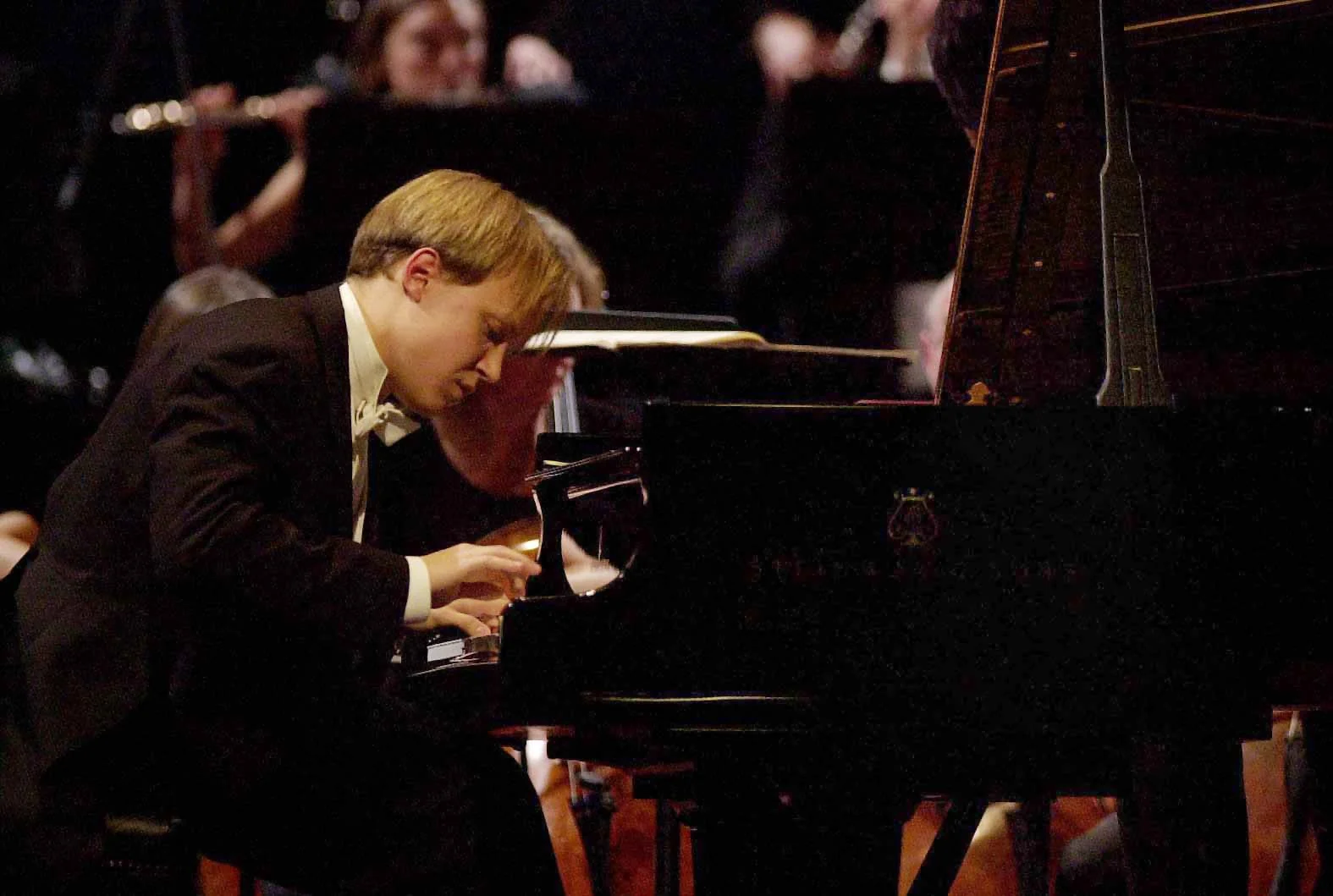
Image from Wikipedia
Image from Wikipedia
Antti Siirala – The Finnish Pianist Who Combines Virtuosity with Depth
An Artist Portrait That Makes Sound Colors, Career Highlights, and Cultural Context Tangible
Antti Aleksi Siirala, born on May 16, 1979, in Helsinki, is one of the most prominent pianists of his generation. His music career combines competitive triumphs, mature artistic development, and a stage presence that is as controlled as it is electrifying. At the heart of his artistic work lies the German Classical and Romantic repertoire, particularly Beethoven and Brahms, supplemented by a conscious commitment to contemporary music. This creates a profile that merges historical stylistic confidence with a curious presence— a pianist who explores sound shaping, awareness of form, and nuanced articulation in exemplary balance. (en.wikipedia.org)
Early Influences and Education: From Helsinki to the International Stage
Siirala received his training at the Sibelius Academy in Finland—a setting that fosters high technical standards alongside aesthetic independence. Early on, his special relationship with tone culture and structure became apparent; his playing combines richly colored soundscapes with intellectually clear phrasing. This artistic development was supported by renowned teachers and an academic context that intertwines tradition with innovation. Later, Siirala returned as a professor to the Sibelius Academy, thus consistently passing on his pedagogical expertise to the next generation. (uniarts.fi)
Competition Successes as a Career Starter: From the Beethoven Prize to Leeds
The pianist's international career took off in 1997 when he won the 10th International Beethoven Piano Competition in Vienna as the youngest participant—also awarded for the best interpretation of a late Beethoven sonata. He followed this with the London International Piano Competition (2000), the Dublin International Piano Competition (2003), and the prestigious Leeds International Piano Competition (2003). This series of notable successes laid the foundation for invitations to significant concert halls and shaped Siirala's profile as an interpreter with uncompromising insight into the works. (en.wikipedia.org)
The "Substitute" Who Impressed: Stage Presence Under Pressure
A hallmark of his musical career has been his poise when stepping in on short notice for prominent colleagues. In 2004, in Brussels, Siirala took over the orchestra's leadership from the piano at a debut due to the conductor's illness and performed the second half of the concert alone with Beethoven's Diabelli Variations—a calling card of musical authority. From 2005 to 2007, he substituted for Emanuel Ax, Hélène Grimaud, Ivo Pogorelich, Michail Pletnjow, and Yefim Bronfman—performances that impressively demonstrated his stage presence and resilience under pressure, earning him lasting recognition from audiences and the press. (hmtm.de)
Artistic Development: Core Repertoire of Beethoven/Brahms – Looking Ahead
Beethoven and Brahms form the stylistic core of his discography and programming. At the same time, Siirala consistently opens up to the present: he performed the world premiere of Kalevi Aho's new piano concerto and integrated works such as Kaija Saariaho's "Ballade" into his recital repertoire. This dual perspective—historically informed and contemporaneously aware—makes his interpretive approach appealing to orchestras, festivals, and chamber music partners who seek stylistic integration. (hmtm.de)
International Stages and Festivals: From Berlin to New York
Siirala has performed in significant piano series and concert halls: Berlin Philharmonie, Lucerne Festival, Piano Festival Ruhr, Cologne Philharmonie, Wigmore Hall London, Concertgebouw Amsterdam, Metropolitan Museum New York, and Tonhalle Zurich. Residencies such as the three-year "Young Wild" series at the Konzerthaus Dortmund made his artistic development tangible over several seasons and provided space for curatorially stringent programming. These stages have sharpened his profile as an artist who convincingly combines sound culture, dramaturgy, and the broad impact of repertoire. (kirchnermusikmanagement.de)
Recent Projects, Orchestra Contacts, and Pedagogy
Recent highlights included debuts with the Württembergische Philharmonie Reutlingen, the Lithuanian Chamber Orchestra, and the Qatar Philharmonic Orchestra; he also returned to ensembles like the NDR Radiophilharmonie Hannover and the Deutsche Radio Philharmonie. For upcoming seasons, re-invitations to European orchestras are anticipated. Meanwhile, Siirala has shaped the training at the Hochschule für Musik und Theater München as a piano professor (since the 2013/2014 academic year) and is actively involved in masterclasses internationally. This dual role—stage and professorship—anchors his expertise equally in the concert hall and the classroom. (kirchnermusikmanagement.de)
Discography: From Competition Profile to Editorially Honored Reference
Siirala's discography documents a journey from the competition stage to the canon of editorially recommended recordings. Early recordings featuring transcriptions of Schubert and Brahms were awarded "Editor's Choice" in Gramophone, recognizing not only technical perfection but also the interpretive coherence of his readings. In addition to the album "Piano Recital: Antti Siirala," there are recordings of the late Beethoven sonatas (AVI-Music) and Beethoven's Triple Concerto—together with The Knights, Colin Jacobsen, and Jan Vogler—on Sony. Further releases from Naxos refine his repertoire profile towards Romantic piano lyricism. (en.wikipedia.org)
Chamber Music and Artistic Partnerships
Chamber music plays a significant role in Siirala's artistic development. Collaborations with partners such as Carolin Widmann, Baiba Skride, Lawrence Power, Tanja Tetzlaff, Jan Vogler, and Sharon Kam highlight his sensitive understanding of sound balance, dialogism, and tonal depth. The ability to connect soloistic sound with chamber musical transparency also shapes his orchestral work, where rich color and structural clarity intertwine. (kirchnermusikmanagement.de)
Stylistic Analysis: Sound Ideals, Structural Thinking, and Narrative Form
Technically sovereign, tonally nuanced: Siirala's playing unfolds a spectrum of legato culture, consciously weighted agogics, and articulatory precision. His interpretations of Beethoven shine through structural clarity—theme seeds emerge clearly, and form arcs remain tense without tipping into mere virtuoso rhetoric. In Brahms, he reads the texture more orchestrally without losing polyphonic clarity. In contemporary music, analytical elegance shines through: rhythmic configurations and harmonic layers are experienced as dramatic breath, not as academic dry exercises. (kirchnermusikmanagement.de)
Cultural Influence and Reception
Siirala’s status as one of the most prominent Finnish pianists of his generation is evidenced by the ongoing resonance in the specialized press and in curatorial invitations from leading institutions. Critics have repeatedly highlighted his "intelligent" and "nuanced" interpretations, as well as his ability to fill great cyclical architectures with eloquent sound. The international scope of his career—spanning from Central Europe to North America—grants his playing a cultural mediation force between tradition and the present, score and audience. (kirchnermusikmanagement.de)
Teaching, Masterclasses, and Artistic Responsibility
Besides the stage, Siirala is engaged in teaching—at the HMTM in Munich and at the Sibelius Academy in Helsinki. Masterclasses in Europe, Asia, and the USA attest to how he conveys interpretive experience and pianistic methodology: sound conception, economic technique, pedaled transparency, and the integration of historical performance practice with contemporary sound aesthetics. This pedagogy follows an artistic ethos: musical integrity, service to the work, and personal voice as goals of artistic development. (hmtm.de)
Current Activities and Media Presence
As a sought-after concert pianist and educator, Siirala remains present in programs, juries, and seminars; selected masterclasses and institutional profiles document this work. For concert organizers, students, and the interested public, this results in a transparent picture of his artistic agenda—between repertoire maintenance, contemporary accents, and sustainable support for the next generation. (medici.tv)
Conclusion: Why Listen to Antti Siirala – and Experience Him Live?
Antti Siirala combines pianistic mastery with an interpretive signature that unites awareness of form, richness of color, and narrative breath. His discography showcases an artist who understands editorial accolades not as trophies, but as a commitment to musical truth. Anyone who wants to experience piano music as a vibrant art form between tradition and the here and now should hear Siirala live: In his playing, structure and sensuality, archive and departure, score and present come together to create a touching experience. (kirchnermusikmanagement.de)
Official Channels of Antti Siirala:
- Instagram: No official profile found
- Facebook: No official profile found
- YouTube: No official profile found
- Spotify: No official profile found
- TikTok: No official profile found
Sources:
- Kirchner Musikmanagement – Artist Profile Antti Siirala
- Hochschule für Musik und Theater München – Prof. Antti Siirala
- Uniarts Helsinki (Sibelius Academy) – Antti Siirala
- Wikipedia (EN) – Antti Siirala
- Konzerthaus Dortmund – Biography/Program Book
- medici.tv – Master Class with Antti Siirala
- Wikipedia: Image and Text Source
Upcoming Events
Masterclass Piano of the International Music Academy Munich
Master Class Piano of the International Music Academy Munich
Masterclass Piano of the International Music Academy Munich
Final Concert Masterclass Piano