
Bonnie und Clyde
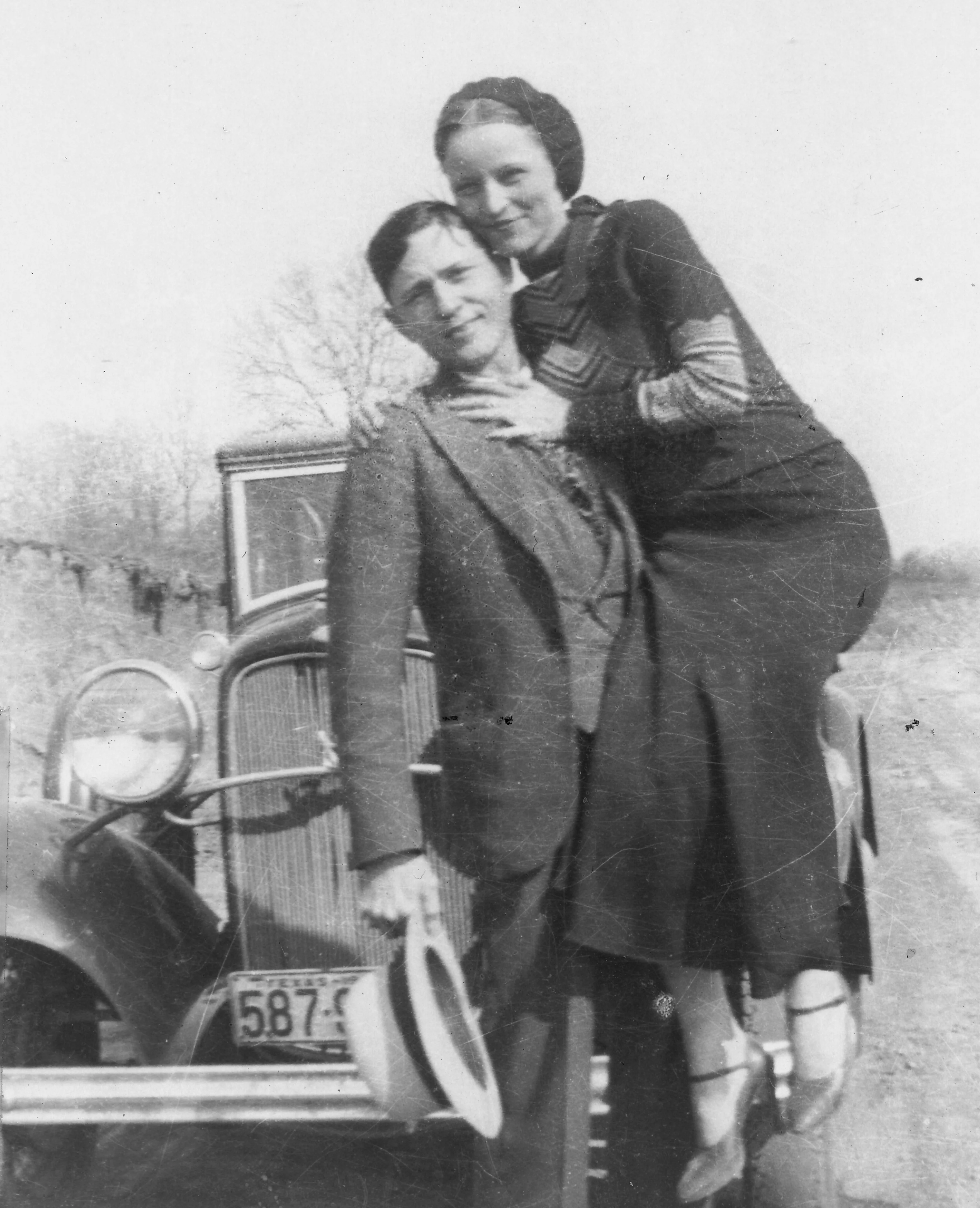
Image from Wikipedia
Image from Wikipedia
Bonnie and Clyde – The Notorious Duo that Shaped America
Between the Great Depression, Myth, and Pop Culture: The Story of Bonnie Parker and Clyde Barrow
Bonnie and Clyde remain one of the most famous criminal partnerships of the 20th century. Bonnie Elizabeth Parker, born in 1910, and Clyde Chestnut Barrow, born in 1909, became legends in the United States during the Great Depression, transcending the boundaries of criminal history. Their names are associated with violence, escape, media hype, and a myth deeply embedded in American culture.
The two traveled through the Midwest and the South of the United States between 1932 and 1934. Together with accomplices, they robbed small businesses, gas stations, and banks, often yielding little loot but generating enormous media impact. Their ruthlessness, the pursuit by authorities, and their ending in Louisiana made them symbols of an era defined by fear and sensationalism.
The Beginnings: Two Lives from Texas
Bonnie Parker was born in Rowena, Texas, and Clyde Barrow in Telico, also in Texas. Both came from impoverished backgrounds marked by economic instability and social tensions. At a time when the Great Depression strained millions, two outcasts came together, their shared path soon becoming a chronicle of American crime.
Their relationship developed against a backdrop of instability, rebellion, and escape. The later myth of Bonnie and Clyde is based not only on their deeds but also on their portrayal as an inseparable couple. This blend of romance and violence turned their name into a lasting symbol in pop culture and media history.
Crime as a Road Movie of the Crisis
Between 1932 and 1934, Bonnie and Clyde, together with other members of the Barrow Gang, committed a series of armed robberies. Their targets were often small rural establishments such as grocery stores and gas stations; while banks were also involved, the large sums often eluded them. The crimes spanned several states, presenting authorities with a challenge that was particularly difficult in police work at the time due to poor communication across state lines.
The FBI took notice of the duo early on, initially due to the transport of a stolen car. The manhunt subsequently expanded as Bonnie and Clyde were linked to robbery, murder, kidnapping, and car theft. Their escape turned into a chase through the American South, increasingly reminiscent of a dark criminal myth.
Media Escalation and Public Fascination
Bonnie and Clyde were not just perpetrators but also images of their time. Photos of the couple, their weapon stances, and the demonstrative coldness of their self-presentation amplified public horror as well as curiosity. In the press of the 1930s, they became symbolic figures of an era when criminals were often perceived with almost mythical presence.
This mixture of brutality and glamour made the duo immortal. The coverage gave their names a cultural resonance that extended far beyond police records. Bonnie and Clyde became the epitome of the "Public Enemy" era, where criminal biographies became the fabric of national narratives.
The Final Act: The End in Louisiana
On May 23, 1934, the couple was ambushed and killed by police officers in Bienville Parish, Louisiana. According to the FBI, at that time Bonnie and Clyde were responsible for numerous murders; authorities assumed there were 13 victims. Their violent deaths not only ended their flight but also sealed the legend of a couple whose story was instantly engraved in American memory culture.
The final phase of their pursuit illustrates how closely intertwined crime history and state power were during this era. The manhunt, the takedown, and the public reaction to their deaths reinforced the image of a duo that was as feared as it was admired. From a real criminal case, a lasting myth with a dark allure emerged.
Cultural Influence: From Criminal Chronicle to Pop Icon
The name Bonnie and Clyde continues to exist today primarily as a cultural symbol. In film, television, literature, and music, the couple reappears, often as an image of romanticized rebellion, dangerous loyalty, or fateful partnership. Particularly in music, their name has become a motif representing transgression and dramatic bonding.
Notable musical references include songs by Serge Gainsbourg and Brigitte Bardot, Georgie Fame, Mel Tormé, Merle Haggard, Die Toten Hosen, Jay-Z and Beyoncé, as well as Bastille. These titles illustrate how strongly the duo functions as a cultural sign: not as a role model, but as a canvas for stories about closeness, risk, and self-destruction. The term "Bonnie and Clyde" is now firmly embedded in everyday language, often describing a couple with uncompromising loyalty.
Why Bonnie and Clyde Still Fascinate Today
Bonnie and Clyde captivate because their story touches on multiple levels: social history, media history, crime, and pop mythology. They embody the dark side of the American ideal of freedom and show how quickly real violence can produce a lasting myth. Thus, their story is not just a criminal case but a reflection of the 1930s and its collective anxieties.
Anyone interested in American history, true crime narratives, and the emergence of modern legends will find one of the most defining cases here. Bonnie and Clyde remain a subject for books, films, songs, and debates about glorification and reality. This very ambivalence makes their name so powerful and unforgettable.
Conclusion
Bonnie and Clyde are far more than a notorious criminal couple. Their story intertwines violence and romance, escape and media spectacle, historical reality and cultural resonance. Anyone interested in the darker sides of the American myth encounters a case of extraordinary allure that still resonates today.
The fascination with Bonnie and Clyde lies in their blend of tragedy, speed, and symbolism. It is precisely this that keeps their story so present. To understand the cultural dimension of this myth, one should delve deeper into their traces in film, music, and memory culture.
Official Channels of Bonnie and Clyde:
- Instagram: No official profile found
- Facebook: No official profile found
- YouTube: No official profile found
- Spotify: No official profile found
- TikTok: No official profile found