
Carl Loewe
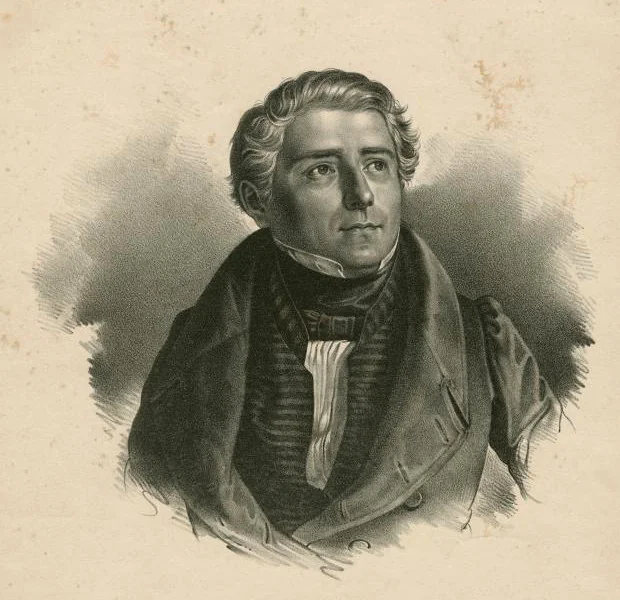
Image from Wikipedia
Image from Wikipedia
Carl Loewe – the Ballad King of Romanticism and Master of Dramatic Song
A composer between church office, concert hall, and poetic narrative art
Johann Carl Gottfried Loewe is one of those German composers whose name is closely associated with a single genre while also reaching far beyond it. Born on November 30, 1796, in Löbejün and died on April 20, 1869, in Kiel, he shaped musical Romanticism as a cantor, organist, singer, and composer with exceptional productivity. His fame primarily rests on more than 400 ballads and songs, but his oeuvre also includes oratorios, operas, symphonies, and chamber music. ([de.wikipedia.org](https://de.wikipedia.org/wiki/Carl_Loewe?utm_source=openai))
What makes Loewe intriguing to this day is the combination of musical narrative power, lyrical precision, and dramatic intensity. He transformed the art song into an expressive miniature with scenic tension, earning him the title of "Pomeranian Ballad King," as music history continues to call him. His work thrives on a balance of clarity, emotional directness, and technical finesse, making him an important representative of early Romanticism. ([operalounge.de](https://operalounge.de/cd/zwischen-oper-und-oratorium?utm_source=openai))
Early Years: Musical Influences and the Path to Art
Loewe grew up in Löbejün and received his first musical education in an environment where church music, teaching, and practical musical practice were closely linked. From an early age, his talent as a singer and musician became apparent; contemporary accounts noted that his voice was recognized even outside the family, opening further educational pathways for him. The fact that his career did not begin as a mere academic but emerged from lived musical practice continues to shape the image of this composer today. ([en.wikipedia.org](https://en.wikipedia.org/wiki/Carl_Loewe?utm_source=openai))
The artistic socialization led him into the world of Protestant church music and the romantic song, two spheres that significantly influenced his later work. The young Loewe combined education, religiosity, and musical ambition, developing an early sense for text interpretation, declamation, and vocal expression. These foundations are later reflected in the ballads, where language and music respond to each other like in a narrative tension arc. ([de.wikipedia.org](https://de.wikipedia.org/wiki/Carl_Loewe?utm_source=openai))
Szczecin as an Artistic Center: 46 Years of Precision and Productivity
Loewe spent the decisive phase of his music career in Szczecin (Stettin), where he worked for 46 years. There, he served as organist, music director, and composer, significantly influencing the city's musical life; he also founded the Pomeranian Choral Association. This long period in Szczecin made him a fixture in the North German music scene and established his reputation far beyond Pomerania. ([de.wikipedia.org](https://de.wikipedia.org/wiki/Carl_Loewe?utm_source=openai))
In Szczecin, Loewe developed that productive connection between ecclesiastical office and artistic public life, which makes his work so special. As an organist and music director, he collaborated with choirs, soloists, and in liturgical contexts while also cultivating the concert song and the ballad as an independent art form. This dual role between office and stage gave his compositions a rare range: spiritual depth on one side, dramatic public effectiveness on the other. ([carusmedia.com](https://www.carusmedia.com/images-intern/medien/20/2300253/2300253x.pdf?utm_source=openai))
The Breakthrough with the Ballad: Dramatic Song Art Instead of Mere Setting to Music
Loewe became famous primarily through his ballads, which are forms of song where narrative text, dramatic escalation, and musical characterization work particularly closely together. Music history highlights his settings of Goethe's "Erlkönig," the Scottish ballad "Edward," "Herr Oluf," "Archibald Douglas," and "Tom der Reimer." These works are among the most celebrated examples of his oeuvre and demonstrate how adeptly he translated language into sound. ([britannica.com](https://www.britannica.com/biography/Carl-Loewe?utm_source=openai))
In the ballad, Loewe achieves a unique form of musical storytelling. Instead of merely placing a melody over an accompaniment, he crafts small dramatic scenes from motifs, changes of register, and harmonic tension that directly reflect the text's content. This is precisely where his significance for music history lies: he provided the epic-dramatic song genre with a concise, artistically closed form that remains a reference for song composition to this day. ([operalounge.de](https://operalounge.de/cd/zwischen-oper-und-oratorium?utm_source=openai))
Beyond the Song: Oratorios, Operas and Symphonic Thinking
Although his fame is tied to the ballads, Loewe's discography in a broader sense encompasses an astonishingly wide field of work. There are 17 preserved oratorios, six operas, and two symphonies; additionally, there are chamber music, piano works, and other sacred compositions. This versatility reveals a composer who not only mastered the intimate scene but also filled large-scale forms with ambition and structure. ([iclg.org](https://www.iclg.org/de/musiker-und-komponist?utm_source=openai))
Particularly his oratorios deserve attention because they take up the spiritual tradition of Bach and Handel and translate it into Romantic tonality. Works like "Das Sühnopfer des neuen Bundes" or "Jan Hus" demonstrate that Loewe does not merely treat religious themes illustratively but rather condenses them dramatically. It is in these scores that it becomes clear how much he cared about musical architecture, vocal guidance, and expressive power. ([de.wikipedia.org](https://de.wikipedia.org/wiki/Das_S%C3%BChnopfer_des_neuen_Bundes?utm_source=openai))
Musical Development and Style: Between Tradition and Romantic Intensity
Loewe's early songs still partly follow the pattern of the late classical tradition, with simple melodic lines and predominantly strophic structures. Later, his style gained dramatic differentiation, allowing him to model text details, mood changes, and narrative turning points with greater freedom. This development characterizes him as a composer who did not abandon the form of the song but rather expanded it from within. ([en.wikipedia.org](https://en.wikipedia.org/wiki/Carl_Loewe?utm_source=openai))
His tonal quality is clearly geared towards the voice, while at the same time supported by a pronounced sensitivity in piano and harmony. Apple Music Classical describes him as a composer, singer, and conductor of the transitional period between late classical and early Romanticism, whose international reputation primarily solidified through his vocal writing. In this lies Loewe's signature: he composed not only for singing but for dramatic storytelling through song. ([classical.music.apple.com](https://classical.music.apple.com/us/artist/14811492?utm_source=openai))
Critical Reception, Cultural Influence, and Contemporary Perception
Today's reception particularly emphasizes that Loewe created popular ballads that remain present in concert repertoire and musical historical memory. The Neue Musikzeitung calls him the star of the ballad; the cultural foundation describes him as the creator of the new German ballad style. This classification shows that his influence is not based solely on individual works but on a lasting aesthetic development. ([nmz.de](https://www.nmz.de/politik-betrieb/veranstaltungen/musikfest-fuer-balladenkoenig-loewe-als-kirchenmusiker?utm_source=openai))
Even in recent times, his works are regularly performed and remembered: festivals, concert series, and church music programs are dedicated to his oratorios and ballads. The fact that festivals featuring his work took place in 2024 and that sacred compositions like "Palestrina" will be presented in concert contexts in 2025 attests to the ongoing relevance of his music in today's cultural life. Loewe is certainly not a relic of the past but part of a vibrant performance practice. ([zeit.de](https://www.zeit.de/news/2024-04/14/carl-loewe-festtage-eroeffnet?utm_source=openai))
Current Projects and Publications: a Classical Heritage Instead of New Releases
As a composer who died in the 19th century, Carl Loewe naturally has no new albums, singles, or tours in today's sense. However, new releases, editions, and concert programs continually appear, placing his work in new contexts and keeping the performance tradition alive. Especially in the area of sacred music and song art, his name remains present in program brochures, classical catalogs, and anniversary events. ([zeit.de](https://www.zeit.de/news/2024-04/14/carl-loewe-festtage-eroeffnet?utm_source=openai))
The ongoing engagement with Loewe is therefore primarily editorial and interpretative. Labels, concert organizers, and musicological institutions keep his scores in circulation and emphasize his status as one of the most important ballad composers of the 19th century. Today, anyone who encounters Loewe meets a classic whose work continues to resonate in the present through performances and recordings. ([jpc.de](https://www.jpc.de/jpcng/classic/detail/-/art/Carl-Loewe-1796-1869-Das-S%C3%BChneopfer-des-neuen-Bundes-Passions-Oratorium/hnum/9841765?utm_source=openai))
Conclusion: Why Carl Loewe Remains Fascinating Today
Carl Loewe fascinates because he transformed the song into a dramatic narrative form and elevated the ballad to an art of immediate experience. His music career connects church office, concert culture, and poetic condensation into a distinctive profile within Romanticism. Those who listen to his works do not merely experience melodies but musical stories of rare clarity and tension. ([operalounge.de](https://operalounge.de/cd/zwischen-oper-und-oratorium?utm_source=openai))
It is especially in live performances that Loewe's ballads and oratorios reveal their full impact: the concise declamation, the interplay of voice and piano or orchestra, the immediate theatrical power. Anyone who has the chance to experience one of his compositions in the concert hall should seize it, as it is there that the extraordinary stage presence of this composer is most revealed. Carl Loewe remains a master of musical storytelling, whose work is a discovery for lovers of German Romanticism. ([deutschlandfunkkultur.de](https://www.deutschlandfunkkultur.de/carl-loewe-museum-in-loebejuen-zu-besuch-beim-koenig-der-100.html?utm_source=openai))
Official Channels of Carl Loewe:
- Instagram: no official profile found
- Facebook: no official profile found
- YouTube: no official profile found
- Spotify: no official profile found
- TikTok: no official profile found
Sources:
- Wikipedia – Carl Loewe
- Britannica – Carl Loewe
- Kulturstiftung – Loewe, Carl
- Apple Music Classical – Carl Loewe
- Deutschlandfunk Kultur – Carl-Loewe-Museum in Löbejün
- Neue Musikzeitung – Music Festival for "Ballad King" Loewe as Church Musician
- DIE ZEIT / dpa – Carl-Loewe Festival Days Opened
- Helbling Publishing – Carl Loewe
- Wikipedia: Image and Text Source