
Curtis Harding
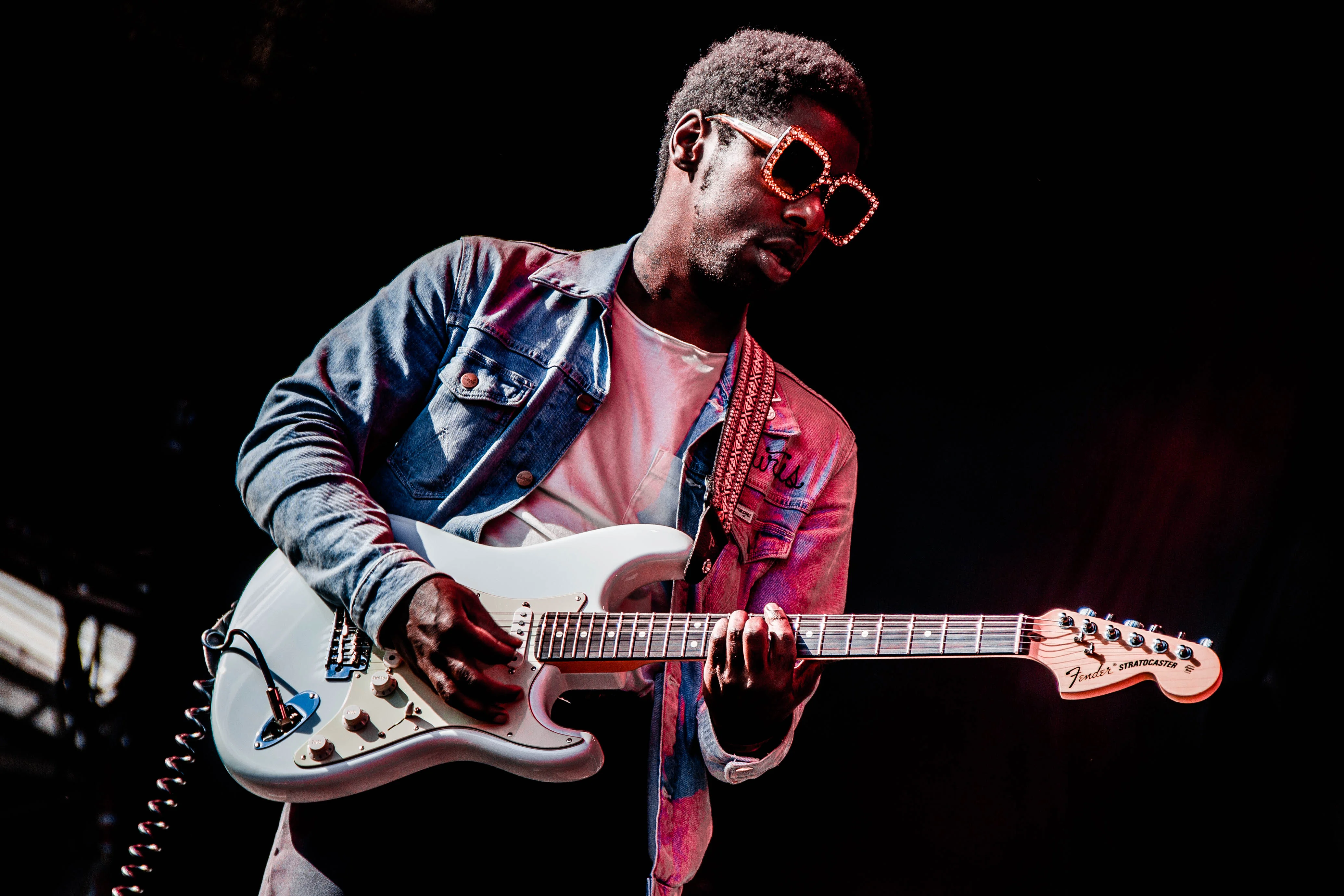
Image from Wikipedia
Image from Wikipedia
Curtis Harding – Soul with Power, Depth, and Vision
The artist who combines modern soul with gospel, psych-rock, and great storytelling
Curtis Harding is one of the most exciting voices in contemporary soul. Born in Saginaw, Michigan, and shaped in Atlanta, the musician blends gospel intensity, classic soul aesthetics, and an open, genre-crossing approach to production into a distinctive artistic profile. His music career has been characterized by mobility, church music, backing vocals, his own songwriting style, and a steady expansion of his stage presence. Since his solo debut, he has gained a dedicated fan base, especially in Europe, and is regarded today as an artist who does not archive tradition but reinvigorates it. ([de.wikipedia.org](https://de.wikipedia.org/wiki/Curtis_Harding?utm_source=openai))
Biography: Between Michigan, Atlanta, and the Roots of American Soul
Curtis Harding was born on June 11, 1979, in Saginaw, Michigan. His childhood was marked by frequent relocations before his family finally settled in Atlanta. There, he grew up in an environment deeply rooted in gospel music: He sang and played in church with his mother from an early age, while Stax, Motown, and hip-hop records expanded his horizons at home. This mix of spiritual discipline, pop socialization, and southern musical history remains at the core of his artistic development to this day. ([curtisharding.com](https://curtisharding.com/about?utm_source=openai))
His path into music did not begin as a calculated career plan but rather as an organic consequence of this environment. Harding was rapping as a child, later taught himself guitar, and began merging various musical identities into a personal style rather than pitting them against each other. In interviews and artist statements, it becomes clear that he never views the church merely as a biographical backdrop, but as a school for voice, expression, and emotional authenticity. This is precisely what feeds the unique authority of his songs: they sound like real experiences, not mere constructions. ([curtisharding.com](https://curtisharding.com/about?utm_source=openai))
Career Start: LaFace, Backing Vocals, and First Professional Steps
Before Curtis Harding stepped out with his own albums, he worked in promotion for LaFace Records in Atlanta while also gaining experience as a backing vocalist. During this phase, he was close to the professional music industry and learned how songs, productions, and artist images function outside the studio. This time sharpened his sense for arrangement, song dramaturgy, and musical economy. It laid the groundwork for a solo career that did not emerge from nowhere but from years of practice. ([curtisharding.com](https://curtisharding.com/about?utm_source=openai))
An important precursor was also the project Night Sun with Cole Alexander from the Black Lips, which Harding co-shaped in 2011 and underscored his openness to rougher, rockier sounds. Even then, it was clear that he never regards soul as a rigid vintage format. Instead, he incorporates garage aesthetics, psychedelia, and southern rock energy into his music. This stylistic flexibility later became a hallmark of his solo work. ([de.wikipedia.org](https://de.wikipedia.org/wiki/Curtis_Harding?utm_source=openai))
The Breakthrough: Soul Power and the First International Resonance
With the 2014 release of his debut album Soul Power, Curtis Harding made a clear statement. The album put him on the map in Europe, showcasing an artist deeply rooted in the soul tradition without seeming nostalgic. Critics described the sound as powerful, horn-driven, and imbued with a raw garage character. In this way, Harding was not simply a revival act, but a singer with his own aesthetic signature. ([en.wikipedia.org](https://en.wikipedia.org/wiki/Soul_Power_%28album%29?utm_source=openai))
What is particularly interesting about this early phase is that Harding was already perceived as someone who does not copy the past but reorders it. His singing combined falsetto, preacher pathos, and an almost physical directness. For music lovers, this created special tension: Curtis Harding felt both classic and fresh. His debut marked the starting point of a career that places more emphasis on substance than on short-term trends. ([diepresse.com](https://www.diepresse.com/6066852/soul-schoen-wie-in-den-siebzigern?utm_source=openai))
Face Your Fear: The Major Step into the Spotlight
The real international breakthrough came in 2017 with Face Your Fear, an album that elevated Harding artistically and commercially to a new level. The record was developed in collaboration with Danger Mouse and Sam Cohen and received widespread acclaim in the music press. NPR listed it among the best R&B releases of the year; other media praised the mix of vintage soul, psychedelic nuances, and garage rock fuzz. This was complemented by tour dates with Jack White and Lenny Kravitz as well as festival appearances at Newport Folk, Lollapalooza, and Austin City Limits. ([curtisharding.com](https://curtisharding.com/about-page-1?utm_source=openai))
This album was crucial for Harding's artistic development as it made his range visible. He sounded not only like a great soul singer but like a songwriter with a knack for tension, refrain architecture, and emotional density. Reception frequently emphasized that his sound combines classic soul elements with modern songwriting and a strong live feel. This also enhanced his stage presence: from then on, Harding represented intensity, charisma, and musical control. ([curtisharding.com](https://curtisharding.com/about-page-1?utm_source=openai))
If Words Were Flowers: Resilience, Warmth, and Stylistic Breadth
In 2021, If Words Were Flowers was released, an album that showcased Harding as an even more open composer and producer. The artist described the record as a bouquet of love, resilience, and reconciliation; the songs merge vintage soul, R&B, hip-hop, garage rock, and psychedelia into a dense, yet warm production. Press and critics reacted strongly to this mix: music magazines praised the balance between classic feel and experimental openness, with some reviews referring to it as one of the strongest albums in his catalog to date. ([curtisharding.com](https://curtisharding.com/about-page-1?utm_source=openai))
Content-wise, Harding shifted the focus on If Words Were Flowers to relationships, solidarity, and emotional healing. This gave his songwriting depth without losing directness. It is precisely this combination of personal intimacy and societal resonance that makes him so interesting to music journalists: Harding does not write abstract poses but songs that connect stance with feeling. The result is soul as a contemporary narrative form. ([curtisharding.com](https://curtisharding.com/about?utm_source=openai))
Current Phase: Departures & Arrivals and the Concept Album as Space Travel
In 2025, Curtis Harding will again be in the spotlight with Departures & Arrivals: Adventures of Captain Curt. According to his official website, the album has now been released and marks his fourth full-length work. The record has been described as a concept album about a pilot lost in space and combines space opera-like narrative with classic soul, baroque pop, space funk, and psych-rock. Harding produced the album himself; it was recorded live with a band at Electric Deluxe Recorders in Austin. ([curtisharding.com](https://curtisharding.com/about?utm_source=openai))
The current single "There She Goes" is also highlighted on the official site, along with ongoing tour dates. This indicates that Harding is not only releasing a new album in 2025, but is also consistently evolving his aesthetic: moving away from mere stylistic maintenance toward a well-rounded musical universe. In the production, symphonic strings, rich harmonies, and a deliberately cinematic structure play an important role. This album impressively demonstrates how consistently Harding is advancing his artistic development. ([curtisharding.com](https://curtisharding.com/about?utm_source=openai))
Style and Sound Language: Soul with Psychological Depth
Harding's style can best be described as modern soul with a strong sense of tradition and a high openness to boundary-crossing. He works with gospel vocabulary, bouncy grooves, brass arrangements, organic band recordings, and often a production that allows the songs breathing space. At the same time, influences from psych-rock, garage, hip-hop, and baroque pop crop up repeatedly. It is precisely this multifacetedness that makes his discography interesting for listeners who do not view soul as a retrograde genre. ([curtisharding.com](https://curtisharding.com/about?utm_source=openai))
Also noteworthy is the role of his voice. Harding sings with raw authority, dynamic control, and a timbre that creates immediate recognition. The press has repeatedly highlighted his "scorching voice" and his ability to blend both preaching and seduction in a single take. This creates an artistic tension that elevates his songs beyond mere retro reference. ([curtisharding.com](https://curtisharding.com/about-page-1?utm_source=openai))
Cultural Influence, Reception, and Place in Contemporary Soul
Curtis Harding belongs to that generation of artists who have made soul visible again as a vibrant contemporary music. His works are regularly mentioned alongside the new voices of the genre, while remaining distinct due to their narrative breadth and spiritual undertone. Particularly in Europe, he has earned an audience that appreciates his blend of craftsmanship, energy, and authenticity. This cultural influence is not based on mass success but on trust-building over several albums. ([de.wikipedia.org](https://de.wikipedia.org/wiki/Curtis_Harding?utm_source=openai))
The critical reception also paints a clear picture: Harding does not merely deliver a nostalgic return to the golden era of soul, but an updated form that brings together the present, memory, and musical personality. For this reason, his discography feels cohesive while simultaneously open to new chapters. Anyone who follows his development from Soul Power through Face Your Fear and If Words Were Flowers to Departures & Arrivals recognizes a consistently growing artistic signature. ([en.wikipedia.org](https://en.wikipedia.org/wiki/Soul_Power_%28album%29?utm_source=openai))
The exciting thing about Curtis Harding is the rare combination of voice, vision, and stylistic independence. He embodies soul as emotional architecture, not as mere pose, making each album a standalone chapter. Those who experience him live encounter a musician who does not just sing his songs but physically and spiritually lives them. This is precisely where the appeal of this extraordinary artist lies. ([curtisharding.com](https://curtisharding.com/about?utm_source=openai))
Official Channels of Curtis Harding:
- Instagram: https://www.instagram.com/curtisharding
- Facebook: https://www.facebook.com/curtishardingofficial/
- YouTube: https://www.youtube.com/channel/UCz6eN_EJr4izMWmWPVNBRxg
- Spotify: https://open.spotify.com/artist/0CUpzKPDfIVzYqMn47jiV3
- TikTok: https://www.tiktok.com/@curtishardingmusic
- Twitter/X: https://twitter.com/Curtis_Harding
Sources:
- Curtis Harding – About, official artist page
- Curtis Harding – Homepage, official artist page
- Curtis Harding – Discography, official artist page
- Curtis Harding – Videos, official artist page
- ANTI- Records – Press page for Curtis Harding
- Wikipedia: Curtis Harding – Image and text source
- The Guardian – Curtis Harding: Face Your Fear review
- Die Presse – Soul, beautiful like in the seventies
- Musikexpress – Review: Curtis Harding, If Words Were Flowers
- COS – The gospel according to Curtis Harding
Upcoming Events
Curtis Harding – Live in Potsdam 2026