
Ermanno Wolf-Ferrari
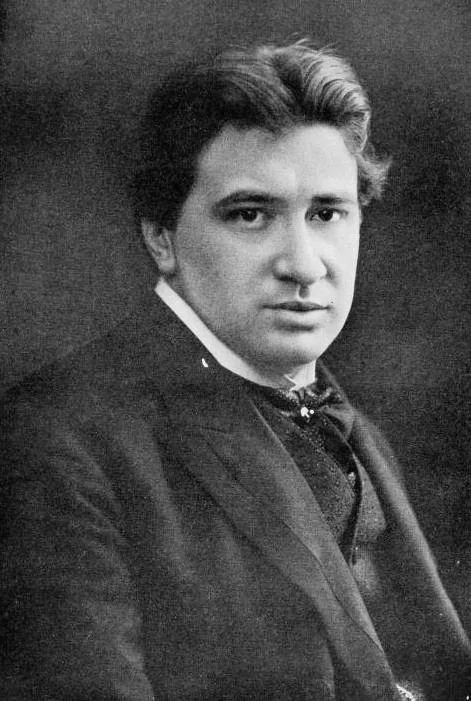
Image from Wikipedia
Image from Wikipedia
Ermanno Wolf-Ferrari – The Master of Modern Opera Buffa Between Venice and Munich
With Venetian Lightness and German Precision: How a German-Italian Composer Shaped 20th Century Music Theatre
Ermanno Wolf-Ferrari, born on January 12, 1876, in Venice and died on January 21, 1948, there, embodies a rare synthesis of Italian melody and German compositional artistry. As the son of the German painter August Wolf and the Venetian Emilia Ferrari, he grew up between two cultures that influenced his music career, stage presence in the musical life, and artistic development. From an early age, he was drawn to composition; his education took him to Munich, while Venice remained his spiritual and aesthetic home. Throughout the first decades of the 20th century, he became a central figure in the revival of opera buffa – characterized by subtle comedy, psychological nuance, and masterful craftsmanship in composition, arrangement, and orchestration.
Biography: Two Worlds, One Voice
His dual heritage gave the young Ermanno a cultural breadth that remains audible in his music: Italian melodic lines combined with German counterpoint and a sense of form. Even as a young man, he augmented his family name with his mother's maiden name and called himself Wolf-Ferrari. After studying in Munich and producing early compositions, including chamber music and choral works, he quickly established himself in German-language opera. By the early 20th century, he was experiencing his first noteworthy successes – a decisive step toward a breakthrough that would make him widely known across Europe.
In 1902, a brilliant success with a stage music and ballet adaptation of the Cinderella story marked an early turning point in his career. Still the same year, his hometown of Venice – notable for a 26-year-old – appointed him the head of its conservatory. This position solidified his reputation as an authority in both pedagogical and artistic matters and firmly anchored him in both cultural spheres, between the lagoon city and southern German musical life.
Breakthrough in Music Theatre: A New Interpretation of Goldoni
Wolf-Ferrari celebrated his major breakthrough with operas based on Carlo Goldoni, whose dramaturgical intricacies and dialogic musicality he transformed into a contemporary sparkling opera buffa language. The curious women captivated audiences in Munich with a blend of pointed ensemble artistry, singable lines, and chamber music transparency in the orchestra. Soon after, he produced further adaptations of Goldoni – foremost among them I quattro rusteghi – where he combined Venetian color, vital rhythms, and striking melodic ideas into compelling music theatre. These works demonstrate his mastery in writing for the singer-friendly: smooth phrases, intelligent voice leading, and elegant formal closures that carry the scenes organically.
His one-act opera Il segreto di Susanna unfolded as a concise, cleverly orchestrated comedy of suggestion – a prime example of Wolf-Ferrari's ability to outline characters lightly and anchor situational comedy in finely tuned orchestral colors. The scores speak the language of an eclectic with an attitude: no epigonal historicizing, but a newly created, lovingly ironic view of tradition.
Between Verismo and Classicism: Independence as a Program
While Verismo dominated with sharp emotions and social realism, and Wagner's influence resonated across Europe, Wolf-Ferrari pursued an alternative aesthetic. His operas rely on classical clarity, controlled crescendos, and a sound dramaturgy that favors psychological nuances over stark effects. In style analysis, delicate instrumentation details emerge – woodwind color play, subtle brass accents, transparent string textures – which never overpower the singing but rather support it.
Especially in I gioielli della Madonna, his most opulent music theatre piece, he intertwines Mediterranean sensuality with a thoroughly developed motivic technique. Here, one encounters a sound language that balances folk proximity, opera tradition, and modernized harmony. The result: musical drama that eludes every fashion dictate and thus withstands the test of time.
War Years, Retreats, and New Beginnings
The political upheavals of the first half of the 20th century also affected Wolf-Ferrari. The pendulum movements between Italy and the German-speaking world reflect the reality of an artist caught in the tensions of contemporary history. Yet, his work remains free from agitational tones, focusing on individual character development, emotional movements, and the art of musical dialogue. This attitude explains why his oeuvre is continually rediscovered – beyond time-dependent ideologies.
In his later years, Wolf-Ferrari increasingly turned to instrumental music. In addition to chamber music, he composed concertos whose cantabile solo lines and colorful orchestral responses transfer his stage rhetoric into the concert hall. Here, we find a composer who transforms vocal quality into instrumental lines and bundles it in strikingly clear forms.
Late Mastery: Concertos, Serenades, the Legacy
The Violin Concerto, conceived during the war years, combines radiant cantilenas with smooth virtuosity – a tribute to the art of singing on strings. The C Major Cello Concerto, aptly titled Invocazione, deepens the contemplative side of his style: wide arcs, breathing phrases, rhetorical pauses as dramatic brackets. Both works are regaining prominence in today's concert scene and appear in high-quality recordings that highlight the poetic economy of his musical language.
His last opera, Der Kuckuck von Theben (Gli dei a Tebe), rounds off the stage works and again showcases the balance of humor, humanity, and artisanal finesse. Here too, the vocal line carries the drama, supported by an orchestra that comments, contradicts, and underpins – in short: creates theatre.
Discography and Critical Reception: Rediscoveries in the Studio
The discography of Wolf-Ferrari has been noticeably growing over the past few years. New complete editions, thematic samplers, and targeted repertoire expansions focus on previously underrepresented scores. Reviews emphasize the elegant orchestration, the irony-laden musical language, and the singer-friendly nature of the scores. Recording series consolidate chamber music, concert works, and stage music, making the breadth of his oeuvre audible – from subtle one-act operas to grand opera panoramas.
Recent productions stand out due to editorial care, historically informed readings, and a recording technique that highlights the chamber music clarity of his orchestral treatment. The focus is not only on well-known titles like Il segreto di Susanna but also on rarities that demonstrate the stylistic range between buffonesque theatricality and lyrical introspection. Award-winning interpretations and clever program concepts have once again placed Wolf-Ferrari's name on the map for curious listeners.
Style, Form, and Sound Language: Craft with Heart
From a music historical perspective, Wolf-Ferrari represents a neoclassical tendency that predates true neoclassicism: he revitalizes forms of opera buffa without merely quoting. His composition technique combines lyrical periodicity with pointed motivic work; his arrangements feature colorful yet transparent layers of instrumentation. The dramatic pulse emerges from rhythmic speech, scenic economy, and precise phrasing – a theatre of subtle nuances where psychological depiction triumphs over volume.
His genre spectrum ranges from comic opera to lyrical chamber plays and concert forms. Notably, he excels at modeling ensemble numbers: characters speak musically at the same time without overshadowing each other; the orchestral texture remains elastic, the harmony bright and breathing, often infused with Venetian light in the woodwinds. This artistic development makes him one of the most unique voices in the Italian-German music dialogue of his time.
Cultural Influence and Aftermath: Stage, Library, Recording Studio
The enduring fascination for Wolf-Ferrari manifests on multiple levels. On opera stages, his works receive regular revivals that bring his dramaturgical skill to the fore. Edition projects, library collections, and digital curations document life and work – a growing foundation for research and repertoire maintenance. For singers, his music remains a training ground for text declamation and breath control; for conductors, it serves as a textbook on sonic balance between stage and pit.
The recording industry accompanies this renaissance with carefully edited albums that also engage casual audiences: through dramaturgically cohesive programs, accessible cycles, and harmonious interpretations. In summary, a picture emerges of the composer as a bridge builder – between centuries, nations, and aesthetics.
Current Projects and Performances: Renaissance in the 21st Century
In the concert and opera scene of the 2020s, Wolf-Ferrari is experiencing noticeable attention. New recordings profile his instrumental concertos while stage productions present his Goldoni adaptations in fresh interpretations. Program series, essays, and video formats contextualize and open his work to an audience that appreciates wit, warmth, and craftsmanship in the music theatre tradition. The look at sources and new editions also sharpens the understanding of his compositional techniques and musical dramaturgy.
Recent performances and editorially curated online content further demonstrate this dynamism. Documentaries introduce creation stories, reconstruct performance practices, and make editorial decisions transparent. The blend of historical fidelity and contemporary stage energy keeps Wolf-Ferrari's scores feeling current, vital, and emotionally immediate.
Conclusion
Ermanno Wolf-Ferrari remains a composer for explorers: a theatrical artist with style, a sound poet with a sense of humor and humanity. His discography is growing, his operas are returning to the stages, and his concertos shine in the repertoire – signs of a sustainable, informed rediscovery. Those who love the fine art of the music-dramatic dialogue find in him a master of moderation: singer-friendly, instrumentally delicate, and dramaturgically clever. The best proof? A live experience of his operas or concerts – where his music resonates most strongly: on stage, in the space, in the now.
Official Channels of Ermanno Wolf-Ferrari:
- Instagram: No official profile found
- Facebook: No official profile found
- YouTube: No official profile found
- Spotify: No official profile found
- TikTok: No official profile found
Sources:
- Ermanno Wolf-Ferrari – Official Website: Biography
- Ermanno Wolf-Ferrari – Official Website: Current/News
- Wikipedia – Ermanno Wolf-Ferrari (German)
- Google Arts & Culture – Ermanno Wolf-Ferrari: The Early Years
- German Biography – Wolf-Ferrari, Ermanno
- ANSA – I quattro rusteghi in Modena, Report from February 16, 2026
- Pizzicato – Comprehensive Set with Music by Ermanno Wolf-Ferrari (Review, 2025)
- Felsner Artists – Reviews of Il segreto di Susanna (Oehms)
- Musikproduktion Höflich – Foreword to La Vita Nuova
- Naxos/Brilliant Classics – Booklet (Wolf-Ferrari 1876–1948)
- Apple Music Classical – Ermanno Wolf-Ferrari: Artist Page
- Wikipedia: Image and text source
Upcoming Events
A Life Between Two Worlds – Ermanno Wolf-Ferrari
A Life Between Two Worlds: Musical Journey for the 150th Birthday of Ermanno Wolf-Ferrari
A Life Between Two Worlds: A Musical Journey for the 150th Birthday of Ermanno Wolf-Ferrari
A Life Between Two Worlds - Ermanno Wolf-Ferrari
A Life Between Two Worlds: Ermanno Wolf-Ferrari at the Wolf-Ferrari House
Ermanno Wolf-Ferrari - Between Venice, Munich, and Ottobrunn
Ermanno Wolf-Ferrari Exhibition at the Wolf-Ferrari House Ottobrunn