
Florence Foster Jenkins
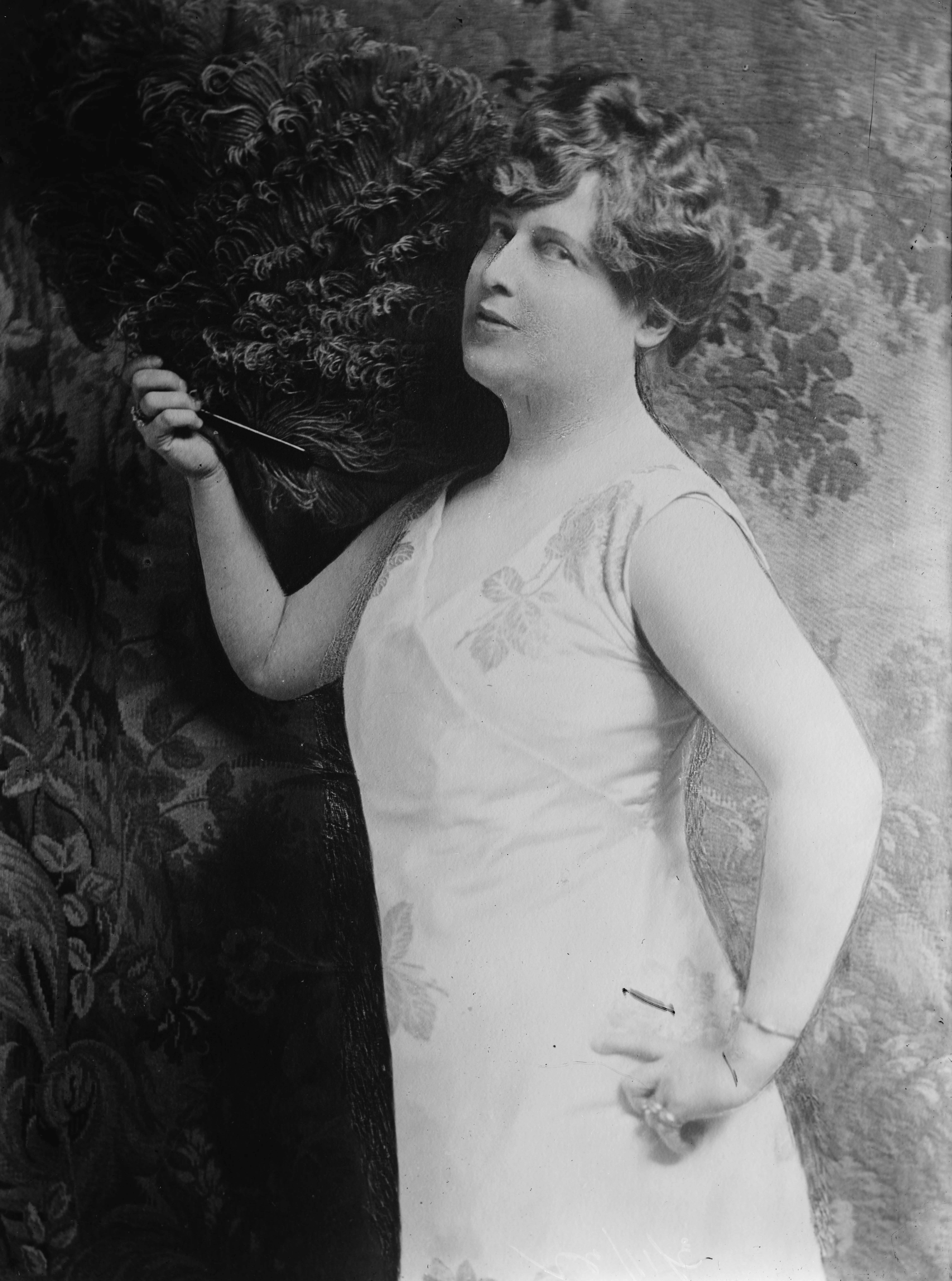
Image from Wikipedia
Image from Wikipedia
Florence Foster Jenkins: The Legendary Diva of False Notes and Her Irresistible Place in Music History
An Artist Biography of Glamour, Willfulness, and Musical Legend
Florence Foster Jenkins was an American patron, socialite, and amateur singer whose name still generates immediate attention today. Born on July 19, 1868, in Wilkes-Barre, Pennsylvania, she became famous for a voice that contemporaries described as notoriously imprecise, rhythmically uncertain, and spectacularly out of tune. Out of this emerged one of the most astonishing careers in music history: a singer who became a cult figure not through flawless technique, but through uncompromising self-presentation, societal presence, and enormous audience curiosity.
Her story is much more than an anecdote about "bad singing." Jenkins combined wealth, cultural capital, and unwavering self-confidence into a stage persona that became a curious yet authentic phenomenon in early 20th-century New York. To this day, her music career fascinates because it touches on questions of talent, public perception, irony, audience taste, and artistic perception in unusually direct ways.
Background and Early Influences: Music as a Life Project
Florence Foster Jenkins grew up in a wealthy and cultured family. Her father supported her early musical interests with piano lessons but refused to allow her to take singing lessons when it became apparent that her vocal abilities did not match those of a classical soprano. This early disappointment did not extinguish her ambition; rather, it sharpened it. Jenkins resolved to see music not as a hobby, but as a life mission.
In 1883, she married Francis Thornton Jenkins, a doctor from whom she later separated. After her father’s death in 1909, she received a substantial inheritance that granted her financial independence. This economic freedom became the driving force behind her career: she could pay for singing lessons, organize her own performances, and assert her artistic self-image against all external doubts.
Career Development: Private Recitals, Verdi Club, and New York Society
Starting in 1912, Jenkins began giving private singing evenings, initially in smaller settings, later organized with increasing confidence and social engagement. In 1917, she founded the Verdi Club, an association to support musicians, and cultivated a social environment in which she played a central role. The club grew rapidly; well-known names from the music world became honorary members, and Jenkins established herself as a hostess, patron, and key figure in her own musical universe.
Her ability to transform performance situations into events was particularly significant. She performed in imaginative costumes, maintained strict control over her recitals, and surrounded herself with a loyal audience that fluctuated between admiration, politeness, and amused astonishment. Her stage presence was not that of a classical, technically trained opera artist, but rather a blend of pathos, social ritual, and unwavering self-belief.
Vocal Profile: Between Pitch, Rhythm, and Self-Image
The critical reception of her time inevitably focused on her singing performance. Contemporary reports and later analyses describe significant issues with intonation, rhythm, phrasing, and breath control. She was often accompanied by Cosmé McMoon, who attempted to compensate for her tempo deviations and uncertainties at the piano. Nevertheless, Jenkins was not merely a caricature. Her performances possessed a strange energy because she threw herself wholeheartedly into the dramatic gestures of opera.
This aspect is central to her cultural impact. Florence Foster Jenkins did not see herself as a parody but as a serious interpreter. This tension between self-perception and external perception made her the subject of ridicule but also of fascination. In music history, she occupies a unique intersection between amateur art, camp aesthetics, and the relentless gaze of the audience.
Discography: A Small but Legendary Sound Archive
Florence Foster Jenkins’s discography is modest, yet its historical significance is immense. Between 1941 and 1944, she made nine professional recordings on five 78 RPM records at the Melotone Recording Studio in New York City. These recordings were financed by Jenkins herself and sold to friends; later, they were reissued in various compilations, including on RCA Victor. The pieces include arias and art songs by Mozart, Delibes, Johann Strauss II, Félicien David, as well as several titles contributed by Cosmé McMoon.
Her interpretation of the Queen of the Night aria from Mozart’s The Magic Flute became particularly famous. This recording is regarded as a key piece of her small but mythically elevated repertoire. The reissues, such as under the title The Glory of the Human Voice, kept her recordings in circulation for decades and allowed her legend to grow far beyond the original New York social circle. Thus, her discography is less a classical catalog and more a historical document marking the transition from social curiosity to pop culture phenomenon.
The Breakthrough as a Cult Figure: Carnegie Hall and the Power of Spectacle
The highlight of her career was the sold-out concert at Carnegie Hall on October 25, 1944. The demand was so great that numerous interested parties had to be turned away. The fact that she filled the hall with about 3,000 people can be attributed not only to musical interest but also to a mix of anticipation, sensation, and social event. By this time, Jenkins was more than a singer: she was an urban spectacle.
The evening itself became a historical focal point of her legend. Reports speak of an exuberant response, of tension in the hall, and of that hard-to-describe dynamic that arises when an audience is simultaneously laughing, astonished, and unable to look away. Just a few weeks later, Jenkins died of a heart attack. Thus, her career came to an end, but her afterlife was just beginning.
Critical Reception and Cultural Influence: From Mockery to Lasting Fascination
The music press and later cultural commentary often viewed Florence Foster Jenkins as the epitome of failed singing. However, a purely mocking perspective would be too simplistic. Her story shows how deeply musical perception is shaped by context, class, staging, and expectation. Jenkins was wealthy, organized, present, and determined, and it was precisely these factors that facilitated a career that would have been hardly conceivable without her financial independence.
Her influence on pop culture is still felt today. Plays, films, essays, and broadcast contributions revisit her figure repeatedly as she embodies a rare narrative: the tragicomic yet self-determined quest for artistic recognition. In this tension, Florence Foster Jenkins stands not merely as the "worst singer in the world," but as a lasting cultural provocation. She compels the audience to rethink quality, seriousness, and the social stage of music.
Current Relevance and Contemporary Perception
Florence Foster Jenkins herself left no current projects or new releases in the traditional sense, as she passed away in 1944. However, her recordings remain in circulation, are reissued, and are continuously reassessed in cultural-historical contexts. Even in 2024 and 2025, her name endures in articles, music archives, reissues, and stage adaptations. Therefore, her relevance arises not from new music but from the ongoing fascination with her historical figure.
This lasting presence makes her interesting to music lovers, cultural historians, and anyone interested in the boundaries between art, audience expectation, and the creation of legend. Florence Foster Jenkins is not a classical role model for technical perfection, but an impressive example of how personality, assertion, and social context can shape a music career.
Conclusion: Why Florence Foster Jenkins Continues to Captivate Today
Florence Foster Jenkins remains one of the most extraordinary figures in music history because she did not fulfill conventions but broke them. Her career unites self-assertion, social history, operatic pathos, and cultural irony into a unique chapter of American music and social culture. Those who follow her story encounter not just a notorious singer, but a figure who radically redefines the concept of success.
Florence Foster Jenkins is particularly exciting because she took to the stage with unwavering passion, shaping an unmistakable cultural legacy. Her recordings and performances demonstrate how fascinating music can be beyond perfect technique. Anyone seeking to understand the history of great voices of the 20th century should also be familiar with this voice—and rediscover the legend in its historical resonance, in recordings, films, and archival material.
Official Channels of Florence Foster Jenkins:
- Instagram: No official profile found
- Facebook: No official profile found
- YouTube: No official profile found
- Spotify: No official profile found
- TikTok: No official profile found
Sources:
- Britannica - Florence Foster Jenkins
- Wikipedia - Florence Foster Jenkins
- TIME - What It Was Like to Hear the Real Florence Foster Jenkins Sing, as Told in 1934
- The Guardian - Florence Foster Jenkins: we may laugh, but to be this bad took talent
- Presto Music - The Glory (????) Of The Human Voice
- Britannica - Florence Foster Jenkins (film)
- Wikipedia: Image and text source
Upcoming Events
Glorious! – Schauspielhaus Neubrandenburg
Glorious!
Glorious!
Glorious! – The True Story of Florence Foster Jenkins

Florence-Star without Talent

Florence - Star Without Talent (Copy)

Florence-Star without Talent

Florence-Star without Talent

Florence-Star without Talent