
Frank Schöbel
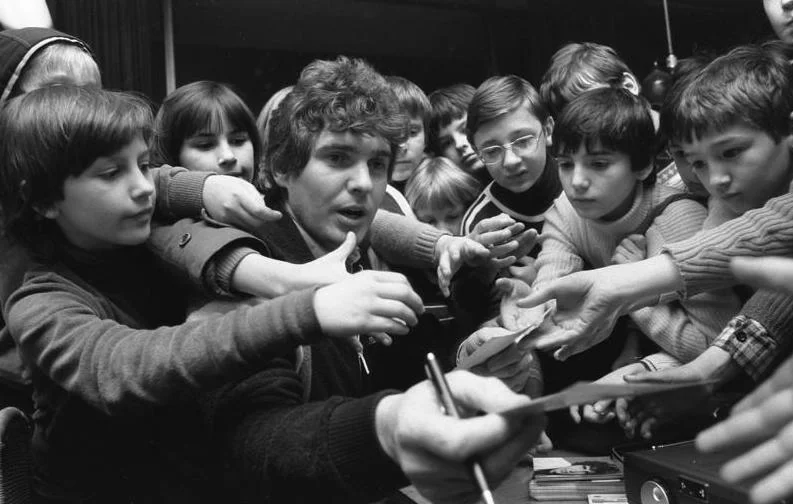
Image from Wikipedia
Image from Wikipedia
Frank Schöbel – Icon of German Schlager, Chronicler of an Era, and Tireless Entertainer
A Life for Music: From Leipzig's Rising Talent to the Voice of Entire Generations
Frank-Lothar Schöbel, born on December 11, 1942, in Leipzig, has shaped German-speaking Schlager over six decades with his unmistakable stage presence, melodic brilliance, and an exceptionally long music career. As a singer, composer, producer, author, and actor, he combined catchy compositions with clear messages, creating a canon of songs that resonated beyond the borders of the GDR. “Wie ein Stern,” “Gold in deinen Augen,” and “Ich geh vom Nordpol zum Südpol zu Fuß” still represent his artistic evolution and the feelings of entire generations. His discography, TV presence, and live energy testify to a body of work that unites popularity, craftsmanship, and cultural influence.
Biography: Education, Early Singles, and Rise in the 1960s
Schöbel's musical career officially began on April 1, 1962, following his training in guitar, piano, and singing. By 1964, he had released his first singles, including “Looky-Looky,” “Blonder Stern,” and “Party Twist,” which quickly topped the charts in the GDR—an early testament to his keen sense of melody, arrangement, and audience. In 1967, he won the Schlager competition of the GDR with the duet composition “Lieb mich so wie dein Herz es mag”—a crucial career step that established him as both an interpreter and songwriter. Simultaneously, he made his mark as a TV entertainer and film actor, appearing in four musicals between 1965 and 1973, including the DEFA cult classic “Heißer Sommer.” These early stages defined his profile as a versatile pop virtuoso with dramatic instinct and a flair for narrative stagecraft.
Breakthrough and Iconic 1970s: “Wie ein Stern” and Crossing Borders
His definitive breakthrough came in 1971 with “Wie ein Stern”—a composition that succeeded in both East and West and became a cultural hallmark. The title topped the GDR charts and achieved audience success in Poland, the Soviet Union, Czechoslovakia, Hungary, West Germany, Switzerland, and Austria. In the RIAS program “Schlager der Woche,” “Wie ein Stern” reached the number one spot three times (November 15–29, 1971), and Schöbel performed the song in “Musik aus Studio B” in 1972. Decades later, its inclusion in classic films like “Das Leben der Anderen” (2006) added cultural historical resonance—a testament to the timeless quality of its composition, lyrics, and production.
Christmas in Family: A Record Album as Cultural Memory
In 1985, Schöbel set an unmatched benchmark with “Weihnachten in Familie”—recorded with Aurora Lacasa and their daughters. The album became the best-selling record in GDR history and remains a staple of German-speaking Christmas culture. Its success lies in the perfect interplay of warm vocal arrangements, careful production, and familial authenticity: a soundscape that connects generations and stimulates annual rediscoveries. The blend of tradition, sonic intimacy, and a fine sense of mood explains why this album remains relevant for decades.
Style and Signature: Between Schlager, Chanson, and Pop – with Clear Lyric Dramaturgy
Schöbel's artistic development displays a consistent balance of melodic orientation, narrative density, and production clarity. His arrangements emphasize clear hook lines, foreground vocals, harmonic brilliance, and rhythmic directness. The result is songs with high recognizability that work well both on the radio and on stage. Characteristically, his lyrics offer clarity, semantic depth at certain stages of his career, and a closeness to the chanson tradition, which continually enriches his Schlager production with nuanced colors.
Stage, TV, and Film: Entertainment as a Total Work of Art
Alongside his studio work, Schöbel developed a distinct presence as an entertainer and host. Starting in 1971, he presented “Franks Beatkiste” as its “speaker,” became a sought-after singer in TV shows bridging East and West, performed at the opening of the World Cup in 1974 in Frankfurt am Main, and established his own brand as a live storyteller with shows like “Tour de Frank” (1996/1998). As an actor, he left traces in the film and television universe—from DEFA productions to appearances in “In aller Freundschaft”—underscoring his image as a versatile stage artist.
Social Context and Turning Years: Pop Between Message and Liberation
In the late 1980s, Schöbel combined pop aesthetics with social contemporaneity. “Wir brauchen keine Lügen mehr” (1989) struck a chord during the upheaval and documented how popular music can resonate within the tension between personal expression and collective sentiment. This phase portrays him as an artist who operates between the lines yet maintains the clear, accessible language of Schlager—a dynamic that adds further depth to his work.
Discography, Milestones, and Awards: The Long Haul of a Hit Composer
Schöbel's discography spans several decades—from the first singles of the 1960s through the major albums of the 1970s and 1980s to late works following reunification. Besides classics, children's songs (“Komm, wir malen eine Sonne”) and thematic albums play a significant role. Overall, he wrote hundreds of songs and interpreted well over 600 titles, winning numerous audience awards. A ten-time “TV Favorite” and recipient of the “Goldene Henne,” among others, he unites popularity with media appreciation; industry awards like the Amiga Platinum Award for the best-selling GDR artist repertoire attest to his outstanding standing in the Amiga record label catalog.
Music Journalistic Classification: Sound, Composition, Production
From a musical perspective, Schöbel's strongest works are based on a careful synthesis of composition (melodic arcs, clear refrain guidance), arrangement (string sections, guitar and keyboard pads, punctuated brass arrangements), and production (vocal-centered mix philosophy, radio-compatible dynamics). The tonal stability, striking motifs, and dynamic build in refrains support the narrative level of his songs. The resulting signature sound profile blends traditionalism with pop affinity, explaining the enduring catalog value of his hit singles.
Present and New Projects: A New Studio Album in 2026
Even in his eighth decade, Schöbel remains productive: on March 13, 2026, a new studio album titled “Spiel des Lebens” will be released, which he will present live in Berlin. Accompanying this release will be “daily videos” featuring the songs— a track-by-track concept that provides insights into themes, composition, and production. With the pre-release single “Adler fliegen einsam” (released in 2025), he marked a striking expression of his current sonic aesthetics, blending modern pop production with classic Schlager storytelling. Public performances, interviews, and features in cultural programs will accompany the release, showcasing the unbroken relevance of his brand as a singer and storyteller.
Key Works of the Repertoire and Cultural Reach
“Wie ein Stern” remains the signature song with a particularly powerful cultural historical impact. Its repeated chart-topper status and its entry into West German TV formats highlight the artist's exceptional standing as early as the 1970s. “Weihnachten in Familie” has become a fixed element of German-speaking holiday culture. Added to this are hits like “Gold in deinen Augen” and “Freunde gibt es überall,” which are firmly established in collective memory. The fact that Schöbel's music continues to live on in celebrated film productions documents its status as a resonant history of popular music—pop as an emotional repository of memory.
Career Sums and Legacy
Throughout the decades, Frank Schöbel epitomizes stability, craftsmanship, and a clear artistic stance. His music career is rich with moments where entertainment, songwriting, and societal resonance intertwine. That he remained successful as an artist from the GDR in reunited Germany demonstrates the universal viability of his songs. The sum of his discography, media presence, and live quality makes him a reference figure of German Schlager—with a legacy that offers guidance in composition, arrangement, and production for emerging generations.
Conclusion: Why You Should Listen to and Experience Frank Schöbel Today
Frank Schöbel's artistry melds timeless melody, narrative clarity, and a stage presence that endures over decades. His greatest successes are already part of the collective repertoire, but this current phase—with a new studio album and detailed insights into its creation—shows just how vibrant his music career remains. Anyone wanting to experience the full breadth of German pop and Schlager history will find a reliable constant in Schöbel's work. Recommendation: rediscover the classics, consciously listen to the new titles—and see the entertainer live, where his storytelling, voice, and arrangement have their strongest impact.
Official Channels of Frank Schöbel:
- Instagram: No official profile found
- Facebook: No official profile found
- YouTube: No official profile found
- Spotify: No official profile found
- TikTok: No official profile found
Sources:
- Frank Schöbel – Official Website: Biography
- Frank Schöbel – Official Website: Current/News
- Frank Schöbel – Official Website: Daily Videos for the Album “Spiel des Lebens”
- smago! – “His new CD 'Spiel des Lebens' will be released on 13.03.2026”
- Schlagerprofis – New Album 2026 Announced
- Deutschlandfunk Kultur – “DDR Schlager Legend with New Album” (March 2026)
- Schlagerpuls – Interview/Details on the New Album (2025)
- Apple Music – Artist Profile Frank Schöbel (“Adler fliegen einsam,” 2025)
- Wikipedia – Frank Schöbel (General Data, Career Overview)
- Wikipedia – “Wie ein Stern” (Chart History, Cultural References)
- Wikipedia: Image and Text Source
Upcoming Events
Frank Schöbel at Christmas Time