
Herman van Veen
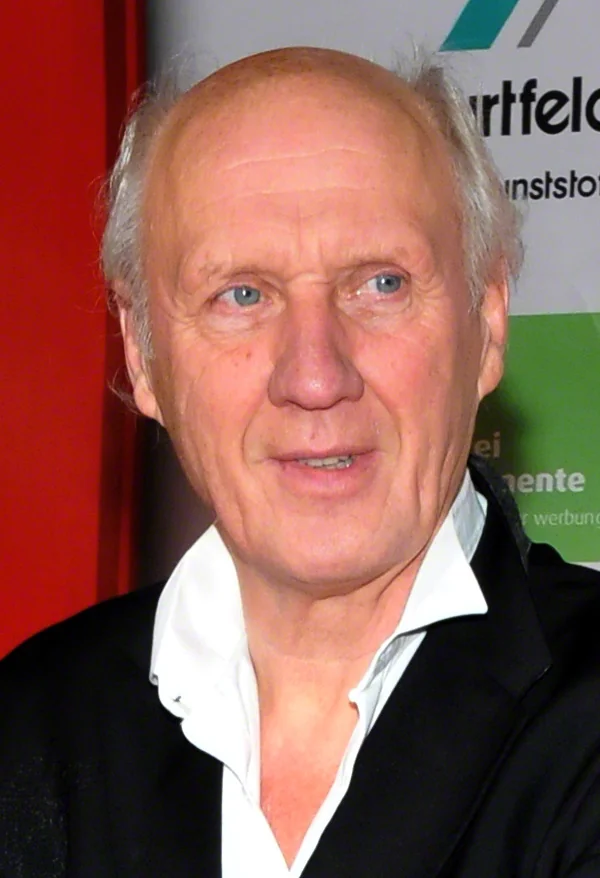
Image from Wikipedia
Image from Wikipedia
Herman van Veen – Poet at the Microphone, Virtuoso on the Violin, Storyteller between Song and Life
A Voice that Connects Generations: The Life and Work of Herman van Veen
Hermannus "Herman" Jantinus van Veen, born on March 14, 1945, in Utrecht, exemplifies the rare combination of lyrical poetry, stage presence, and artistic development. As a singer-songwriter, violinist, actor, clown, author, and director, he has shaped the Dutch and German-speaking cultural landscape since the 1960s. His music career blurs the boundaries between chanson, singer-songwriter artistry, chamber music, theater, and cabaret – always supported by a warm timbre, finely crafted arrangements, and a humanistic outlook. In the German-speaking area, he became an institution of cultural memory with the song "Ich hab’ ein zärtliches Gefühl" and as the spiritual father of the animated duck Alfred Jodocus Kwak.
Early Years and Education: From Montessori School to Conservatory
Growing up as the son of a typesetter, van Veen discovered his affinity for singing and the violin early on. His precision on the violin and natural vocal qualities developed in parallel, fostered by a solid education at the Utrecht Conservatory in violin, singing, and music pedagogy. Even as a young artist, he intertwined composition, arrangement, and interpretation with a scenic handwriting that would later define his music theater. He received crucial impulses in the early 1960s through his collaboration with pianist and composer Erik van der Wurff, whose sonorous, lyrical, and often chamber-music-oriented accompaniment mirrored van Veen's song aesthetics for decades.
Harlekijn and the Breakthrough on Stage: Cabaret, Chanson, and the “Theaterlied”
In 1965, van Veen presented his first solo program – a format that merged chanson evenings, storytelling concerts, and clowning. Shortly thereafter, he founded the production company Harlekijn, which became the creative engine of his entire body of work. During this phase, a hybrid stage art took shape: songs as small theatrical pieces, poetic interludes as dramaturgical frameworks, and violin miniatures as atmospheric commentaries. His artistic development linked the craft of song composition to scenic economy, allowing the "Theaterlied" to emerge as his trademark. Harlekijn professionalized the production of albums, books, and tours, while simultaneously encouraging young talents – a visible foundation of his cultural sustainability from the outset.
“Discovery” in Germany and the Triumph on TV
In 1972, doors opened for van Veen to German-speaking audiences when Alfred Biolek and Thomas Woitkewitsch adapted his Dutch songs for Germany. Woitkewitsch translated the lyrics and style with great finesse, preserving the emotional directness of his songs. In 1973, his first German-language album "Ich hab’ ein zärtliches Gefühl" was released, expanding the tradition of singer-songwriters with poetic and theatrical elements. In 1977, the six-part TV series "Die seltsamen Abenteuer des Herman van Veen" aired on ARD, bringing the charismatic stage figure closer to a broad audience and significantly increasing the artist's media presence.
International Career and Alfred J. Kwak: From Musical Fable to Cultural Icon
In the late 1980s, van Veen created the animated series Alfred J. Kwak based on his musical fable – a transnational pop culture phenomenon that reached children and adults with narrative warmth, humor, and a moral compass. The series, which has received multiple awards, embodies his humanistic agenda: empathy, civil courage, anti-discrimination, and children's rights. In this project, van Veen not only acted as the ideological father but also as composer, lyricist, and voice actor – an example of interdisciplinary production that solidified his artistic authority far beyond the concert stage.
Discography, Repertoire, and Successes: From “Ich hab’ ein zärtliches Gefühl” to “Plus”
His discography is monumental and multilingual: Dutch, German, French, English, and Afrikaans document a body of work that ranges from early chanson to retrospective song showcases. In the Netherlands, early albums and live productions like the "Carré" releases marked chart-topping stations in his music career; in the German-speaking area, songs like "Ich hab’ ein zärtliches Gefühl" became perennial favorites in the collective ear. The combination of chamber music instrumentation, vocal intimacy, and pointed poetry did not cater to trendy genres but cultivated its own idiom – between song, art song, chanson, and cabaret song. His accolades include several Edison Awards, the Golden Harp, the Golden Camera, and the Federal Cross of Merit – signatures of an authority that draws from artistic longevity and social engagement.
Style, Sound, and Language: Poetry in Tone and Timing
Van Veen's voice has a narrative grain that creates intimacy: slightly rich in vibrato, warm, with soft phrasing. As a violinist, he establishes lyrical lines, occasionally with folkloric twists that circle around melodic cores. Compositional choices favor clear harmonic progressions and song-like forms, while arrangements shimmer with piano, acoustic guitar, gently played strings, or woodwinds. A characteristic of his storytelling is its timing: punchlines come casually, melancholy never without comfort, and comedy never without seriousness. This blend places him musically between the francophile chanson, German-speaking singer-songwriter tradition, and a distinctly Dutch theatrical tradition.
Stage Presence and Dramaturgy: The “Poetic Clown”
His stage presence arises from economical gestures, controlled facial expressions, and consciously placed silences. The “poetic clown” works with pauses, glances, and scenic space. In artistic development, this principle remained constant: few artists navigate so assuredly between spoken song, scenic asides, and instrumental interludes. The production aesthetic of his tours – from lighting design to acoustic transparency – reflects a respect for the audience: clarity, intimacy, and a dramaturgical arc that shapes evenings into narrated cycles.
Collaborations, Mentorship, and the Harlekijn Ecosystem
Harlekijn is more than a label – it is an artistic ecosystem. The long-term collaboration with pianist and composer Erik van der Wurff gave rise to a sound language that thrives on dialogue. Companions such as guitarist Harry Sacksioni impacted the early phase, while younger musicians have recently become visible in van Veen's productions and stage programs. The Herman van Veen Arts Center at Landgoed De Paltz serves as a laboratory for concerts, exhibitions, and nurturing young talent – a formalized form of mentorship that extends his authority into the future.
Social Engagement: Children’s Rights, Humanism, Memory Culture
As a UNICEF ambassador, founder, and public intellectual, van Veen connects his art with a stance. Children’s rights, education, cultural participation, and European understanding are recurring themes in his songs and public appearances. Awards such as the Federal Cross of Merit or the Martin Buber Plaque document an ethic that resonates in his repertoire: songs as memory work, poetry as a counterpoint to the hardening of discourse.
Current Projects and Late Mastery: Tours, “Achtzig,” and the Album “Plus”
Even in his eighth decade, van Veen proves his artistic vitality. In 2025, he celebrated his 80th birthday and presented the program “Achtzig” in renowned venues, including major halls in Germany. Reviews highlight the blend of retrospection, humor, and laconic melancholy – a repertoire that is reordered, not museumified. Concurrently, on October 31, 2025, the album "Herman van Veen Plus" (Universal) was released, which compiles classics, new versions, and current songs. This release showcases how adeptly he curates sound, language, and memory, connecting them with contemporary production – a late mastery that has opened his oeuvre to a new generation of listeners.
Critical Reception and Cultural Influence
Music critics honor van Veen as a "poetic clown" and "musical storyteller": an artist who cultivates intimacy while asserting worldly relevance. In Germany and the Netherlands, his work has shifted the perception of song form and chanson, particularly through the synthesis of tonal art, text poetry, and theatrical precision. The series Alfred J. Kwak continues to shape the cultural memory of several generations, while concerts – often featuring family members on stage – performatively continue the idea of an “artistic house.” Chart placements, awards, and the density of his discography underpin this influence with institutional recognition, without overshadowing the intimate character of his art.
Works, Languages, Versions: A Lived Multilingualism
A unique feature of his discography is its multilingualism. Original songs, translations, and adaptations – such as Leonard Cohen's "Suzanne" – exist in parallel linguistic versions. The compositional structure remains, but semantic nuances shift meanings. This was crucial for reception in German-speaking areas: van Veen did not sing “for export,” but integrated the German language into his artistic thinking. This polyglossia creates a specific tension between home sound and global relevance, between intimate address and universal readability.
Production and Sound Design: Between Studio and Stage
His productions emphasize transparency: vocals in the forefront, acoustic instruments with defined spatiality, a mix that allows for breathing. Live recordings also reflect this philosophy: no overwhelming effects, but rather clarity of articulation and sonic balance. Producer-wise, this often means minimal compression, meticulous spatial proportions, and honored dynamics – virtues that make the "Van Veen sound" so enduring. In a pop landscape of cut-based sensory overload, he asserts continuity, where every note holds meaning.
A Canon in Motion: Why Herman van Veen Remains Relevant Today
Van Veen is a classic who evolves. His repertoire does not age; it matures. By remaining both an unmistakable artistic figure and a vulnerable person, he provides an alternative to posturing. Music as conversation, concert as shared breath – that is the signature of his work. Those who listen to him experience how songs become wisdom for life: tender, suggestive, with that quiet authority that arises when experience and form speak the same language.
Conclusion
Herman van Veen remains compelling because he seeks the essential in every phase of his music career: human connection. His songs unite precision and poetry, his stage presence transforms evenings into narratives, and his artistic development connects generations. Those who want to understand the man behind the voice should experience him live – where the spaces resonate, words breathe, and a violin begins to tell a story.
Official Channels of Herman van Veen:
- Instagram: No official profile found
- Facebook: No official profile found
- YouTube: No official profile found
- Spotify: No official profile found
- TikTok: No official profile found
Sources:
- Herman van Veen – Official Website
- Harlekijn Holland – Label/Production
- Wikipedia – Herman van Veen
- Kölner Philharmonie – Program “Achtzig” (Concert Announcement, 2025)
- Hannoversche Allgemeine – Concert Report/Program 2025
- Musik in Dresden – Review of the 2025 Tour
- DIE ZEIT (dpa) – Portrait for the 80th Birthday (March 2025)
- Apple Music – Album “Herman van Veen Plus” (2025, Universal)
- Berlin.de – Concert Announcement
Upcoming Events
Herman van Veen – Open Air 2026
Herman van Veen Live at KulturImZelt
Herman van Veen live in Braunschweig: Culture in the Tent with Great Stage Magic
KulturImZelt with Herman van Veen