
Hito Steyerl
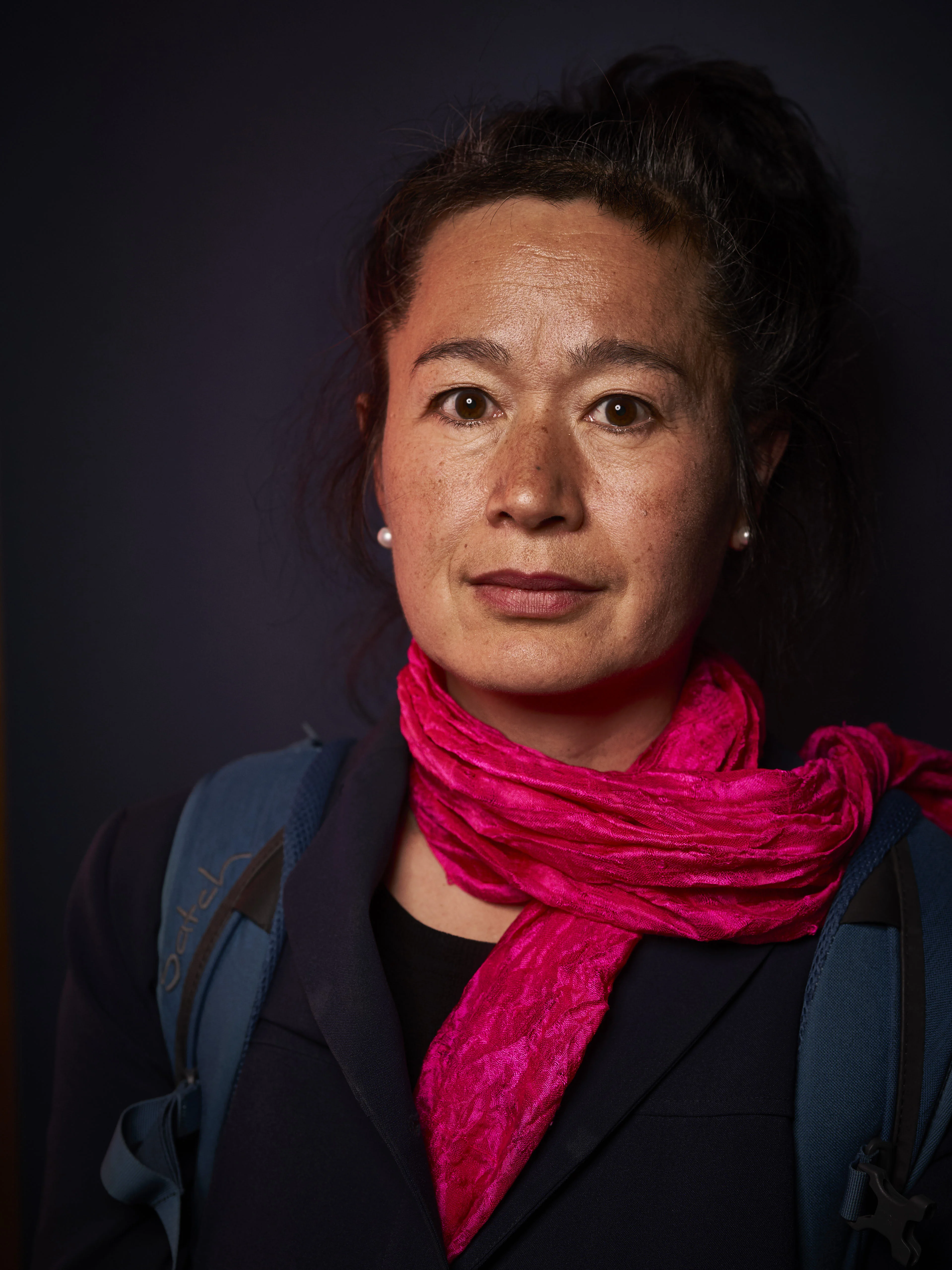
Image from Wikipedia
Image from Wikipedia
Hito Steyerl – The Sharp-Witted Voice Between Film, Art, and Theory
One of the Most Influential Contemporary Artists
Hito Steyerl, born in 1966 in Munich, is regarded as one of the most influential voices in international contemporary art. She works as a filmmaker, artist, and author, merging essayistic documentary film, theory, and visual arts into a distinctive practice. Her works revolve around digital image politics, post-colonial critique, feminist representation issues, and the power structures of global media circulation. Her films are showcased in museums, film festivals, and exhibitions worldwide; at the same time, she acts as a commentator, critic, and educator in the art scene. ([en.wikipedia.org](https://en.wikipedia.org/wiki/Hito_Steyerl?utm_source=openai))
Biographical Origin: Munich, Film School, Analytical Perspective
Steyerl studied documentary film directing at the Hochschule für Fernsehen und Film München from 1992 to 1998. This education significantly shaped her later approach: she does not think in fixed genre boundaries but in image structures, narrative breaks, and political perspectives. Early on, she developed a language that understands filmic form as a tool for analysis, intertwining aesthetic precision with critical theory. ([andrewkreps.com](https://www.andrewkreps.com/news/hito-steyerl-at-art-tower-mito-japan?utm_source=openai))
Her artistic development was not supported by a conventional career in music or entertainment but rather by a consistently intellectual and institutionally critical stance. Steyerl navigates between essay film, installation, text production, and teaching. This plurality makes her work appealing to art audiences, theory enthusiasts, and a broader public: she not only explains the world but also deconstructs the images through which this world is narrated. ([nbk.org](https://www.nbk.org/en/diskurs/steyerl?utm_source=openai))
The Artistic Breakthrough: Essay Film as Contemporary Commentary
Hito Steyerl became internationally visible, especially through works that negotiate the relationship between image, technology, and power with great clarity. Pieces such as How Not to Be Seen, Lovely Andrea, The Factory of the Sun, and Hell Yeah We Fuck Die exemplify her method: she combines documentary research with media collage, ironic emphasis, and political sharpening. This results in a form of essay film that intervenes more than it illustrates. ([en.wikipedia.org](https://en.wikipedia.org/wiki/Hito_Steyerl?utm_source=openai))
Her engagement with digital culture is particularly poignant. Steyerl examines how images circulate in social networks, war economies, and global data streams, simultaneously questioning who controls them and who is controlled by them. This perspective gives her works a rare contemporary relevance. They are not merely artworks but precise diagnoses of a present where visibility, surveillance, and political power are inextricably intertwined. ([kunstsammlung.de](https://www.kunstsammlung.de/press/Hito_Steyerl_I_Will_Survive_A_Digital_min.pdf?utm_source=openai))
Work and Present: Exhibitions, Biennials, and New Projects
Steyerl's international presence is exceptionally dense. Her works have been featured at documenta 12 and documenta fifteen in Kassel, as well as at the Venice Biennale in 2013, 2015, 2019, and 2023, and at the Münster Sculpture Projects 2017. These repeated invitations not only mark recognition but also the continued relevance of her work for central debates in contemporary art. ([en.wikipedia.org](https://en.wikipedia.org/wiki/Hito_Steyerl?utm_source=openai))
Currently, she remains productive and present in the exhibition scene. The MAK in Vienna will showcase her installation Mechanical Kurds in 2025, including it in a solo exhibition that also features Hell Yeah We Fuck Die from 2016. At the same time, the MAK references a new video piece produced in 2025 that examines developments in artificial intelligence. This illustrates how consistently Steyerl sharpens and develops her artistic language in relation to the present. ([mak.at](https://www.mak.at/en/press/hito_steyerl?utm_source=openai))
Discography? Not in the Classical Sense – But a Canon of Works with Iconic Titles
For Hito Steyerl, there is no discography in the musical sense, but there is a canon of works that impacts the art world similarly to a celebrated album series in music history. Her central works include How Not to Be Seen: A Fucking Didactic Educational .MOV File, The Factory of the Sun, Lovely Andrea, Strike, Power Plants, and Mechanical Kurds. These works form a cohesive oeuvre in which media criticism, feminist perspectives, and geopolitical reflection intertwine. ([afterall.org](https://www.afterall.org/videos/hito-steyerl-strike-2010-28s-hdv/?utm_source=openai))
Her art circulates not only in museums but also in publications, catalogs, and institutional programs. The publishing house of the Walther König bookstore published a comprehensive catalog of her work as early as 2010; additionally, press texts and exhibition materials document her continuous international reception. This connection between work, text, and public debate gives Steyerl's practice a rare depth. ([hitosteyerl.net](https://www.hitosteyerl.net/?utm_source=openai))
Style, Method, and Aesthetic Signature
Steyerl's style is analytical, pointed, and visually dense. Her films and installations utilize archival material, voice-over, digital surfaces, performative elements, and theoretical emphasis. The result is not a distanced art about the world but a form of thinking in images that actively draws viewers into the construction of meaning. ([hitosteyerl.net](https://www.hitosteyerl.net/?utm_source=openai))
Her ability to intertwine pop culture, theory, and political analysis is particularly striking. In Hell Yeah We Fuck Die, for example, she plays with a phrase that, according to the accompanying text by the MAK, resembles commonly used words in the English-language music charts of the 2010s while simultaneously capturing a global crisis atmosphere. This is precisely where the special quality of her work lies: she reads the surface of the media as a political symptom. ([mak.at](https://www.mak.at/en/education/short_and_sweet_hito_steyerl_2025-12-09_1815?utm_source=openai))
Cultural Influence, Awards, and Authority
The influence of Hito Steyerl extends far beyond the field of visual arts. The art magazine ArtReview has listed her on its annual “Power 100” since 2013; in 2017, she was the first woman to top the list. In 2019, she received the Käthe Kollwitz Prize, and in 2021, she declined the Federal Cross of Merit. These milestones showcase an artist who is not only visible but also politically reflects on her visibility. ([adk.berlin](https://www.adk.berlin/en/press/press-pack/adk19_KKP_Steyerl_Pressedossier_EN.pdf?utm_source=openai))
Academically and institutionally, she is also exceptionally present. Since 2024, Steyerl has been a professor of Current Digital Media at the Academy of Fine Arts in Munich. At the same time, she remains an in-demand international speaker and author, whose texts and lectures consistently provide reference points in debates about surveillance, AI, representation, and digital public. Her authority is based on artistic practice, theoretical acuity, and institutional resonance alike. ([en.wikipedia.org](https://en.wikipedia.org/wiki/Hito_Steyerl?utm_source=openai))
Conclusion: Why Hito Steyerl Remains Exciting
Hito Steyerl is exciting because she not only comments on the present but also visibly reorganizes it. Her films and installations merge intellectual precision with visual impact and cultural relevance. Those who experience her works encounter an artist who decodes the language of the media while simultaneously revealing the power of their images. Visiting her exhibitions or lectures is always worthwhile – rarely does an artistic position so clearly, intelligently, and uncompromisingly condense the present. ([mak.at](https://www.mak.at/en/press/hito_steyerl?utm_source=openai))
Official Channels of Hito Steyerl:
- Instagram: no official profile found
- Facebook: no official profile found
- YouTube: no official profile found
- Spotify: no official profile found
- TikTok: no official profile found
Sources:
- Hito Steyerl — Filmmaker, Artist, Writer
- MAK Museum Vienna — Press Information on Hito Steyerl
- MAK Museum Vienna — Short and Sweet: HITO STEYERL
- Kunstsammlung Nordrhein-Westfalen — Hito Steyerl / Power Plants
- Kunstsammlung Nordrhein-Westfalen / Centre Pompidou — Press Dossier
- Akademie der Künste Berlin — Käthe Kollwitz Prize 2019 Press Dossier
- Akademie der Künste — Hito Steyerl, Käthe Kollwitz Prize
- ART at Berlin — Hito Steyerl at Number 1 of the ArtReview Power 100 2017
- Wikipedia: Hito Steyerl
Upcoming Events
... so that the sound of war diminishes, its roar