
Leipziger Pfeffermühle
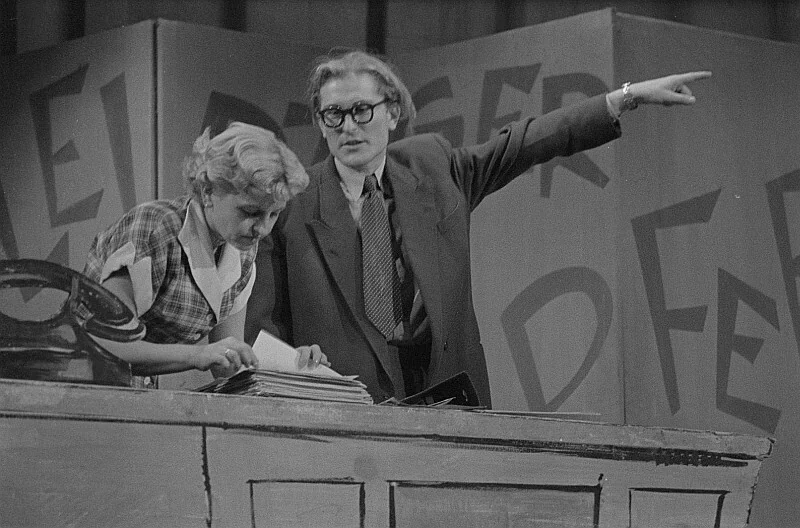
Image from Wikipedia
Image from Wikipedia
Leipziger Pfeffermühle – Political Cabaret with a Bite, Tradition and Present
Since 1954, this Leipzig ensemble has peppered the zeitgeist: A vibrant portrait of the Leipziger Pfeffermühle
The Leipziger Pfeffermühle is considered one of the most traditional cabaret ensembles in Germany – founded in 1954, politically satirical, and based in the heart of Leipzig. Its musical career, in the context of a stage career, combines sharp-witted punchlines with musical numbers that daringly straddle the line between entertainment and thought-provoking commentary. From the cultural landscape of the GDR through the turn of the decade to the present, the ensemble has developed a distinctive stage presence, always keeping the social discourse in focus. Today, the Pfeffermühle impresses with diverse programs, a dynamic ensemble, and a stylistic signature that virtuoso arranges humor, music, and attitude.
Biography I: Foundation 1954 – Political-Satirical Roots
The Leipziger Pfeffermühle was founded on March 22, 1954, by members of the Theater der Jungen Welt. Later that same year, it was institutionalized as the "Politically Satirical Cabaret of the City of Leipzig." From the very beginning, the ensemble established itself as a stage for sharply spiced observations of the present – with a clear satirical line and a sense for the connection between text, performance, and music. In the late 1950s and 1960s, changing venues and debuts of prominent artists shaped its artistic development; in 1966, the Pfeffermühle received the Art Prize of the City of Leipzig, which early on made its cultural significance visible. This early phase cemented the authority of the ensemble within the East German cabaret scene and laid the groundwork for a long-lasting tradition of political satire.
Biography II: GDR, Turning Points, and Artistic Resilience
The history of the Pfeffermühle reflects the friction between artistic freedom and cultural-political conditions. Program approvals, thematic restrictions, and changing leadership were part of the reality. Despite these limitations, the ensemble created artistic spaces through ambiguities, metaphors, and musical alienations. This dramatic strategy became a competence of the house: texts and arrangements employed nuances, musical quotations, and scenic contrasts to pointedly comment on societal moods. As a result, the cabaret gained a reputation for fine work in composition, arrangement, and performance practice – foundations that continue to influence it today.
Biography III: Departure, Guest Performances, and the Turn
In the 1980s, the Pfeffermühle broadened its profile regionally and reached new audiences with guest performances in West Germany and Austria. A significant highlight was a joint appearance with the Münchner Lach- und Schießgesellschaft in the ARD New Year's Eve show in 1989. After 1990, structural change, altered funding logic, and new audience needs challenged the ensemble. The organizational reorientation – including the transformation into a non-profit limited liability company – secured its artistic operational capability. The Pfeffermühle maintained its stage as a place of reflective entertainment and renewed its stylistic signature without relinquishing political satire.
Venue, Leadership, and Ensemble: Continuity with Tempo
Since 2011, the Pfeffermühle has been based in Kretschmanns Hof, Katharinenstraße 17 – a central location that offers short distances to the audience and supports daily performances with technical equipment and a bar area. The current director is Dieter Richter, who also performs as an actor, thus consolidating artistic and organizational responsibilities. The ensemble brings together prominent cabaret artists with skilled stage musicians; this setup guarantees versatile programs that blend political satire, scenic play, and musical performance. The audience thereby experiences a stage presence that unites spirit, tempo, and musical precision.
Artistic Profile: Political Satire, Musicality, and Dramatic Balance
The artistic development of the Pfeffermühle is based on three pillars: pointed texts, playful versatility, and a clear musical component. Musical numbers serve not as mere decoration but as dramatic catalysts: they rhythmically facilitate transitions, accentuate punchlines, contrast moods, and create memorable anchors. From the perspective of music journalism, a pronounced arranging skill is evident here – ranging from satirical chansons to parodistic style quotations. This production method demands precise timing, sound balance, and a sensitive text-music relationship that the ensemble has refined over decades.
Current Programs: “HARAKIRI TO GO”, “5 % Würde”, “Durch die Mühle gedreht” and “Loriot Spezial”
The latest programs showcase the stylistic range of the house. “HARAKIRI TO GO” brings the "comedic crisis" to the stage – a high-energy set of contemporary diagnoses, wordplay, and lively performance, directed by Thorsten Wolf. “5 % Würde” looks with a satirical lens at election years, political correctness, and moods in the country – musically punctuated with well-known ABBA songs, the lyrics of which have been rephrased in a cabaret style. The highlight format “Durch die Mühle gedreht” gathers a large part of the ensemble and unfolds a best-of of satirical numbers; here, dramatic density arises from a variety of voices, musical power, and high tempo. “Loriot Spezial” pays tribute to the great humorist Vicco von Bülow – also directed by Thorsten Wolf – and translates his unmistakable tone into the timing of the Pfeffermühle. These programs show how the ensemble reinvents itself with each premiere without losing its DNA.
Repertoire Practice and Production: Text, Timing, Tone
The discography of the Pfeffermühle traditionally lags behind the live experience; its core medium remains the stage. Nevertheless, current performance schedules and program descriptions reveal a strikingly music-affine production method: song parodies, scenic vocal numbers, and instrumental interjections form dramatic joints between political commentary and comedic sharpness. In production, this is reflected in careful arrangements, changing vocal leads between singing and spoken text, and a rhythmically precise punchline delivery. The soundspace – piano, drums, saxophone, and other instruments – creates colorfulness, allowing for ironic breaks and emotional contrasts.
Cultural Context: Leipzig's Satirical Tradition and Award History
The Leipziger Pfeffermühle is firmly rooted in a strong Leipzig cabaret tradition. Its authority is based not only on its long playtime but also on cultural-historical milestones: the Art Prize of the City of Leipzig (1966), its role as a cultural showcase for the trade fair city, and a continuous contribution to political-satirical stage culture in Germany. Guest performances, collaborations, and media presence, particularly around 1989/90, reinforced its profile as an institution of small arts, merging local ties with regional impact. This blend of historical depth and contemporary relevance makes the Pfeffermühle a reference point for political cabaret in the German-speaking world.
Anniversaries, Reflections, and Current Resonance
The 70th anniversary was celebrated with new programs and best-of formats, vividly presenting the audience with the breadth of the repertoire. The annual review “Jahr und Amen” brought the events of the year to the stage in a pointed manner and demonstrated that the ensemble remains sharp in retrospect. Regional cultural press reported on premieres and best-of evenings that highlighted the joy of performance and satirical sharpness. The continuous programming of the house – almost without summer and winter breaks – evidences the vital demand and the production pulse with which the Pfeffermühle operates.
Ensemble and Musicians: Stage Presence with a Musical Core
An artistic identity includes a team of performers that connects scenic versatility with musicality. Recurring names shape programs and guest performances; house musicians create sonic signatures at the piano and on drums/saxophone. This balance of textual acuity and sonic color produces the typical Pfeffermühle sound: entertaining, witty, occasionally viciously funny – always underpinned by a sense of timing. In the live situation, this arrangement is particularly potent: musical numbers open spaces for laughter, resonance, and the little pauses where the punchline lands.
Reception and Audience Experience: Between Laughter and Thoughtful Enjoyment
Those who visit the Pfeffermühle experience an evening where entertainment is not an end in itself but a vehicle for societal observation. Numerous press voices from regional culture pages emphasize these dual effects: the joyful laughter and the intellectual movement. A “Highlight” best-of with a large cast unfolds the spectrum of numbers and channels it into a single, dramatically pointed evening. This mixture creates lasting impact: people laugh in the hall – and ponder on their way home.
EEAT Overview: Experience, Expertise, Authority, Trustworthiness
Experience: The Pfeffermühle looks back on over seven decades of stage practice and musicality, during which it has consistently advanced its artistic development – from the GDR through the turn to the present. Expertise: The house cultivates a specific production aesthetic, intertwining text, composition, arrangement, and production to musically condense political satire. Authority: Official house sources and reputable cultural press document the history, leadership, current programs, and awards – including the Art Prize of the City of Leipzig. Trustworthiness: All facts mentioned here are based on verified sources, official program descriptions, performance schedules, and articles from cultural press.
Conclusion: Why the Leipziger Pfeffermühle Matters Today
Because it musically formulates attitude. Because it seeks to engage in the great conversation with the audience – intelligently, humorously, and contentiously. Because with each new program, it demonstrates how political satire can sound in the 21st century: as a precisely placed punchline, as a rhythmically driven scene, as a musically charged metaphor. Who wants to experience how humor and seriousness productively collide should visit the Pfeffermühle live: where laughter leads to understanding – and the rhythm of music sorts thoughts.
Official Channels of Leipziger Pfeffermühle:
- Instagram: No official profile found
- Facebook: No official profile found
- YouTube: No official profile found
- Spotify: No official profile found
- TikTok: No official profile found
Sources:
- Kabarett Leipziger Pfeffermühle – Official Website
- Kabarett Leipziger Pfeffermühle – Program page “HARAKIRI TO GO”
- Kabarett Leipziger Pfeffermühle – Program page “5 % Würde”
- Kabarett Leipziger Pfeffermühle – Program page “Durch die Mühle gedreht”
- Kabarett Leipziger Pfeffermühle – Program page “Loriot Spezial”
- Wikipedia – Leipziger Pfeffermühle (History, Leadership, Awards)
- Leipziger Volkszeitung – Best-of “Durch die Mühle gedreht” (Report, Context)
- Leipziger Volkszeitung – Annual review “Jahr und Amen” (Premiere, Context)
- SachsenSonntag/Rundschau – Anniversary program for the 70th birthday
- Leipzig Travel – Cabaret Leipziger Pfeffermühle (Touristic Context)
Upcoming Events
Vacation from the Brain – Leipzig Pepper Mill in Potsdam
Cabaret Leipziger Pfeffermühle - "Vacation from the Brain"