
Les Arts Florissants
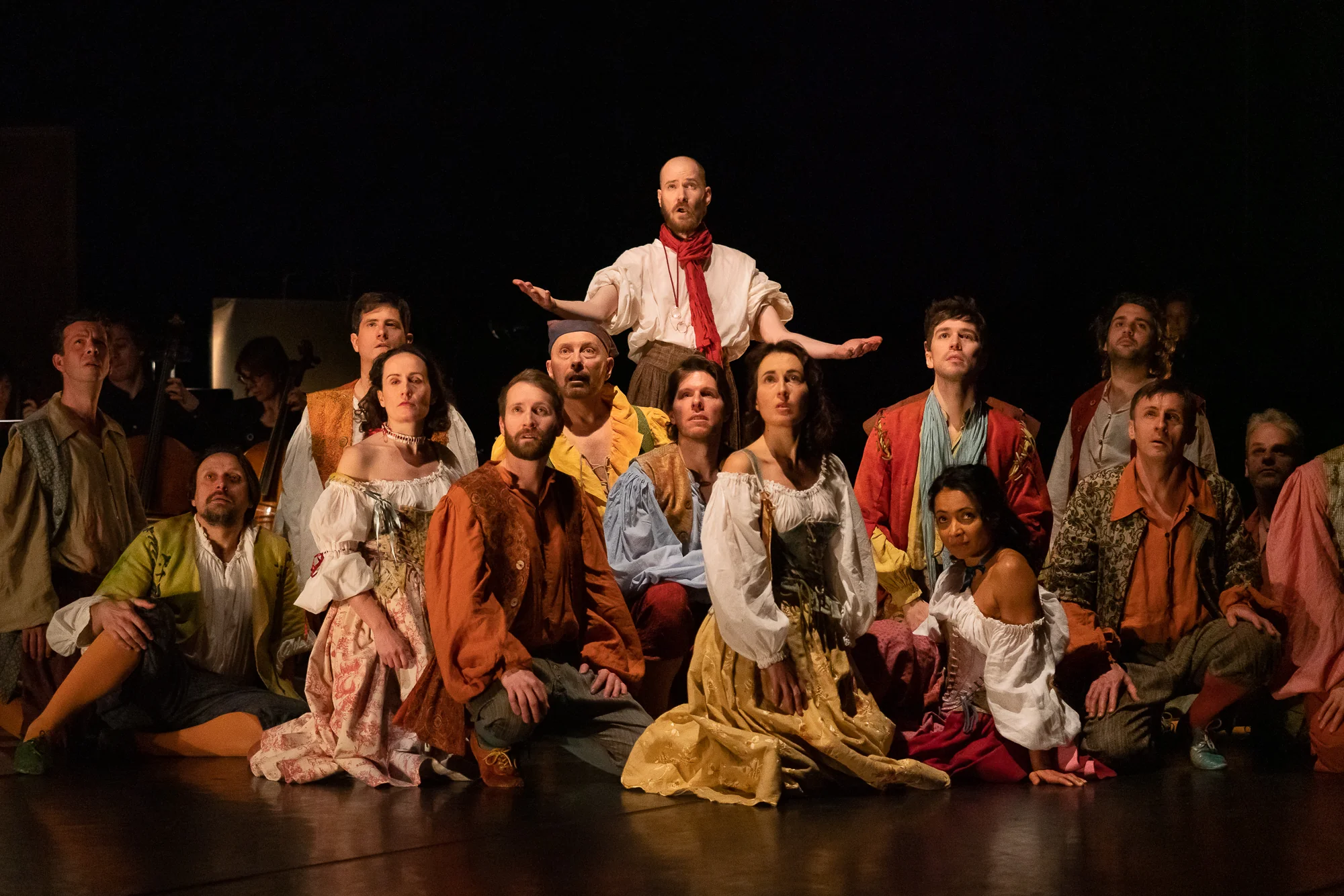
Image from Wikipedia
Image from Wikipedia
Les Arts Florissants: The Stylistic Influence of Historical Performance Practice
An ensemble that has made Baroque music audible again
Les Arts Florissants is one of the most influential ensembles in Early Music. Founded in 1979 in Caen by William Christie, the ensemble quickly became an international reference for French Baroque music and historical performance practice. The name refers to Marc-Antoine Charpentier's opera "Les Arts florissants," thereby establishing an artistic program: the rediscovery, refinement, and emotional liberation of a repertoire that long stood on the fringes of concert life. ([arts-florissants.org](https://www.arts-florissants.org/en/music/ensemble-les-arts-florissants))
Today, Les Arts Florissants represents a sound ideal that combines musicology, stylistic precision, and theatrical presence. William Christie continues to shape the artistic identity, while Jonathan Cohen appears as a cellist and increasingly also as a conductor and Paul Agnew has been acting as musical co-director since 2019; the official representation also names Agnew as co-musical director since 2020. This personnel continuity explains why Les Arts Florissants have remained both tradition-conscious and vibrant. ([en.wikipedia.org](https://en.wikipedia.org/wiki/Les_Arts_Florissants_%28ensemble%29?utm_source=openai))
Biography: From the Founding Moment to an International Beacon
William Christie, born in Buffalo and having settled in France, gave a decisive turn to his own career in 1979 with the founding of Les Arts Florissants. From an artistic vision emerged an ensemble that set standards on opera stages, in concert halls, and on recordings. The official ensemble description emphasizes Christie's distinctive style as a musician and theatrical figure, adept at both grand productions and chamber music transparency. ([arts-florissants.org](https://www.arts-florissants.org/en/music/ensemble-les-arts-florissants))
The historical significance of the ensemble also lies in the fact that it not only performed works of the French Baroque but in many cases also brought them back into the repertoire. Critical sources and media highlight that Les Arts Florissants played a crucial role in the renaissance of operas and stage works by Lully, Rameau, and Charpentier. This made the ensemble a catalyst of an entire movement that today firmly roots Early Music in international concert life. ([prestomusic.com](https://www.prestomusic.com/classical/artists/1088--les-arts-florissants))
Career Development: Historical Performance Practice as an Artistic Mission
Les Arts Florissants have never understood themselves as merely a specialist ensemble, but as an interpretative school. The official website has referred for decades to a comprehensive cultural and educational program that includes musical projects, educational work, festivals, and the preservation of cultural heritage. This complexity shows that the ensemble perceives historical performance practice not as a museum concept, but as a living present. ([arts-florissants.org](https://www.arts-florissants.org/en))
The connection between the ensemble and the promotion of young talent is particularly strong. Through the Academy Le Jardin des Voix, networks and careers have emerged that have significantly shaped the field of Early Music; Presto Music mentions names associated with Christie, including Christophe Rousset, Hervé Niquet, Marc Minkowski, and Jonathan Cohen. Paul Agnew also grew into a leadership role from within the practice of the ensemble, further strengthening the artistic continuity. ([prestomusic.com](https://www.prestomusic.com/classical/artists/1088--les-arts-florissants))
Discography: Reference Recordings with Impact
The discography of Les Arts Florissants is closely linked to the rediscovery of French Baroque opera. Presto Music points to key recordings of Rameau's "Hippolyte et Aricie" and "Les Fêtes d’Hébé," Handel's "Acis and Galatea," and Purcell's "King Arthur," which received Gramophone Awards in the 1990s. Additionally, there are Monteverdi madrigals on their own label, underscoring the ensemble's ambition to not only document historical repertoire but to rethink it sonically. ([prestomusic.com](https://www.prestomusic.com/classical/artists/1088--les-arts-florissants))
Recent releases also demonstrate how vibrant this work remains. On the official site of the ensemble, "Nei giardini d’amore" under the musical direction of William Christie and "Orphée et Euridice" under Paul Agnew are announced for 2025; the latter is scheduled for September 12, 2025, and has been awarded a Diapason d’or. Such releases confirm that Les Arts Florissants continue to advance the repertoire between research, edition, and sonic dramaturgy. ([arts-florissants.org](https://www.arts-florissants.org/en/cd-dvd/nei-giardini-damore))
Current Projects: Stage, Studio, and Outreach
The official annual report for 2023 shows an ensemble that engages in much more than just concert activity. Four masterclass programs in New York, several new releases on the harmonia-mundi label, and extensive educational work with schools, families, and young musicians in Vendée and beyond are mentioned. The image is clear: Les Arts Florissants see themselves as a cultural institution with international reach and regional roots. ([medias.arts-florissants.org](https://medias.arts-florissants.org/sites/default/files/2025-02/RAPPORT-ACTIVITE%CC%81_ARTS-FLORISSANTS-2023_ENG_V2.pdf))
At the same time, their digital presence remains an important part of the present. The annual report notes increasing reach on Instagram, Facebook, and X, as well as significant activity in video and audio formats. Although Les Arts Florissants are primarily known for their stage and studio work, outreach through digital channels has now become firmly established in the ensemble's brand identity. ([medias.arts-florissants.org](https://medias.arts-florissants.org/sites/default/files/2025-02/RAPPORT-ACTIVITE%CC%81_ARTS-FLORISSANTS-2023_ENG_V2.pdf))
Style and Sound Language: Elegance, Theatre, and Historical Precision
The sound of Les Arts Florissants is immediately recognizable: clearly contoured, rhetorically sharpened, and supported by intense affective expression. Specialized media describe the ensemble's specialty primarily in the French Baroque repertoire; the historical articulation, the transparency of the strings, and the expressive treatment of the vocal line are among its trademarks. It is precisely in this that the exceptional position of the ensemble in the music history of recent decades lies. ([prestomusic.com](https://www.prestomusic.com/classical/artists/1088--les-arts-florissants))
The official ensemble description highlights Christie's theatrical approach, which closely intertwines concert language and opera direction. This connection makes Les Arts Florissants so exciting: it is not just about "authentic" tonal colors, but about musical rhetoric, dramatic tension, and a vivid reconstruction of historical expressions. As a result, even well-known works gain a new, immediate presence. ([arts-florissants.org](https://www.arts-florissants.org/en/music/ensemble-les-arts-florissants))
Cultural Influence: From Rediscovery to a Defining Institution
Les Arts Florissants have profoundly changed the perception of Early Music. The engagement with Charpentier, Lully, and Rameau has contributed significantly to understanding French Baroque not merely as a special interest, but as a central component of the European music canon. Reception in the music press and awards for important recordings confirm this influence over decades. ([prestomusic.com](https://www.prestomusic.com/classical/artists/1088--les-arts-florissants))
The institutional orientation is also noteworthy. Official materials mention festivals, educational programs, residences, artistic collaboration, and international exchange formats as integral components of their work. This creates an ensemble profile that connects artistic authority with social relevance and transposes historical performance practice into a contemporary cultural context. ([arts-florissants.org](https://www.arts-florissants.org/en))
Conclusion: Why Les Arts Florissants Continues to Fascinate
Les Arts Florissants is more than an ensemble for Early Music. It is an artistic mindset, a historically informed body, and a school of listening that connects the Baroque with intellectual depth and sensual power. Those who want to understand how historical performance practice can transform into modern culture will find one of the most convincing examples here. ([arts-florissants.org](https://www.arts-florissants.org/en/music/ensemble-les-arts-florissants))
For this reason, a live experience with Les Arts Florissants is particularly worthwhile. The ensemble's stage presence, stylistic discipline, and theatrical energy create an effect in the concert hall that recordings can only hint at. Anyone who is passionate about Baroque music, sonic excellence, and great musical storytelling should definitely experience this ensemble live. ([arts-florissants.org](https://www.arts-florissants.org/en/music/ensemble-les-arts-florissants))
Official Channels of Les Arts Florissants:
- Instagram: https://www.instagram.com/lesartsflo/
- Facebook: https://www.facebook.com/lesartsflorissants/
- YouTube: https://www.youtube.com/channel/UCm4r77GGMy09zP2KhjS07Gg
- Spotify: no official profile found
- TikTok: no official profile found
Sources:
- Les Arts Florissants - Official Website
- Les Arts Florissants - The Ensemble
- Les Arts Florissants - Orphée et Euridice
- Les Arts Florissants - Nei giardini d'amore
- Les Arts Florissants - Annual Report 2023
- Presto Music - Les Arts Florissants
- The Guardian - Home listening: Les Arts Florissants and the Sixteen hit 40
- Los Angeles Times - Review: William Christie, with small Les Arts Florissants group, works magic
- The Washington Post - Music review: Les Arts Florissants
- Wikipedia: Image and Text Source