
Manfred Mann’s Earth Band
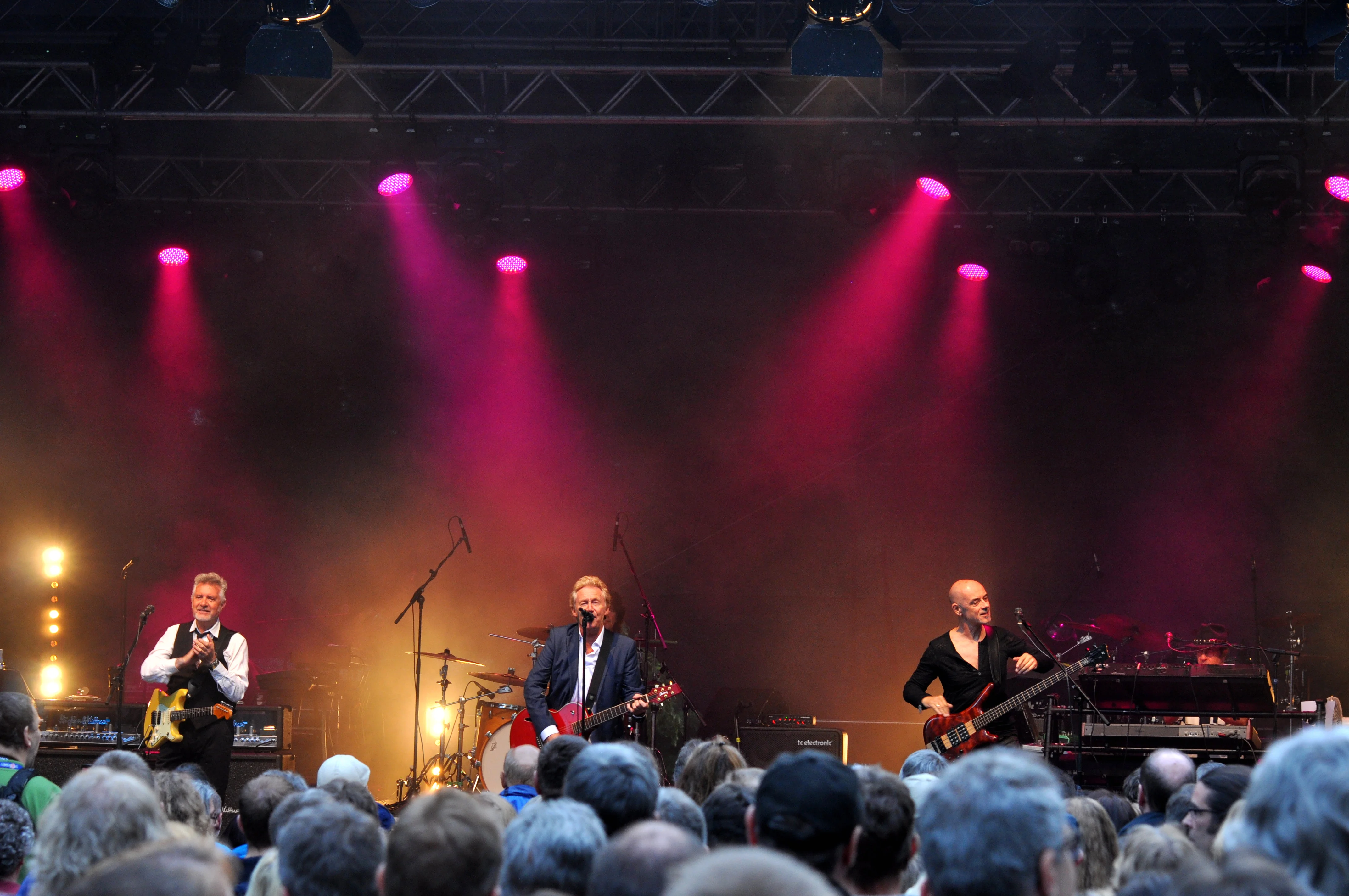
Image from Wikipedia
Image from Wikipedia
Manfred Mann’s Earth Band – British Rock with a Progressive Core and Iconic Cover Versions
A Band Between Rock, Prog, and Pop Culture Resonance
Manfred Mann’s Earth Band is one of the defining British rock formations of the 1970s and continues to embody a mix of progressive rock, blues rock, jazz rock, and intricately crafted cover versions. The band was founded in 1971 by South African-born keyboardist Manfred Mann, who consciously chose a heavier, more experimental sound after early successes in pop and R&B. This artistic realignment gave rise to a body of work that constantly generated new tensions between mainstream appeal, musical depth, and pronounced stage energy. (de.wikipedia.org)
The very name of the group signals continuity and a new beginning at the same time: Manfred Mann used his well-known name as a bridge into a different era, where synthesizers, more complex arrangements, and longer song forms formed the foundation. The Earth Band was seen not just as a backing band, but as an independent artistic project that reinterpreted familiar songs and transformed them into a distinctive rock guise. This connection of recognizability with stylistic independence constitutes a significant part of their enduring legacy. (de.wikipedia.org)
Biographical Roots: From R&B to Rock Expansion
The backstory of the Earth Band dates back to the early 1960s, when Manfred Mann initially celebrated British chart successes with his own band and established himself as a keyboardist with a strong sense of melody and arrangement. After stints with Manfred Mann and Manfred Mann Chapter Three, the search for a freer, less format-bound expression led him in 1971 to establish Manfred Mann’s Earth Band. This step was more than just a change in lineup: it marked a departure from the three-minute pop format towards a musician's perspective focusing on improvisation, harmonic work, and atmospheric density. (de.wikipedia.org)
Early phases of the band combined rock energy with jazz elements, and especially the first albums showcase how strongly the Earth Band thrived on the friction of varied influences. Official discography and biography pages situate the band within a tension field between progressive rock and heavy, organic guitar sound, while AllMusic describes the group as a formation that moved from pure pop functionality towards a synthetically and rhythmically expanded understanding of rock. The evolution did not unfold linearly, but in waves of stylistic densification, personnel changes, and new accents. (allmusic.com)
The Breakthrough: The 1970s as a Golden Decade
The band's commercially strongest phase began in the mid-1970s and is closely associated with the albums Solar Fire, The Roaring Silence, and Watch. According to the German Wikipedia page, The Roaring Silence (1976) and Watch (1978) were among the band's greatest commercial successes; the official chart archive confirms the enduring presence of individual tracks in the music charts. Particularly, Blinded By the Light became the band's global trademark, making Manfred Mann’s Earth Band known even outside the rock scene. (de.wikipedia.org)
The success was based not only on radio playability but also on a rare combination of song dramaturgy and sonic impact. The band mastered the art of not just reproducing cover material but recontextualizing it: Bob Dylan, Bruce Springsteen, and other foreign compositions became dense, often epically constructed rock pieces with a distinctive keyboard color and a powerful rhythm section. It was precisely this transformative performance that made the Earth Band intriguing for listeners who sought not just songs in rock music but also the artistry of production and arrangement. (www1.wdr.de)
Discography: Albums, Singles, and Key Milestones
The band's official music overview lists the major releases in a clear chronology: the debut Manfred Mann’s Earth Band (1972), followed by Messin’, The Good Earth, Solar Fire, Nightingales & Bombers, The Roaring Silence, Watch, Angel Station, Chance, Somewhere in Afrika, Criminal Tango, Plains Music, Soft Vengeance, 2006, Mann Alive, and the later retrospective 40th Anniversary Box Set. This selection showcases the spectrum from hard rock work to conceptual approaches and late reflections on their own oeuvre. (manfredmann.co.uk)
Streaming data also underscores the lasting relevance of individual songs: on Spotify, Blinded By The Light, Davy’s On The Road Again, Spirits In The Night, Mighty Quinn, For You, and The Road To Babylon are among the defining titles of the catalog. The official chart archive also highlights the band's hit history within the British context, while the trade press particularly emphasizes the album Watch as the most successful release in Germany. This results in an image of a band whose discography is not only rich but, at its core, very concentrated: few but salient milestones sustain the perception to this day. (open.spotify.com)
Musical Development: From Prog Rock to Textural Rock Architecture
Stylistically, Manfred Mann’s Earth Band can most accurately be described as blues rock with significant influences from jazz rock, rhythm & blues, and experimental music. The German Wikipedia emphasizes this mixture and also points to influences that range from Miles Davis’ electric jazz albums to progressive rock forms. This explains why the band is particularly effective in longer instrumental sections, complex keyboard layers, and dynamic arcs of tension: they conceive rock not just as a genre, but as a form of architecture. (de.wikipedia.org)
The early works show even more the tendency towards sonic risk, while the major successes of the 1970s perfected the balance between experimentation and accessibility. The Good Earth stages an ecological theme and is also memorable for the distinctive marketing idea of a land share in Wales, giving the band an additional cultural-historical profile. Somewhere in Afrika addressed apartheid and South African references, underscoring that the Earth Band consistently transcended mere rock entertainment. (de.wikipedia.org)
Current Projects and Late Stage Presence
Even decades after major studio successes, the band remains active and present. The official website lists extensive tour dates for 2026 in Germany, Switzerland, Austria, Norway, Sweden, and Denmark; this shows that the Earth Band continues to function as a live attraction. The site also points to current news and a well-maintained repertoire of catalog updates, new releases, and digital presence. (manfredmann.co.uk)
Of particular interest is the official mention of new or recent activities around the archive and repertoire management. The band operates its own music overview, a video section with official clips, and a merch/news structure that keeps the catalog consistently visible. For the present, this means: Manfred Mann’s Earth Band thrives not only on nostalgia but on a well-curated, ongoing reception of their artistic history. (manfredmann.co.uk)
Press Opinions and Critical Reception
In the music press, the band is often described as one of those formations that frequently fly under the radar in the classic rock canon, even though their hits and albums resonate for decades. AllMusic highlights the band as one of the most competent British invasion and rock formations and situates their style between R&B roots, blues rock, and a stronger, synthesizer-driven rock. Critic Robert Christgau also emphasizes in his review the tension between driving riffs and an underlying, almost jazzy tendency towards resolution. (open.spotify.com)
In the German-speaking feuilleton and concert announcements, the Earth Band regularly appears as a long-lasting live power with high recognition value. A cultural magazine description alludes to classics like Pretty Flamingo, Mighty Quinn, Blinded By The Light, and Davy’s On The Road Again, as well as sold-out concerts and enthusiastic fans. This resonance shows that the band works not only because of their radio hits but also due to their stage presence and their precisely crafted ensemble play. (leporello-kulturmagazin.de)
Cultural Influence and Legacy
The cultural weight of Manfred Mann’s Earth Band lies in their ability to transform external material into their own idiom. Particularly the Springsteen covers became reference points for how rock music can be transformed through arrangement, sound design, and vocal dynamics. At the same time, the band remained open to conceptual ideas, political themes, and stylistic boundary crossings, which extended their influence far beyond classic oldie rotation. (www1.wdr.de)
The band’s loyal following in Germany, Britain, and other parts of Europe is evidenced by chart references, ongoing tour activity, and the continuous availability of live and archival material. For music lovers, the legacy of the Earth Band is therefore doubly interesting: on one hand, it represents great songs; on the other, it promotes a specific understanding of rock as a sonically open, thoughtful art form. Within this tension, the group has found its lasting place in the rock canon. (officialcharts.com)
Conclusion: Why Manfred Mann’s Earth Band Remains Fascinating Today
Manfred Mann’s Earth Band remains exciting because the band connects musical intelligence with massive stage power. Their discography tells of bravery in reinterpretation, progressive ideas, strong keyboard and guitar structures, and a sound that remains unmistakable even after decades. For those seeking rock music with depth, historical relevance, and live palpable energy, this is a band that is much more than just a hit maker. (de.wikipedia.org)
Those who experience the Earth Band live receive not only nostalgia but a confidently delivered lesson in rock history. The current tour activity particularly demonstrates that this music continues to breathe on stage and even amplifies its impact in the concert hall. Therefore, it is essential to not only listen to this band but to experience them. (manfredmann.co.uk)
Official Channels of Manfred Mann’s Earth Band:
- Instagram: no official profile found
- Facebook: no official profile found
- YouTube: https://www.youtube.com/channel/UC98Lw7GVRYt8MYblCNkM_tw
- Spotify: https://open.spotify.com/artist/2utNxkLhreF1oIfO8kQT3q
- TikTok: no official profile found
Sources:
- Manfred Mann's Earth Band - Official Website
- Manfred Mann's Earth Band - Tour
- Manfred Mann's Earth Band - Music
- Manfred Mann's Earth Band - Manfred TV
- Spotify - Manfred Mann's Earth Band
- YouTube - Manfred Mann's Earth Band
- Official Charts - Manfred Mann's Earth Band
- AllMusic - Manfred Mann's Earth Band Biography
- Wikipedia - Manfred Mann’s Earth Band