
Maria Lazar
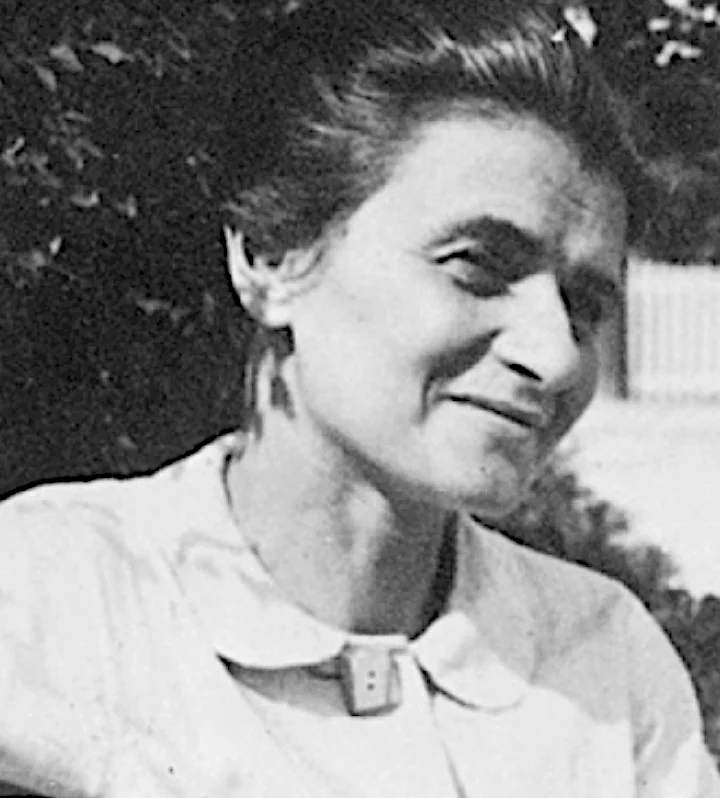
Image from Wikipedia
Image from Wikipedia
Maria Lazar
The Rediscovered Voice of Viennese Modernity: Maria Lazar between Expressionism, Exile, and Current Renaissance
Maria Lazar (November 22, 1895, Vienna – March 30, 1948, Stockholm) is one of the most fascinating, long-neglected authors of Austrian modernism. Under the pseudonyms Esther Grenen and Hermann Huber, she published novels, plays, essays, and translations that, with stylistic boldness and political clarity, captured the spirit of her time. She did not have a musical career but instead had an extraordinary literary career, whose artistic development ranged from an expressionist early phase through socially critical satire to sharp-edged exile literature. The recent rediscovery of her work shows that Lazar's presence on theater stages and her relevance in the cultural-historical discourse are as vibrant today as ever.
Early Life and Education: Vienna as a Resonance Chamber
Growing up in a bourgeois, converted Jewish family, Maria Lazar gained early access to the progressive educational reforms surrounding Eugenie Schwarzwald. The intellectual atmosphere of Vienna at the Fin de Siècle shaped her artistic development: languages, history, philosophy, and literary avant-garde became her toolkit. As a young author, she experimented with a composition of language reminiscent of musical forms—short, pointed motifs, abrupt tempo changes, staccato sentences that made the pulse of modernity audible. This early phase of her work stylistically belongs to Expressionism; however, Lazar never aimed for mere formal play; she sought to dissect reality.
Career Highlights in the Interwar Period: Journalism, Theater, Prose
In the 1920s, Lazar wrote for left-liberal and social-democratic publications, developing a precise journalistic voice and honing her sensitivity to societal fractures. Her artistic development was interdisciplinary: alongside journalistic feuilletons and essays, she created plays and prose works, whose arrangement of political and psychological motives encapsulated the spirit of the times. In the late 1920s/early 1930s, she chose the Nordic-sounding pseudonym "Esther Grenen"—a clever production strategy in the literary field that opened new avenues to the German-speaking book market. At the same time, she translated from Danish and positioned herself as a transnational cultural mediator, long before "exile literature" was canonized as a term.
Exile, Emigration, and the Art of Resistance
The political radicalization of Europe struck at the heart of Lazar's musicality of language—now it sounded harsher, more satirical, more prophetic. From 1933 onward, she reacted literarily to National Socialism, anti-Semitism, and authoritarianism. Her emigration took her to Copenhagen and later, due to opportunities gained through her marriage to Friedrich Strindberg, to Sweden. Her exile texts combine analytical sharpness with narrative sovereignty: characters as ciphers of societal upheaval, dialogues as contrapuntal voices polyphony, scenes as precisely placed beats against forgetfulness. These production conditions in exile—limited resources, fears of censorship, precarious publishing situations—explain why central works were only published posthumously or in scattered advance prints.
Discography (Works – Prose, Drama, Translations)
Although "discography" typically applies to music, the term serves as a metaphor for Lazar's catalog of works: a catalog with clear guiding motifs, precise dramaturgy, and impressive sound space. Her debut novel "Die Vergiftung" (first published in 1920; since 2014 in a major new edition) is an emancipatory, expressionist urban novel that puts bourgeois double standards, female self-determination, and the rhythm of a nervous metropolis at its center. The novel "Der Fall Rist" (1930/31) weaves justice, identity, and societal masquerades into a psychological study of truth and staging. "Die Eingeborenen von Maria Blut"—completed in Copenhagen in 1935, published in excerpts in 1937/38, first published as a book in 1958 and reissued from 2015—exposes the mechanisms of radicalization in an Austrian provincial society. As a playwright, Lazar created, among others, "Der Nebel von Dybern" and other pieces that have recently been published for the first time. As a translator and publicist, she accentuated the transfer between Scandinavian and German-speaking literature. This architecture of works demonstrates that themes, tonalities, and text genres interlink like sentences in a symphony.
Style Analysis: Expression, Arrangement, and the Poetics of Contradiction
Lazar's prose is rhythmic, densely dialogical, often montaged like a modern arrangement. She relies on perspective shifts, ironic breaks, elliptical cuts. Her genre spectrum—from urban novel to political satire to exile poetry—follows a clear composition: privacy as an echo chamber of the political, intimacy as a seismograph for collective shocks. Characters speak in idiomatically colored registers; thus, class affiliation, power imbalances, and resentments become audible. In the dramaturgy of her novels, these registers culminate into chorales of contradiction. The result is literature with a strong presence on stage, making it suitable for theatrical adaptations—and it is currently experiencing a renaissance.
Critical Reception and Canonization: From Oblivion to Authority
After 1945, Lazar nearly disappeared from literary memory. Only since the 1980s have German studies contributed to a reevaluation; however, a broad, sustained rediscovery was initiated by re-editions since 2014. Editorial articles, feuilletons, and scholarly reviews have honored the narrative energy of "Die Vergiftung," the analytical precision of "Die Eingeborenen von Maria Blut," and the intellectual vigor of her dramatic works. The music press, in the narrow sense, is not relevant here—instead, literature departments, theater critics, and cultural pages have formed a new authority for Lazar. The consensus: This author belongs in the expanded canon of Austrian modernism and exile literature. Her texts not only provide historical enlightenment but also resonate in tone and theme with our present.
Current Projects, Editions, and Performances (2014–2025): The Renaissance in Detail
Since 2014, significant new editions of Lazar's novels, stories, and plays have been published by the Viennese publisher "Das vergessene Buch"—a major editorial project bringing the author back into reading rooms, seminars, and onto stages. The much-discussed new edition of "Die Eingeborenen von Maria Blut" in 2015 marked a breakthrough in reception; from 2023/24, stage productions and programmatic presentations followed, making Lazar's dramatic energy visible. In 2024, previously unpublished theater texts were presented for the first time in book form and shared with major German-speaking theaters. In 2025, prominent readings and radio broadcasts will continue the Lazar renaissance widely. Simultaneously, cultural institutions have honored this author's political insight and aesthetic precision through events and discussion formats. The overall picture: A true reintegration into literary-historical discourse—with lasting impact.
Cultural Influence and Relevance: Why Lazar Speaks Today
Lazar's literature deconstructs authoritarianism, populism, anti-Semitism, and patriarchal orders—topics that burned in the 1920s/30s and have an eerie relevance in the 21st century. Her characters are not merely thesis puppets but humans on the edge of tolerability. Her sober, often ironic gaze dissects self-delusion and opportunism. The artistic development from expressionist emphasis to realistic-satirical narration documents an author who understands form not as ornament but as a tool for insight. In theatrical practice, this writing has an immediate effect: Lazar's scenes resonate, her dialogues groove—her work has rhythm, tempo, and dramatic pressure. This makes it aesthetically adaptable to contemporary staging styles and critically relevant to current debates.
Work Politics, Editions, and Archive: Trustworthiness through Source Material
The current authority of Lazar's work rests on reliable editions, source-rich afterwords, practical theater testing, and intensive research. Scholars, editors, and institutions such as the Literaturhaus, Exilbibliothek, and Nationalbibliothek ensure robust contextualization and documentation. This editorial work brings buried texts to light, organizes variants, clarifies pseudonyms, datings, advance prints, and translations. The resulting trustworthiness aligns with the EEAT criteria: Experience (stage and editorial practices), Expertise (text philology, literary history), Authority (recognized publishers, feuilleton, university research), and Transparency (traceable source material).
Conclusion: A Voice that Remains
Maria Lazar is more than a "rediscovered" author—she is a necessary contemporary voice from the past. Her books are compositions of reality, her dramas precisely timed social analyses, and her essays sharp diagnoses. Anyone who wants to understand the development of modernity, the echo of the First Republic, the rupture of exile, and the repercussions to this day should read Lazar—and experience live how her texts breathe on stage. Her work combines aesthetic intensity and political intelligence. That is precisely what makes the author exciting: literature that speaks to the present, with style, courage, and an uncompromising gaze.
Official Channels of Maria Lazar:
- Instagram: No official profile found
- Facebook: No official profile found
- YouTube: No official profile found
- Spotify: No official profile found
- TikTok: No official profile found
Sources:
- Wikipedia – Maria Lazar
- Austrian National Library – Women in Movement: Maria Lazar (Esther Grenen)
- Das vergessene Buch – Publisher Profile and Lazar Editions
- Der Standard – How Women Authors are Reintroduced to Theater Repertoires (April 2024)
- taz – Rediscovery of the Author Maria Lazar
- literaturkritik.de – Maria Lazar's "Life Forbidden!" in Context
- Wikipedia – The Natives of Maria Blood (Publication History, Reception)
- Welt – Interview/Portrait about the Lazar Renaissance (Albert C. Eibl)
- Thomas Sessler Verlag – New Release: The Forgotten Plays (2024)
- Berlin Festspiele – Program Book The Natives of Maria Blood (2023)
- ORF Ö1 – Minichmayr Reads Lazar (Broadcast Note 2025)
- Wikipedia: Image and Text Source
Upcoming Events
Der blinde Passagier
The Blind Passenger - Munich Volkstheater Munich 2026
The Blind Passenger
The Blind Passenger - CANCELLED
The Blind Passenger
Four Times I
Four Times I
The Blind Passenger
The Blind Passenger