Max Frisch
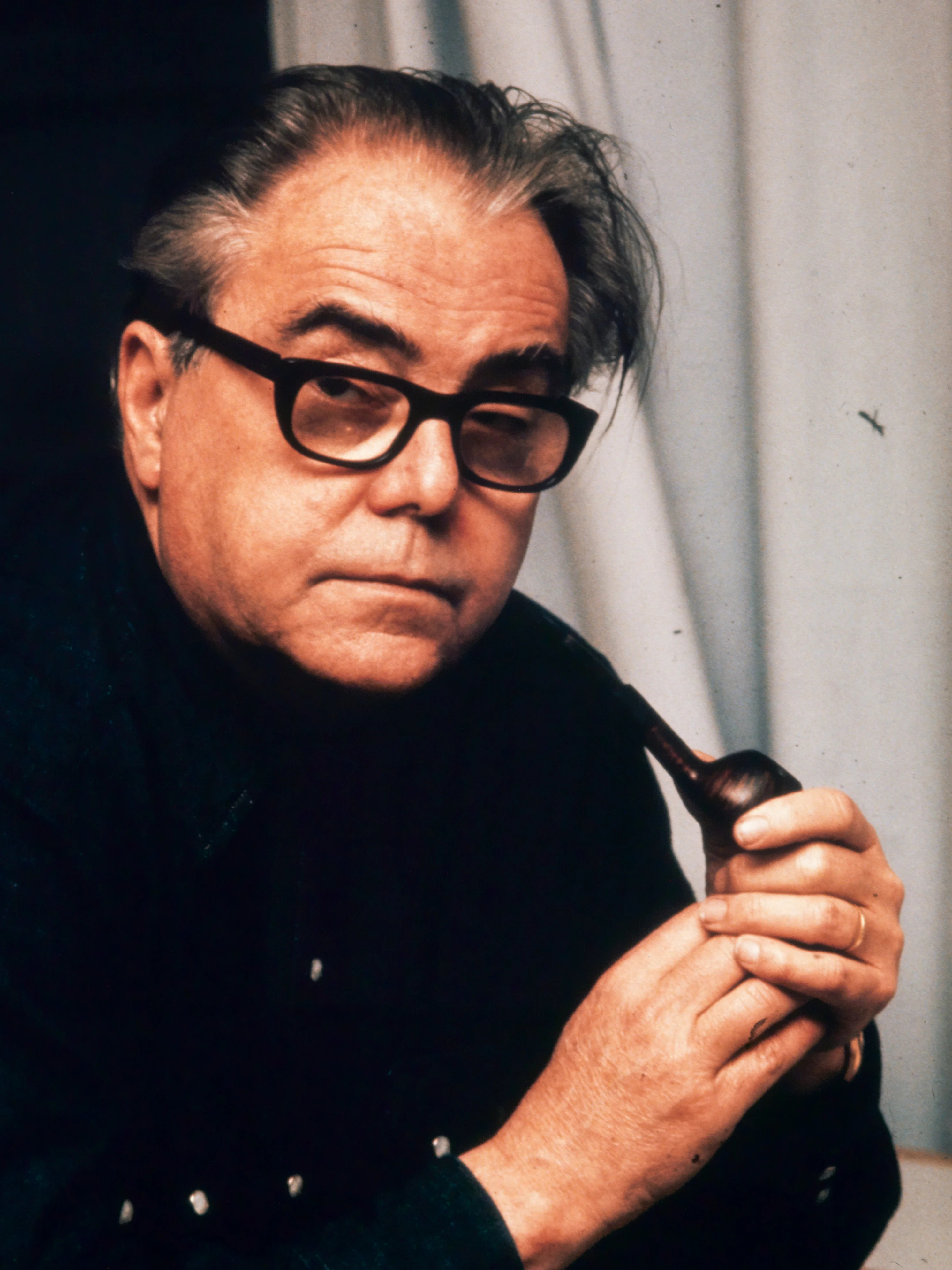
Image from Wikipedia
Image from Wikipedia
Max Frisch – Architect of Narrative, Innovator of German-speaking Theater
A Life Between Architecture and Literature: How Max Frisch Redefined Identity, Role, and Responsibility
Max Rudolf Frisch, born on May 15, 1911, in Zurich and died on April 4, 1991, in the same city, influenced 20th-century literature as a Swiss author and trained architect. His plays "Biedermann und die Brandstifter" and "Andorra," as well as the novels "Stiller," "Homo faber," and "Mein Name sei Gantenbein," reached millions and became integral to school curricula. Frisch combined bourgeois reality, contemporary politics, and philosophical questions into a distinctive prose and stage language. He documented his artistic development in two major diaries, which he regarded as an independent literary form.
Biography: From Zurich to the World – and Back
Growing up in a bourgeois family in Zurich, Frisch initially began studying German literature but abandoned it to pursue practical training as an architect following some early literary attempts. This dual socialization shaped his artistic development: the rigor of design met the openness of literary composition. The experience of mobilization and military service became a catalyst for his early writing, before the post-war years brought travel, theater visits, and intense exchanges with the European intelligentsia. After the global success of "Stiller," he ultimately chose a career in the language of music – a life as a freelance writer, which had him oscillating between Zurich, Rome, Berlin, and New York.
Breakthrough and New Beginning: "Stiller" as a Life Decision
With the publication of the novel "Stiller" in 1954, Frisch achieved literary breakthrough. The book marks the transition from secure bourgeois existence to an uncompromising writing career. The novel, supported by an artful narrative architecture, revolves around questions of identity and the power of external attributions. "Stiller" made Frisch both a bestselling author and a precise observer of a man asserting himself against societal role assignments. This struggle with the construction of the self became a guiding motif in his later works.
On Stage: A Teaching Play Without a Lesson – Theater as a Moral Laboratory
For Frisch, theater became a stage for societal self-examination. "Biedermann und die Brandstifter" dissected the phenomenon of willful blindness to violence and ideology with bitter humor. "Andorra" unfolded in twelve images a parable about prejudices, projections, and guilt. Earlier works like "Graf Öderland" or "Don Juan oder Die Liebe zur Geometrie" grappled with the relationship between freedom, desire, and order. Frisch's stage presence relied not on pathos but on clever arrangements: clear sequences of scenes, recurring motifs, characters addressing their masks – a theater of reduction and precise placement.
Diaries as Aesthetic Experimental Setup
With "Tagebuch 1946–1949" and "Tagebuch 1966–1971," Frisch created a literary form where autobiography, reflection, sketches, and fiction intertwine. The diaries serve as a workshop for composition: materials and characters of future dramas and novels emerge as motifs, fragments of dialogue, or scenic outlines. At the same time, they negotiate how much truth the self can bear in its own narrative – a fundamental impulse of modernity. These laboratory books present Frisch as an author who makes his artistic development transparent and raises writing as a topic in itself.
Style and Themes: Identity, Role, Language
Frisch's prose and drama work with reflections, masks, role reversals. His compositions set traps for the reader: unreliable narrators, broken chronologies, and shifts in perspective. The formal effort serves a clear question: Who are we to ourselves – and who in the eyes of others? Language is never a neutral medium but material that shapes, irritates, and elucidates. In the tradition of existentialist thought, while simultaneously engaging in dialogue with the Swiss public, Frisch explores responsibility, guilt, gender roles, and the limits of the sayable – themes that resonate in contemporary cultural debates.
Reception, Awards, and Authority
Frisch's work gained early international attention. Productions in major German-speaking theaters, translations into numerous languages, and adaptations for film and television made him one of the leading voices of post-war literature. His receipt of the Georg-Büchner-Preis (1958) solidified his position in the canon. The Peace Prize of the German Book Trade (1976) recognized his persistent public engagement against abuse of power and ideological rigidity. Late accolades underscored the author's role as a moral authority, understanding art not as an aesthetic comfort zone but as a social responsibility.
Overview of Works: Novels, Dramas, Diaries
Novels: "Stiller" (1954) as a poetics of asserting identity; "Homo faber" (1957) as a modernist tragedy about faith in technology, chance, and guilt; "Mein Name sei Gantenbein" (1964) as a poetic montage system playing through possible lives. Dramas: "Biedermann und die Brandstifter" (1958) and "Andorra" (1961) as structured plays about adaptation, prejudice, and the blind spots of bourgeois morality; "Graf Öderland" and "Don Juan oder Die Liebe zur Geometrie" as reflections on freedom, desire, and the architecture of societal order. Diaries: "Tagebuch 1946–1949" (1950) and "Tagebuch 1966–1971" (1972) as hybrid forms between notes, essays, narrative, and dramatic sketches.
Production Aesthetics: Architectural Thinking in Narrative
Frisch's work displays a remarkable affinity for architectural thinking: clear floor plans, modular scenes, and supporting motifs as static axes. His arrangements prefer structural economy and functional precision. At the same time, poetic repetitions, thematic refrains, and semantic accents weave through the composition – like a carefully designed load-bearing structure that allows movement. This combination of construction and contingency lends his texts a fresh modernity.
Cultural Influence: School, Stage, Public
Few other German-speaking authors of the 20th century influence school education as profoundly as Frisch does. His plays and novels serve as didactic focal points for topics such as civil courage, prejudice, ethics of technological civilization, and gender roles. In theater practice, his works remain highly adaptable due to their reduced stage directions and discursive openness: they allow for updates in direction, design, and musical arrangement. In the public sphere, Frisch represents literature that takes a stand and demands self-examination – a signature that resonates far beyond literary studies.
Adaptations and Intermedial Resonance
"Homo faber" gained new international visibility with the film adaptation by Volker Schlöndorff. Theater and television productions of "Biedermann und die Brandstifter" and "Andorra" spread the themes into new media contexts. Essayistic works and speeches kept Frisch active as an intellectual who commented on political events without sacrificing his literary independence. This intermedial presence strengthened his authority and opened the work to new reader and audience groups.
Current Research and Editorial Status
The scholarly engagement with Frisch's work remains dynamic. The Max Frisch Archive at the ETH Library continuously assembles materials related to his life, work, and reception through exhibitions, digitizations, and a reference library. New biographical research and annotated editions deepen the understanding of his novels, plays, and diaries. The recently highlighted source access – such as previously difficult-to-obtain youth texts or handwritten notebooks – demonstrates how strongly Frisch's production style is characterized by sketches, revisions, and montages.
Technology, Ethics, Modernity: Why Frisch Remains Relevant Today
The question of how technology shapes life trajectories, how identity is narrated, and how responsibility is shared remains highly relevant. Frisch's literature serves as a corrective against self-deception and as a call for honesty in both the private and political realms. His characters stumble over their own images – revealing how stories shape reality. This is where the unbroken contemporary relevance of this author lies.
Conclusion: A Classic that Continues to Challenge Us
Max Frisch united the rigor of the architect with the imaginative power of the novelist and the analytical sharpness of the dramatist. His discography of narrative – novels, plays, diaries – establishes testing grounds for self-image, society, and language. Anyone who reads Frisch today or experiences him on stage encounters a piece of cultural history that entrusts us with responsibility. Recommendation: see Frisch's plays live, let the dramaturgy breathe, endure the questions – and read his novels anew as precisely composed contemporaries.
Official Channels of Max Frisch:
- Instagram: No official profile found
- Facebook: No official profile found
- YouTube: No official profile found
- Spotify: No official profile found
- TikTok: No official profile found
Sources:
- Wikipedia – Max Frisch
- ETH Zurich – Max Frisch Archive: Biography
- LeMO – Biography of Max Frisch (House of History)
- Peace Prize of the German Book Trade – Max Frisch (Laudation / Award Recipient Page)
- Frankfurter Allgemeine Zeitung – Julian Schütt's Max Frisch Biography
- Wikipedia – Diary 1946–1949
- Wikipedia – Diary 1966–1971
- Wikipedia (en) – Max Frisch
- ETH Zurich – Max Frisch Archive: Archive and Holdings
- Wikipedia: Image and Text Source
Upcoming Events
Biography: A Play
BIEDERMANN AND THE ARSONISTS
Andorra (Make-up Date)
Theater play 'Andorra' by Max Frisch
Biedermann and the Arsonists
Biedermann und die Brandstifter