Raphaela Bardutzky
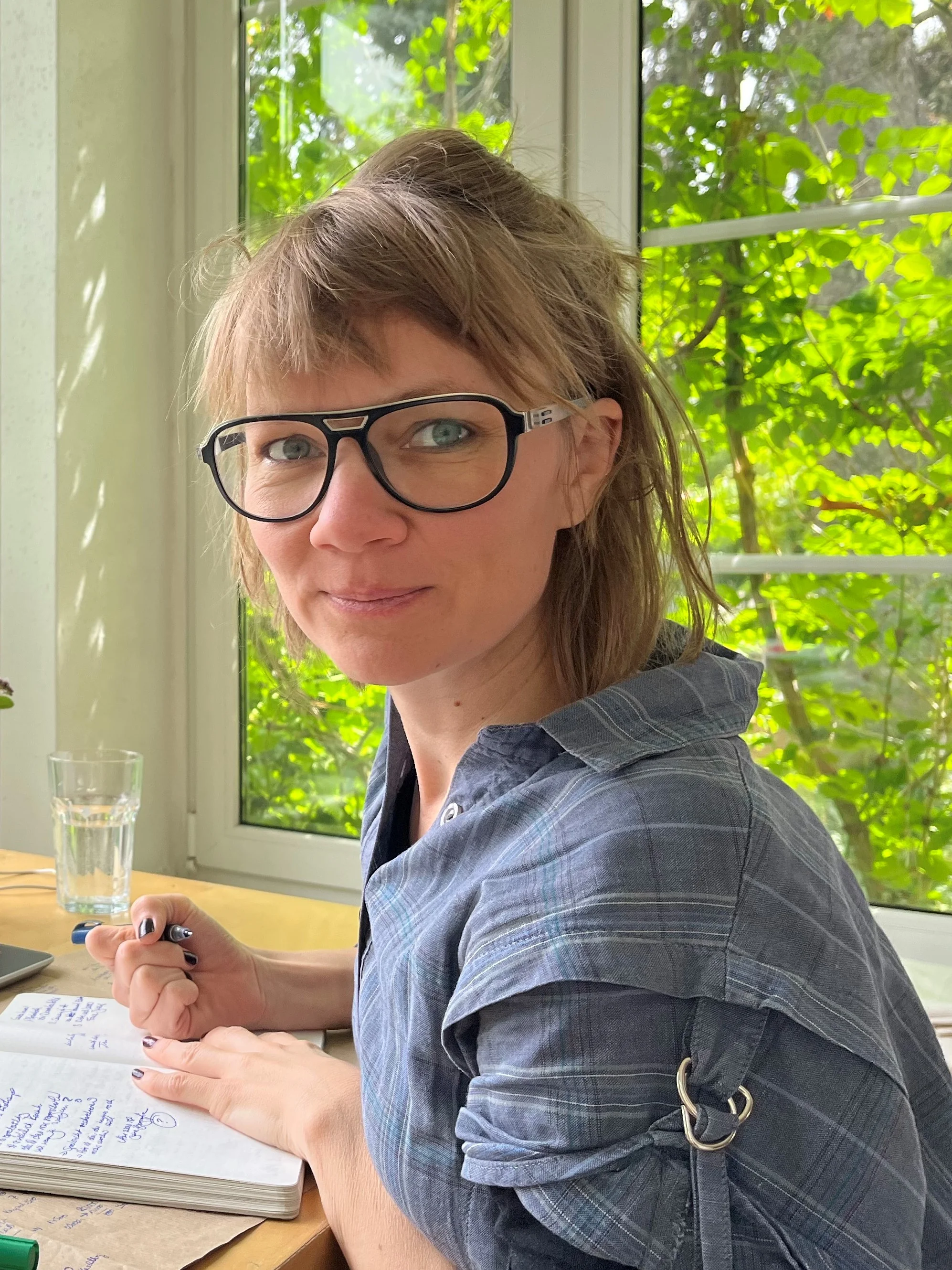
Image from Wikipedia
Image from Wikipedia
Raphaela Bardutzky – Author and Dramaturg of Precise Linguistic Power
How a Munich Theatre Maker Renewed the Stage with Rhythm, Wit, and Social Depth
Raphaela Bardutzky, born in 1983 and residing in Munich, is one of the most distinct voices in contemporary German-language drama. Her music career in the narrower sense does not exist; instead, as an author and dramaturg, she shapes a stage aesthetic that resembles a composed score: rhythmic, sound-conscious, and pointed. Her artistic development leads from theatrical dramaturgy through philosophical reflection to theater texts that connect social reality with formal precision. Works like “Fischer Fritz,” “Das Licht der Welt,” and “74 Minuten” showcase a marked handwriting between humor, empathy, and analytical sharpness.
Her plays are created in dialogue with directors, ensemble members, and audiences. This stage presence of her language is evident in performances at central venues in the German-speaking world. Awards and festival invitations affirm the authority of this work. Bardutzky thinks in composition and arrangement: linguistic sounds, tempos, and pauses are dramaturgically set so that themes like care, migration, class, and climate are not just told but acoustically experienced.
Biography: Education, Influences, First Steps
Raphaela Bardutzky studied theatrical dramaturgy, philosophy, and literary studies at Ludwig Maximilians University Munich and at the Bavarian Theatre Academy August Everding. After her studies, she worked as a script consultant and editor in the arthouse film sector before consistently developing her own plays. In 2016, she co-founded the network Münchner Theatertexter*innen with Theresa Seraphin – an association that collegially strengthens authors and promotes aesthetic diversity. Simultaneously, Bardutzky taught writing for film and theater and is involved as a curator of the reading series LIX at Munich's HochX. This practical experience in production, teaching, and curation feeds her expertise and gives her linguistic musicality a particular precision.
She gained early recognition in 2017 with the Munich Literary Grant for “Wüstling.” This award served as an impetus to further sharpen her voice: formally aware, humorous, and rhythm-sensitive. These foundations shape her later successes and mark an artistic development that is equally theory-supported and practically tested on stage.
Career Path: Theatre Practice at Leading Venues
In the following years, Bardutzky’s texts became fixed points at central venues: Burgtheater Vienna, Deutsches Theater Berlin, Schauspiel Graz, Theater Heidelberg, Landestheater Linz, Schauspiel Leipzig, and Münchner Kammerspiele or Münchner Volkstheater. These stations form a consistent musical career in a figurative sense – a career in stage composition. The premieres and revivals document how well her texts can be tailored to ensembles and how differentiated they appear in directorial styles.
Since the 2025/26 season, Bardutzky has served as a resident playwright at the Staatstheater Nürnberg. This consolidates production and development capacities and allows for long-term work on thematic cycles. At the same time, co-productions and guest performances remain central, ensuring her plays resonate in various city contexts.
Breakthrough Moment: “Fischer Fritz” – Spoken Theatre as Sound Art
“Fischer Fritz” has become a success with critics and audiences alike. The play addresses care, aging, and responsibility – utilizing logopedics after a stroke as a poetic-dramaturgical principle. Tongue twisters, pauses, repetitions: the language becomes a score, the character guidance a finely tuned polyphony. The production received nominations in 2021 (including Heidelberger Stückemarkt, Förderpreis für Neue Dramatik) and premiered in 2022 as part of the Author Theater Days at the Deutsches Theater Berlin. Performances and invitations to other stages – including Rostock, Regensburg, Munich, and Marburg – made “Fischer Fritz” the crystallization point of her authorship.
The critical reception repeatedly highlighted the mix of wit, precision, and empathy. The entanglement of sound and meaning creates a “musical” perception of language: the audience hears care, origin, and social situations – it hears the struggles of articulation and, thus, the struggles of the world. This theatrical effect carries the breakthrough beyond the narrower theater scene into broader cultural journalistic attention.
Awards, Prizes, and Positions
Raphaela Bardutzky's professional expertise is reflected in awards and nominations: 2017 the Munich Literary Grant (“Wüstling”), 2022 the selection of the ATT jury for the premiere of “Fischer Fritz,” 2023 the Bavarian Arts Promotion Award in the literature category for “Das Licht der Welt.” In 2025, the nomination of “Altbau in zentraler Lage. Eine Schaueroper” for the Mülheimer Dramatikpreis followed. This choreography of recognitions lends authority to her work and consolidates her position as a defining voice in contemporary drama.
Beyond the awards, her role as a resident playwright, festival presence, and continuous revivals mark an artistic maturation process. In total, a profile emerges that combines experience and a drive for innovation: themes from everyday reality and political present are translated onto the stage with aesthetic consistency.
Selected Works and Reception
“Fischer Fritz” forms the widely visible center of a repertoire that spans several thematic lines: “Das Licht der Welt” focuses on generations, responsibilities, and future visions; “74 Minuten” addresses numbers and statistics related to care work and transforms them into theatrical pulse; “Altbau in zentraler Lage. Eine Schaueroper” connects urban life reality with genre elements and dense sound dramaturgy; “Wüstling” won the Munich Literary Grant and early demonstrated Bardutzky’s sensitivity for rhythmic language and scenic energy. Theatre programs, reviews, and festival formats testify to the ongoing dissemination of her work.
The critical reception repeatedly emphasizes the “groove”-like quality of her spoken scores, the calculated tempo of her sequences, and the clear beats between humorous accents and quiet, poetic passages. Reviewers also highlight the thorough research and the reliability of her societal premises – a hallmark of her dramaturgy and material development.
Style and Aesthetics: Rhythm, Polyphony, Social Resonance
Bardutzky’s texts are characterized by a pronounced sonic shape. Alliterations, tongue twisters, repetitions, and syncopations create an acoustic structure reminiscent of composition and arrangement. The language dances, stumbles, accelerates, pauses – and thus narrates the unspeakable about bodies, work, and relationships. This formal awareness pairs with clear thinking in scenes, tableaus, and counterpoints. Characters not only speak; they sound – and thus touch audiences directly.
From an expert perspective, Bardutzky navigates an aesthetic between spoken theatre, auditory images, and choreographed movement. In rehearsal processes, a close timing often develops between text and direction, bestowing the performances with high precision. Her plays are thus exemplary studies in “language composition” – a term that unites the connection of literature and performing arts in her work.
Artistic Development and Collaborations
Essential to Bardutzky’s linguistic musicality are interdisciplinary impulses: reading series, workshops, teaching activities, and collaborations with various directorial positions. The author frequently works with ensembles that integrate both spoken and sign languages – an opening that is impactful both aesthetically and socially. Bilingual or bimodal modes of representation expand theatrical perception and implement inclusion not as a footnote but as a compositional structural principle.
This practice leads to a deepened stage presence of the texts: breath, pauses, lines of sight, body sounds, and room acoustics become parameters of the composition. As a result, theater gains directness and opens up to audiences with different cultural and linguistic backgrounds.
Cultural Influence: Telling the Present, Shaping the Future
Raphaela Bardutzky’s plays convey societal reality with artistic precision. Care and caring, working conditions, migration, and climate: these themes do not appear as theses, but as experienceable dramaturgy. By interweaving sound and meaning, the author anchors content durably in memory. Houses that program her plays therefore commit to a public sphere that reaches beyond the stage – into education, discussion, and civic society.
In the theater landscape, Bardutzky stands for the reliability of research, the accuracy of observation, and a courage for form. This makes her work appealing to audiences outside the theater scene: cultural press, festival juries, and civic society recognize in her work a relevant, multi-voiced commentary on the present.
Current Projects and Developments (2024–2026)
Between 2024 and 2026, several lines have converged: “Fischer Fritz” received further productions and invitations; “74 Minuten” experienced a highly regarded premiere with significant choreographic staging; “Das Licht der Welt” placed strong emphasis on youth and ensemble in Vienna; “Altbau in zentraler Lage. Eine Schaueroper” was nominated in 2025 for the Mülheimer Dramatikpreis. At the same time, her role as a resident playwright at the Staatstheater Nürnberg from the 2025/26 season strengthens continuous play development.
These projects combine artistic advancement with institutional embedding. In the coming years, new texts are anticipated that will ignite discourse and stage energy alike, deepening partnerships with major institutions.
Conclusion: Why You Should Experience Raphaela Bardutzky Now
For those who want to experience theatre as a living sound art and as precisely narrated contemporary reality, Raphaela Bardutzky offers a rare author of stringency. Her texts are musically constructed, socially sharp, and highly rewarding for performers. They provide ensembles the opportunity for fine timing, coherent dynamic arcs, and rich ensemble sounds. At the same time, they allow the audience to not only understand complex themes but also physically feel them. In short: Bardutzky’s works are contemporary pieces with a long echo – highly recommended for live discovery on stage.
Official Channels of Raphaela Bardutzky:
- Instagram: No official profile found
- Facebook: No official profile found
- YouTube: No official profile found
- Spotify: No official profile found
- TikTok: No official profile found
Sources:
- Raphaela Bardutzky – Official Website
- About Me – Biography, Education, Awards
- Texts – Selection of Works and Production Notes
- Münchner Volkstheater – Author Profile
- Deutsches Theater Berlin – Biography and ATT Information
- Die Deutsche Bühne – Review of “Fischer Fritz”, Marburg
- Die Deutsche Bühne – Review of “74 Minuten”, Nuremberg
- Süddeutsche Zeitung – Review of “Fischer Fritz” Munich
- Theater Regensburg – “Fischer Fritz”
- WIENER WORTSTAETTEN – Project Profile, Awards, Nominations
- Wikipedia: Image and Text Source
Upcoming Events
Fischer Fritz