
Rembrandt van Rijn
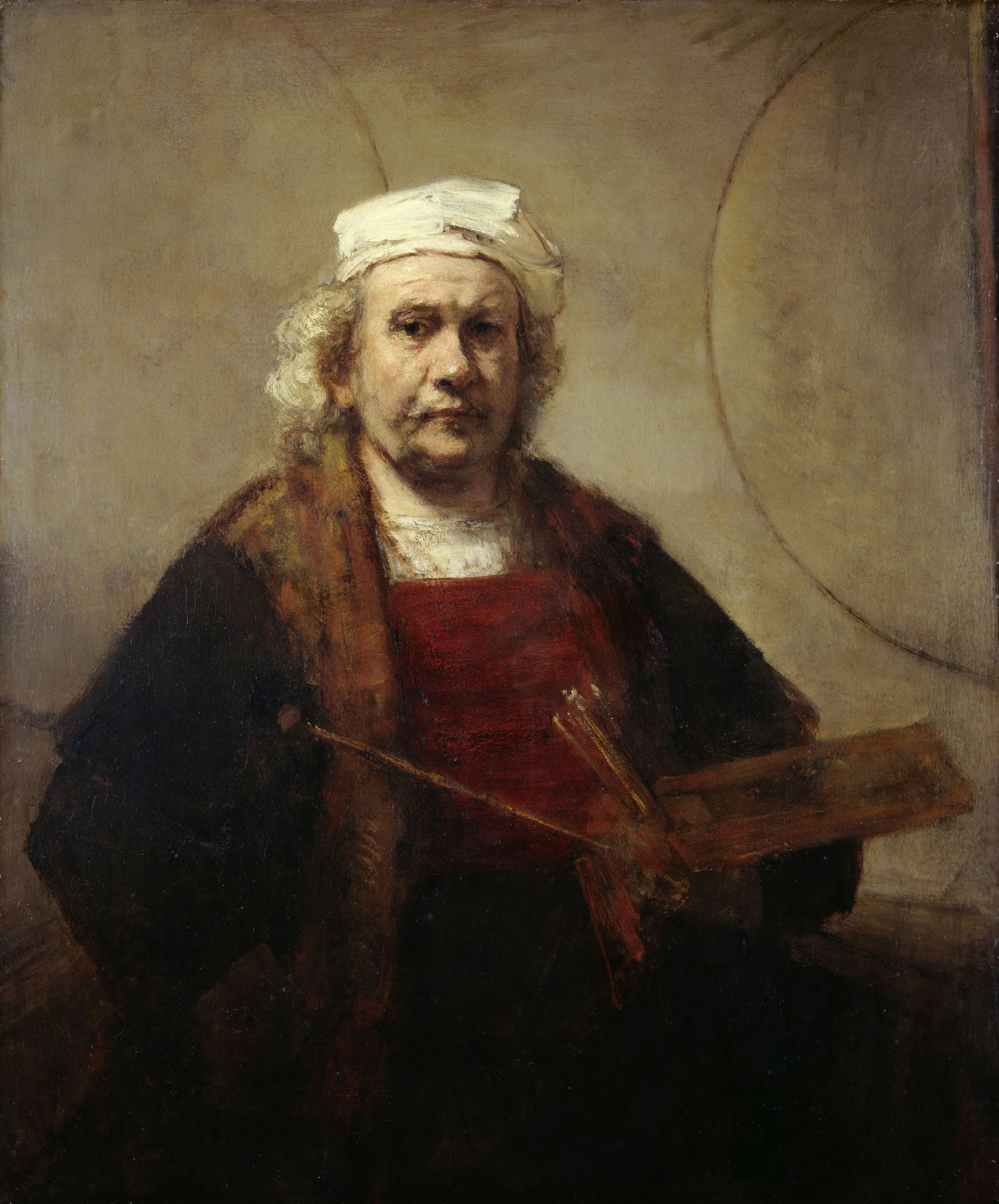
Image from Wikipedia
Image from Wikipedia
Rembrandt van Rijn – The Master of Light, Shadow, and the Human Soul
Rembrandt van Rijn: The Baroque Painter Who Redefined Art History
Rembrandt Harmenszoon van Rijn is one of the defining artists of the European Baroque and one of the most influential image creators of the Netherlands. Born on July 15, 1606, in Leiden and died on October 4, 1669, in Amsterdam, he evolved from an ambitious young artist to a historical authority in painting and printmaking. His work continues to serve as a benchmark for psychological depth, dramatic use of light, and narrative power. ([britannica.com](https://www.britannica.com/biography/Rembrandt-van-Rijn?utm_source=openai))
During his lifetime, Rembrandt enjoyed great esteem for his history paintings, portraits, self-portraits, and etchings. At the same time, his biography tells of not only fame but also economic crises, stylistic breaks, and personal hardships. This tension between success and downfall makes him one of the most fascinating figures in art history. ([britannica.com](https://www.britannica.com/biography/Rembrandt-van-Rijn?utm_source=openai))
Early Years in Leiden: Education, Ambition, and Early Studio Successes
Rembrandt grew up in Leiden as the son of a miller and initially received a formal education before turning to art. After studying under Pieter Lastman, he returned around 1625 to Leiden and opened his first studio there. Even in this early phase, his talent for not only depicting figures but embedding them in lively scenes with tension and significance was evident. ([britannica.com](https://www.britannica.com/biography/Rembrandt-van-Rijn?utm_source=openai))
The early works demonstrate how quickly Rembrandt internalized the narrative power of history painting. He drew inspiration from biblical and ancient themes but combined them with an unusually intense observation of the face, gesture, and inner state of his figures. This set standards for art that characterizes rather than decorates long before his breakthrough in Amsterdam. ([britannica.com](https://www.britannica.com/biography/Rembrandt-van-Rijn?utm_source=openai))
The Breakthrough in Amsterdam: Fame, Commissions, and Artistic Maturity
In 1631, Rembrandt moved to Amsterdam, the economic and cultural center of the Republic, and quickly connected with a wealthy clientele. This step was crucial for his figurative career in painting: he was now performing on the grand stage of the Republic, with prestigious portraits, group pictures, and historical compositions. Works like The Anatomy of Dr. Tulp made him widely known and established his reputation as a master of the human form. ([britannica.com](https://www.britannica.com/biography/Rembrandt-van-Rijn?utm_source=openai))
Particularly the large group portraits showcase Rembrandt's ability to weave individual characters into complex visual arrangements. His compositions appear not static but like scenic tableaux, where light, direction of gaze, and movement create a dramatic unity. The famous The Night Watch marks, according to the Rijksmuseum, a turning point in his career and is considered the pinnacle of his creative genius. ([rijksmuseum.nl](https://www.rijksmuseum.nl/en/visit/inside-the-museum/night-watch-gallery?utm_source=openai))
The Studio as a Creative Machine: Students, Copies, and Influence
Rembrandt ran a studio and trained numerous artists. In doing so, he influenced not only individual images but also a generation of painters and graphic artists who carried forward his method of observation, condensation, and light handling. The studio practice was part of his success: it made him a productive producer of images, studies, and prints that circulated throughout Europe. ([britannica.com](https://www.britannica.com/biography/Rembrandt-van-Rijn?utm_source=openai))
His works spread during his lifetime through reproductions and copies, reaching an audience far beyond Amsterdam. Particularly the etchings contributed to his international renown and made him a standout among 17th-century artists. Rembrandt was not only a painter but also a master of line, tonal values, and graphic condensation. ([britannica.com](https://www.britannica.com/biography/Rembrandt-van-Rijn?utm_source=openai))
Style and Technique: Chiaroscuro, Character Study, and Narrative Depth
Rembrandt's hallmark is his masterful command of chiaroscuro, the strong contrasts of light and dark. His handling of light not only creates drama but also draws the viewer's attention to emotional states, dramatic turning points, and human dignity. He modeled faces, hands, and fabrics with an intensity that makes his visual world feel immediate even today. ([britannica.com](https://www.britannica.com/biography/Rembrandt-van-Rijn?utm_source=openai))
Equally important is his stylistic development. Britannica describes how his conception of space, form, color, contour, and brushstroke visibly changed throughout his oeuvre, sometimes slowly and sometimes abruptly. The The Night Watch represents a watershed moment because it exemplifies Rembrandt's curiosity for new narrative and compositional solutions. ([britannica.com](https://www.britannica.com/biography/Rembrandt-van-Rijn?utm_source=openai))
Self-Portraits as Artistic Self-Presentation
Among the most extraordinary chapters of his art are the self-portraits. The Metropolitan Museum of Art describes Rembrandt as an artist who explored his own face throughout his life and mercilessly made the traces of aging and labor visible in around forty preserved self-portraits. These images are not mere portraits but visual essays on identity, transience, and artistic presence. ([metmuseum.org](https://www.metmuseum.org/art/collection/search/437397?utm_source=openai))
Especially in the later works, it becomes evident how much Rembrandt understood the self-portrait as a testing ground for expression and material. The restrained, almost meditative quality of these works reveals an artist who does not rely on external glamour but on authenticity. This is precisely where their enduring brilliance lies. ([metmuseum.org](https://www.metmuseum.org/art/collection/search/437397?utm_source=openai))
Financial Crises, Bankruptcy, and the Dark Side of Fame
Despite his fame, Rembrandt encountered significant economic difficulties. The Wikipedia text mentions a bankruptcy in 1656; art historical research also points to the discrepancy between artistic prestige and financial situation. His life in Amsterdam shows how precarious even a celebrated artist's existence remained in the 17th century. ([britannica.com](https://www.britannica.com/biography/Rembrandt-van-Rijn?utm_source=openai))
This crisis was not a mere footnote but part of his biography and mythos. Later fame long overshadowed the real life burdened with debts, losses, and personal hardships. This very ambivalence strengthens the impact of his oeuvre: Rembrandt's images are not just beautiful but existential. ([britannica.com](https://www.britannica.com/biography/Rembrandt-van-Rijn?utm_source=openai))
Discography? No – But a Canon of Iconic Images and Prints
Since Rembrandt is not a musician, there is no discography in the traditional sense. However, for a comprehensive artistic consideration, his canon of works counts: The Blinding of Samson, The Night Watch, The Anatomy of Dr. Tulp, and the Hundred Guilder Print are among the most famous works of his oeuvre. These works form a sort of canonical “tracks” in art history – recognizable, influential, and style-defining. ([britannica.com](https://www.britannica.com/biography/Rembrandt-van-Rijn?utm_source=openai))
His central themes include portraits, landscapes, as well as biblical and mythological subjects. Particularly noteworthy is that Rembrandt often took up motifs in his historical representations that had hardly been treated artistically before or radically reinterpreted existing themes. This resulted in a body of work that combines traditional iconography with psychological depth and visual innovation. ([britannica.com](https://www.britannica.com/biography/Rembrandt-van-Rijn?utm_source=openai))
Critical Reception and Cultural Influence: From Being Underappreciated to Canonization
After his death, Rembrandt’s painting style was sometimes evaluated negatively during the classicism period, primarily due to its colorfulness and perceived disorder. At the same time, his works remained in demand among collectors and fetched high prices, as his reputation continued to spread in the 18th century. Britannica additionally describes how German and English artists found followers and admirers, considering Rembrandt as a precursor to modern artistic subjectivity in the Romantic era. ([britannica.com](https://www.britannica.com/biography/Rembrandt-van-Rijn?utm_source=openai))
In the 19th century, research shed more precise light on his life, which had previously been heavily shaped by legends. In the 20th and 21st centuries, scholarly research set new standards: The Rembrandt Research Project investigated the authenticity of attributed works over decades, leading to a clearer image of his oeuvre. From formerly over 700 attributed works, only about 350 are now considered to be autographs. ([britannica.com](https://www.britannica.com/biography/Rembrandt-van-Rijn?utm_source=openai))
Current Research and the Vibrant Presence of a Historical Artist
Although Rembrandt himself cannot have any current projects or new releases, his work remains highly relevant. Museums such as the Rijksmuseum and the Metropolitan Museum of Art continue to publish research findings, exhibitions, and detailed studies on individual paintings. In 2025, the Rijksmuseum even announced new insights about the dog in The Night Watch, showcasing how vibrant the Rembrandt research remains to this day. ([rijksmuseum.nl](https://www.rijksmuseum.nl/en/press/press-releases/original-drawing-of-the-dog-in-the-night-watch-discovered?utm_source=openai))
This ongoing research is part of his persistent cultural presence. Rembrandt belongs not only in museums and textbooks but remains a touchstone for questions about authorship, technique, and interpretation. This is precisely where his modernity lies: he is a classic who never feels finished. ([rijksmuseum.nl](https://www.rijksmuseum.nl/en/press/press-releases/original-drawing-of-the-dog-in-the-night-watch-discovered?utm_source=openai))
Conclusion: Why Rembrandt Continues to Electrify Today
Rembrandt van Rijn fascinates because he depicted the human figure with a depth that goes far beyond mere representation. His art combines dramatic light, technical mastery, and psychological truth into a body of work of extraordinary endurance. Those who view Rembrandt do not only see the 17th century but also the birth of a modern conception of imagery. ([britannica.com](https://www.britannica.com/biography/Rembrandt-van-Rijn?utm_source=openai))
His paintings remain intriguing because they oscillate between greatness and vulnerability, brilliance and crisis, public rank and personal insecurity. For this very reason, every encounter with his works in originals, exhibitions, and collections is worthwhile. Experiencing Rembrandt live means witnessing one of the greatest storytellers in art history up close. ([britannica.com](https://www.britannica.com/biography/Rembrandt-van-Rijn?utm_source=openai))
Official Channels of Rembrandt van Rijn:
- Instagram: no official profile found
- Facebook: no official profile found
- YouTube: no official profile found
- Spotify: no official profile found
- TikTok: no official profile found
Sources:
- Britannica – Rembrandt van Rijn
- Rijksmuseum – The Night Watch Gallery
- Rijksmuseum – Rembrandt's masterpiece on show at Rijksmuseum
- Rijksmuseum – Original drawing of the dog in The Night Watch discovered
- The Metropolitan Museum of Art – Self-Portrait, Rembrandt
- The Metropolitan Museum of Art – Rembrandt Self-Portrait press release
- National Gallery, London – Rembrandt
- Wikipedia: Rembrandt van Rijn
Upcoming Events
Rembrandt 1632. The Birth of a Brand
Rembrandt 1632. The birth of a brand
Rembrandt 1632. The Birth of a Brand
Rembrandt 1632. The Birth of a Brand
Rembrandt 1632: Creation of a Brand
Rembrandt 1632. The Birth of a Brand
Rembrandt 1632. The Emergence of a Brand
Rembrandt 1632. The Birth of a Brand
Rembrandt 1632. The Birth of a Brand