
Tom Schneider
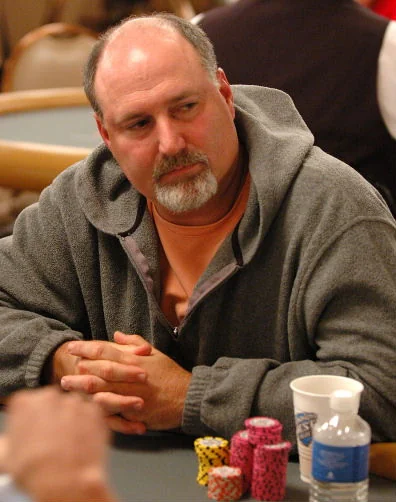
Image from Wikipedia
Image from Wikipedia
Tom Schneider – "Donkey Bomber": Strategist, Storyteller, and Influential Figure in the Modern Poker Scene
From Finance Professional to Four-Time WSOP Champion: The Multifaceted Career of an Exceptional Player
Tom Schneider, born on December 24, 1959, in Indianapolis, embodies one of the most impressive transformations in the world of professional gaming: starting as a successful manager and auditor in Arizona, he developed a music career-like stage presence at the poker table from 2002 onwards – showcasing unmistakable artistic evolution in Mixed Games. Under his nickname "Donkey Bomber," he made history by winning four bracelets at the World Series of Poker and was named "Player of the Year" in 2007. His path represents discipline, strategic finesse, and a charisma that continues to inspire the community today.
His appearances at the WSOP, his authorship, and his sense of the dramatic arc of long tournament days make Schneider an authority who connects competition, composition, and "arrangement" at the poker table like an experienced conductor. This biography traces his career milestones, analyzes stylistic features, contextualizes achievements, and demonstrates why Schneider's impact extends culturally beyond the poker scene.
Early Years and Professional Background: From Balance Sheets to Blind Wars
Before Tom Schneider embarked on his career as a tournament player, he worked as a Certified Public Accountant (CPA) and held senior positions in Arizona companies. The structured thinking from controlling and financial architecture shaped his game: expected values are calculated, variance is planned, and risks are strategically assessed. This management schooling laid the foundation for an artistic development at the table, where tells, timing, and table image are understood as part of an overall composition.
2002 marks the formal start of his poker career. He quickly focused not solely on No-Limit Hold’em but sought the diversity of formats – a conscious decision against monoculture. It was this breadth, the cross-genre repertoire of Omaha Hi/Lo, Seven-Card Stud variants, and H.O.R.S.E., that later became his trademark.
The Breakthrough in 2007: Two Bracelets, One Signature
In 2007, Tom Schneider achieved a double success: two bracelets in one summer – in Omaha/Seven-Card Stud Hi/Lo 8-or-Better and Seven-Card Stud Hi/Lo 8-or-Better. These victories suddenly anchored him in the canon of WSOP history and earned him the title of "Player of the Year." In an era heavily dominated by Hold’em, Schneider made Mixed Games a prominent topic of discussion in the scene again, showing how varied play produces top performances.
The 2007 tournaments feel like a debut album, precisely produced: accurate reads, patient value lines, aggressive pressure play in the right spots. Over several final tables, he demonstrated how position, pot control, and ICM pressure coalesce into a coherent arrangement – a compact work of modern Mixed-Game strategy.
Comeback Statement 2013: Double H.O.R.S.E. and the Mastery of Diversity
Six years after the great breakthrough, 2013 saw a veritable continuation of the success narrative: two additional WSOP bracelets, both in H.O.R.S.E. This was more than mere statistics – it was an artistic statement. H.O.R.S.E. forces continuous genre switches (Hold’em, Omaha Hi/Lo, Razz, Seven-Card Stud, Seven-Card Stud Hi/Lo) and rewards all-rounders with crystal-clear technique. Schneider displayed a balance of defense and offense over long tournament days, adapting against different types of opponents and controlling pot geometry.
This second double crowning solidified his reputation as the "album artist" of mixed-game poker: not merely single hits, but coherent, sophisticated works spanning multiple variants – driven by changes in rhythm, dynamic tempo shifts, and elegant reduction when the structure demands it.
Style Analysis: Mixed-Game Architecture, Balancing, and Dramaturgical Control
Schneider's game thrives on clear concepts. In Omaha/Stud Hi/Lo, he employs the concept of "frequent nut draws" and prioritizes redraws in split-pot environments. In Stud formats, he scores with discipline in starting selection "arrangement" and the ability to read board textures narratively: every open card shifts the harmony and dissonance of the opposing ranges. In H.O.R.S.E., he ties these micro-decisions into a macro plan, fluidly switching tactics with each variant while maintaining the strategic balance of his frequencies.
Another central quality is his "stage presence": he controls pace and table talk without resorting to show for the sake of spectacle. The dramaturgy appears purposeful – he occasionally sets counterpoints through timing delays to manage information flow. The result is a production that does not rely on loud effects but rather on recognizable motifs and clear tonal colors across game types.
Career Highlights and Numbers: Continuity Over Decades
Four WSOP bracelets, multiple final tables, and consistent cashes over the years document Schneider's sustainability. The sum of his live earnings has been estimated in leading databases to be in the seven-figure range and remained stable throughout much of the 2010s and early 2020s. Even outside of the pure winner lists, Schneider has established himself in the fields that define Mixed Games today: complex, long formats with a high density of specialists.
This consistency is the result of a repertoire philosophy. Those who take Mixed Games seriously invest in techniques that "ripen" more slowly, yet remain resilient against changes in the metagame. Schneider's discography in a figurative sense – his tournament results and recurring deep runs – reads like a catalog of solid, carefully produced releases instead of fleeting trends.
Author, Mediator, Media Presence: From Theory to Practice
In addition to his activities at the table, Schneider published the book "Oops! I Won Too Much Money: Winning Wisdom from the Boardroom to the Poker Table." The content connects business perspectives with poker strategy, addressing composition, production, and arrangement of decisions. His media appearances – from poker formats to interviews – strengthen his authority as a communicator, making complexity tangible without oversimplifying it.
This way, he not only shapes the field but also the discourse surrounding bankroll management, mindset, and mixed-game etiquette. Awards and press reviews from industry media regularly recognize the craftsmanship and exemplary role Schneider plays in shortening learning curves for ambitious players.
Current Activities and Historical Context
The late 2010s and 2020s saw a resurgence of classic variants in the shadow of the omnipresence of Hold’em. Schneider not only remained true to this trend but also helped carry it forward. His name also appears in starter and result lists in recent WSOP summers – an indicator of enduring relevance. This illustrates that Mixed Games are not a retro gimmick but a vital part of the tournament landscape with continuous innovative power.
In this phase, the focus of the scene shifted increasingly towards content that is pedagogically prepared: podcasts, strategy columns, in-depth format analyses. Schneider serves as a bridge between practice and theory – his experience at the highest level lends weight to his advice, and his language makes nuanced structures accessible.
Cultural Influence: Why Mixed Games Shine Again
Tom Schneider represents a culture of versatility. He embodies the idea that breadth need not be opposed to depth. In a community that long been entrenched in "meta" discussions about preflop ranges and solver lines, he opens windows to variants that appeal to different cognitive and creative resources. In doing so, he broadens the aesthetic scope of the game.
His legacy is reflected in generations of players who are taking Omaha Hi/Lo, Stud, and H.O.R.S.E. seriously again, investing training time, and targeting final tables in what have formerly been "niche" disciplines. This repertoire thinking acts like a stylistic modernization – a quality-oriented counter-offer to the fleeting nature of online volume.
Technical Nuances: Ranges, Redraws, and the Craft of Small Edges
Schneider's expertise illustrates how small edges cumulatively achieve great results. In split-pot formats, he prioritizes hands that hold equity in both directions ("two-way potential") and avoids marginal "one-way" situations without redraws. In Stud variants, he gains advantages through "dead card" readings and tracking board information – an art that demands attention, memory work, and discipline.
This precision connects with bankroll and tournament management. Stack sizes are maneuvered like instruments, street play is deliberately "phrased" to isolate opponents or maintain multi-way pots. The result is a production that does not rely on luck but structures variance – in service of a clear, long-term expected value.
Conclusion: Why Tom Schneider Continues to Set the Benchmark
Tom Schneider remains captivating because he combines continuity with creativity. His four bracelets document successes, while his mixed-game expertise explains them. He stands for a craft that calculates risks, reduces error rates, and still leaves room for intuition. Thus, his play becomes a narrative – tightly composed and with recognizability.
Those who witness Schneider live feel the energy of an artist of small edges: a performance that dispenses with pathos but convinces with clarity, rhythm, and timing. Mixed Games, in his understanding, are not a niche but a stage – and Tom Schneider is one of its most composed protagonists. A call to all lovers of sophisticated strategies: watch him, learn from his repertoire, and experience how theory becomes tangible performance.
Official Channels of Tom Schneider:
- Instagram: No official profile found
- Facebook: No official profile found
- YouTube: No official profile found
- Spotify: No official profile found
- TikTok: No official profile found
Sources:
- Wikipedia (de) – Tom Schneider
- Wikipedia (en) – Tom Schneider
- WSOP.com – Event 5 Winner Profile 2007
- WSOP.com – Third Bracelet 2013
- WSOP.com – H.O.R.S.E. Double Victory 2013
- ESPN – Second Bracelet 2007
- PokerNews – Player Profile
- WSOP – Participant/Results Lists 2024 (PDF)
- Wikipedia: Image and Text Source
Upcoming Events

Frankenstein
Frankenstein

Frankenstein