
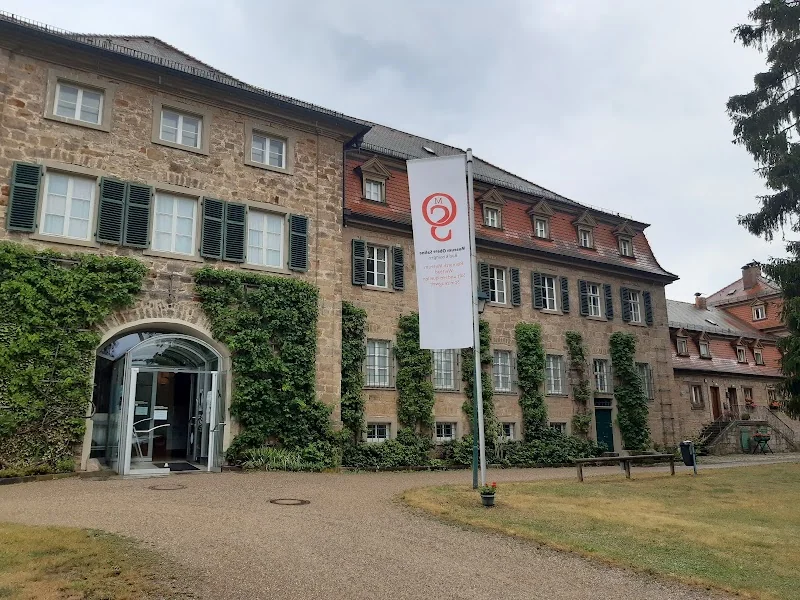
Bad Kissingen
Ob. Saline 20, 97688 Bad Kissingen, Deutschland
Bismarck Museum Bad Kissingen | Opening Hours & Admission
Those who want to experience the history of Otto von Bismarck not just by reading but at an authentic location will find an extraordinary access at the Bismarck Museum Bad Kissingen. Located at Obere Saline 20 – a representative building complex from the 18th century in the Hausen district – the historical living quarters of the Chancellor are preserved. Here, Bismarck spent a large part of his time during his spa stays from 1876 to 1893 and made decisions of national and international significance. In the original furnished rooms, complemented by carefully curated exhibition spaces, political history becomes tangible. Just a few minutes from the city center, the museum is easily accessible by car, public transport, on foot, or by bike via the Salinenpromenade; parking is available directly at Obere Saline. Family-friendly admission prices, reliable opening hours, and a varied guided tour offering make the visit planable and worthwhile – whether as part of a spa stay, a weekend trip to the UNESCO Great Spa Town, or as a targeted cultural journey in Lower Franconia.
Opening Hours, Admission, and Tickets: Plan Your Visit
The Bismarck Museum is reliably and visitor-friendly organized as part of the Museum Obere Saline. The regular opening hours are from Wednesday to Sunday, each from 14:00 to 17:00. Monday and Tuesday are closing days; this gives the team time for conservation measures, collection work, and preparation of special programs. Around holidays, there are partially differing times that will be communicated in advance: For example, it is closed on Christmas Eve (December 24) and New Year's Eve (December 31), while open on December 25 and 26 as well as January 1 and 6 – each from 14:00 to 17:00. Those visiting Bad Kissingen between the years or at the turn of the year can combine the festive atmosphere with a museum visit. Since the opening hours are generally handled similarly across the year, it is worthwhile to take a quick look at the museum's current daily notices in advance.
The admission prices are deliberately designed to be family-friendly. Adults pay €5, children up to 6 years have free admission. Discounts (e.g., for students, apprentices, and people with disabilities) are €3, groups of ten or more pay €3 per person, and a family ticket is available for €10. For single parents with children, the admission is €5. The pricing structure invites spontaneous visits to the museum, for example, after a round in the spa park or as an event before a concert or a guided tour in the city area. During busy visitor traffic, it is advisable to arrive a few minutes before 14:00 to start the exhibition relaxed. Those who want to deepen their visit can plan guided tours; these are thematically curated and tailored to the specifics of the house. For individual groups, it is advisable to coordinate an appointment in advance. In general, it is recommended to allocate about two hours to experience the historical rooms and the accompanying exhibition spaces at a leisurely pace – ideal for understanding the connections between spa culture, local history, and national politics.
Information on accessibility is transparently indicated: Due to the historical building fabric, some departments in the Museum Obere Saline – such as the special exhibition room in the former saline chapel, the toy world rooms, and parts of the World Bath Kissingen department – are not wheelchair accessible. The team provides support on-site as much as possible and informs about current possibilities. Those with specific needs should contact in advance to plan a suitable visit route together. Additionally, there are seasonal offers, holiday programs, or Sunday formats for families that make the museum visit entertaining even with children.
Directions and Parking: How to Reach Obere Saline 20
The journey is flexible – whether by car, bus, on foot, by bike, or even partially by boat and tourist train during the season. For navigation devices, the destination address is Obere Saline 20, 97688 Bad Kissingen. There are sufficient parking spaces available directly at the Obere Saline area, including spaces for larger motorhomes and coaches. Those who prefer to use public transport benefit from a stop directly at the museum: “Obere Saline”. Here, the city bus line 6 (note: it does not operate on Sundays and public holidays), bus line 700, and the seasonal spa bus 8230 (between May 1 and October 31) stop. This makes the museum comfortably accessible from the surrounding area, for example, as part of a spa or weekend trip to the region.
A special charm of the spa town is the possibility to embed the visit into a small exercise unit. From the city center, the Salinenpromenade leads gently along the Franconian Saale to the Obere Saline; depending on the pace, the walk or short bike ride takes about 20 to 30 minutes. Along the way, views of historical brine buildings and the park landscape that has shaped the spa town for centuries open up repeatedly. In the warm season, there is also the option to take the “Dampferle” from the Rosengarten landing stage to the Saline landing stage; from there, it is about 1 kilometer on foot to the museum. The GeckoBahn also operates seasonally, bringing visitors from the spa garden or the Wild-Park Klaushof to the Gradierbau stop; from there, the walk is about 600 meters.
Those arriving by bike will find parking options along the promenade and at the museum. The path is mostly flat and well-suited for leisure cyclists. For guests with limited mobility or families with strollers, arriving by car or bus directly to the Obere Saline is recommended. On-site, clearly marked paths provide orientation – it is only a few steps from the parking lot to the entrance. Tip for the visit sequence: First, let the historical ensemble in the outdoor area take effect and a few minutes later dive into the exhibition – this creates a harmonious transition from the spa and saline ambiance into the world of Bismarck's living and working spaces.
Original Bismarck Apartment and Exhibition Spaces on 350 m²
The heart of the house is the original living quarters of Otto von Bismarck in the Obere Saline. They form – together with a large festive hall – the core of the Bismarck Museum. The exhibition is divided into a total of seven rooms and covers about 350 m² of exhibition space. With great care, interiors have been brought together that document Bismarck's stays in Bad Kissingen between 1876 and 1893: from the study to private rooms. The presentation allows everyday objects to be viewed in their historical context, thus gaining an impression of how the Chancellor lived and worked during his spa times. This strong local reference distinguishes the Bismarck Museum in Bad Kissingen from other memorial sites – it is the only museum that honors Bismarck directly at his authentic residence.
The adjacent exhibition spaces are deliberately conceived as a thematic bridge: they connect local spa and city history with the national and European political history of the 19th century. Exhibits, visual sources, and explanatory texts show how closely the spa tradition and Bismarck's political activities were intertwined. A didactic focus is on understandable access: instead of a mere enumeration of dates, a context is established that appeals to both first-time visitors and historically interested individuals. In its interior design, the museum takes new paths – everyday objects are shown alongside symbolic pieces that illustrate Bismarck's health condition, his work rhythm, and his public image. In some showcases, visitors also encounter unexpected items from the private environment of the “Iron Chancellor,” which broadens the view of the person behind the myth.
The festive hall serves as an atmospheric space for mediation and events. Thematic tours can begin or conclude here, and focal points of the collection can be deepened. The curated mix of the original Bismarck apartment and complementary thematic rooms ensures that both the personal and the political come into focus. Those who are not yet familiar with Bismarck's history receive a structured introduction; connoisseurs discover connections to German social and foreign policy of those years. Especially in combination with the other departments of the Museum Obere Saline – salt production, spa and world bath history, and toy world – a multifaceted panorama emerges that makes the place Bad Kissingen an experience of historical developments.
History on Site: Bismarck's Spa Stays and the Kissinger Dictate
Bad Kissingen was a magnet for spa guests from Europe and beyond in the 19th century – and became a formative retreat and workplace for Otto von Bismarck. During his first spa stay in 1874, he narrowly escaped an assassination attempt on the then Saalestraße (now Bismarckstraße). For security reasons, Bismarck moved to the Obere Saline in the Hausen district from 1876, where the historical living quarters were set up. Until 1893, he returned another 14 times – a total of 15 spa stays. The Obere Saline offered the necessary tranquility and at the same time the infrastructure for Bismarck to carry out government work even far from Berlin. A gendarmerie station and a telegraph connection were established; visitors and diplomats were received in the rooms, decisions were prepared, writings were dictated, and sent to the imperial leadership via courier or telegraph.
In June 1877, the so-called Kissinger Dictate was created in Bad Kissingen – a fundamental document in which Bismarck formulated guidelines for his foreign policy. The text, which was attentively registered in political Europe, shows how strongly the spa town became a stage for great politics. The Obere Saline also radiated into domestic politics: in 1880, considerations matured here to pursue new paths in social policy with a state-organized workers' insurance. Such decisions explain why the Bismarck apartment is today understood not only as a historical interior but also as a memorial site for political decision-making processes. During his years in Kissingen, Bismarck maintained contacts, for example, with King Ludwig II of Bavaria, and used the spa to alleviate health burdens without completely relinquishing political leadership. The museum illustrates this dual role between regeneration and government work with objects, images, and contemporary reports.
The choice of the Obere Saline as a living and working place was not coincidental. The baroque-shaped ensemble had already played a significant role in the region: originally built for salt production and later expanded into a princely spa residence, it offered representative rooms and at the same time the seclusion that Bismarck sought after the assassination attempt. The sequence of rooms in the apartment – from the study to living rooms to the festive hall – brings the setting of a 19th-century statesman to life. In the exhibition, one also encounters the public image of Bismarck, shaped by painters like Franz von Lenbach, and learns how strongly Bad Kissingen was perceived as a “world bath” in the second half of the 19th century. The place makes it clear that the history of the founding of the Empire and European diplomacy did not only take place in parliaments and capitals but also in spa towns that temporarily became control centers.
Guided Tours, Programs, and Services at the Museum Obere Saline
The Museum Obere Saline connects several departments under one roof – the Bismarck Museum, presentations on salt and saline history, spa and world bath, as well as the toy world. This makes the house attractive for very different target groups: those interested in cultural history, families, spa guests, and school classes. A proven format is the regularly occurring Sunday tours, which vary thematically. Particularly popular are tours that link Bismarck's role as a spa guest and statesman – exemplarily the format “Spa Guest. Statesman. Myth. Bismarck in Bad Kissingen.” Such tours relate the historical rooms and the political documents and provide space for questions and discussions. Throughout the year, special exhibitions complement the offering; they address connections to Bad Kissingen, regional history, and Bismarck's perception in media and art.
A special feature in the program area is the department “Jewish Life in Bad Kissingen,” which is accessible year-round on Tuesdays from 15:00 to 17:00. It expands the view of the city and spa history and makes the Museum Obere Saline a place of multiperspective remembrance. For children and families, there are creative formats, such as workshop offerings or a children's studio. Upon request, group tours and educational programs are organized; school classes can deepen topics such as the founding of the Empire, social policy, spa and health care, as well as the technology history of salt production.
Service orientation is also evident in the planning of arrival and stay. The parking spaces directly at the house facilitate organization for bus groups, and the public transport stop “Obere Saline” in front of the door makes the arrival sustainably uncomplicated. Those who use the museum time wisely plan the Bismarck apartment and the exhibition spaces first (about 60 to 90 minutes), followed by a tour through the other departments. If needed, the team provides information on accessibility issues; certain areas are not wheelchair accessible due to historical stairs. For international guests, well-structured, visual stations are suitable; labels and object presentations provide orientation, even if German language skills are limited. Together with the quiet location by the Saale, a visit experience emerges that combines historical depth with a pleasant atmosphere – ideal for anyone wanting to get to know Bad Kissingen as a UNESCO Great Spa Towns of Europe.
Tips for Photos and Visit Time Around the Obere Saline
Many visitors search in advance for “Bismarck Museum Photos” to get a feel for the place and atmosphere. Especially the ensemble of the Obere Saline offers numerous atmospheric motifs in the outdoor area: the symmetrical, castle-like front, the pathways, and the contrast between nature and historical architecture. Those who use the Salinenpromenade along the Franconian Saale will find varied perspectives – from the riverbank over light tree rows to the brine buildings. In the warm season, a visit in the late afternoon is worthwhile when the light emphasizes the facades and the park landscape casts soft shadows. Details also tell stories here: doors, window shutters, historical fittings, or sightlines between the wings of the building.
Inside, the original living and working rooms of Bismarck are the focus. They convey a closed image of that spa and working time through furnishings, room sequence, and selected objects. Since conservation concerns play a significant role in historical interiors, it is advisable to heed any instructions from the museum staff and ask questions directly on-site. This way, the balance between visitor interest and object protection is maintained. Regardless, the room staging provides a vivid impression: one walks through the same festive hall where guests were once received and stands near the study from which imperial policy was temporarily directed. Those who combine the visit with a guided tour also gain additional contexts and stories that go beyond the labels.
For daily planning, the museum hours from 14:00 to 17:00 are well suited, which can be easily combined with walks in the spa garden, a visit to the brine buildings, or a ride on the GeckoBahn or “Dampferle.” Families benefit from the affordable rates and the clarity on-site. For groups, it is advisable to coordinate the arrival shortly beforehand – bus parking is available, and the path from the parking lot to the entrance is short. Those who plan a little buffer can take a look at the outdoor facilities before or after the tour and enjoy the salty air on the promenade. Thus, the museum visit becomes not only an encounter with Bismarck's political history but also with the spa and saline landscape that continues to shape Bad Kissingen today.
Sources:
- City of Bad Kissingen – The Bismarck Museum
- City of Bad Kissingen – Opening Hours and Admission Prices
- City of Bad Kissingen – How to Reach the Museum Obere Saline
- Wikipedia – Museum Obere Saline
- Wikipedia – Obere Saline (Bad Kissingen)
- UNESCO Great Spa Towns – Museum Obere Saline (Bad Kissingen)
- Wikipedia – Otto von Bismarck in Bad Kissingen
Show moreShow less
Bismarck Museum Bad Kissingen | Opening Hours & Admission
Those who want to experience the history of Otto von Bismarck not just by reading but at an authentic location will find an extraordinary access at the Bismarck Museum Bad Kissingen. Located at Obere Saline 20 – a representative building complex from the 18th century in the Hausen district – the historical living quarters of the Chancellor are preserved. Here, Bismarck spent a large part of his time during his spa stays from 1876 to 1893 and made decisions of national and international significance. In the original furnished rooms, complemented by carefully curated exhibition spaces, political history becomes tangible. Just a few minutes from the city center, the museum is easily accessible by car, public transport, on foot, or by bike via the Salinenpromenade; parking is available directly at Obere Saline. Family-friendly admission prices, reliable opening hours, and a varied guided tour offering make the visit planable and worthwhile – whether as part of a spa stay, a weekend trip to the UNESCO Great Spa Town, or as a targeted cultural journey in Lower Franconia.
Opening Hours, Admission, and Tickets: Plan Your Visit
The Bismarck Museum is reliably and visitor-friendly organized as part of the Museum Obere Saline. The regular opening hours are from Wednesday to Sunday, each from 14:00 to 17:00. Monday and Tuesday are closing days; this gives the team time for conservation measures, collection work, and preparation of special programs. Around holidays, there are partially differing times that will be communicated in advance: For example, it is closed on Christmas Eve (December 24) and New Year's Eve (December 31), while open on December 25 and 26 as well as January 1 and 6 – each from 14:00 to 17:00. Those visiting Bad Kissingen between the years or at the turn of the year can combine the festive atmosphere with a museum visit. Since the opening hours are generally handled similarly across the year, it is worthwhile to take a quick look at the museum's current daily notices in advance.
The admission prices are deliberately designed to be family-friendly. Adults pay €5, children up to 6 years have free admission. Discounts (e.g., for students, apprentices, and people with disabilities) are €3, groups of ten or more pay €3 per person, and a family ticket is available for €10. For single parents with children, the admission is €5. The pricing structure invites spontaneous visits to the museum, for example, after a round in the spa park or as an event before a concert or a guided tour in the city area. During busy visitor traffic, it is advisable to arrive a few minutes before 14:00 to start the exhibition relaxed. Those who want to deepen their visit can plan guided tours; these are thematically curated and tailored to the specifics of the house. For individual groups, it is advisable to coordinate an appointment in advance. In general, it is recommended to allocate about two hours to experience the historical rooms and the accompanying exhibition spaces at a leisurely pace – ideal for understanding the connections between spa culture, local history, and national politics.
Information on accessibility is transparently indicated: Due to the historical building fabric, some departments in the Museum Obere Saline – such as the special exhibition room in the former saline chapel, the toy world rooms, and parts of the World Bath Kissingen department – are not wheelchair accessible. The team provides support on-site as much as possible and informs about current possibilities. Those with specific needs should contact in advance to plan a suitable visit route together. Additionally, there are seasonal offers, holiday programs, or Sunday formats for families that make the museum visit entertaining even with children.
Directions and Parking: How to Reach Obere Saline 20
The journey is flexible – whether by car, bus, on foot, by bike, or even partially by boat and tourist train during the season. For navigation devices, the destination address is Obere Saline 20, 97688 Bad Kissingen. There are sufficient parking spaces available directly at the Obere Saline area, including spaces for larger motorhomes and coaches. Those who prefer to use public transport benefit from a stop directly at the museum: “Obere Saline”. Here, the city bus line 6 (note: it does not operate on Sundays and public holidays), bus line 700, and the seasonal spa bus 8230 (between May 1 and October 31) stop. This makes the museum comfortably accessible from the surrounding area, for example, as part of a spa or weekend trip to the region.
A special charm of the spa town is the possibility to embed the visit into a small exercise unit. From the city center, the Salinenpromenade leads gently along the Franconian Saale to the Obere Saline; depending on the pace, the walk or short bike ride takes about 20 to 30 minutes. Along the way, views of historical brine buildings and the park landscape that has shaped the spa town for centuries open up repeatedly. In the warm season, there is also the option to take the “Dampferle” from the Rosengarten landing stage to the Saline landing stage; from there, it is about 1 kilometer on foot to the museum. The GeckoBahn also operates seasonally, bringing visitors from the spa garden or the Wild-Park Klaushof to the Gradierbau stop; from there, the walk is about 600 meters.
Those arriving by bike will find parking options along the promenade and at the museum. The path is mostly flat and well-suited for leisure cyclists. For guests with limited mobility or families with strollers, arriving by car or bus directly to the Obere Saline is recommended. On-site, clearly marked paths provide orientation – it is only a few steps from the parking lot to the entrance. Tip for the visit sequence: First, let the historical ensemble in the outdoor area take effect and a few minutes later dive into the exhibition – this creates a harmonious transition from the spa and saline ambiance into the world of Bismarck's living and working spaces.
Original Bismarck Apartment and Exhibition Spaces on 350 m²
The heart of the house is the original living quarters of Otto von Bismarck in the Obere Saline. They form – together with a large festive hall – the core of the Bismarck Museum. The exhibition is divided into a total of seven rooms and covers about 350 m² of exhibition space. With great care, interiors have been brought together that document Bismarck's stays in Bad Kissingen between 1876 and 1893: from the study to private rooms. The presentation allows everyday objects to be viewed in their historical context, thus gaining an impression of how the Chancellor lived and worked during his spa times. This strong local reference distinguishes the Bismarck Museum in Bad Kissingen from other memorial sites – it is the only museum that honors Bismarck directly at his authentic residence.
The adjacent exhibition spaces are deliberately conceived as a thematic bridge: they connect local spa and city history with the national and European political history of the 19th century. Exhibits, visual sources, and explanatory texts show how closely the spa tradition and Bismarck's political activities were intertwined. A didactic focus is on understandable access: instead of a mere enumeration of dates, a context is established that appeals to both first-time visitors and historically interested individuals. In its interior design, the museum takes new paths – everyday objects are shown alongside symbolic pieces that illustrate Bismarck's health condition, his work rhythm, and his public image. In some showcases, visitors also encounter unexpected items from the private environment of the “Iron Chancellor,” which broadens the view of the person behind the myth.
The festive hall serves as an atmospheric space for mediation and events. Thematic tours can begin or conclude here, and focal points of the collection can be deepened. The curated mix of the original Bismarck apartment and complementary thematic rooms ensures that both the personal and the political come into focus. Those who are not yet familiar with Bismarck's history receive a structured introduction; connoisseurs discover connections to German social and foreign policy of those years. Especially in combination with the other departments of the Museum Obere Saline – salt production, spa and world bath history, and toy world – a multifaceted panorama emerges that makes the place Bad Kissingen an experience of historical developments.
History on Site: Bismarck's Spa Stays and the Kissinger Dictate
Bad Kissingen was a magnet for spa guests from Europe and beyond in the 19th century – and became a formative retreat and workplace for Otto von Bismarck. During his first spa stay in 1874, he narrowly escaped an assassination attempt on the then Saalestraße (now Bismarckstraße). For security reasons, Bismarck moved to the Obere Saline in the Hausen district from 1876, where the historical living quarters were set up. Until 1893, he returned another 14 times – a total of 15 spa stays. The Obere Saline offered the necessary tranquility and at the same time the infrastructure for Bismarck to carry out government work even far from Berlin. A gendarmerie station and a telegraph connection were established; visitors and diplomats were received in the rooms, decisions were prepared, writings were dictated, and sent to the imperial leadership via courier or telegraph.
In June 1877, the so-called Kissinger Dictate was created in Bad Kissingen – a fundamental document in which Bismarck formulated guidelines for his foreign policy. The text, which was attentively registered in political Europe, shows how strongly the spa town became a stage for great politics. The Obere Saline also radiated into domestic politics: in 1880, considerations matured here to pursue new paths in social policy with a state-organized workers' insurance. Such decisions explain why the Bismarck apartment is today understood not only as a historical interior but also as a memorial site for political decision-making processes. During his years in Kissingen, Bismarck maintained contacts, for example, with King Ludwig II of Bavaria, and used the spa to alleviate health burdens without completely relinquishing political leadership. The museum illustrates this dual role between regeneration and government work with objects, images, and contemporary reports.
The choice of the Obere Saline as a living and working place was not coincidental. The baroque-shaped ensemble had already played a significant role in the region: originally built for salt production and later expanded into a princely spa residence, it offered representative rooms and at the same time the seclusion that Bismarck sought after the assassination attempt. The sequence of rooms in the apartment – from the study to living rooms to the festive hall – brings the setting of a 19th-century statesman to life. In the exhibition, one also encounters the public image of Bismarck, shaped by painters like Franz von Lenbach, and learns how strongly Bad Kissingen was perceived as a “world bath” in the second half of the 19th century. The place makes it clear that the history of the founding of the Empire and European diplomacy did not only take place in parliaments and capitals but also in spa towns that temporarily became control centers.
Guided Tours, Programs, and Services at the Museum Obere Saline
The Museum Obere Saline connects several departments under one roof – the Bismarck Museum, presentations on salt and saline history, spa and world bath, as well as the toy world. This makes the house attractive for very different target groups: those interested in cultural history, families, spa guests, and school classes. A proven format is the regularly occurring Sunday tours, which vary thematically. Particularly popular are tours that link Bismarck's role as a spa guest and statesman – exemplarily the format “Spa Guest. Statesman. Myth. Bismarck in Bad Kissingen.” Such tours relate the historical rooms and the political documents and provide space for questions and discussions. Throughout the year, special exhibitions complement the offering; they address connections to Bad Kissingen, regional history, and Bismarck's perception in media and art.
A special feature in the program area is the department “Jewish Life in Bad Kissingen,” which is accessible year-round on Tuesdays from 15:00 to 17:00. It expands the view of the city and spa history and makes the Museum Obere Saline a place of multiperspective remembrance. For children and families, there are creative formats, such as workshop offerings or a children's studio. Upon request, group tours and educational programs are organized; school classes can deepen topics such as the founding of the Empire, social policy, spa and health care, as well as the technology history of salt production.
Service orientation is also evident in the planning of arrival and stay. The parking spaces directly at the house facilitate organization for bus groups, and the public transport stop “Obere Saline” in front of the door makes the arrival sustainably uncomplicated. Those who use the museum time wisely plan the Bismarck apartment and the exhibition spaces first (about 60 to 90 minutes), followed by a tour through the other departments. If needed, the team provides information on accessibility issues; certain areas are not wheelchair accessible due to historical stairs. For international guests, well-structured, visual stations are suitable; labels and object presentations provide orientation, even if German language skills are limited. Together with the quiet location by the Saale, a visit experience emerges that combines historical depth with a pleasant atmosphere – ideal for anyone wanting to get to know Bad Kissingen as a UNESCO Great Spa Towns of Europe.
Tips for Photos and Visit Time Around the Obere Saline
Many visitors search in advance for “Bismarck Museum Photos” to get a feel for the place and atmosphere. Especially the ensemble of the Obere Saline offers numerous atmospheric motifs in the outdoor area: the symmetrical, castle-like front, the pathways, and the contrast between nature and historical architecture. Those who use the Salinenpromenade along the Franconian Saale will find varied perspectives – from the riverbank over light tree rows to the brine buildings. In the warm season, a visit in the late afternoon is worthwhile when the light emphasizes the facades and the park landscape casts soft shadows. Details also tell stories here: doors, window shutters, historical fittings, or sightlines between the wings of the building.
Inside, the original living and working rooms of Bismarck are the focus. They convey a closed image of that spa and working time through furnishings, room sequence, and selected objects. Since conservation concerns play a significant role in historical interiors, it is advisable to heed any instructions from the museum staff and ask questions directly on-site. This way, the balance between visitor interest and object protection is maintained. Regardless, the room staging provides a vivid impression: one walks through the same festive hall where guests were once received and stands near the study from which imperial policy was temporarily directed. Those who combine the visit with a guided tour also gain additional contexts and stories that go beyond the labels.
For daily planning, the museum hours from 14:00 to 17:00 are well suited, which can be easily combined with walks in the spa garden, a visit to the brine buildings, or a ride on the GeckoBahn or “Dampferle.” Families benefit from the affordable rates and the clarity on-site. For groups, it is advisable to coordinate the arrival shortly beforehand – bus parking is available, and the path from the parking lot to the entrance is short. Those who plan a little buffer can take a look at the outdoor facilities before or after the tour and enjoy the salty air on the promenade. Thus, the museum visit becomes not only an encounter with Bismarck's political history but also with the spa and saline landscape that continues to shape Bad Kissingen today.
Sources:
- City of Bad Kissingen – The Bismarck Museum
- City of Bad Kissingen – Opening Hours and Admission Prices
- City of Bad Kissingen – How to Reach the Museum Obere Saline
- Wikipedia – Museum Obere Saline
- Wikipedia – Obere Saline (Bad Kissingen)
- UNESCO Great Spa Towns – Museum Obere Saline (Bad Kissingen)
- Wikipedia – Otto von Bismarck in Bad Kissingen
Bismarck Museum Bad Kissingen | Opening Hours & Admission
Those who want to experience the history of Otto von Bismarck not just by reading but at an authentic location will find an extraordinary access at the Bismarck Museum Bad Kissingen. Located at Obere Saline 20 – a representative building complex from the 18th century in the Hausen district – the historical living quarters of the Chancellor are preserved. Here, Bismarck spent a large part of his time during his spa stays from 1876 to 1893 and made decisions of national and international significance. In the original furnished rooms, complemented by carefully curated exhibition spaces, political history becomes tangible. Just a few minutes from the city center, the museum is easily accessible by car, public transport, on foot, or by bike via the Salinenpromenade; parking is available directly at Obere Saline. Family-friendly admission prices, reliable opening hours, and a varied guided tour offering make the visit planable and worthwhile – whether as part of a spa stay, a weekend trip to the UNESCO Great Spa Town, or as a targeted cultural journey in Lower Franconia.
Opening Hours, Admission, and Tickets: Plan Your Visit
The Bismarck Museum is reliably and visitor-friendly organized as part of the Museum Obere Saline. The regular opening hours are from Wednesday to Sunday, each from 14:00 to 17:00. Monday and Tuesday are closing days; this gives the team time for conservation measures, collection work, and preparation of special programs. Around holidays, there are partially differing times that will be communicated in advance: For example, it is closed on Christmas Eve (December 24) and New Year's Eve (December 31), while open on December 25 and 26 as well as January 1 and 6 – each from 14:00 to 17:00. Those visiting Bad Kissingen between the years or at the turn of the year can combine the festive atmosphere with a museum visit. Since the opening hours are generally handled similarly across the year, it is worthwhile to take a quick look at the museum's current daily notices in advance.
The admission prices are deliberately designed to be family-friendly. Adults pay €5, children up to 6 years have free admission. Discounts (e.g., for students, apprentices, and people with disabilities) are €3, groups of ten or more pay €3 per person, and a family ticket is available for €10. For single parents with children, the admission is €5. The pricing structure invites spontaneous visits to the museum, for example, after a round in the spa park or as an event before a concert or a guided tour in the city area. During busy visitor traffic, it is advisable to arrive a few minutes before 14:00 to start the exhibition relaxed. Those who want to deepen their visit can plan guided tours; these are thematically curated and tailored to the specifics of the house. For individual groups, it is advisable to coordinate an appointment in advance. In general, it is recommended to allocate about two hours to experience the historical rooms and the accompanying exhibition spaces at a leisurely pace – ideal for understanding the connections between spa culture, local history, and national politics.
Information on accessibility is transparently indicated: Due to the historical building fabric, some departments in the Museum Obere Saline – such as the special exhibition room in the former saline chapel, the toy world rooms, and parts of the World Bath Kissingen department – are not wheelchair accessible. The team provides support on-site as much as possible and informs about current possibilities. Those with specific needs should contact in advance to plan a suitable visit route together. Additionally, there are seasonal offers, holiday programs, or Sunday formats for families that make the museum visit entertaining even with children.
Directions and Parking: How to Reach Obere Saline 20
The journey is flexible – whether by car, bus, on foot, by bike, or even partially by boat and tourist train during the season. For navigation devices, the destination address is Obere Saline 20, 97688 Bad Kissingen. There are sufficient parking spaces available directly at the Obere Saline area, including spaces for larger motorhomes and coaches. Those who prefer to use public transport benefit from a stop directly at the museum: “Obere Saline”. Here, the city bus line 6 (note: it does not operate on Sundays and public holidays), bus line 700, and the seasonal spa bus 8230 (between May 1 and October 31) stop. This makes the museum comfortably accessible from the surrounding area, for example, as part of a spa or weekend trip to the region.
A special charm of the spa town is the possibility to embed the visit into a small exercise unit. From the city center, the Salinenpromenade leads gently along the Franconian Saale to the Obere Saline; depending on the pace, the walk or short bike ride takes about 20 to 30 minutes. Along the way, views of historical brine buildings and the park landscape that has shaped the spa town for centuries open up repeatedly. In the warm season, there is also the option to take the “Dampferle” from the Rosengarten landing stage to the Saline landing stage; from there, it is about 1 kilometer on foot to the museum. The GeckoBahn also operates seasonally, bringing visitors from the spa garden or the Wild-Park Klaushof to the Gradierbau stop; from there, the walk is about 600 meters.
Those arriving by bike will find parking options along the promenade and at the museum. The path is mostly flat and well-suited for leisure cyclists. For guests with limited mobility or families with strollers, arriving by car or bus directly to the Obere Saline is recommended. On-site, clearly marked paths provide orientation – it is only a few steps from the parking lot to the entrance. Tip for the visit sequence: First, let the historical ensemble in the outdoor area take effect and a few minutes later dive into the exhibition – this creates a harmonious transition from the spa and saline ambiance into the world of Bismarck's living and working spaces.
Original Bismarck Apartment and Exhibition Spaces on 350 m²
The heart of the house is the original living quarters of Otto von Bismarck in the Obere Saline. They form – together with a large festive hall – the core of the Bismarck Museum. The exhibition is divided into a total of seven rooms and covers about 350 m² of exhibition space. With great care, interiors have been brought together that document Bismarck's stays in Bad Kissingen between 1876 and 1893: from the study to private rooms. The presentation allows everyday objects to be viewed in their historical context, thus gaining an impression of how the Chancellor lived and worked during his spa times. This strong local reference distinguishes the Bismarck Museum in Bad Kissingen from other memorial sites – it is the only museum that honors Bismarck directly at his authentic residence.
The adjacent exhibition spaces are deliberately conceived as a thematic bridge: they connect local spa and city history with the national and European political history of the 19th century. Exhibits, visual sources, and explanatory texts show how closely the spa tradition and Bismarck's political activities were intertwined. A didactic focus is on understandable access: instead of a mere enumeration of dates, a context is established that appeals to both first-time visitors and historically interested individuals. In its interior design, the museum takes new paths – everyday objects are shown alongside symbolic pieces that illustrate Bismarck's health condition, his work rhythm, and his public image. In some showcases, visitors also encounter unexpected items from the private environment of the “Iron Chancellor,” which broadens the view of the person behind the myth.
The festive hall serves as an atmospheric space for mediation and events. Thematic tours can begin or conclude here, and focal points of the collection can be deepened. The curated mix of the original Bismarck apartment and complementary thematic rooms ensures that both the personal and the political come into focus. Those who are not yet familiar with Bismarck's history receive a structured introduction; connoisseurs discover connections to German social and foreign policy of those years. Especially in combination with the other departments of the Museum Obere Saline – salt production, spa and world bath history, and toy world – a multifaceted panorama emerges that makes the place Bad Kissingen an experience of historical developments.
History on Site: Bismarck's Spa Stays and the Kissinger Dictate
Bad Kissingen was a magnet for spa guests from Europe and beyond in the 19th century – and became a formative retreat and workplace for Otto von Bismarck. During his first spa stay in 1874, he narrowly escaped an assassination attempt on the then Saalestraße (now Bismarckstraße). For security reasons, Bismarck moved to the Obere Saline in the Hausen district from 1876, where the historical living quarters were set up. Until 1893, he returned another 14 times – a total of 15 spa stays. The Obere Saline offered the necessary tranquility and at the same time the infrastructure for Bismarck to carry out government work even far from Berlin. A gendarmerie station and a telegraph connection were established; visitors and diplomats were received in the rooms, decisions were prepared, writings were dictated, and sent to the imperial leadership via courier or telegraph.
In June 1877, the so-called Kissinger Dictate was created in Bad Kissingen – a fundamental document in which Bismarck formulated guidelines for his foreign policy. The text, which was attentively registered in political Europe, shows how strongly the spa town became a stage for great politics. The Obere Saline also radiated into domestic politics: in 1880, considerations matured here to pursue new paths in social policy with a state-organized workers' insurance. Such decisions explain why the Bismarck apartment is today understood not only as a historical interior but also as a memorial site for political decision-making processes. During his years in Kissingen, Bismarck maintained contacts, for example, with King Ludwig II of Bavaria, and used the spa to alleviate health burdens without completely relinquishing political leadership. The museum illustrates this dual role between regeneration and government work with objects, images, and contemporary reports.
The choice of the Obere Saline as a living and working place was not coincidental. The baroque-shaped ensemble had already played a significant role in the region: originally built for salt production and later expanded into a princely spa residence, it offered representative rooms and at the same time the seclusion that Bismarck sought after the assassination attempt. The sequence of rooms in the apartment – from the study to living rooms to the festive hall – brings the setting of a 19th-century statesman to life. In the exhibition, one also encounters the public image of Bismarck, shaped by painters like Franz von Lenbach, and learns how strongly Bad Kissingen was perceived as a “world bath” in the second half of the 19th century. The place makes it clear that the history of the founding of the Empire and European diplomacy did not only take place in parliaments and capitals but also in spa towns that temporarily became control centers.
Guided Tours, Programs, and Services at the Museum Obere Saline
The Museum Obere Saline connects several departments under one roof – the Bismarck Museum, presentations on salt and saline history, spa and world bath, as well as the toy world. This makes the house attractive for very different target groups: those interested in cultural history, families, spa guests, and school classes. A proven format is the regularly occurring Sunday tours, which vary thematically. Particularly popular are tours that link Bismarck's role as a spa guest and statesman – exemplarily the format “Spa Guest. Statesman. Myth. Bismarck in Bad Kissingen.” Such tours relate the historical rooms and the political documents and provide space for questions and discussions. Throughout the year, special exhibitions complement the offering; they address connections to Bad Kissingen, regional history, and Bismarck's perception in media and art.
A special feature in the program area is the department “Jewish Life in Bad Kissingen,” which is accessible year-round on Tuesdays from 15:00 to 17:00. It expands the view of the city and spa history and makes the Museum Obere Saline a place of multiperspective remembrance. For children and families, there are creative formats, such as workshop offerings or a children's studio. Upon request, group tours and educational programs are organized; school classes can deepen topics such as the founding of the Empire, social policy, spa and health care, as well as the technology history of salt production.
Service orientation is also evident in the planning of arrival and stay. The parking spaces directly at the house facilitate organization for bus groups, and the public transport stop “Obere Saline” in front of the door makes the arrival sustainably uncomplicated. Those who use the museum time wisely plan the Bismarck apartment and the exhibition spaces first (about 60 to 90 minutes), followed by a tour through the other departments. If needed, the team provides information on accessibility issues; certain areas are not wheelchair accessible due to historical stairs. For international guests, well-structured, visual stations are suitable; labels and object presentations provide orientation, even if German language skills are limited. Together with the quiet location by the Saale, a visit experience emerges that combines historical depth with a pleasant atmosphere – ideal for anyone wanting to get to know Bad Kissingen as a UNESCO Great Spa Towns of Europe.
Tips for Photos and Visit Time Around the Obere Saline
Many visitors search in advance for “Bismarck Museum Photos” to get a feel for the place and atmosphere. Especially the ensemble of the Obere Saline offers numerous atmospheric motifs in the outdoor area: the symmetrical, castle-like front, the pathways, and the contrast between nature and historical architecture. Those who use the Salinenpromenade along the Franconian Saale will find varied perspectives – from the riverbank over light tree rows to the brine buildings. In the warm season, a visit in the late afternoon is worthwhile when the light emphasizes the facades and the park landscape casts soft shadows. Details also tell stories here: doors, window shutters, historical fittings, or sightlines between the wings of the building.
Inside, the original living and working rooms of Bismarck are the focus. They convey a closed image of that spa and working time through furnishings, room sequence, and selected objects. Since conservation concerns play a significant role in historical interiors, it is advisable to heed any instructions from the museum staff and ask questions directly on-site. This way, the balance between visitor interest and object protection is maintained. Regardless, the room staging provides a vivid impression: one walks through the same festive hall where guests were once received and stands near the study from which imperial policy was temporarily directed. Those who combine the visit with a guided tour also gain additional contexts and stories that go beyond the labels.
For daily planning, the museum hours from 14:00 to 17:00 are well suited, which can be easily combined with walks in the spa garden, a visit to the brine buildings, or a ride on the GeckoBahn or “Dampferle.” Families benefit from the affordable rates and the clarity on-site. For groups, it is advisable to coordinate the arrival shortly beforehand – bus parking is available, and the path from the parking lot to the entrance is short. Those who plan a little buffer can take a look at the outdoor facilities before or after the tour and enjoy the salty air on the promenade. Thus, the museum visit becomes not only an encounter with Bismarck's political history but also with the spa and saline landscape that continues to shape Bad Kissingen today.
Sources:
- City of Bad Kissingen – The Bismarck Museum
- City of Bad Kissingen – Opening Hours and Admission Prices
- City of Bad Kissingen – How to Reach the Museum Obere Saline
- Wikipedia – Museum Obere Saline
- Wikipedia – Obere Saline (Bad Kissingen)
- UNESCO Great Spa Towns – Museum Obere Saline (Bad Kissingen)
- Wikipedia – Otto von Bismarck in Bad Kissingen
Upcoming Events
No events found
Frequently Asked Questions
Reviews
Dietmar Bergander
15. October 2024
A worthwhile museum about the history of the spa and the 15 spa stays of Bismarck, who lived here in the Upper Saline. The living spaces and furniture have been preserved in their original state.
Sarah Krebs
6. April 2025
A really cute museum to check out for those interested in stories. The admission of €8 (adults) / €4 (reduced) is absolutely reasonable, and the staff is competent and friendly, making you feel right at home. It's worth a visit.
Hans-Jürgen “Stefan” Witt
19. April 2023
You should visit it; it gives an insight into the time of the personality whose name the museum carries. I stayed there longer than planned because the exhibits captivated me. Interior photography is not allowed.
Ira arI
12. August 2024
Interesting collection, historic building, quite nice special exhibition.
Anja M.
6. August 2023
Great, very entertaining museum. Also great for kids (school age) as they are guided through the exhibits with a quiz.