
Am Kurgarten 1, Bad Kissingen
Am Kurgarten 1, 97688 Bad Kissingen, Germany
Spring and Wandelhalle | Tickets & Concerts
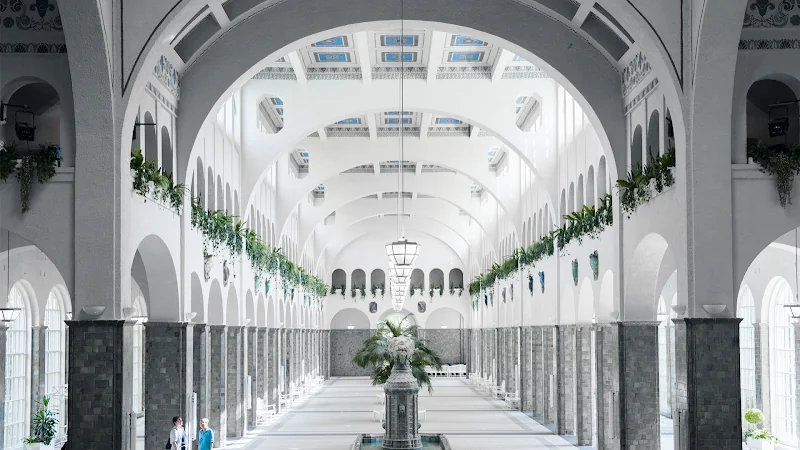
The Spring and Wandelhalle is one of the most iconic landmarks in the spa garden of Bad Kissingen. Visitors to the site not only experience an architectural monument from the early 20th century but also a vibrant center of spa culture that continues to thrive today. Healing water, music, walking culture, and historical representation seamlessly intertwine here. This mixture makes the hall one of the places where Bad Kissingen convincingly showcases its reputation as a traditional spa town. Its inclusion in the UNESCO World Heritage Great Spa Towns of Europe further enhances this impression, as the facility is not isolated but part of a whole spa ensemble that brings together city history, landscape, and health culture. ([welterbe.badkissingen.de](https://welterbe.badkissingen.de/welterbe-bad-kissingen/sehenswuerdigkeiten/41603.Die-Wandelhalle-in-Bad-Kissingen.html))
Particularly appealing is the proximity between function and atmosphere. In the Spring Hall, the Kissinger healing waters are served, in the Wandelhalle, the spa concerts of the Staatsbad Philharmonie Kissingen resonate, and surrounding it are the spa garden, arcade building, and regent building within walking distance. This creates a visitor experience that works for both day guests and cultural and health travelers: one can briefly stop by for a moment of healing water or use the place as a starting point for a longer walk through the historic spa district. For this reason, the most common search queries revolve not only around tickets but also around concerts, photos, reviews, parking, and the everyday life of this unique hall. ([welterbe.badkissingen.de](https://welterbe.badkissingen.de/welterbe-bad-kissingen/sehenswuerdigkeiten/41602.Brunnenhalle.html))
Tickets for the Spring and Wandelhalle: Visit, Tour, and Booking
Those looking for tickets for the Spring and Wandelhalle usually want more than just a quick glance at a historic building. The official tour through the spa ensemble is designed so that visitors get a compact but very dense impression of Bad Kissingen's spa architecture. According to the city and World Heritage portal, guests with a ticket gain access to the magnificent rooms of the regent building, the arcade building, as well as the Wandelhalle with the Spring Hall. This is particularly convenient for seekers because the most important sights of the spa district can be combined in one visit without having to plan everything separately. Tickets are available online or at the Tourist Information in the arcade building. ([welterbe.badkissingen.de](https://welterbe.badkissingen.de/historische-kur-erleben/welterbe-entdecken/41706.Ideen-fuer-einen-Nachmittag-in-Bad-Kissingen.html?utm_source=openai))
The visit is also attractive because the time slots are clearly regulated and can be easily integrated into a day trip. Entry for the individual tour is possible from Wednesday to Sunday from 12:00 to 14:30, and the rooms remain open until 15:00. Those who wish can additionally use the ticket on the same day for a spa concert by the Staatsbad Philharmonie Kissingen and the healing water dispensing in the Spring Hall. This connection of admission, culture, and spa tradition is a core component of the experience, as it transforms a simple building visit into a true Bad Kissingen moment. For SEO search queries like tickets, program, visit, or admission, this is a central information point. ([welterbe.badkissingen.de](https://welterbe.badkissingen.de/historische-kur-erleben/welterbe-entdecken/41706.Ideen-fuer-einen-Nachmittag-in-Bad-Kissingen.html?utm_source=openai))
It is also practical that the visit can be flexibly adapted to different target groups. Day guests can plan the hall as a highlight of a short stay, while spa guests and regular visitors use the tour as a fixed part of their stay. The official World Heritage site even recommends starting the stay in the spa garden with a ticket and then exploring the historic buildings step by step. This creates a clear orientation in the spa district, which is particularly helpful for first-time visitors. Those searching for the Spring and Wandelhalle are often actually looking for a compact cultural and spa program in a central location. This is exactly what this place fulfills: well-planned, content-rich, and closely connected to the city's history. ([welterbe.badkissingen.de](https://welterbe.badkissingen.de/historische-kur-erleben/welterbe-entdecken/41706.Ideen-fuer-einen-Nachmittag-in-Bad-Kissingen.html?utm_source=openai))
Healing Water Dispensing in the Spring Hall: Pandur, Rakoczy, and the Drinking Cure
The Spring Hall is the heart of the drinking cure because two of the seven Kissinger healing springs originate here: Pandur and Rakoczy. According to the official information from the World Heritage site, the dispensing of all drinkable healing waters from Kissingen, as well as Kissinger Bitter Water, is still carried out in the Spring Hall today. This is done by trained spring women who not only serve but also advise on the application and effects of the springs. For many guests, this moment is the actual hallmark of Bad Kissingen: a glass of healing water in hand, a quiet walk through the hall, and the immediate connection of architecture, health, and tradition. ([welterbe.badkissingen.de](https://welterbe.badkissingen.de/welterbe-bad-kissingen/sehenswuerdigkeiten/41602.Brunnenhalle.html))
The drinking cure is not a decorative ritual but a historically grown spa principle. Official texts explain that it is usually prescribed over several weeks and follows medical recommendations. The holistic idea is crucial: sipping, slow walking up and down, and an environment that offers calm and orientation. This is precisely what the Spring Hall is made for. Additionally, the public dispensing point in front of the Wandelhalle and in the arcade extends the spa idea beyond the hall itself into the urban space. Therefore, those interested in healing water, springs, Spring Hall, or the term drinking cure will find here not a museum-like exception but a lived everyday culture of a spa town. ([welterbe.badkissingen.de](https://welterbe.badkissingen.de/welterbe-bad-kissingen/sehenswuerdigkeiten/41602.Brunnenhalle.html))
Very important for visitors is also the daily logic of the dispensing. The official World Heritage site states that the dispensing has been done twice daily since 1911; in the separately described history of the spa, the Spring Hall is depicted as a place where the healing waters are “often dispensed twice daily.” For practice, this means: The healing water moment is firmly integrated into the daily routine and is not just a random additional offer. This explains why search terms like healing water dispensing, Spring Hall, springs, or spa culture are so frequently associated with Bad Kissingen. The place does not thrive on a single attraction but on a recurring, ritualized use that has shaped the character of spa operations for decades. ([welterbe.badkissingen.de](https://welterbe.badkissingen.de/historische-kur-erleben/historische-kur-heute?utm_source=openai))
Concerts, Spa Music, and Special Events in the Wandelhalle
The Wandelhalle is much more than a passageway for healing water. It is a classic concert and meeting place in the spa district, where music and architecture belong together. The official World Heritage site mentions spa concerts of the Staatsbad Philharmonie Kissingen taking place up to twice daily, and the concert shell at the Wandelhalle can be oriented towards the hall or the spa park depending on the weather. This is not only technically interesting but also atmospherically remarkable, as the hall thus remains flexible in the best sense. Those searching for concerts, programs, schedules, or special spa music will find here a place where daily cultural maintenance functions not as an event staging but as a lived tradition. ([welterbe.badkissingen.de](https://welterbe.badkissingen.de/welterbe-bad-kissingen/sehenswuerdigkeiten/41609.Die-Konzertmuschel-an-der-Wandelhalle.html?utm_source=openai))
The city's event calendar also shows that the Wandelhalle is regularly used for special formats. A current example is Magic Gregorian Night in the Wandelhalle, which fits well with search queries for unusual concert evenings, tickets, and program dates. This mixture of classical spa music, choir and vocal formats, and seasonal special events makes the hall interesting for various target groups. One can experience very different musical worlds there, from traditional spa concerts to thematic evenings with a spiritual or pop cultural note. Therefore, those searching for a concert in the Spring and Wandelhalle are often looking for a place that is not only historically beautiful but is regularly filled with life. ([badkissingen.de](https://www.badkissingen.de/kultur/veranstaltungskalender?ev%5Bid%5D=130768&utm_source=openai))
Architecture, History, and UNESCO Context of the Spring and Wandelhalle
Architecturally, the Spring and Wandelhalle is one of the most significant spa buildings in Germany. The official World Heritage site describes the facility as a building by the Munich architect Max Littmann, constructed between 1910 and 1912. It is designed as a cross-shaped basilica, with the Spring Hall and entrance hall in the cross arms. Particularly important for the construction history is that the hall represents a very early example of the use of reinforced concrete, thus making the claim for modern spa architecture visible. The decision to close and heat the building also had a clear purpose: Bad Kissingen wanted to enable year-round spa treatments and thus detach itself from the then-common seasonal logic from May to October. ([welterbe.badkissingen.de](https://welterbe.badkissingen.de/welterbe-bad-kissingen/sehenswuerdigkeiten/41603.Die-Wandelhalle-in-Bad-Kissingen.html))
The Art Nouveau decoration with majolica tiles and ceramic fountains from Villeroy & Boch additionally gives the hall its distinctive character. This combination of sober engineering achievement and decorative quality makes the building so impressive. The historical information about the development of the spa also makes it clear that the expansion of the spa facilities from 1904 to 1913 was a cohesive large project, within which, alongside the Wandelhalle and Spring Hall, the spa theater and regent building were also created. The hall should therefore not be understood as a standalone piece but as part of a consistently planned spa town architecture. Those searching for images will quickly recognize: The Wandelhalle thrives on proportions, materiality, light, and the calm monumentality of a building that elegantly combines representation and everyday life. ([welterbe.badkissingen.de](https://welterbe.badkissingen.de/welterbe-bad-kissingen/sehenswuerdigkeiten/41603.Die-Wandelhalle-in-Bad-Kissingen.html))
The UNESCO context further enhances this significance. Since 2021, Bad Kissingen has been part of the World Heritage site Great Spa Towns of Europe, together with ten other European spa towns. The official pages explicitly describe the Wandelhalle as part of the spa ensemble that continues to make the historical spa phenomenon visible and usable today. This is important for search intentions around history, peculiarities, and sights because the Spring and Wandelhalle is not only beautifully preserved but also continues to fulfill its original purpose. This is precisely why it remains a vibrant part of the World Heritage site and not just a monument. In a place characterized by healing springs, walking paths, spa gardens, and spa music, this hall is one of the central anchor points of the entire city experience. ([welterbe.badkissingen.de](https://welterbe.badkissingen.de/entdeckentour/einstieg?utm_source=openai))
Access, Parking, and Barrier-Free Visit at the Spa Garden
For practical planning, the location of the Spring and Wandelhalle is a great advantage. The site is located directly at the spa garden, right in the central spa area, which is easily accessible on foot. For the city of Bad Kissingen, parking in the city center and spa area is clearly regulated; the official parking pages refer to the parking overview and indicate that many parking options are available within a few minutes' walk from the city center or spa area. Particularly helpful for guests with mobility impairments is the designated accessible parking space at the spa garden. This makes it clear that the facility is not only historically significant but also well-prepared for contemporary visits. ([badkissingen.de](https://www.badkissingen.de/information/parken/36452.Parken-in-Bad-Kissingen.html?utm_source=openai))
Also relevant are the barrier-free offers around the spa district. The city mentions accessible toilets in the open arcades at the spa garden, and the Tourist Information is accessible for wheelchair users via an elevator. Additionally, the city points out that wheelchair spaces are offered for many concerts and theater performances. This is an important signal for visitors with special needs, as accessibility can become a real planning issue in a listed ensemble. For the Spring and Wandelhalle, this means: The visit is not only attractive for culture enthusiasts but also for people seeking well-organized, central, and as comfortable access as possible. ([badkissingen.de](https://www.badkissingen.de/information/barrierefreiheit/barrierefreie-stadt))
Spa Garden, Spring Path, and Tour: How to Best Combine the Visit
When visiting the Spring and Wandelhalle, one should not narrow the focus to the building alone. The spa garden was already planned and designed in 1738 as a meeting point for spa guests and still forms the heart of the spa district today. The official World Heritage site describes it as a place where the drinking cure and social gatherings have developed over centuries. From here, the other components of the spa ensemble can be easily accessed: arcade building, regent building, the open arcades, the spa park, and the paths towards Luitpoldpark. This creates a walking experience that is dense both in content and space. For this reason, themes like spring paths, healing water paths, and spa walks are often searched for in the vicinity of the hall. ([welterbe.badkissingen.de](https://welterbe.badkissingen.de/historische-kur-erleben/historische-kur-heute/41722.Meet--Greet-im-Kurgarten.html?utm_source=openai))
An ideal visit begins in the spa garden, leads to the Spring Hall for healing water, and then continues to a concert in the Wandelhalle. The official World Heritage route recommends exactly this interplay and explains that a ticket not only grants access to the historic rooms but also allows for the visit of a spa concert and the healing water dispensing on the same day. Those with a bit more time can combine the walk through the Wandelhalle with a stroll along the Saale or into Luitpoldpark. This transforms the visit into a little spa tradition in self-experimentation: walking slowly, looking, listening, drinking, lingering. This is probably the best reason why the Spring and Wandelhalle is so often sought not just as a sight but as an experiential place. ([welterbe.badkissingen.de](https://welterbe.badkissingen.de/historische-kur-erleben/welterbe-entdecken/41706.Ideen-fuer-einen-Nachmittag-in-Bad-Kissingen.html?utm_source=openai))
Sources:
- World Heritage Bad Kissingen - The Wandelhalle in Bad Kissingen
- World Heritage Bad Kissingen - Spring Hall
- World Heritage Bad Kissingen - Historical Spa to go: Ideas for an Afternoon in Bad Kissingen
- City of Bad Kissingen - Barrier-Free City
- City of Bad Kissingen - Magic Gregorian Night in the Event Calendar
- City of Bad Kissingen - Parking in Bad Kissingen
Show moreShow less
Spring and Wandelhalle | Tickets & Concerts
The Spring and Wandelhalle is one of the most iconic landmarks in the spa garden of Bad Kissingen. Visitors to the site not only experience an architectural monument from the early 20th century but also a vibrant center of spa culture that continues to thrive today. Healing water, music, walking culture, and historical representation seamlessly intertwine here. This mixture makes the hall one of the places where Bad Kissingen convincingly showcases its reputation as a traditional spa town. Its inclusion in the UNESCO World Heritage Great Spa Towns of Europe further enhances this impression, as the facility is not isolated but part of a whole spa ensemble that brings together city history, landscape, and health culture. ([welterbe.badkissingen.de](https://welterbe.badkissingen.de/welterbe-bad-kissingen/sehenswuerdigkeiten/41603.Die-Wandelhalle-in-Bad-Kissingen.html))
Particularly appealing is the proximity between function and atmosphere. In the Spring Hall, the Kissinger healing waters are served, in the Wandelhalle, the spa concerts of the Staatsbad Philharmonie Kissingen resonate, and surrounding it are the spa garden, arcade building, and regent building within walking distance. This creates a visitor experience that works for both day guests and cultural and health travelers: one can briefly stop by for a moment of healing water or use the place as a starting point for a longer walk through the historic spa district. For this reason, the most common search queries revolve not only around tickets but also around concerts, photos, reviews, parking, and the everyday life of this unique hall. ([welterbe.badkissingen.de](https://welterbe.badkissingen.de/welterbe-bad-kissingen/sehenswuerdigkeiten/41602.Brunnenhalle.html))
Tickets for the Spring and Wandelhalle: Visit, Tour, and Booking
Those looking for tickets for the Spring and Wandelhalle usually want more than just a quick glance at a historic building. The official tour through the spa ensemble is designed so that visitors get a compact but very dense impression of Bad Kissingen's spa architecture. According to the city and World Heritage portal, guests with a ticket gain access to the magnificent rooms of the regent building, the arcade building, as well as the Wandelhalle with the Spring Hall. This is particularly convenient for seekers because the most important sights of the spa district can be combined in one visit without having to plan everything separately. Tickets are available online or at the Tourist Information in the arcade building. ([welterbe.badkissingen.de](https://welterbe.badkissingen.de/historische-kur-erleben/welterbe-entdecken/41706.Ideen-fuer-einen-Nachmittag-in-Bad-Kissingen.html?utm_source=openai))
The visit is also attractive because the time slots are clearly regulated and can be easily integrated into a day trip. Entry for the individual tour is possible from Wednesday to Sunday from 12:00 to 14:30, and the rooms remain open until 15:00. Those who wish can additionally use the ticket on the same day for a spa concert by the Staatsbad Philharmonie Kissingen and the healing water dispensing in the Spring Hall. This connection of admission, culture, and spa tradition is a core component of the experience, as it transforms a simple building visit into a true Bad Kissingen moment. For SEO search queries like tickets, program, visit, or admission, this is a central information point. ([welterbe.badkissingen.de](https://welterbe.badkissingen.de/historische-kur-erleben/welterbe-entdecken/41706.Ideen-fuer-einen-Nachmittag-in-Bad-Kissingen.html?utm_source=openai))
It is also practical that the visit can be flexibly adapted to different target groups. Day guests can plan the hall as a highlight of a short stay, while spa guests and regular visitors use the tour as a fixed part of their stay. The official World Heritage site even recommends starting the stay in the spa garden with a ticket and then exploring the historic buildings step by step. This creates a clear orientation in the spa district, which is particularly helpful for first-time visitors. Those searching for the Spring and Wandelhalle are often actually looking for a compact cultural and spa program in a central location. This is exactly what this place fulfills: well-planned, content-rich, and closely connected to the city's history. ([welterbe.badkissingen.de](https://welterbe.badkissingen.de/historische-kur-erleben/welterbe-entdecken/41706.Ideen-fuer-einen-Nachmittag-in-Bad-Kissingen.html?utm_source=openai))
Healing Water Dispensing in the Spring Hall: Pandur, Rakoczy, and the Drinking Cure
The Spring Hall is the heart of the drinking cure because two of the seven Kissinger healing springs originate here: Pandur and Rakoczy. According to the official information from the World Heritage site, the dispensing of all drinkable healing waters from Kissingen, as well as Kissinger Bitter Water, is still carried out in the Spring Hall today. This is done by trained spring women who not only serve but also advise on the application and effects of the springs. For many guests, this moment is the actual hallmark of Bad Kissingen: a glass of healing water in hand, a quiet walk through the hall, and the immediate connection of architecture, health, and tradition. ([welterbe.badkissingen.de](https://welterbe.badkissingen.de/welterbe-bad-kissingen/sehenswuerdigkeiten/41602.Brunnenhalle.html))
The drinking cure is not a decorative ritual but a historically grown spa principle. Official texts explain that it is usually prescribed over several weeks and follows medical recommendations. The holistic idea is crucial: sipping, slow walking up and down, and an environment that offers calm and orientation. This is precisely what the Spring Hall is made for. Additionally, the public dispensing point in front of the Wandelhalle and in the arcade extends the spa idea beyond the hall itself into the urban space. Therefore, those interested in healing water, springs, Spring Hall, or the term drinking cure will find here not a museum-like exception but a lived everyday culture of a spa town. ([welterbe.badkissingen.de](https://welterbe.badkissingen.de/welterbe-bad-kissingen/sehenswuerdigkeiten/41602.Brunnenhalle.html))
Very important for visitors is also the daily logic of the dispensing. The official World Heritage site states that the dispensing has been done twice daily since 1911; in the separately described history of the spa, the Spring Hall is depicted as a place where the healing waters are “often dispensed twice daily.” For practice, this means: The healing water moment is firmly integrated into the daily routine and is not just a random additional offer. This explains why search terms like healing water dispensing, Spring Hall, springs, or spa culture are so frequently associated with Bad Kissingen. The place does not thrive on a single attraction but on a recurring, ritualized use that has shaped the character of spa operations for decades. ([welterbe.badkissingen.de](https://welterbe.badkissingen.de/historische-kur-erleben/historische-kur-heute?utm_source=openai))
Concerts, Spa Music, and Special Events in the Wandelhalle
The Wandelhalle is much more than a passageway for healing water. It is a classic concert and meeting place in the spa district, where music and architecture belong together. The official World Heritage site mentions spa concerts of the Staatsbad Philharmonie Kissingen taking place up to twice daily, and the concert shell at the Wandelhalle can be oriented towards the hall or the spa park depending on the weather. This is not only technically interesting but also atmospherically remarkable, as the hall thus remains flexible in the best sense. Those searching for concerts, programs, schedules, or special spa music will find here a place where daily cultural maintenance functions not as an event staging but as a lived tradition. ([welterbe.badkissingen.de](https://welterbe.badkissingen.de/welterbe-bad-kissingen/sehenswuerdigkeiten/41609.Die-Konzertmuschel-an-der-Wandelhalle.html?utm_source=openai))
The city's event calendar also shows that the Wandelhalle is regularly used for special formats. A current example is Magic Gregorian Night in the Wandelhalle, which fits well with search queries for unusual concert evenings, tickets, and program dates. This mixture of classical spa music, choir and vocal formats, and seasonal special events makes the hall interesting for various target groups. One can experience very different musical worlds there, from traditional spa concerts to thematic evenings with a spiritual or pop cultural note. Therefore, those searching for a concert in the Spring and Wandelhalle are often looking for a place that is not only historically beautiful but is regularly filled with life. ([badkissingen.de](https://www.badkissingen.de/kultur/veranstaltungskalender?ev%5Bid%5D=130768&utm_source=openai))
Architecture, History, and UNESCO Context of the Spring and Wandelhalle
Architecturally, the Spring and Wandelhalle is one of the most significant spa buildings in Germany. The official World Heritage site describes the facility as a building by the Munich architect Max Littmann, constructed between 1910 and 1912. It is designed as a cross-shaped basilica, with the Spring Hall and entrance hall in the cross arms. Particularly important for the construction history is that the hall represents a very early example of the use of reinforced concrete, thus making the claim for modern spa architecture visible. The decision to close and heat the building also had a clear purpose: Bad Kissingen wanted to enable year-round spa treatments and thus detach itself from the then-common seasonal logic from May to October. ([welterbe.badkissingen.de](https://welterbe.badkissingen.de/welterbe-bad-kissingen/sehenswuerdigkeiten/41603.Die-Wandelhalle-in-Bad-Kissingen.html))
The Art Nouveau decoration with majolica tiles and ceramic fountains from Villeroy & Boch additionally gives the hall its distinctive character. This combination of sober engineering achievement and decorative quality makes the building so impressive. The historical information about the development of the spa also makes it clear that the expansion of the spa facilities from 1904 to 1913 was a cohesive large project, within which, alongside the Wandelhalle and Spring Hall, the spa theater and regent building were also created. The hall should therefore not be understood as a standalone piece but as part of a consistently planned spa town architecture. Those searching for images will quickly recognize: The Wandelhalle thrives on proportions, materiality, light, and the calm monumentality of a building that elegantly combines representation and everyday life. ([welterbe.badkissingen.de](https://welterbe.badkissingen.de/welterbe-bad-kissingen/sehenswuerdigkeiten/41603.Die-Wandelhalle-in-Bad-Kissingen.html))
The UNESCO context further enhances this significance. Since 2021, Bad Kissingen has been part of the World Heritage site Great Spa Towns of Europe, together with ten other European spa towns. The official pages explicitly describe the Wandelhalle as part of the spa ensemble that continues to make the historical spa phenomenon visible and usable today. This is important for search intentions around history, peculiarities, and sights because the Spring and Wandelhalle is not only beautifully preserved but also continues to fulfill its original purpose. This is precisely why it remains a vibrant part of the World Heritage site and not just a monument. In a place characterized by healing springs, walking paths, spa gardens, and spa music, this hall is one of the central anchor points of the entire city experience. ([welterbe.badkissingen.de](https://welterbe.badkissingen.de/entdeckentour/einstieg?utm_source=openai))
Access, Parking, and Barrier-Free Visit at the Spa Garden
For practical planning, the location of the Spring and Wandelhalle is a great advantage. The site is located directly at the spa garden, right in the central spa area, which is easily accessible on foot. For the city of Bad Kissingen, parking in the city center and spa area is clearly regulated; the official parking pages refer to the parking overview and indicate that many parking options are available within a few minutes' walk from the city center or spa area. Particularly helpful for guests with mobility impairments is the designated accessible parking space at the spa garden. This makes it clear that the facility is not only historically significant but also well-prepared for contemporary visits. ([badkissingen.de](https://www.badkissingen.de/information/parken/36452.Parken-in-Bad-Kissingen.html?utm_source=openai))
Also relevant are the barrier-free offers around the spa district. The city mentions accessible toilets in the open arcades at the spa garden, and the Tourist Information is accessible for wheelchair users via an elevator. Additionally, the city points out that wheelchair spaces are offered for many concerts and theater performances. This is an important signal for visitors with special needs, as accessibility can become a real planning issue in a listed ensemble. For the Spring and Wandelhalle, this means: The visit is not only attractive for culture enthusiasts but also for people seeking well-organized, central, and as comfortable access as possible. ([badkissingen.de](https://www.badkissingen.de/information/barrierefreiheit/barrierefreie-stadt))
Spa Garden, Spring Path, and Tour: How to Best Combine the Visit
When visiting the Spring and Wandelhalle, one should not narrow the focus to the building alone. The spa garden was already planned and designed in 1738 as a meeting point for spa guests and still forms the heart of the spa district today. The official World Heritage site describes it as a place where the drinking cure and social gatherings have developed over centuries. From here, the other components of the spa ensemble can be easily accessed: arcade building, regent building, the open arcades, the spa park, and the paths towards Luitpoldpark. This creates a walking experience that is dense both in content and space. For this reason, themes like spring paths, healing water paths, and spa walks are often searched for in the vicinity of the hall. ([welterbe.badkissingen.de](https://welterbe.badkissingen.de/historische-kur-erleben/historische-kur-heute/41722.Meet--Greet-im-Kurgarten.html?utm_source=openai))
An ideal visit begins in the spa garden, leads to the Spring Hall for healing water, and then continues to a concert in the Wandelhalle. The official World Heritage route recommends exactly this interplay and explains that a ticket not only grants access to the historic rooms but also allows for the visit of a spa concert and the healing water dispensing on the same day. Those with a bit more time can combine the walk through the Wandelhalle with a stroll along the Saale or into Luitpoldpark. This transforms the visit into a little spa tradition in self-experimentation: walking slowly, looking, listening, drinking, lingering. This is probably the best reason why the Spring and Wandelhalle is so often sought not just as a sight but as an experiential place. ([welterbe.badkissingen.de](https://welterbe.badkissingen.de/historische-kur-erleben/welterbe-entdecken/41706.Ideen-fuer-einen-Nachmittag-in-Bad-Kissingen.html?utm_source=openai))
Sources:
- World Heritage Bad Kissingen - The Wandelhalle in Bad Kissingen
- World Heritage Bad Kissingen - Spring Hall
- World Heritage Bad Kissingen - Historical Spa to go: Ideas for an Afternoon in Bad Kissingen
- City of Bad Kissingen - Barrier-Free City
- City of Bad Kissingen - Magic Gregorian Night in the Event Calendar
- City of Bad Kissingen - Parking in Bad Kissingen
Spring and Wandelhalle | Tickets & Concerts
The Spring and Wandelhalle is one of the most iconic landmarks in the spa garden of Bad Kissingen. Visitors to the site not only experience an architectural monument from the early 20th century but also a vibrant center of spa culture that continues to thrive today. Healing water, music, walking culture, and historical representation seamlessly intertwine here. This mixture makes the hall one of the places where Bad Kissingen convincingly showcases its reputation as a traditional spa town. Its inclusion in the UNESCO World Heritage Great Spa Towns of Europe further enhances this impression, as the facility is not isolated but part of a whole spa ensemble that brings together city history, landscape, and health culture. ([welterbe.badkissingen.de](https://welterbe.badkissingen.de/welterbe-bad-kissingen/sehenswuerdigkeiten/41603.Die-Wandelhalle-in-Bad-Kissingen.html))
Particularly appealing is the proximity between function and atmosphere. In the Spring Hall, the Kissinger healing waters are served, in the Wandelhalle, the spa concerts of the Staatsbad Philharmonie Kissingen resonate, and surrounding it are the spa garden, arcade building, and regent building within walking distance. This creates a visitor experience that works for both day guests and cultural and health travelers: one can briefly stop by for a moment of healing water or use the place as a starting point for a longer walk through the historic spa district. For this reason, the most common search queries revolve not only around tickets but also around concerts, photos, reviews, parking, and the everyday life of this unique hall. ([welterbe.badkissingen.de](https://welterbe.badkissingen.de/welterbe-bad-kissingen/sehenswuerdigkeiten/41602.Brunnenhalle.html))
Tickets for the Spring and Wandelhalle: Visit, Tour, and Booking
Those looking for tickets for the Spring and Wandelhalle usually want more than just a quick glance at a historic building. The official tour through the spa ensemble is designed so that visitors get a compact but very dense impression of Bad Kissingen's spa architecture. According to the city and World Heritage portal, guests with a ticket gain access to the magnificent rooms of the regent building, the arcade building, as well as the Wandelhalle with the Spring Hall. This is particularly convenient for seekers because the most important sights of the spa district can be combined in one visit without having to plan everything separately. Tickets are available online or at the Tourist Information in the arcade building. ([welterbe.badkissingen.de](https://welterbe.badkissingen.de/historische-kur-erleben/welterbe-entdecken/41706.Ideen-fuer-einen-Nachmittag-in-Bad-Kissingen.html?utm_source=openai))
The visit is also attractive because the time slots are clearly regulated and can be easily integrated into a day trip. Entry for the individual tour is possible from Wednesday to Sunday from 12:00 to 14:30, and the rooms remain open until 15:00. Those who wish can additionally use the ticket on the same day for a spa concert by the Staatsbad Philharmonie Kissingen and the healing water dispensing in the Spring Hall. This connection of admission, culture, and spa tradition is a core component of the experience, as it transforms a simple building visit into a true Bad Kissingen moment. For SEO search queries like tickets, program, visit, or admission, this is a central information point. ([welterbe.badkissingen.de](https://welterbe.badkissingen.de/historische-kur-erleben/welterbe-entdecken/41706.Ideen-fuer-einen-Nachmittag-in-Bad-Kissingen.html?utm_source=openai))
It is also practical that the visit can be flexibly adapted to different target groups. Day guests can plan the hall as a highlight of a short stay, while spa guests and regular visitors use the tour as a fixed part of their stay. The official World Heritage site even recommends starting the stay in the spa garden with a ticket and then exploring the historic buildings step by step. This creates a clear orientation in the spa district, which is particularly helpful for first-time visitors. Those searching for the Spring and Wandelhalle are often actually looking for a compact cultural and spa program in a central location. This is exactly what this place fulfills: well-planned, content-rich, and closely connected to the city's history. ([welterbe.badkissingen.de](https://welterbe.badkissingen.de/historische-kur-erleben/welterbe-entdecken/41706.Ideen-fuer-einen-Nachmittag-in-Bad-Kissingen.html?utm_source=openai))
Healing Water Dispensing in the Spring Hall: Pandur, Rakoczy, and the Drinking Cure
The Spring Hall is the heart of the drinking cure because two of the seven Kissinger healing springs originate here: Pandur and Rakoczy. According to the official information from the World Heritage site, the dispensing of all drinkable healing waters from Kissingen, as well as Kissinger Bitter Water, is still carried out in the Spring Hall today. This is done by trained spring women who not only serve but also advise on the application and effects of the springs. For many guests, this moment is the actual hallmark of Bad Kissingen: a glass of healing water in hand, a quiet walk through the hall, and the immediate connection of architecture, health, and tradition. ([welterbe.badkissingen.de](https://welterbe.badkissingen.de/welterbe-bad-kissingen/sehenswuerdigkeiten/41602.Brunnenhalle.html))
The drinking cure is not a decorative ritual but a historically grown spa principle. Official texts explain that it is usually prescribed over several weeks and follows medical recommendations. The holistic idea is crucial: sipping, slow walking up and down, and an environment that offers calm and orientation. This is precisely what the Spring Hall is made for. Additionally, the public dispensing point in front of the Wandelhalle and in the arcade extends the spa idea beyond the hall itself into the urban space. Therefore, those interested in healing water, springs, Spring Hall, or the term drinking cure will find here not a museum-like exception but a lived everyday culture of a spa town. ([welterbe.badkissingen.de](https://welterbe.badkissingen.de/welterbe-bad-kissingen/sehenswuerdigkeiten/41602.Brunnenhalle.html))
Very important for visitors is also the daily logic of the dispensing. The official World Heritage site states that the dispensing has been done twice daily since 1911; in the separately described history of the spa, the Spring Hall is depicted as a place where the healing waters are “often dispensed twice daily.” For practice, this means: The healing water moment is firmly integrated into the daily routine and is not just a random additional offer. This explains why search terms like healing water dispensing, Spring Hall, springs, or spa culture are so frequently associated with Bad Kissingen. The place does not thrive on a single attraction but on a recurring, ritualized use that has shaped the character of spa operations for decades. ([welterbe.badkissingen.de](https://welterbe.badkissingen.de/historische-kur-erleben/historische-kur-heute?utm_source=openai))
Concerts, Spa Music, and Special Events in the Wandelhalle
The Wandelhalle is much more than a passageway for healing water. It is a classic concert and meeting place in the spa district, where music and architecture belong together. The official World Heritage site mentions spa concerts of the Staatsbad Philharmonie Kissingen taking place up to twice daily, and the concert shell at the Wandelhalle can be oriented towards the hall or the spa park depending on the weather. This is not only technically interesting but also atmospherically remarkable, as the hall thus remains flexible in the best sense. Those searching for concerts, programs, schedules, or special spa music will find here a place where daily cultural maintenance functions not as an event staging but as a lived tradition. ([welterbe.badkissingen.de](https://welterbe.badkissingen.de/welterbe-bad-kissingen/sehenswuerdigkeiten/41609.Die-Konzertmuschel-an-der-Wandelhalle.html?utm_source=openai))
The city's event calendar also shows that the Wandelhalle is regularly used for special formats. A current example is Magic Gregorian Night in the Wandelhalle, which fits well with search queries for unusual concert evenings, tickets, and program dates. This mixture of classical spa music, choir and vocal formats, and seasonal special events makes the hall interesting for various target groups. One can experience very different musical worlds there, from traditional spa concerts to thematic evenings with a spiritual or pop cultural note. Therefore, those searching for a concert in the Spring and Wandelhalle are often looking for a place that is not only historically beautiful but is regularly filled with life. ([badkissingen.de](https://www.badkissingen.de/kultur/veranstaltungskalender?ev%5Bid%5D=130768&utm_source=openai))
Architecture, History, and UNESCO Context of the Spring and Wandelhalle
Architecturally, the Spring and Wandelhalle is one of the most significant spa buildings in Germany. The official World Heritage site describes the facility as a building by the Munich architect Max Littmann, constructed between 1910 and 1912. It is designed as a cross-shaped basilica, with the Spring Hall and entrance hall in the cross arms. Particularly important for the construction history is that the hall represents a very early example of the use of reinforced concrete, thus making the claim for modern spa architecture visible. The decision to close and heat the building also had a clear purpose: Bad Kissingen wanted to enable year-round spa treatments and thus detach itself from the then-common seasonal logic from May to October. ([welterbe.badkissingen.de](https://welterbe.badkissingen.de/welterbe-bad-kissingen/sehenswuerdigkeiten/41603.Die-Wandelhalle-in-Bad-Kissingen.html))
The Art Nouveau decoration with majolica tiles and ceramic fountains from Villeroy & Boch additionally gives the hall its distinctive character. This combination of sober engineering achievement and decorative quality makes the building so impressive. The historical information about the development of the spa also makes it clear that the expansion of the spa facilities from 1904 to 1913 was a cohesive large project, within which, alongside the Wandelhalle and Spring Hall, the spa theater and regent building were also created. The hall should therefore not be understood as a standalone piece but as part of a consistently planned spa town architecture. Those searching for images will quickly recognize: The Wandelhalle thrives on proportions, materiality, light, and the calm monumentality of a building that elegantly combines representation and everyday life. ([welterbe.badkissingen.de](https://welterbe.badkissingen.de/welterbe-bad-kissingen/sehenswuerdigkeiten/41603.Die-Wandelhalle-in-Bad-Kissingen.html))
The UNESCO context further enhances this significance. Since 2021, Bad Kissingen has been part of the World Heritage site Great Spa Towns of Europe, together with ten other European spa towns. The official pages explicitly describe the Wandelhalle as part of the spa ensemble that continues to make the historical spa phenomenon visible and usable today. This is important for search intentions around history, peculiarities, and sights because the Spring and Wandelhalle is not only beautifully preserved but also continues to fulfill its original purpose. This is precisely why it remains a vibrant part of the World Heritage site and not just a monument. In a place characterized by healing springs, walking paths, spa gardens, and spa music, this hall is one of the central anchor points of the entire city experience. ([welterbe.badkissingen.de](https://welterbe.badkissingen.de/entdeckentour/einstieg?utm_source=openai))
Access, Parking, and Barrier-Free Visit at the Spa Garden
For practical planning, the location of the Spring and Wandelhalle is a great advantage. The site is located directly at the spa garden, right in the central spa area, which is easily accessible on foot. For the city of Bad Kissingen, parking in the city center and spa area is clearly regulated; the official parking pages refer to the parking overview and indicate that many parking options are available within a few minutes' walk from the city center or spa area. Particularly helpful for guests with mobility impairments is the designated accessible parking space at the spa garden. This makes it clear that the facility is not only historically significant but also well-prepared for contemporary visits. ([badkissingen.de](https://www.badkissingen.de/information/parken/36452.Parken-in-Bad-Kissingen.html?utm_source=openai))
Also relevant are the barrier-free offers around the spa district. The city mentions accessible toilets in the open arcades at the spa garden, and the Tourist Information is accessible for wheelchair users via an elevator. Additionally, the city points out that wheelchair spaces are offered for many concerts and theater performances. This is an important signal for visitors with special needs, as accessibility can become a real planning issue in a listed ensemble. For the Spring and Wandelhalle, this means: The visit is not only attractive for culture enthusiasts but also for people seeking well-organized, central, and as comfortable access as possible. ([badkissingen.de](https://www.badkissingen.de/information/barrierefreiheit/barrierefreie-stadt))
Spa Garden, Spring Path, and Tour: How to Best Combine the Visit
When visiting the Spring and Wandelhalle, one should not narrow the focus to the building alone. The spa garden was already planned and designed in 1738 as a meeting point for spa guests and still forms the heart of the spa district today. The official World Heritage site describes it as a place where the drinking cure and social gatherings have developed over centuries. From here, the other components of the spa ensemble can be easily accessed: arcade building, regent building, the open arcades, the spa park, and the paths towards Luitpoldpark. This creates a walking experience that is dense both in content and space. For this reason, themes like spring paths, healing water paths, and spa walks are often searched for in the vicinity of the hall. ([welterbe.badkissingen.de](https://welterbe.badkissingen.de/historische-kur-erleben/historische-kur-heute/41722.Meet--Greet-im-Kurgarten.html?utm_source=openai))
An ideal visit begins in the spa garden, leads to the Spring Hall for healing water, and then continues to a concert in the Wandelhalle. The official World Heritage route recommends exactly this interplay and explains that a ticket not only grants access to the historic rooms but also allows for the visit of a spa concert and the healing water dispensing on the same day. Those with a bit more time can combine the walk through the Wandelhalle with a stroll along the Saale or into Luitpoldpark. This transforms the visit into a little spa tradition in self-experimentation: walking slowly, looking, listening, drinking, lingering. This is probably the best reason why the Spring and Wandelhalle is so often sought not just as a sight but as an experiential place. ([welterbe.badkissingen.de](https://welterbe.badkissingen.de/historische-kur-erleben/welterbe-entdecken/41706.Ideen-fuer-einen-Nachmittag-in-Bad-Kissingen.html?utm_source=openai))
Sources:
- World Heritage Bad Kissingen - The Wandelhalle in Bad Kissingen
- World Heritage Bad Kissingen - Spring Hall
- World Heritage Bad Kissingen - Historical Spa to go: Ideas for an Afternoon in Bad Kissingen
- City of Bad Kissingen - Barrier-Free City
- City of Bad Kissingen - Magic Gregorian Night in the Event Calendar
- City of Bad Kissingen - Parking in Bad Kissingen
Upcoming Events
No events found
Frequently Asked Questions
Reviews
Zoran Popovic
19. July 2024
Interesting taste of the water, refreshing, you can feel the nature.
Daniela Koch
26. August 2025
It's sad that there's so much background noise while the musicians are playing. It's distracting from the music...
Yoni Shtern
14. December 2018
Interesting historical place of old mineral water.
Giuseppe Barione
26. August 2025
Very bad.
Dave Tippett
11. July 2019
So well maintained, beautiful gardens.