
Bad Kissingen
Prinzregentenstraße 9, 97688 Bad Kissingen, Deutschland
Redeemer Church Bad Kissingen | History & Parking
The Redeemer Church in Bad Kissingen is much more than a prominent church building at a well-known spa town address. Those who visit the church at Prinzregentenstraße 9 encounter a place that has emerged from the Protestant life of the city and continues to assert itself as a significant spiritual, musical, and historical center. Especially because Bad Kissingen is traditionally Catholic, the Redeemer Church has a special role: it is not only a house of worship but also a visible sign of how Protestant community life developed in the 19th century in a growing spa town. The construction began as a modest Protestant prayer house for spa guests and citizens, was later expanded, and today is a building where early Renaissance, neo-Romanesque, and modern use come together. This mixture makes the church equally exciting for visitors, music lovers, and those interested in cultural history. Additionally, the vibrant program of the community with choirs, orchestras, organ music, and cantata services creates a place where history does not feel museum-like but remains audible and tangible. ([welterbe.badkissingen.de](https://welterbe.badkissingen.de/welterbe-bad-kissingen/sehenswuerdigkeiten/41615.Erloeserkirche.html))
History of the Redeemer Church Bad Kissingen
The emergence of the Redeemer Church is closely linked to the rise of Bad Kissingen as a spa and world bath. In the 1840s, the number of Protestant spa guests and incoming Protestant residents increased so significantly that the previous facilities in the Old Town Hall were no longer sufficient. The city and church chronicle describes that King Ludwig I approved the construction of a Protestant prayer house in 1844 and commissioned his court architect Friedrich von Gärtner with the design. The king explicitly wanted simple architectural forms, and this wish has shaped the original character of the building to this day. The shell was completed in 1845, the furnishings were finished in 1847, and the solemn inauguration took place on June 6, 1847. Thus, the building was not intended from the beginning as a representative large church but as a functional, modest, and yet architecturally carefully designed house of worship for a growing Protestant community in a fashionable spa town. At the same time, the location shows how consciously the building was integrated into the new street network and the perspectives of the cityscape. ([badkissingen.de](https://www.badkissingen.de/m_121217))
From the simple prayer house, a significantly larger church emerged a few decades later. After the Protestant community received parish status in 1864, the desire for a “proper church” with a stronger architectural profile arose. The renovation from 1889 to 1891 was planned by August Thiersch; he added two towers to the west front and redesigned the eastern part with a transept, crossing, octagonal tower, and choir. The tourism and city information emphasizes that the original Gärtner building remains discernible: the current nave, the structure of the longitudinal sides, and the basic idea of the building body still refer to the original phase. At the same time, the expansions fundamentally changed the overall impression, so that the church today appears as a neo-Romanesque building. The last interior restoration took place from 1978 to 1980, and since this renovation, the church has officially been named Redeemer Church. Thus, the building is not only a monument of the 19th century but also an example of how a sacred space has been adapted in several stages to new liturgical and urban planning requirements. ([badkissingen.de](https://www.badkissingen.de/m_121217))
Parking and Access to the Redeemer Church
For visitors, access to the Redeemer Church is straightforward if you know the official address: Prinzregentenstraße 9 in 97688 Bad Kissingen. The church community suggests the Theater parking garage in Kapellenstraße as a nearby option for drivers. Parking there is subject to fees, but on Sundays, it is free between 8 AM and 12 PM. This is particularly convenient for services, concerts, and visits on weekends, as the church can be reached quickly from there. The municipal parking information is also helpful: Bad Kissingen offers a clear parking structure with additional parking spaces and charging stations in the city area, as well as affordable and free parking spaces in the downtown area. For those who want to combine their visit with a walk through the spa town, this is a real advantage. The Redeemer Church is located in an area that has historically developed, is well-connected, and is also within walking distance to the city center. This makes it easy to combine a visit with a tour of the city center, the spa area, or other attractions. ([erloeserkirche.info](https://www.erloeserkirche.info/kirchengemeinde/?utm_source=openai))
The access is interesting not only for individual travelers but also for guests attending events. Especially for concerts, choir days, or cantata services, it is advisable to plan the Theater parking garage or other central parking options in advance. The city points out that Bad Kissingen offers a large number of parking spaces at varying distances from the pedestrian zone, including free spaces within a slightly longer walking distance. This makes the city pleasant for visitors who do not want to drive right up to the entrance. For the Redeemer Church itself, it is important that it is well integrated into the inner-city traffic and pathway network and can be quickly found as a landmark. Those arriving via GPS or the official address will reach one of the city's most well-known Protestant buildings without detours. This is particularly useful for guests visiting the church for the first time and wanting to get an impression of the historical spa character of Bad Kissingen. ([erloeserkirche.info](https://www.erloeserkirche.info/kirchengemeinde/?utm_source=openai))
Church Music, Concerts, and Cantata Services
Today, the Redeemer Church in Bad Kissingen is primarily a place of vibrant church music. The official page of the community shows how broad the musical spectrum is: there is a chamber orchestra, the gospel choir The KisSingers, children's and youth choirs, a flute ensemble, as well as other musical groups and concert dates. This diversity is not a side issue but a core of community life. This becomes particularly visible in the cantata services during the Kissinger Summer, which are described on the official music page as one of the great highlights of the church year. They usually take place on the last Sunday of June or the first Sunday of July and attract up to 600 community members and guests. This shows that the church is not only used for Sunday services but also serves as a cultural resonance space for an entire region. For visitors, this is attractive because spiritual music, concert culture, and the special atmosphere of the nave are directly connected. Those who experience the Redeemer Church with music quickly understand why it has a special aura in Bad Kissingen: here, liturgy, choir work, orchestral sound, and community identity are closely intertwined. ([erloeserkirche.info](https://www.erloeserkirche.info/))
The chamber orchestra Bad Kissingen, founded in 1981 at the Redeemer Church, is a particularly good example of this. According to the official description, it consists of about 18 string players and is supplemented by other instruments as needed. It rehearses and performs for cantata services and concerts at the Redeemer Church but also performs outside. The community connects these ensembles not only with musical quality but also with youth work and intergenerational participation. Thus, the offerings range from singing for children and grandparents to Gospel kids, advanced rehearsals, and the planned recorder orchestra. Organ lessons are also offered upon request. This is important for external perception because it elevates the church from the role of a mere monument. It is simultaneously a concert venue, an educational space, and a meeting point for musically interested people. Therefore, those looking for events, church music, or special services will find in the Redeemer Church not only the historical setting but also an ongoing active program that keeps the name of the church visible in city life. ([erloeserkirche.info](https://www.erloeserkirche.info/musik-kunst/kammerorchester/?utm_source=openai))
Organ, Interior, and Furnishings
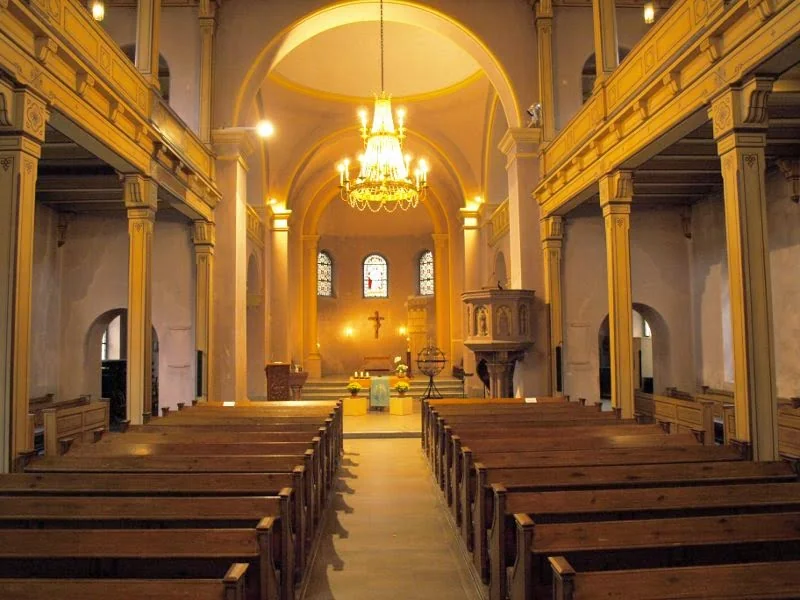
Even inside, the Redeemer Church tells its story in several layers. The current spatial effect is the result of redesign, expansion, and restoration. According to the church historical information from the city, the original building by Friedrich von Gärtner has mainly preserved the nave. The three-sided gallery and the coffered ceiling from the early phase have been largely retained, while the Thiersch expansion gave the space a significantly more monumental character. The last interior restoration from 1978 to 1980 had not only conservational goals but also liturgical ones: the original stencil painting was reconstructed, the overall color concept harmonized, and the altar moved closer to the congregation so that the interior better corresponds to today's forms of worship. Among the neo-Romanesque furnishings from around 1890, the stone pulpit and the baptismal font created by the Bad Kissingen sculptor Valentin Weidner have been preserved; additionally, a stained glass window in the apse has been handed down. This mixture of historical substance and functional adaptation makes the church space interesting. It is neither completely original nor arbitrarily modernized but has been consciously further developed. ([badkissingen.de](https://www.badkissingen.de/m_121217))
Particularly significant is the organ history of the Redeemer Church. The first organ dates from 1847 and was built by Carl Friedrich Geyer from Bamberg; according to the chronicle, it had ten sounding voices. Later renovations and new constructions eventually led to the current large organ, which was rebuilt in 1978/79 by Steinmeyer using older pipe stock. On the official organ page, it is described as an instrument with 36 registers on three manuals and pedal; it also features a swell division, normal couplings, and 128 setters. This makes it clear that the Redeemer Church is noteworthy not only liturgically but also in terms of organ building. Additionally, there is the history of the choir organ, which was temporarily on permanent loan in the building and was later dismantled. For visitors, this means: those sitting in the Redeemer Church do not simply hear a standard instrument but a historically developed organ concept that is closely connected to the musical tradition of the community. Especially in connection with cantata services, organ music, and concert formats, this space unfolds its special effect. ([erloeserkirche.info](https://www.erloeserkirche.info/musik-kunst/orgel/?utm_source=openai))
Place of Worship, Community, and Special Role in Bad Kissingen
The Redeemer Church is not only architecturally and musically significant but also serves as a central anchor point in a special religious landscape. The city of Bad Kissingen points out that the Protestant church only emerged in the 19th century as a result of the increasing number of Protestant spa guests, while the Catholic background of the state bath long dominated. The church community itself describes its situation as a diaspora situation, making it clear that it represents a minority within the city whose catchment area extends far beyond the actual city center. At the same time, the overall church community of Bad Kissingen is the largest of the 27 Protestant congregations in the Schweinfurt deanery. These numbers are important because they show that the Redeemer Church is relevant not only for local community members but also for a large regional environment. According to the official website, the parish covers about 290 square kilometers, and around 20 percent of the population in the city are Protestant Christians. The church thus serves as a parish church, spiritual meeting point, and symbol of a growing Protestant presence in a historically Catholic spa town. ([badkissingen.de](https://www.badkissingen.de/bildung-und-soziales/kirchliche-einrichtungen/kirchen-in-bad-kissingen?utm_source=openai))
As a sight, the Redeemer Church also fits into the cityscape of Bad Kissingen. The World Heritage and tourism information emphasize that the building was designed by Friedrich von Gärtner as a visual conclusion in the new street network. Thus, the church is not randomly placed but has been consciously integrated into the urban order. This idea explains why it is still perceived as a landmark today: it is not hidden but located in a place where architecture, sight lines, and urban life intersect. At the same time, the environment of the church community is evolving, for example, with the new LichtForum at Von-Hessing-Straße 4, which is being established as a house of the Protestant Church. For visitors exploring Bad Kissingen out of cultural interest, the Redeemer Church is therefore an ideal starting point. Here, city history, spa tradition, musical life, and Protestant identity meet in close proximity. Those who enter the church or view it from the outside see not only a sacred building but also a piece of Bad Kissingen's self-understanding that has been continuously rewritten since the 19th century. ([welterbe.badkissingen.de](https://welterbe.badkissingen.de/welterbe-bad-kissingen/sehenswuerdigkeiten/41615.Erloeserkirche.html))
Sources:
- Evangelical-Lutheran Congregation Bad Kissingen - Official Website
- Evangelical-Lutheran Congregation Bad Kissingen - Congregation and Access
- City of Bad Kissingen - Redeemer Church
- Evangelical-Lutheran Congregation Bad Kissingen - Chamber Orchestra
- Evangelical-Lutheran Congregation Bad Kissingen - Cantata Services
- City of Bad Kissingen - Parking in Bad Kissingen
- Evangelical-Lutheran Congregation Bad Kissingen - Organ
Mehr anzeigenWeniger anzeigen
Redeemer Church Bad Kissingen | History & Parking
The Redeemer Church in Bad Kissingen is much more than a prominent church building at a well-known spa town address. Those who visit the church at Prinzregentenstraße 9 encounter a place that has emerged from the Protestant life of the city and continues to assert itself as a significant spiritual, musical, and historical center. Especially because Bad Kissingen is traditionally Catholic, the Redeemer Church has a special role: it is not only a house of worship but also a visible sign of how Protestant community life developed in the 19th century in a growing spa town. The construction began as a modest Protestant prayer house for spa guests and citizens, was later expanded, and today is a building where early Renaissance, neo-Romanesque, and modern use come together. This mixture makes the church equally exciting for visitors, music lovers, and those interested in cultural history. Additionally, the vibrant program of the community with choirs, orchestras, organ music, and cantata services creates a place where history does not feel museum-like but remains audible and tangible. ([welterbe.badkissingen.de](https://welterbe.badkissingen.de/welterbe-bad-kissingen/sehenswuerdigkeiten/41615.Erloeserkirche.html))
History of the Redeemer Church Bad Kissingen
The emergence of the Redeemer Church is closely linked to the rise of Bad Kissingen as a spa and world bath. In the 1840s, the number of Protestant spa guests and incoming Protestant residents increased so significantly that the previous facilities in the Old Town Hall were no longer sufficient. The city and church chronicle describes that King Ludwig I approved the construction of a Protestant prayer house in 1844 and commissioned his court architect Friedrich von Gärtner with the design. The king explicitly wanted simple architectural forms, and this wish has shaped the original character of the building to this day. The shell was completed in 1845, the furnishings were finished in 1847, and the solemn inauguration took place on June 6, 1847. Thus, the building was not intended from the beginning as a representative large church but as a functional, modest, and yet architecturally carefully designed house of worship for a growing Protestant community in a fashionable spa town. At the same time, the location shows how consciously the building was integrated into the new street network and the perspectives of the cityscape. ([badkissingen.de](https://www.badkissingen.de/m_121217))
From the simple prayer house, a significantly larger church emerged a few decades later. After the Protestant community received parish status in 1864, the desire for a “proper church” with a stronger architectural profile arose. The renovation from 1889 to 1891 was planned by August Thiersch; he added two towers to the west front and redesigned the eastern part with a transept, crossing, octagonal tower, and choir. The tourism and city information emphasizes that the original Gärtner building remains discernible: the current nave, the structure of the longitudinal sides, and the basic idea of the building body still refer to the original phase. At the same time, the expansions fundamentally changed the overall impression, so that the church today appears as a neo-Romanesque building. The last interior restoration took place from 1978 to 1980, and since this renovation, the church has officially been named Redeemer Church. Thus, the building is not only a monument of the 19th century but also an example of how a sacred space has been adapted in several stages to new liturgical and urban planning requirements. ([badkissingen.de](https://www.badkissingen.de/m_121217))
Parking and Access to the Redeemer Church
For visitors, access to the Redeemer Church is straightforward if you know the official address: Prinzregentenstraße 9 in 97688 Bad Kissingen. The church community suggests the Theater parking garage in Kapellenstraße as a nearby option for drivers. Parking there is subject to fees, but on Sundays, it is free between 8 AM and 12 PM. This is particularly convenient for services, concerts, and visits on weekends, as the church can be reached quickly from there. The municipal parking information is also helpful: Bad Kissingen offers a clear parking structure with additional parking spaces and charging stations in the city area, as well as affordable and free parking spaces in the downtown area. For those who want to combine their visit with a walk through the spa town, this is a real advantage. The Redeemer Church is located in an area that has historically developed, is well-connected, and is also within walking distance to the city center. This makes it easy to combine a visit with a tour of the city center, the spa area, or other attractions. ([erloeserkirche.info](https://www.erloeserkirche.info/kirchengemeinde/?utm_source=openai))
The access is interesting not only for individual travelers but also for guests attending events. Especially for concerts, choir days, or cantata services, it is advisable to plan the Theater parking garage or other central parking options in advance. The city points out that Bad Kissingen offers a large number of parking spaces at varying distances from the pedestrian zone, including free spaces within a slightly longer walking distance. This makes the city pleasant for visitors who do not want to drive right up to the entrance. For the Redeemer Church itself, it is important that it is well integrated into the inner-city traffic and pathway network and can be quickly found as a landmark. Those arriving via GPS or the official address will reach one of the city's most well-known Protestant buildings without detours. This is particularly useful for guests visiting the church for the first time and wanting to get an impression of the historical spa character of Bad Kissingen. ([erloeserkirche.info](https://www.erloeserkirche.info/kirchengemeinde/?utm_source=openai))
Church Music, Concerts, and Cantata Services
Today, the Redeemer Church in Bad Kissingen is primarily a place of vibrant church music. The official page of the community shows how broad the musical spectrum is: there is a chamber orchestra, the gospel choir The KisSingers, children's and youth choirs, a flute ensemble, as well as other musical groups and concert dates. This diversity is not a side issue but a core of community life. This becomes particularly visible in the cantata services during the Kissinger Summer, which are described on the official music page as one of the great highlights of the church year. They usually take place on the last Sunday of June or the first Sunday of July and attract up to 600 community members and guests. This shows that the church is not only used for Sunday services but also serves as a cultural resonance space for an entire region. For visitors, this is attractive because spiritual music, concert culture, and the special atmosphere of the nave are directly connected. Those who experience the Redeemer Church with music quickly understand why it has a special aura in Bad Kissingen: here, liturgy, choir work, orchestral sound, and community identity are closely intertwined. ([erloeserkirche.info](https://www.erloeserkirche.info/))
The chamber orchestra Bad Kissingen, founded in 1981 at the Redeemer Church, is a particularly good example of this. According to the official description, it consists of about 18 string players and is supplemented by other instruments as needed. It rehearses and performs for cantata services and concerts at the Redeemer Church but also performs outside. The community connects these ensembles not only with musical quality but also with youth work and intergenerational participation. Thus, the offerings range from singing for children and grandparents to Gospel kids, advanced rehearsals, and the planned recorder orchestra. Organ lessons are also offered upon request. This is important for external perception because it elevates the church from the role of a mere monument. It is simultaneously a concert venue, an educational space, and a meeting point for musically interested people. Therefore, those looking for events, church music, or special services will find in the Redeemer Church not only the historical setting but also an ongoing active program that keeps the name of the church visible in city life. ([erloeserkirche.info](https://www.erloeserkirche.info/musik-kunst/kammerorchester/?utm_source=openai))
Organ, Interior, and Furnishings
Even inside, the Redeemer Church tells its story in several layers. The current spatial effect is the result of redesign, expansion, and restoration. According to the church historical information from the city, the original building by Friedrich von Gärtner has mainly preserved the nave. The three-sided gallery and the coffered ceiling from the early phase have been largely retained, while the Thiersch expansion gave the space a significantly more monumental character. The last interior restoration from 1978 to 1980 had not only conservational goals but also liturgical ones: the original stencil painting was reconstructed, the overall color concept harmonized, and the altar moved closer to the congregation so that the interior better corresponds to today's forms of worship. Among the neo-Romanesque furnishings from around 1890, the stone pulpit and the baptismal font created by the Bad Kissingen sculptor Valentin Weidner have been preserved; additionally, a stained glass window in the apse has been handed down. This mixture of historical substance and functional adaptation makes the church space interesting. It is neither completely original nor arbitrarily modernized but has been consciously further developed. ([badkissingen.de](https://www.badkissingen.de/m_121217))
Particularly significant is the organ history of the Redeemer Church. The first organ dates from 1847 and was built by Carl Friedrich Geyer from Bamberg; according to the chronicle, it had ten sounding voices. Later renovations and new constructions eventually led to the current large organ, which was rebuilt in 1978/79 by Steinmeyer using older pipe stock. On the official organ page, it is described as an instrument with 36 registers on three manuals and pedal; it also features a swell division, normal couplings, and 128 setters. This makes it clear that the Redeemer Church is noteworthy not only liturgically but also in terms of organ building. Additionally, there is the history of the choir organ, which was temporarily on permanent loan in the building and was later dismantled. For visitors, this means: those sitting in the Redeemer Church do not simply hear a standard instrument but a historically developed organ concept that is closely connected to the musical tradition of the community. Especially in connection with cantata services, organ music, and concert formats, this space unfolds its special effect. ([erloeserkirche.info](https://www.erloeserkirche.info/musik-kunst/orgel/?utm_source=openai))
Place of Worship, Community, and Special Role in Bad Kissingen
The Redeemer Church is not only architecturally and musically significant but also serves as a central anchor point in a special religious landscape. The city of Bad Kissingen points out that the Protestant church only emerged in the 19th century as a result of the increasing number of Protestant spa guests, while the Catholic background of the state bath long dominated. The church community itself describes its situation as a diaspora situation, making it clear that it represents a minority within the city whose catchment area extends far beyond the actual city center. At the same time, the overall church community of Bad Kissingen is the largest of the 27 Protestant congregations in the Schweinfurt deanery. These numbers are important because they show that the Redeemer Church is relevant not only for local community members but also for a large regional environment. According to the official website, the parish covers about 290 square kilometers, and around 20 percent of the population in the city are Protestant Christians. The church thus serves as a parish church, spiritual meeting point, and symbol of a growing Protestant presence in a historically Catholic spa town. ([badkissingen.de](https://www.badkissingen.de/bildung-und-soziales/kirchliche-einrichtungen/kirchen-in-bad-kissingen?utm_source=openai))
As a sight, the Redeemer Church also fits into the cityscape of Bad Kissingen. The World Heritage and tourism information emphasize that the building was designed by Friedrich von Gärtner as a visual conclusion in the new street network. Thus, the church is not randomly placed but has been consciously integrated into the urban order. This idea explains why it is still perceived as a landmark today: it is not hidden but located in a place where architecture, sight lines, and urban life intersect. At the same time, the environment of the church community is evolving, for example, with the new LichtForum at Von-Hessing-Straße 4, which is being established as a house of the Protestant Church. For visitors exploring Bad Kissingen out of cultural interest, the Redeemer Church is therefore an ideal starting point. Here, city history, spa tradition, musical life, and Protestant identity meet in close proximity. Those who enter the church or view it from the outside see not only a sacred building but also a piece of Bad Kissingen's self-understanding that has been continuously rewritten since the 19th century. ([welterbe.badkissingen.de](https://welterbe.badkissingen.de/welterbe-bad-kissingen/sehenswuerdigkeiten/41615.Erloeserkirche.html))
Sources:
- Evangelical-Lutheran Congregation Bad Kissingen - Official Website
- Evangelical-Lutheran Congregation Bad Kissingen - Congregation and Access
- City of Bad Kissingen - Redeemer Church
- Evangelical-Lutheran Congregation Bad Kissingen - Chamber Orchestra
- Evangelical-Lutheran Congregation Bad Kissingen - Cantata Services
- City of Bad Kissingen - Parking in Bad Kissingen
- Evangelical-Lutheran Congregation Bad Kissingen - Organ
Redeemer Church Bad Kissingen | History & Parking
The Redeemer Church in Bad Kissingen is much more than a prominent church building at a well-known spa town address. Those who visit the church at Prinzregentenstraße 9 encounter a place that has emerged from the Protestant life of the city and continues to assert itself as a significant spiritual, musical, and historical center. Especially because Bad Kissingen is traditionally Catholic, the Redeemer Church has a special role: it is not only a house of worship but also a visible sign of how Protestant community life developed in the 19th century in a growing spa town. The construction began as a modest Protestant prayer house for spa guests and citizens, was later expanded, and today is a building where early Renaissance, neo-Romanesque, and modern use come together. This mixture makes the church equally exciting for visitors, music lovers, and those interested in cultural history. Additionally, the vibrant program of the community with choirs, orchestras, organ music, and cantata services creates a place where history does not feel museum-like but remains audible and tangible. ([welterbe.badkissingen.de](https://welterbe.badkissingen.de/welterbe-bad-kissingen/sehenswuerdigkeiten/41615.Erloeserkirche.html))
History of the Redeemer Church Bad Kissingen
The emergence of the Redeemer Church is closely linked to the rise of Bad Kissingen as a spa and world bath. In the 1840s, the number of Protestant spa guests and incoming Protestant residents increased so significantly that the previous facilities in the Old Town Hall were no longer sufficient. The city and church chronicle describes that King Ludwig I approved the construction of a Protestant prayer house in 1844 and commissioned his court architect Friedrich von Gärtner with the design. The king explicitly wanted simple architectural forms, and this wish has shaped the original character of the building to this day. The shell was completed in 1845, the furnishings were finished in 1847, and the solemn inauguration took place on June 6, 1847. Thus, the building was not intended from the beginning as a representative large church but as a functional, modest, and yet architecturally carefully designed house of worship for a growing Protestant community in a fashionable spa town. At the same time, the location shows how consciously the building was integrated into the new street network and the perspectives of the cityscape. ([badkissingen.de](https://www.badkissingen.de/m_121217))
From the simple prayer house, a significantly larger church emerged a few decades later. After the Protestant community received parish status in 1864, the desire for a “proper church” with a stronger architectural profile arose. The renovation from 1889 to 1891 was planned by August Thiersch; he added two towers to the west front and redesigned the eastern part with a transept, crossing, octagonal tower, and choir. The tourism and city information emphasizes that the original Gärtner building remains discernible: the current nave, the structure of the longitudinal sides, and the basic idea of the building body still refer to the original phase. At the same time, the expansions fundamentally changed the overall impression, so that the church today appears as a neo-Romanesque building. The last interior restoration took place from 1978 to 1980, and since this renovation, the church has officially been named Redeemer Church. Thus, the building is not only a monument of the 19th century but also an example of how a sacred space has been adapted in several stages to new liturgical and urban planning requirements. ([badkissingen.de](https://www.badkissingen.de/m_121217))
Parking and Access to the Redeemer Church
For visitors, access to the Redeemer Church is straightforward if you know the official address: Prinzregentenstraße 9 in 97688 Bad Kissingen. The church community suggests the Theater parking garage in Kapellenstraße as a nearby option for drivers. Parking there is subject to fees, but on Sundays, it is free between 8 AM and 12 PM. This is particularly convenient for services, concerts, and visits on weekends, as the church can be reached quickly from there. The municipal parking information is also helpful: Bad Kissingen offers a clear parking structure with additional parking spaces and charging stations in the city area, as well as affordable and free parking spaces in the downtown area. For those who want to combine their visit with a walk through the spa town, this is a real advantage. The Redeemer Church is located in an area that has historically developed, is well-connected, and is also within walking distance to the city center. This makes it easy to combine a visit with a tour of the city center, the spa area, or other attractions. ([erloeserkirche.info](https://www.erloeserkirche.info/kirchengemeinde/?utm_source=openai))
The access is interesting not only for individual travelers but also for guests attending events. Especially for concerts, choir days, or cantata services, it is advisable to plan the Theater parking garage or other central parking options in advance. The city points out that Bad Kissingen offers a large number of parking spaces at varying distances from the pedestrian zone, including free spaces within a slightly longer walking distance. This makes the city pleasant for visitors who do not want to drive right up to the entrance. For the Redeemer Church itself, it is important that it is well integrated into the inner-city traffic and pathway network and can be quickly found as a landmark. Those arriving via GPS or the official address will reach one of the city's most well-known Protestant buildings without detours. This is particularly useful for guests visiting the church for the first time and wanting to get an impression of the historical spa character of Bad Kissingen. ([erloeserkirche.info](https://www.erloeserkirche.info/kirchengemeinde/?utm_source=openai))
Church Music, Concerts, and Cantata Services
Today, the Redeemer Church in Bad Kissingen is primarily a place of vibrant church music. The official page of the community shows how broad the musical spectrum is: there is a chamber orchestra, the gospel choir The KisSingers, children's and youth choirs, a flute ensemble, as well as other musical groups and concert dates. This diversity is not a side issue but a core of community life. This becomes particularly visible in the cantata services during the Kissinger Summer, which are described on the official music page as one of the great highlights of the church year. They usually take place on the last Sunday of June or the first Sunday of July and attract up to 600 community members and guests. This shows that the church is not only used for Sunday services but also serves as a cultural resonance space for an entire region. For visitors, this is attractive because spiritual music, concert culture, and the special atmosphere of the nave are directly connected. Those who experience the Redeemer Church with music quickly understand why it has a special aura in Bad Kissingen: here, liturgy, choir work, orchestral sound, and community identity are closely intertwined. ([erloeserkirche.info](https://www.erloeserkirche.info/))
The chamber orchestra Bad Kissingen, founded in 1981 at the Redeemer Church, is a particularly good example of this. According to the official description, it consists of about 18 string players and is supplemented by other instruments as needed. It rehearses and performs for cantata services and concerts at the Redeemer Church but also performs outside. The community connects these ensembles not only with musical quality but also with youth work and intergenerational participation. Thus, the offerings range from singing for children and grandparents to Gospel kids, advanced rehearsals, and the planned recorder orchestra. Organ lessons are also offered upon request. This is important for external perception because it elevates the church from the role of a mere monument. It is simultaneously a concert venue, an educational space, and a meeting point for musically interested people. Therefore, those looking for events, church music, or special services will find in the Redeemer Church not only the historical setting but also an ongoing active program that keeps the name of the church visible in city life. ([erloeserkirche.info](https://www.erloeserkirche.info/musik-kunst/kammerorchester/?utm_source=openai))
Organ, Interior, and Furnishings
Even inside, the Redeemer Church tells its story in several layers. The current spatial effect is the result of redesign, expansion, and restoration. According to the church historical information from the city, the original building by Friedrich von Gärtner has mainly preserved the nave. The three-sided gallery and the coffered ceiling from the early phase have been largely retained, while the Thiersch expansion gave the space a significantly more monumental character. The last interior restoration from 1978 to 1980 had not only conservational goals but also liturgical ones: the original stencil painting was reconstructed, the overall color concept harmonized, and the altar moved closer to the congregation so that the interior better corresponds to today's forms of worship. Among the neo-Romanesque furnishings from around 1890, the stone pulpit and the baptismal font created by the Bad Kissingen sculptor Valentin Weidner have been preserved; additionally, a stained glass window in the apse has been handed down. This mixture of historical substance and functional adaptation makes the church space interesting. It is neither completely original nor arbitrarily modernized but has been consciously further developed. ([badkissingen.de](https://www.badkissingen.de/m_121217))
Particularly significant is the organ history of the Redeemer Church. The first organ dates from 1847 and was built by Carl Friedrich Geyer from Bamberg; according to the chronicle, it had ten sounding voices. Later renovations and new constructions eventually led to the current large organ, which was rebuilt in 1978/79 by Steinmeyer using older pipe stock. On the official organ page, it is described as an instrument with 36 registers on three manuals and pedal; it also features a swell division, normal couplings, and 128 setters. This makes it clear that the Redeemer Church is noteworthy not only liturgically but also in terms of organ building. Additionally, there is the history of the choir organ, which was temporarily on permanent loan in the building and was later dismantled. For visitors, this means: those sitting in the Redeemer Church do not simply hear a standard instrument but a historically developed organ concept that is closely connected to the musical tradition of the community. Especially in connection with cantata services, organ music, and concert formats, this space unfolds its special effect. ([erloeserkirche.info](https://www.erloeserkirche.info/musik-kunst/orgel/?utm_source=openai))
Place of Worship, Community, and Special Role in Bad Kissingen
The Redeemer Church is not only architecturally and musically significant but also serves as a central anchor point in a special religious landscape. The city of Bad Kissingen points out that the Protestant church only emerged in the 19th century as a result of the increasing number of Protestant spa guests, while the Catholic background of the state bath long dominated. The church community itself describes its situation as a diaspora situation, making it clear that it represents a minority within the city whose catchment area extends far beyond the actual city center. At the same time, the overall church community of Bad Kissingen is the largest of the 27 Protestant congregations in the Schweinfurt deanery. These numbers are important because they show that the Redeemer Church is relevant not only for local community members but also for a large regional environment. According to the official website, the parish covers about 290 square kilometers, and around 20 percent of the population in the city are Protestant Christians. The church thus serves as a parish church, spiritual meeting point, and symbol of a growing Protestant presence in a historically Catholic spa town. ([badkissingen.de](https://www.badkissingen.de/bildung-und-soziales/kirchliche-einrichtungen/kirchen-in-bad-kissingen?utm_source=openai))
As a sight, the Redeemer Church also fits into the cityscape of Bad Kissingen. The World Heritage and tourism information emphasize that the building was designed by Friedrich von Gärtner as a visual conclusion in the new street network. Thus, the church is not randomly placed but has been consciously integrated into the urban order. This idea explains why it is still perceived as a landmark today: it is not hidden but located in a place where architecture, sight lines, and urban life intersect. At the same time, the environment of the church community is evolving, for example, with the new LichtForum at Von-Hessing-Straße 4, which is being established as a house of the Protestant Church. For visitors exploring Bad Kissingen out of cultural interest, the Redeemer Church is therefore an ideal starting point. Here, city history, spa tradition, musical life, and Protestant identity meet in close proximity. Those who enter the church or view it from the outside see not only a sacred building but also a piece of Bad Kissingen's self-understanding that has been continuously rewritten since the 19th century. ([welterbe.badkissingen.de](https://welterbe.badkissingen.de/welterbe-bad-kissingen/sehenswuerdigkeiten/41615.Erloeserkirche.html))
Sources:
- Evangelical-Lutheran Congregation Bad Kissingen - Official Website
- Evangelical-Lutheran Congregation Bad Kissingen - Congregation and Access
- City of Bad Kissingen - Redeemer Church
- Evangelical-Lutheran Congregation Bad Kissingen - Chamber Orchestra
- Evangelical-Lutheran Congregation Bad Kissingen - Cantata Services
- City of Bad Kissingen - Parking in Bad Kissingen
- Evangelical-Lutheran Congregation Bad Kissingen - Organ
Upcoming Events
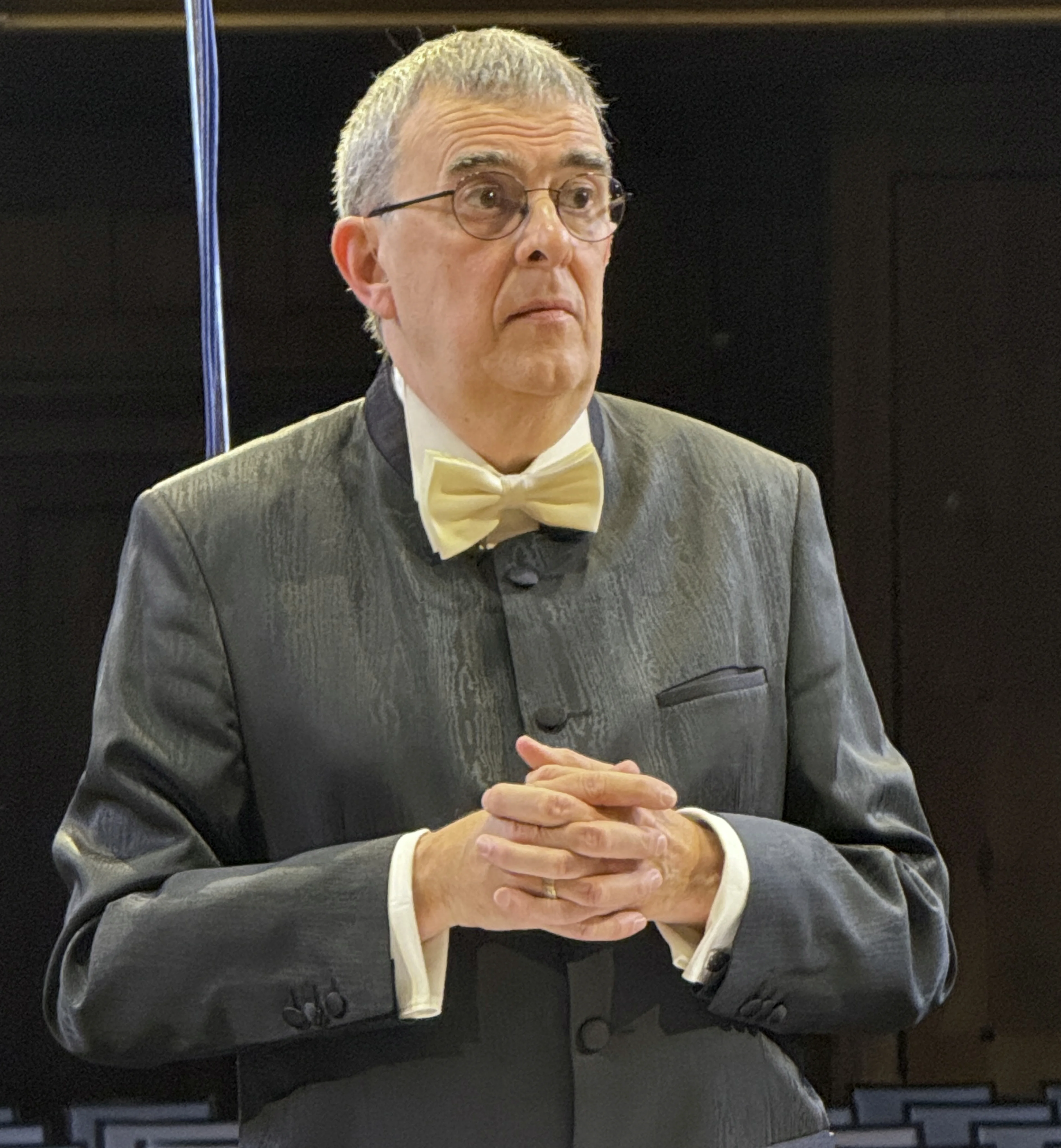
Cantata Service - Kissinger Summer
Celebrate the conclusion of the Kissinger Summer with a festive cantata service in the Church of the Redeemer.
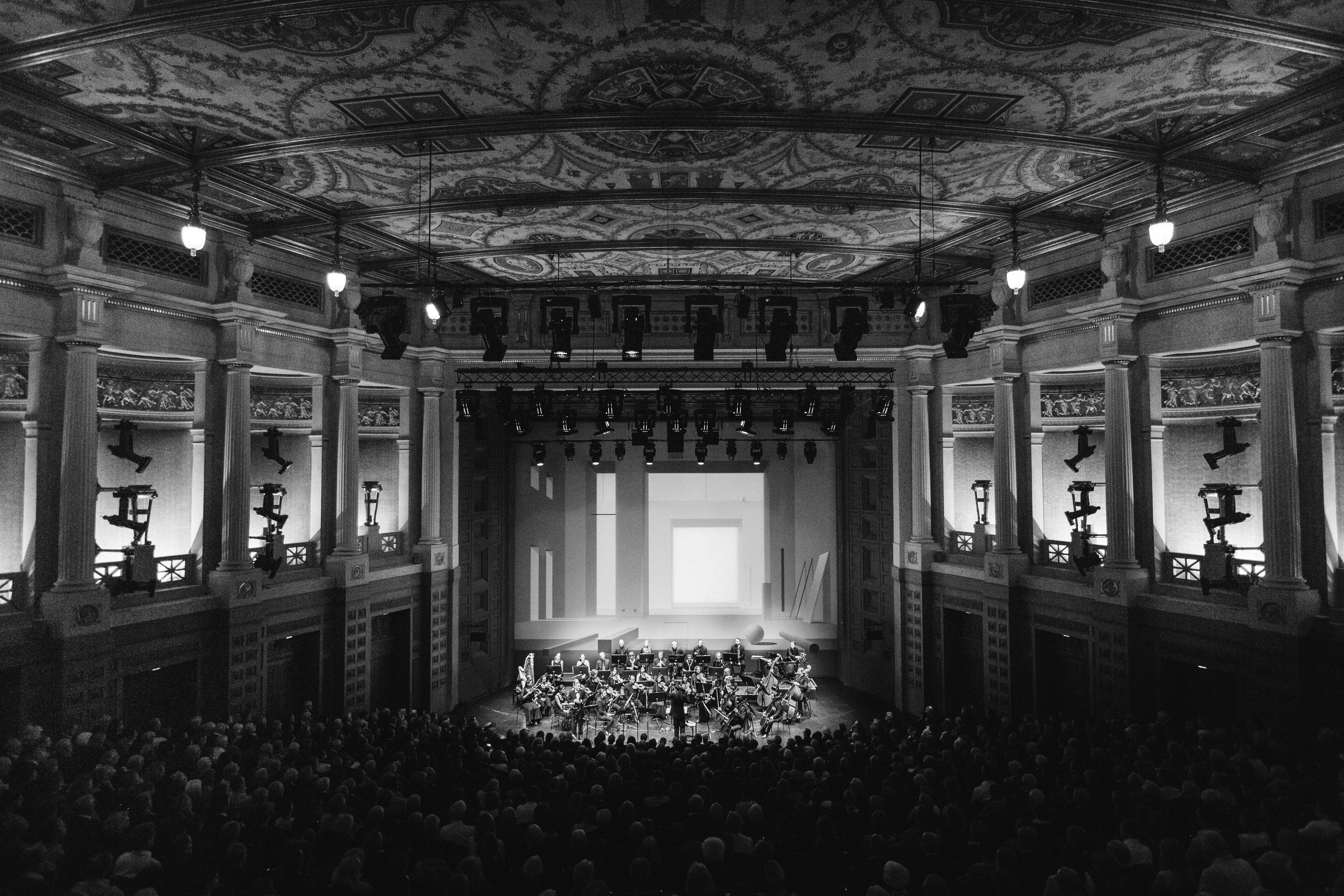
Jewish Chamber Orchestra Munich
A special concert evening in Bad Kissingen: The Jewish Chamber Orchestra Munich plays at the Erlöserkirche. Fine, intense, and moving. #Concert
Frequently Asked Questions
Reviews
Waldemar K
30. April 2026
Very beautiful church. We were there on Easter Sunday and the service was really lovely, the songs were well chosen, and the organ sounded great. After the service, there was communion.
Nic
4. May 2026
A very stylish and historic church. It's bright and has a friendly atmosphere. The pastor is very nice and gave a lovely speech at the wedding. Overall, highly recommended for weddings!
Mik Soljanka
8. April 2025
Absolutely worth seeing and a beautiful church right in the middle of Bad Kissingen. Read the reviews❓ Please rate🙏, I wrote this FOR YOU!
Schildmaid Jule Masselter
23. December 2025
A beautiful church, the performances are amazing and we love it every year 👍 we are super excited, the service is just different from other churches.
Michael Bernstein
14. April 2023
Beautiful church! Something different! Definitely worth a visit!