
Bad Kissingen
Am Kurgarten, 97688 Bad Kissingen, Deutschland
Kurgarten Bad Kissingen | History & Healing Water
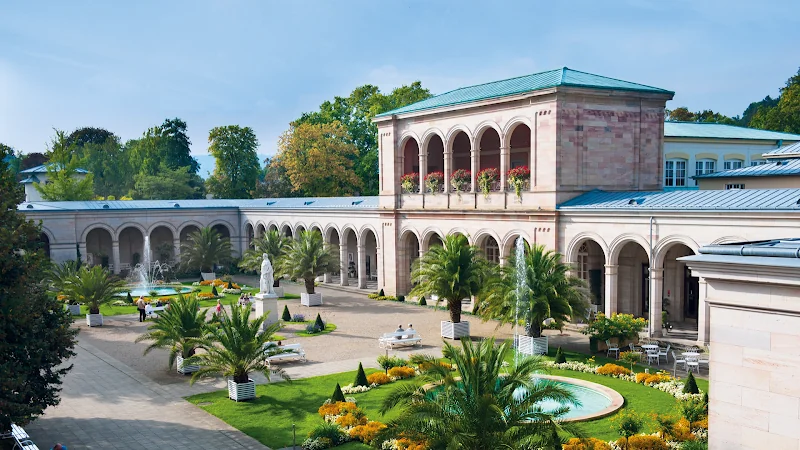
The Kurgarten Bad Kissingen is much more than a well-maintained park. It is the spatial and historical center of the spa district, a place for strolling, pausing, and meeting, where the spa tradition of the city can still be experienced very clearly today. Upon entering the Kurgarten, one moves within an ensemble that uniquely combines architecture, healing water, music, and garden design. This mixture makes it one of the most important places for guests who want to not only visit Bad Kissingen but also understand it. The Kurgarten is at the heart of the UNESCO World Heritage site Great Spa Towns of Europe and reflects the idea that has shaped Bad Kissingen for centuries: health, sociability, and cultural quality belong together here. Between the arcade building, the colonnade, the fountain hall, the regent building, and the healing springs unfolds an urban space that does not appear artificially staged but has convincingly grown out of its history. Therefore, the spa district is not merely a decorative backdrop but a vibrant part of the everyday life of the spa town. This is precisely where it becomes evident why Bad Kissingen is internationally considered one of the most significant spa towns in Europe and why the Kurgarten is the place where many visitors encounter the true character of the city. ([welterbe.badkissingen.de](https://welterbe.badkissingen.de/welterbe-bad-kissingen/sehenswuerdigkeiten/41625.Kurgarten.html?utm_source=openai))
History of the Kurgarten and UNESCO World Heritage
The history of the Kurgarten goes deep into the development of Bad Kissingen as a spa town. It is officially described as the centerpiece of the spa district and simultaneously as the oldest example of a spa garden designed for sociability and strolling within the framework of the drinking cure. As early as 1738, the court architect of Würzburg planned and supervised the construction of the baroque spa house and the garden. It is crucial that design and function were thought together from the very beginning: the garden was not merely decoration but part of a curative and social concept. Spa guests were to move, meet, drink, linger, and enjoy the healing water experience in a well-kept environment. In 1834, the facility reached its current size when two previously separated spa gardens were merged. One of these areas was around the Max fountain, the other near the Rakoczy and Pandur fountains. The visible structure today also follows a historical planning principle: the parallel rows of trees are oriented according to a specification by King Ludwig I from 1833. This mixture of early modern spa ideas, courtly order, and later urban refinement is still recognizable today. The fact that the ensemble character of the Kurgarten has been so well preserved makes the place a centerpiece of the UNESCO profile of the city. The facility has not only survived the centuries but has also remarkably retained its structure and function. This is precisely where its special quality lies: the Kurgarten is not a reconstructed showcase but a historically grown, living heritage that continues to fulfill its original purpose convincingly to this day. ([welterbe.badkissingen.de](https://welterbe.badkissingen.de/welterbe-bad-kissingen/sehenswuerdigkeiten/41625.Kurgarten.html?utm_source=openai))
For its classification as a World Heritage site, the idea of the Kurgarten as a social space is also important. It was understood as a kind of outdoor salon and designed as a meeting point for spa guests. In doing so, it united earlier concepts such as play areas, avenues, and promenades into a new form of spa architecture. The surroundings were never mere decoration but part of a carefully composed health and experience landscape. In a European comparison, this is a remarkable point because here the history of the spa town can be directly read from the urban form. With the Kurgarten, Bad Kissingen represents not only a green place in the center but also a cultural model that gained significance throughout Europe. The UNESCO inclusion of the Great Spa Towns of Europe in 2021 underscores this quality: a transnational heritage that has emerged from architectural, social, and health practices and remains particularly vividly visible in Bad Kissingen. The Kurgarten is a key location for this because the historical layers lie particularly densely on top of each other here. Those who observe the rows of trees, paths, sight axes, and adjacent buildings see not only beautiful design but a consciously shaped spa world that is geared towards movement, communication, and regeneration. Therefore, the Kurgarten is still an ideal starting point to trace the UNESCO history of the city with one's own eyes. ([welterbe.badkissingen.de](https://welterbe.badkissingen.de/welterbe-bad-kissingen/sehenswuerdigkeiten/41625.Kurgarten.html?utm_source=openai))
Max Fountain, Healing Water, and Drinking Cure in the Kurgarten
Without healing water, the Kurgarten Bad Kissingen would only be half understood. The springs are the actual engine of the entire spa tradition, and in the Kurgarten, the Max Fountain occupies a special role. It is considered the oldest of the seven healing springs in Bad Kissingen and was used for spa purposes by at least 1520. It received its name in the form known today after its redesign under King Max I Joseph of Bavaria in 1815. Thus, early usage history, courtly redesign, and the still-living drinking cure are all connected in a single source. Particularly important for visitors is that the Max Fountain is freely accessible directly in the Max Fountain Temple at the Kurgarten. Additionally, its water is served daily at fixed times in the fountain hall. This combination of public accessibility and structured spa practice makes the place especially attractive for guests who want to perceive healing water not just as historical information but as part of a genuine experience. The fact that the springs in the Kurgarten still play a visible and tangible role is part of Bad Kissingen's character as a lively spa town. The city thus not only maintains memory but also ongoing function. This is precisely what is crucial in the logic of World Heritage: a Great Spa does not merely live from monument preservation but from the fact that the historical forms continue to be used meaningfully. Therefore, the Max Fountain fulfills a dual role: it is both a monument and a daily practice. In addition, the Kurgarten points to other healing water stations in the vicinity, including in the area of the arcades. This creates a spa space where the drinking cure is not explained in a museum-like manner but is actually made experienceable. Those who walk the path from the Kurgarten through the fountain hall to the Max Fountain Temple experience a clear historical dramaturgy: here the water, there the architecture, in between the movement, lingering, and conversation. This connection gives the place its unmistakable strength. ([welterbe.badkissingen.de](https://welterbe.badkissingen.de/welterbe-bad-kissingen/sehenswuerdigkeiten/41597.Max-Brunnen.html?utm_source=openai))
The dispensing of healing water in Bad Kissingen is not just a practical procedure but part of the cultural identity. Since 1911, the fountain women have been dispensing healing water in the colonnade and the subsequent fountain hall and advising guests on the application and effects of the water. This tradition is one of the most impressive moments of their stay for many visitors, as medical culture, hospitality, and social encounters converge here. The Kurgarten thus becomes a place where knowledge and ritual come together. Drinking the water is not a casual detail but a consciously designed part of the spa stay. The fact that this practice continues to this day shows how closely Bad Kissingen has preserved its historical function. Especially at a time when many places only symbolically stage their origins, a genuinely lived tradition remains here. This also makes the Kurgarten so valuable: it is not just a beautiful place with springs but a functioning spa ensemble whose elements are coordinated with each other. Those who experience the atmosphere of the healing water dispensing quickly understand why Bad Kissingen is considered a particularly authentic spa town among experts and guests. The interplay of springs, fountain hall, drinking cure, and social interaction is by no means accidental. It follows a long-grown idea of health as a cultural experience. This is precisely where the sustainable appeal of the Kurgarten and its healing waters lies. ([welterbe.badkissingen.de](https://welterbe.badkissingen.de/historische-kur-erleben/historische-kur-heute/41729.Trinkkur-und-Orchesterkonzert-in-der-Wandelhalle.html?utm_source=openai))
Colonnade, Fountain Hall, and Spa Concerts
The colonnade with the fountain hall is one of the architectural and atmospheric centers of the Kurgarten ensemble. It was built from 1910 to 1912 by the Munich architect Max Littmann and is designed as a cross-shaped basilica. With its size, its Art Nouveau furnishings, and the majolica tiles as well as ceramic fountains from Villeroy & Boch, it is one of the most impressive spa buildings in the city. Particularly noteworthy is that the colonnade employed modern construction techniques early on. It is one of the early examples of the use of reinforced concrete and was designed to be closed, with windows and heating, to enable year-round spa use. This shows how consistently Bad Kissingen focused on permanent use rather than seasonal operation. In the subsequent fountain hall, the original idea of spa treatment is condensed: here healing water is dispensed, guests meet, and here arises that calm, elegant atmosphere that still characterizes the place today. The architecture is therefore not merely representative but functionally tailored to the needs of spa life. Upon entering the colonnade, one enters a space that is both a historical stage and a practical place to stay. This makes the difference between a beautiful monument and a lively spa resort. Precisely because the colonnade continues to fulfill its original purpose, it is so attractive to visitors. It is not just an exhibit but a place where the historical spa remains present. ([welterbe.badkissingen.de](https://welterbe.badkissingen.de/welterbe-bad-kissingen/sehenswuerdigkeiten/41603.Die-Wandelhalle-in-Bad-Kissingen.html?utm_source=openai))
A special role is played by the concert shell at the colonnade. It is equipped with a rotating stage and forms part of the colonnade, where the spa orchestra, the Staatsbad Philharmonie Kissingen, plays spa concerts up to twice daily. Depending on the weather, the orchestra can perform towards the hall or towards the spa park. This is remarkable in several respects because the shell is considered the first assembly and installation of a rotating shell-shaped orchestra. Moreover, the orchestra, consisting of employed musicians, has existed since 1837. Music in Bad Kissingen is therefore not just an additional offer but a core component of spa culture. The daily concerts, the healing water dispensing, and the movement spaces of the Kurgarten interlink and create a very unique form of public life. Those who take a break there experience not just a park but a social stage where music, health, and encounters come together. This is also why the Kurgarten remains so lively: it is always in use but never loud or hectic. The concert shell gives the place an acoustic focal point that accompanies strolling and determines the rhythm of spa daily life. For many guests, this moment of water, music, and architecture is the actual highlight of their stay. Bad Kissingen thus preserves a spa tradition that does not appear nostalgic but is atmospheric and functional at the same time. This makes the colonnade with the fountain hall and concert shell an indispensable part of every visit to the Kurgarten. ([welterbe.badkissingen.de](https://welterbe.badkissingen.de/welterbe-bad-kissingen/sehenswuerdigkeiten/41609.Die-Konzertmuschel-an-der-Wandelhalle.html?utm_source=openai))
Arcade Building, Regent Building, and the Great Spa Architecture
The Kurgarten ensemble includes some of the most significant buildings in Bad Kissingen, and particularly the arcade building and the regent building show very well how the spa town has developed architecturally. The arcade building was constructed starting in 1834 in connection with a spa hall, the current Rossini Hall. It is designed in the neo-Romanesque round arch style and is attributed to the royal architect Friedrich von Gärtner. The building complemented the promenade from 1824 and provided spa guests with the opportunity to complete the drinking cure sheltered from wind and weather. In doing so, it architecturally continued the idea of the Kurgarten: stay, movement, and spa application should be combined as comfortably and elegantly as possible. The arcade building is therefore not just a beautiful facade but part of a functional system that facilitated the everyday life of spa guests. Its location at the Kurgarten makes it a central link between green space and representative architecture to this day. Those who walk through the arcades feel how closely the historical spa town has intertwined its paths, facades, and sight axes. This is also where its uniqueness lies in the European comparison. It was never just about erecting buildings but about shaping a readable, coherent spa space in which social, health, and aesthetic functions mutually support each other. ([welterbe.badkissingen.de](https://welterbe.badkissingen.de/welterbe-bad-kissingen/sehenswuerdigkeiten/41605.Arkadenbau.html?utm_source=openai))
This principle becomes even more impressive in the regent building. It is the youngest of the Kissingen spa buildings, designed in the classicizing Art Nouveau style by Max Littmann and seamlessly integrated into the environment of the arcade building. The festival hall building is complemented by side rooms grouped around a courtyard and features two curved facades with monumental columns. Its main hall is considered one of the best concert halls in Europe and is still appreciated today as one of the best-sounding concert halls in the world due to its wooden paneling and acoustics. The hall measures 455 square meters, was originally designed for concerts and balls, and continues to fulfill its function to this day. Between 2003 and 2005, the building was extensively restored, ensuring that the historical quality and usability of the house were preserved. Particularly beautiful is the connection with the adjacent rose garden, created by the city to give the northern front of the regent building a worthy forecourt. This creates an urban clasp of garden, spa architecture, and concert culture. Those who leave the Kurgarten towards the regent building quickly realize that here not individual sights stand side by side but a planned ensemble that derives its effect from the connection of its parts. This is precisely why the regent building, together with the arcade building, colonnade, and fountain hall, is one of the central attractions of the spa town. The architecture tells the story of the place almost without words: baroque beginnings, classicizing expansion, Art Nouveau completion, and still vibrant cultural use. ([welterbe.badkissingen.de](https://welterbe.badkissingen.de/welterbe-bad-kissingen/sehenswuerdigkeiten/41607.Regentenbau.html?utm_source=openai))
Access and Parking at Kurgarten Bad Kissingen
The Kurgarten is also very pleasant to visit because Bad Kissingen is easily accessible by traffic and the paths into the city center are clearly structured. The city describes Bad Kissingen as centrally located in the middle of Germany and very well accessible by all common means of transport. By car, visitors can reach the city via the A7, A71, or A70 highways; it takes about ten minutes from the respective exits to the center. Those arriving by train come from the ICE train stations Würzburg and Fulda via regional trains to Bad Kissingen and get off directly in front of the historic train station building. This is practical for visiting the Kurgarten because the path into the spa district remains short and easy to follow. Arriving by plane is also possible: Bad Kissingen has an airport in the Au, and the city can be reached in about 90 minutes by car from Frankfurt am Main or Nuremberg. This good accessibility is a key part of the visitor-friendliness of the spa town. It makes it easy to incorporate the Kurgarten into a day trip, a weekend, or a longer stay without complicated planning. This is a real advantage, especially for guests who want to experience historical places in a relaxed manner. ([welterbe.badkissingen.de](https://welterbe.badkissingen.de/historische-kur-erleben/anreise-und-parken))
When it comes to parking, Bad Kissingen follows a thoughtful concept. The city center is traffic-calmed, parking options have been improved, and the burden of exhaust fumes and noise has been reduced. For drivers, there are various fee zones around the city center, with costs depending on the distance to the city center. The city’s website provides parking overviews, charging stations, access maps for cars, coaches, and electric cars, as well as information on accessible parking spaces. Particularly relevant for visitors in the vicinity of the Kurgarten are the parking garages at the spa theater and in the center, which are subject to fees, and the parking concept makes the spa area traffic-calmed. Additionally, there are short-term parking spaces in the city center; at the Tattersall parking lot, drivers can park for a flat rate of 1 euro for two hours, with each additional hour costing 0.50 euros. Additionally, there is the so-called Semmeltaste at parking meters, which allows for a short stop of up to 20 minutes for free. The system is thus tailored to different lengths of stay and various needs. Those who do not travel by car to the vicinity of the spa district will also find around 700 free parking spaces about 10 to 15 minutes on foot from the city center. For visiting the Kurgarten, this means: one can plan the journey comfortably and enjoy the stay on-site calmly and without parking stress. This combination of accessibility and orderly mobility supports the quality of the spa experience. ([badkissingen.de](https://www.badkissingen.de/information/parken/39667.Parken-im-Stadtgebiet-Bad-Kissingen.html))
Infopoint in the Kurgarten and Walks in the Spa District
Those who want to not only see the Kurgarten but also contextualize it will find an excellent point of contact at the World Heritage Infopoint. The wooden structure was set up in the middle of the Kurgarten as a central information point and is aimed at citizens and guests who want to learn more about the particularities of the Great Spa Towns of Europe and about Bad Kissingen's contribution to UNESCO World Heritage. On 24 information panels, it explains what UNESCO World Heritage sites achieve, why the European spa towns were awarded, and how Bad Kissingen has developed into a World Heritage site over the centuries. The Infopoint combines knowledge with quality of stay, as it is not only a place of information but also a communicative resting point. With its dimensions of 6.13 by 5.20 meters and two wooden platforms as seating, it invites visitors to take a moment and consciously let the spa history take effect. This is precisely where its value lies: it transforms a historical environment into a well-readable urban space. Especially for first-time visitors, this is helpful because the many historical elements of the Kurgarten can thus be more easily assembled into a complete picture. Those who understand how the Kurgarten, colonnade, fountain hall, arcade building, and regent building are interconnected experience Bad Kissingen much more intensely. The Infopoint is therefore not a secondary attraction but a very meaningful key to the entire facility. ([welterbe.badkissingen.de](https://welterbe.badkissingen.de/historische-kur-erleben/infos-und-aktives/41582.Infopoint-im-Kurgarten.html?utm_source=openai))
The Kurgarten can also be beautifully experienced through the city's guided tours. The South Tour leads from the heart of the spa town, the Kurgarten, via the former bathing house Luitpoldbad into the Luitpold Park and back through the spa district to the Kurgarten, where healing water can be tasted together afterward. This is an ideal opportunity for visitors to experience history, architecture, and spa practice in a compact route. The route “Walking like Sisi” also includes the Kurgarten, Luitpold Park, and the Altenberg and makes visible how closely movement and landscape were thought out in Bad Kissingen. Those interested in the city's history will discover not only individual houses on these paths but a whole system of walking paths, sight axes, and cultural stations. Particularly helpful is that the tourist infrastructure on-site is closely linked to the World Heritage. The Tourist Information is located in the arcade building at Kurgarten 1 and serves as a logical starting point for many guests for a tour. The Kurgarten thus becomes the perfect starting and orientation point: from here, the healing springs, music venues, architecture, and garden design can be vividly connected. Those who visit the place with time, attention, and an open mind quickly realize that Bad Kissingen shows its true profile here. The Kurgarten is not only beautiful but also readable, and that makes it attractive for cultural travelers, wellness guests, and history enthusiasts alike. ([welterbe.badkissingen.de](https://welterbe.badkissingen.de/historische-kur-erleben/nordtour-suedtour/44554.SuedTour-Lebendiges-Erbe.html?utm_source=openai))
Sources:
- Kurgarten – Great Spa Towns of Europe
- Infopoint in the Kurgarten – Great Spa Towns of Europe
- Your Way to Us – Arrival and Parking
- Max Fountain – Great Spa Towns of Europe
- Arcade Building – Great Spa Towns of Europe
- The Concert Shell at the Colonnade – Great Spa Towns of Europe
- Drinking Cure and Orchestra Concert in the Colonnade – Great Spa Towns of Europe
- Fountain Hall – Great Spa Towns of Europe
- Regent Building – Great Spa Towns of Europe
- The Colonnade in Bad Kissingen – Great Spa Towns of Europe
- Rose Garden – Great Spa Towns of Europe
Mehr anzeigenWeniger anzeigen
Kurgarten Bad Kissingen | History & Healing Water
The Kurgarten Bad Kissingen is much more than a well-maintained park. It is the spatial and historical center of the spa district, a place for strolling, pausing, and meeting, where the spa tradition of the city can still be experienced very clearly today. Upon entering the Kurgarten, one moves within an ensemble that uniquely combines architecture, healing water, music, and garden design. This mixture makes it one of the most important places for guests who want to not only visit Bad Kissingen but also understand it. The Kurgarten is at the heart of the UNESCO World Heritage site Great Spa Towns of Europe and reflects the idea that has shaped Bad Kissingen for centuries: health, sociability, and cultural quality belong together here. Between the arcade building, the colonnade, the fountain hall, the regent building, and the healing springs unfolds an urban space that does not appear artificially staged but has convincingly grown out of its history. Therefore, the spa district is not merely a decorative backdrop but a vibrant part of the everyday life of the spa town. This is precisely where it becomes evident why Bad Kissingen is internationally considered one of the most significant spa towns in Europe and why the Kurgarten is the place where many visitors encounter the true character of the city. ([welterbe.badkissingen.de](https://welterbe.badkissingen.de/welterbe-bad-kissingen/sehenswuerdigkeiten/41625.Kurgarten.html?utm_source=openai))
History of the Kurgarten and UNESCO World Heritage
The history of the Kurgarten goes deep into the development of Bad Kissingen as a spa town. It is officially described as the centerpiece of the spa district and simultaneously as the oldest example of a spa garden designed for sociability and strolling within the framework of the drinking cure. As early as 1738, the court architect of Würzburg planned and supervised the construction of the baroque spa house and the garden. It is crucial that design and function were thought together from the very beginning: the garden was not merely decoration but part of a curative and social concept. Spa guests were to move, meet, drink, linger, and enjoy the healing water experience in a well-kept environment. In 1834, the facility reached its current size when two previously separated spa gardens were merged. One of these areas was around the Max fountain, the other near the Rakoczy and Pandur fountains. The visible structure today also follows a historical planning principle: the parallel rows of trees are oriented according to a specification by King Ludwig I from 1833. This mixture of early modern spa ideas, courtly order, and later urban refinement is still recognizable today. The fact that the ensemble character of the Kurgarten has been so well preserved makes the place a centerpiece of the UNESCO profile of the city. The facility has not only survived the centuries but has also remarkably retained its structure and function. This is precisely where its special quality lies: the Kurgarten is not a reconstructed showcase but a historically grown, living heritage that continues to fulfill its original purpose convincingly to this day. ([welterbe.badkissingen.de](https://welterbe.badkissingen.de/welterbe-bad-kissingen/sehenswuerdigkeiten/41625.Kurgarten.html?utm_source=openai))
For its classification as a World Heritage site, the idea of the Kurgarten as a social space is also important. It was understood as a kind of outdoor salon and designed as a meeting point for spa guests. In doing so, it united earlier concepts such as play areas, avenues, and promenades into a new form of spa architecture. The surroundings were never mere decoration but part of a carefully composed health and experience landscape. In a European comparison, this is a remarkable point because here the history of the spa town can be directly read from the urban form. With the Kurgarten, Bad Kissingen represents not only a green place in the center but also a cultural model that gained significance throughout Europe. The UNESCO inclusion of the Great Spa Towns of Europe in 2021 underscores this quality: a transnational heritage that has emerged from architectural, social, and health practices and remains particularly vividly visible in Bad Kissingen. The Kurgarten is a key location for this because the historical layers lie particularly densely on top of each other here. Those who observe the rows of trees, paths, sight axes, and adjacent buildings see not only beautiful design but a consciously shaped spa world that is geared towards movement, communication, and regeneration. Therefore, the Kurgarten is still an ideal starting point to trace the UNESCO history of the city with one's own eyes. ([welterbe.badkissingen.de](https://welterbe.badkissingen.de/welterbe-bad-kissingen/sehenswuerdigkeiten/41625.Kurgarten.html?utm_source=openai))
Max Fountain, Healing Water, and Drinking Cure in the Kurgarten
Without healing water, the Kurgarten Bad Kissingen would only be half understood. The springs are the actual engine of the entire spa tradition, and in the Kurgarten, the Max Fountain occupies a special role. It is considered the oldest of the seven healing springs in Bad Kissingen and was used for spa purposes by at least 1520. It received its name in the form known today after its redesign under King Max I Joseph of Bavaria in 1815. Thus, early usage history, courtly redesign, and the still-living drinking cure are all connected in a single source. Particularly important for visitors is that the Max Fountain is freely accessible directly in the Max Fountain Temple at the Kurgarten. Additionally, its water is served daily at fixed times in the fountain hall. This combination of public accessibility and structured spa practice makes the place especially attractive for guests who want to perceive healing water not just as historical information but as part of a genuine experience. The fact that the springs in the Kurgarten still play a visible and tangible role is part of Bad Kissingen's character as a lively spa town. The city thus not only maintains memory but also ongoing function. This is precisely what is crucial in the logic of World Heritage: a Great Spa does not merely live from monument preservation but from the fact that the historical forms continue to be used meaningfully. Therefore, the Max Fountain fulfills a dual role: it is both a monument and a daily practice. In addition, the Kurgarten points to other healing water stations in the vicinity, including in the area of the arcades. This creates a spa space where the drinking cure is not explained in a museum-like manner but is actually made experienceable. Those who walk the path from the Kurgarten through the fountain hall to the Max Fountain Temple experience a clear historical dramaturgy: here the water, there the architecture, in between the movement, lingering, and conversation. This connection gives the place its unmistakable strength. ([welterbe.badkissingen.de](https://welterbe.badkissingen.de/welterbe-bad-kissingen/sehenswuerdigkeiten/41597.Max-Brunnen.html?utm_source=openai))
The dispensing of healing water in Bad Kissingen is not just a practical procedure but part of the cultural identity. Since 1911, the fountain women have been dispensing healing water in the colonnade and the subsequent fountain hall and advising guests on the application and effects of the water. This tradition is one of the most impressive moments of their stay for many visitors, as medical culture, hospitality, and social encounters converge here. The Kurgarten thus becomes a place where knowledge and ritual come together. Drinking the water is not a casual detail but a consciously designed part of the spa stay. The fact that this practice continues to this day shows how closely Bad Kissingen has preserved its historical function. Especially at a time when many places only symbolically stage their origins, a genuinely lived tradition remains here. This also makes the Kurgarten so valuable: it is not just a beautiful place with springs but a functioning spa ensemble whose elements are coordinated with each other. Those who experience the atmosphere of the healing water dispensing quickly understand why Bad Kissingen is considered a particularly authentic spa town among experts and guests. The interplay of springs, fountain hall, drinking cure, and social interaction is by no means accidental. It follows a long-grown idea of health as a cultural experience. This is precisely where the sustainable appeal of the Kurgarten and its healing waters lies. ([welterbe.badkissingen.de](https://welterbe.badkissingen.de/historische-kur-erleben/historische-kur-heute/41729.Trinkkur-und-Orchesterkonzert-in-der-Wandelhalle.html?utm_source=openai))
Colonnade, Fountain Hall, and Spa Concerts
The colonnade with the fountain hall is one of the architectural and atmospheric centers of the Kurgarten ensemble. It was built from 1910 to 1912 by the Munich architect Max Littmann and is designed as a cross-shaped basilica. With its size, its Art Nouveau furnishings, and the majolica tiles as well as ceramic fountains from Villeroy & Boch, it is one of the most impressive spa buildings in the city. Particularly noteworthy is that the colonnade employed modern construction techniques early on. It is one of the early examples of the use of reinforced concrete and was designed to be closed, with windows and heating, to enable year-round spa use. This shows how consistently Bad Kissingen focused on permanent use rather than seasonal operation. In the subsequent fountain hall, the original idea of spa treatment is condensed: here healing water is dispensed, guests meet, and here arises that calm, elegant atmosphere that still characterizes the place today. The architecture is therefore not merely representative but functionally tailored to the needs of spa life. Upon entering the colonnade, one enters a space that is both a historical stage and a practical place to stay. This makes the difference between a beautiful monument and a lively spa resort. Precisely because the colonnade continues to fulfill its original purpose, it is so attractive to visitors. It is not just an exhibit but a place where the historical spa remains present. ([welterbe.badkissingen.de](https://welterbe.badkissingen.de/welterbe-bad-kissingen/sehenswuerdigkeiten/41603.Die-Wandelhalle-in-Bad-Kissingen.html?utm_source=openai))
A special role is played by the concert shell at the colonnade. It is equipped with a rotating stage and forms part of the colonnade, where the spa orchestra, the Staatsbad Philharmonie Kissingen, plays spa concerts up to twice daily. Depending on the weather, the orchestra can perform towards the hall or towards the spa park. This is remarkable in several respects because the shell is considered the first assembly and installation of a rotating shell-shaped orchestra. Moreover, the orchestra, consisting of employed musicians, has existed since 1837. Music in Bad Kissingen is therefore not just an additional offer but a core component of spa culture. The daily concerts, the healing water dispensing, and the movement spaces of the Kurgarten interlink and create a very unique form of public life. Those who take a break there experience not just a park but a social stage where music, health, and encounters come together. This is also why the Kurgarten remains so lively: it is always in use but never loud or hectic. The concert shell gives the place an acoustic focal point that accompanies strolling and determines the rhythm of spa daily life. For many guests, this moment of water, music, and architecture is the actual highlight of their stay. Bad Kissingen thus preserves a spa tradition that does not appear nostalgic but is atmospheric and functional at the same time. This makes the colonnade with the fountain hall and concert shell an indispensable part of every visit to the Kurgarten. ([welterbe.badkissingen.de](https://welterbe.badkissingen.de/welterbe-bad-kissingen/sehenswuerdigkeiten/41609.Die-Konzertmuschel-an-der-Wandelhalle.html?utm_source=openai))
Arcade Building, Regent Building, and the Great Spa Architecture
The Kurgarten ensemble includes some of the most significant buildings in Bad Kissingen, and particularly the arcade building and the regent building show very well how the spa town has developed architecturally. The arcade building was constructed starting in 1834 in connection with a spa hall, the current Rossini Hall. It is designed in the neo-Romanesque round arch style and is attributed to the royal architect Friedrich von Gärtner. The building complemented the promenade from 1824 and provided spa guests with the opportunity to complete the drinking cure sheltered from wind and weather. In doing so, it architecturally continued the idea of the Kurgarten: stay, movement, and spa application should be combined as comfortably and elegantly as possible. The arcade building is therefore not just a beautiful facade but part of a functional system that facilitated the everyday life of spa guests. Its location at the Kurgarten makes it a central link between green space and representative architecture to this day. Those who walk through the arcades feel how closely the historical spa town has intertwined its paths, facades, and sight axes. This is also where its uniqueness lies in the European comparison. It was never just about erecting buildings but about shaping a readable, coherent spa space in which social, health, and aesthetic functions mutually support each other. ([welterbe.badkissingen.de](https://welterbe.badkissingen.de/welterbe-bad-kissingen/sehenswuerdigkeiten/41605.Arkadenbau.html?utm_source=openai))
This principle becomes even more impressive in the regent building. It is the youngest of the Kissingen spa buildings, designed in the classicizing Art Nouveau style by Max Littmann and seamlessly integrated into the environment of the arcade building. The festival hall building is complemented by side rooms grouped around a courtyard and features two curved facades with monumental columns. Its main hall is considered one of the best concert halls in Europe and is still appreciated today as one of the best-sounding concert halls in the world due to its wooden paneling and acoustics. The hall measures 455 square meters, was originally designed for concerts and balls, and continues to fulfill its function to this day. Between 2003 and 2005, the building was extensively restored, ensuring that the historical quality and usability of the house were preserved. Particularly beautiful is the connection with the adjacent rose garden, created by the city to give the northern front of the regent building a worthy forecourt. This creates an urban clasp of garden, spa architecture, and concert culture. Those who leave the Kurgarten towards the regent building quickly realize that here not individual sights stand side by side but a planned ensemble that derives its effect from the connection of its parts. This is precisely why the regent building, together with the arcade building, colonnade, and fountain hall, is one of the central attractions of the spa town. The architecture tells the story of the place almost without words: baroque beginnings, classicizing expansion, Art Nouveau completion, and still vibrant cultural use. ([welterbe.badkissingen.de](https://welterbe.badkissingen.de/welterbe-bad-kissingen/sehenswuerdigkeiten/41607.Regentenbau.html?utm_source=openai))
Access and Parking at Kurgarten Bad Kissingen
The Kurgarten is also very pleasant to visit because Bad Kissingen is easily accessible by traffic and the paths into the city center are clearly structured. The city describes Bad Kissingen as centrally located in the middle of Germany and very well accessible by all common means of transport. By car, visitors can reach the city via the A7, A71, or A70 highways; it takes about ten minutes from the respective exits to the center. Those arriving by train come from the ICE train stations Würzburg and Fulda via regional trains to Bad Kissingen and get off directly in front of the historic train station building. This is practical for visiting the Kurgarten because the path into the spa district remains short and easy to follow. Arriving by plane is also possible: Bad Kissingen has an airport in the Au, and the city can be reached in about 90 minutes by car from Frankfurt am Main or Nuremberg. This good accessibility is a key part of the visitor-friendliness of the spa town. It makes it easy to incorporate the Kurgarten into a day trip, a weekend, or a longer stay without complicated planning. This is a real advantage, especially for guests who want to experience historical places in a relaxed manner. ([welterbe.badkissingen.de](https://welterbe.badkissingen.de/historische-kur-erleben/anreise-und-parken))
When it comes to parking, Bad Kissingen follows a thoughtful concept. The city center is traffic-calmed, parking options have been improved, and the burden of exhaust fumes and noise has been reduced. For drivers, there are various fee zones around the city center, with costs depending on the distance to the city center. The city’s website provides parking overviews, charging stations, access maps for cars, coaches, and electric cars, as well as information on accessible parking spaces. Particularly relevant for visitors in the vicinity of the Kurgarten are the parking garages at the spa theater and in the center, which are subject to fees, and the parking concept makes the spa area traffic-calmed. Additionally, there are short-term parking spaces in the city center; at the Tattersall parking lot, drivers can park for a flat rate of 1 euro for two hours, with each additional hour costing 0.50 euros. Additionally, there is the so-called Semmeltaste at parking meters, which allows for a short stop of up to 20 minutes for free. The system is thus tailored to different lengths of stay and various needs. Those who do not travel by car to the vicinity of the spa district will also find around 700 free parking spaces about 10 to 15 minutes on foot from the city center. For visiting the Kurgarten, this means: one can plan the journey comfortably and enjoy the stay on-site calmly and without parking stress. This combination of accessibility and orderly mobility supports the quality of the spa experience. ([badkissingen.de](https://www.badkissingen.de/information/parken/39667.Parken-im-Stadtgebiet-Bad-Kissingen.html))
Infopoint in the Kurgarten and Walks in the Spa District
Those who want to not only see the Kurgarten but also contextualize it will find an excellent point of contact at the World Heritage Infopoint. The wooden structure was set up in the middle of the Kurgarten as a central information point and is aimed at citizens and guests who want to learn more about the particularities of the Great Spa Towns of Europe and about Bad Kissingen's contribution to UNESCO World Heritage. On 24 information panels, it explains what UNESCO World Heritage sites achieve, why the European spa towns were awarded, and how Bad Kissingen has developed into a World Heritage site over the centuries. The Infopoint combines knowledge with quality of stay, as it is not only a place of information but also a communicative resting point. With its dimensions of 6.13 by 5.20 meters and two wooden platforms as seating, it invites visitors to take a moment and consciously let the spa history take effect. This is precisely where its value lies: it transforms a historical environment into a well-readable urban space. Especially for first-time visitors, this is helpful because the many historical elements of the Kurgarten can thus be more easily assembled into a complete picture. Those who understand how the Kurgarten, colonnade, fountain hall, arcade building, and regent building are interconnected experience Bad Kissingen much more intensely. The Infopoint is therefore not a secondary attraction but a very meaningful key to the entire facility. ([welterbe.badkissingen.de](https://welterbe.badkissingen.de/historische-kur-erleben/infos-und-aktives/41582.Infopoint-im-Kurgarten.html?utm_source=openai))
The Kurgarten can also be beautifully experienced through the city's guided tours. The South Tour leads from the heart of the spa town, the Kurgarten, via the former bathing house Luitpoldbad into the Luitpold Park and back through the spa district to the Kurgarten, where healing water can be tasted together afterward. This is an ideal opportunity for visitors to experience history, architecture, and spa practice in a compact route. The route “Walking like Sisi” also includes the Kurgarten, Luitpold Park, and the Altenberg and makes visible how closely movement and landscape were thought out in Bad Kissingen. Those interested in the city's history will discover not only individual houses on these paths but a whole system of walking paths, sight axes, and cultural stations. Particularly helpful is that the tourist infrastructure on-site is closely linked to the World Heritage. The Tourist Information is located in the arcade building at Kurgarten 1 and serves as a logical starting point for many guests for a tour. The Kurgarten thus becomes the perfect starting and orientation point: from here, the healing springs, music venues, architecture, and garden design can be vividly connected. Those who visit the place with time, attention, and an open mind quickly realize that Bad Kissingen shows its true profile here. The Kurgarten is not only beautiful but also readable, and that makes it attractive for cultural travelers, wellness guests, and history enthusiasts alike. ([welterbe.badkissingen.de](https://welterbe.badkissingen.de/historische-kur-erleben/nordtour-suedtour/44554.SuedTour-Lebendiges-Erbe.html?utm_source=openai))
Sources:
- Kurgarten – Great Spa Towns of Europe
- Infopoint in the Kurgarten – Great Spa Towns of Europe
- Your Way to Us – Arrival and Parking
- Max Fountain – Great Spa Towns of Europe
- Arcade Building – Great Spa Towns of Europe
- The Concert Shell at the Colonnade – Great Spa Towns of Europe
- Drinking Cure and Orchestra Concert in the Colonnade – Great Spa Towns of Europe
- Fountain Hall – Great Spa Towns of Europe
- Regent Building – Great Spa Towns of Europe
- The Colonnade in Bad Kissingen – Great Spa Towns of Europe
- Rose Garden – Great Spa Towns of Europe
Kurgarten Bad Kissingen | History & Healing Water
The Kurgarten Bad Kissingen is much more than a well-maintained park. It is the spatial and historical center of the spa district, a place for strolling, pausing, and meeting, where the spa tradition of the city can still be experienced very clearly today. Upon entering the Kurgarten, one moves within an ensemble that uniquely combines architecture, healing water, music, and garden design. This mixture makes it one of the most important places for guests who want to not only visit Bad Kissingen but also understand it. The Kurgarten is at the heart of the UNESCO World Heritage site Great Spa Towns of Europe and reflects the idea that has shaped Bad Kissingen for centuries: health, sociability, and cultural quality belong together here. Between the arcade building, the colonnade, the fountain hall, the regent building, and the healing springs unfolds an urban space that does not appear artificially staged but has convincingly grown out of its history. Therefore, the spa district is not merely a decorative backdrop but a vibrant part of the everyday life of the spa town. This is precisely where it becomes evident why Bad Kissingen is internationally considered one of the most significant spa towns in Europe and why the Kurgarten is the place where many visitors encounter the true character of the city. ([welterbe.badkissingen.de](https://welterbe.badkissingen.de/welterbe-bad-kissingen/sehenswuerdigkeiten/41625.Kurgarten.html?utm_source=openai))
History of the Kurgarten and UNESCO World Heritage
The history of the Kurgarten goes deep into the development of Bad Kissingen as a spa town. It is officially described as the centerpiece of the spa district and simultaneously as the oldest example of a spa garden designed for sociability and strolling within the framework of the drinking cure. As early as 1738, the court architect of Würzburg planned and supervised the construction of the baroque spa house and the garden. It is crucial that design and function were thought together from the very beginning: the garden was not merely decoration but part of a curative and social concept. Spa guests were to move, meet, drink, linger, and enjoy the healing water experience in a well-kept environment. In 1834, the facility reached its current size when two previously separated spa gardens were merged. One of these areas was around the Max fountain, the other near the Rakoczy and Pandur fountains. The visible structure today also follows a historical planning principle: the parallel rows of trees are oriented according to a specification by King Ludwig I from 1833. This mixture of early modern spa ideas, courtly order, and later urban refinement is still recognizable today. The fact that the ensemble character of the Kurgarten has been so well preserved makes the place a centerpiece of the UNESCO profile of the city. The facility has not only survived the centuries but has also remarkably retained its structure and function. This is precisely where its special quality lies: the Kurgarten is not a reconstructed showcase but a historically grown, living heritage that continues to fulfill its original purpose convincingly to this day. ([welterbe.badkissingen.de](https://welterbe.badkissingen.de/welterbe-bad-kissingen/sehenswuerdigkeiten/41625.Kurgarten.html?utm_source=openai))
For its classification as a World Heritage site, the idea of the Kurgarten as a social space is also important. It was understood as a kind of outdoor salon and designed as a meeting point for spa guests. In doing so, it united earlier concepts such as play areas, avenues, and promenades into a new form of spa architecture. The surroundings were never mere decoration but part of a carefully composed health and experience landscape. In a European comparison, this is a remarkable point because here the history of the spa town can be directly read from the urban form. With the Kurgarten, Bad Kissingen represents not only a green place in the center but also a cultural model that gained significance throughout Europe. The UNESCO inclusion of the Great Spa Towns of Europe in 2021 underscores this quality: a transnational heritage that has emerged from architectural, social, and health practices and remains particularly vividly visible in Bad Kissingen. The Kurgarten is a key location for this because the historical layers lie particularly densely on top of each other here. Those who observe the rows of trees, paths, sight axes, and adjacent buildings see not only beautiful design but a consciously shaped spa world that is geared towards movement, communication, and regeneration. Therefore, the Kurgarten is still an ideal starting point to trace the UNESCO history of the city with one's own eyes. ([welterbe.badkissingen.de](https://welterbe.badkissingen.de/welterbe-bad-kissingen/sehenswuerdigkeiten/41625.Kurgarten.html?utm_source=openai))
Max Fountain, Healing Water, and Drinking Cure in the Kurgarten
Without healing water, the Kurgarten Bad Kissingen would only be half understood. The springs are the actual engine of the entire spa tradition, and in the Kurgarten, the Max Fountain occupies a special role. It is considered the oldest of the seven healing springs in Bad Kissingen and was used for spa purposes by at least 1520. It received its name in the form known today after its redesign under King Max I Joseph of Bavaria in 1815. Thus, early usage history, courtly redesign, and the still-living drinking cure are all connected in a single source. Particularly important for visitors is that the Max Fountain is freely accessible directly in the Max Fountain Temple at the Kurgarten. Additionally, its water is served daily at fixed times in the fountain hall. This combination of public accessibility and structured spa practice makes the place especially attractive for guests who want to perceive healing water not just as historical information but as part of a genuine experience. The fact that the springs in the Kurgarten still play a visible and tangible role is part of Bad Kissingen's character as a lively spa town. The city thus not only maintains memory but also ongoing function. This is precisely what is crucial in the logic of World Heritage: a Great Spa does not merely live from monument preservation but from the fact that the historical forms continue to be used meaningfully. Therefore, the Max Fountain fulfills a dual role: it is both a monument and a daily practice. In addition, the Kurgarten points to other healing water stations in the vicinity, including in the area of the arcades. This creates a spa space where the drinking cure is not explained in a museum-like manner but is actually made experienceable. Those who walk the path from the Kurgarten through the fountain hall to the Max Fountain Temple experience a clear historical dramaturgy: here the water, there the architecture, in between the movement, lingering, and conversation. This connection gives the place its unmistakable strength. ([welterbe.badkissingen.de](https://welterbe.badkissingen.de/welterbe-bad-kissingen/sehenswuerdigkeiten/41597.Max-Brunnen.html?utm_source=openai))
The dispensing of healing water in Bad Kissingen is not just a practical procedure but part of the cultural identity. Since 1911, the fountain women have been dispensing healing water in the colonnade and the subsequent fountain hall and advising guests on the application and effects of the water. This tradition is one of the most impressive moments of their stay for many visitors, as medical culture, hospitality, and social encounters converge here. The Kurgarten thus becomes a place where knowledge and ritual come together. Drinking the water is not a casual detail but a consciously designed part of the spa stay. The fact that this practice continues to this day shows how closely Bad Kissingen has preserved its historical function. Especially at a time when many places only symbolically stage their origins, a genuinely lived tradition remains here. This also makes the Kurgarten so valuable: it is not just a beautiful place with springs but a functioning spa ensemble whose elements are coordinated with each other. Those who experience the atmosphere of the healing water dispensing quickly understand why Bad Kissingen is considered a particularly authentic spa town among experts and guests. The interplay of springs, fountain hall, drinking cure, and social interaction is by no means accidental. It follows a long-grown idea of health as a cultural experience. This is precisely where the sustainable appeal of the Kurgarten and its healing waters lies. ([welterbe.badkissingen.de](https://welterbe.badkissingen.de/historische-kur-erleben/historische-kur-heute/41729.Trinkkur-und-Orchesterkonzert-in-der-Wandelhalle.html?utm_source=openai))
Colonnade, Fountain Hall, and Spa Concerts
The colonnade with the fountain hall is one of the architectural and atmospheric centers of the Kurgarten ensemble. It was built from 1910 to 1912 by the Munich architect Max Littmann and is designed as a cross-shaped basilica. With its size, its Art Nouveau furnishings, and the majolica tiles as well as ceramic fountains from Villeroy & Boch, it is one of the most impressive spa buildings in the city. Particularly noteworthy is that the colonnade employed modern construction techniques early on. It is one of the early examples of the use of reinforced concrete and was designed to be closed, with windows and heating, to enable year-round spa use. This shows how consistently Bad Kissingen focused on permanent use rather than seasonal operation. In the subsequent fountain hall, the original idea of spa treatment is condensed: here healing water is dispensed, guests meet, and here arises that calm, elegant atmosphere that still characterizes the place today. The architecture is therefore not merely representative but functionally tailored to the needs of spa life. Upon entering the colonnade, one enters a space that is both a historical stage and a practical place to stay. This makes the difference between a beautiful monument and a lively spa resort. Precisely because the colonnade continues to fulfill its original purpose, it is so attractive to visitors. It is not just an exhibit but a place where the historical spa remains present. ([welterbe.badkissingen.de](https://welterbe.badkissingen.de/welterbe-bad-kissingen/sehenswuerdigkeiten/41603.Die-Wandelhalle-in-Bad-Kissingen.html?utm_source=openai))
A special role is played by the concert shell at the colonnade. It is equipped with a rotating stage and forms part of the colonnade, where the spa orchestra, the Staatsbad Philharmonie Kissingen, plays spa concerts up to twice daily. Depending on the weather, the orchestra can perform towards the hall or towards the spa park. This is remarkable in several respects because the shell is considered the first assembly and installation of a rotating shell-shaped orchestra. Moreover, the orchestra, consisting of employed musicians, has existed since 1837. Music in Bad Kissingen is therefore not just an additional offer but a core component of spa culture. The daily concerts, the healing water dispensing, and the movement spaces of the Kurgarten interlink and create a very unique form of public life. Those who take a break there experience not just a park but a social stage where music, health, and encounters come together. This is also why the Kurgarten remains so lively: it is always in use but never loud or hectic. The concert shell gives the place an acoustic focal point that accompanies strolling and determines the rhythm of spa daily life. For many guests, this moment of water, music, and architecture is the actual highlight of their stay. Bad Kissingen thus preserves a spa tradition that does not appear nostalgic but is atmospheric and functional at the same time. This makes the colonnade with the fountain hall and concert shell an indispensable part of every visit to the Kurgarten. ([welterbe.badkissingen.de](https://welterbe.badkissingen.de/welterbe-bad-kissingen/sehenswuerdigkeiten/41609.Die-Konzertmuschel-an-der-Wandelhalle.html?utm_source=openai))
Arcade Building, Regent Building, and the Great Spa Architecture
The Kurgarten ensemble includes some of the most significant buildings in Bad Kissingen, and particularly the arcade building and the regent building show very well how the spa town has developed architecturally. The arcade building was constructed starting in 1834 in connection with a spa hall, the current Rossini Hall. It is designed in the neo-Romanesque round arch style and is attributed to the royal architect Friedrich von Gärtner. The building complemented the promenade from 1824 and provided spa guests with the opportunity to complete the drinking cure sheltered from wind and weather. In doing so, it architecturally continued the idea of the Kurgarten: stay, movement, and spa application should be combined as comfortably and elegantly as possible. The arcade building is therefore not just a beautiful facade but part of a functional system that facilitated the everyday life of spa guests. Its location at the Kurgarten makes it a central link between green space and representative architecture to this day. Those who walk through the arcades feel how closely the historical spa town has intertwined its paths, facades, and sight axes. This is also where its uniqueness lies in the European comparison. It was never just about erecting buildings but about shaping a readable, coherent spa space in which social, health, and aesthetic functions mutually support each other. ([welterbe.badkissingen.de](https://welterbe.badkissingen.de/welterbe-bad-kissingen/sehenswuerdigkeiten/41605.Arkadenbau.html?utm_source=openai))
This principle becomes even more impressive in the regent building. It is the youngest of the Kissingen spa buildings, designed in the classicizing Art Nouveau style by Max Littmann and seamlessly integrated into the environment of the arcade building. The festival hall building is complemented by side rooms grouped around a courtyard and features two curved facades with monumental columns. Its main hall is considered one of the best concert halls in Europe and is still appreciated today as one of the best-sounding concert halls in the world due to its wooden paneling and acoustics. The hall measures 455 square meters, was originally designed for concerts and balls, and continues to fulfill its function to this day. Between 2003 and 2005, the building was extensively restored, ensuring that the historical quality and usability of the house were preserved. Particularly beautiful is the connection with the adjacent rose garden, created by the city to give the northern front of the regent building a worthy forecourt. This creates an urban clasp of garden, spa architecture, and concert culture. Those who leave the Kurgarten towards the regent building quickly realize that here not individual sights stand side by side but a planned ensemble that derives its effect from the connection of its parts. This is precisely why the regent building, together with the arcade building, colonnade, and fountain hall, is one of the central attractions of the spa town. The architecture tells the story of the place almost without words: baroque beginnings, classicizing expansion, Art Nouveau completion, and still vibrant cultural use. ([welterbe.badkissingen.de](https://welterbe.badkissingen.de/welterbe-bad-kissingen/sehenswuerdigkeiten/41607.Regentenbau.html?utm_source=openai))
Access and Parking at Kurgarten Bad Kissingen
The Kurgarten is also very pleasant to visit because Bad Kissingen is easily accessible by traffic and the paths into the city center are clearly structured. The city describes Bad Kissingen as centrally located in the middle of Germany and very well accessible by all common means of transport. By car, visitors can reach the city via the A7, A71, or A70 highways; it takes about ten minutes from the respective exits to the center. Those arriving by train come from the ICE train stations Würzburg and Fulda via regional trains to Bad Kissingen and get off directly in front of the historic train station building. This is practical for visiting the Kurgarten because the path into the spa district remains short and easy to follow. Arriving by plane is also possible: Bad Kissingen has an airport in the Au, and the city can be reached in about 90 minutes by car from Frankfurt am Main or Nuremberg. This good accessibility is a key part of the visitor-friendliness of the spa town. It makes it easy to incorporate the Kurgarten into a day trip, a weekend, or a longer stay without complicated planning. This is a real advantage, especially for guests who want to experience historical places in a relaxed manner. ([welterbe.badkissingen.de](https://welterbe.badkissingen.de/historische-kur-erleben/anreise-und-parken))
When it comes to parking, Bad Kissingen follows a thoughtful concept. The city center is traffic-calmed, parking options have been improved, and the burden of exhaust fumes and noise has been reduced. For drivers, there are various fee zones around the city center, with costs depending on the distance to the city center. The city’s website provides parking overviews, charging stations, access maps for cars, coaches, and electric cars, as well as information on accessible parking spaces. Particularly relevant for visitors in the vicinity of the Kurgarten are the parking garages at the spa theater and in the center, which are subject to fees, and the parking concept makes the spa area traffic-calmed. Additionally, there are short-term parking spaces in the city center; at the Tattersall parking lot, drivers can park for a flat rate of 1 euro for two hours, with each additional hour costing 0.50 euros. Additionally, there is the so-called Semmeltaste at parking meters, which allows for a short stop of up to 20 minutes for free. The system is thus tailored to different lengths of stay and various needs. Those who do not travel by car to the vicinity of the spa district will also find around 700 free parking spaces about 10 to 15 minutes on foot from the city center. For visiting the Kurgarten, this means: one can plan the journey comfortably and enjoy the stay on-site calmly and without parking stress. This combination of accessibility and orderly mobility supports the quality of the spa experience. ([badkissingen.de](https://www.badkissingen.de/information/parken/39667.Parken-im-Stadtgebiet-Bad-Kissingen.html))
Infopoint in the Kurgarten and Walks in the Spa District
Those who want to not only see the Kurgarten but also contextualize it will find an excellent point of contact at the World Heritage Infopoint. The wooden structure was set up in the middle of the Kurgarten as a central information point and is aimed at citizens and guests who want to learn more about the particularities of the Great Spa Towns of Europe and about Bad Kissingen's contribution to UNESCO World Heritage. On 24 information panels, it explains what UNESCO World Heritage sites achieve, why the European spa towns were awarded, and how Bad Kissingen has developed into a World Heritage site over the centuries. The Infopoint combines knowledge with quality of stay, as it is not only a place of information but also a communicative resting point. With its dimensions of 6.13 by 5.20 meters and two wooden platforms as seating, it invites visitors to take a moment and consciously let the spa history take effect. This is precisely where its value lies: it transforms a historical environment into a well-readable urban space. Especially for first-time visitors, this is helpful because the many historical elements of the Kurgarten can thus be more easily assembled into a complete picture. Those who understand how the Kurgarten, colonnade, fountain hall, arcade building, and regent building are interconnected experience Bad Kissingen much more intensely. The Infopoint is therefore not a secondary attraction but a very meaningful key to the entire facility. ([welterbe.badkissingen.de](https://welterbe.badkissingen.de/historische-kur-erleben/infos-und-aktives/41582.Infopoint-im-Kurgarten.html?utm_source=openai))
The Kurgarten can also be beautifully experienced through the city's guided tours. The South Tour leads from the heart of the spa town, the Kurgarten, via the former bathing house Luitpoldbad into the Luitpold Park and back through the spa district to the Kurgarten, where healing water can be tasted together afterward. This is an ideal opportunity for visitors to experience history, architecture, and spa practice in a compact route. The route “Walking like Sisi” also includes the Kurgarten, Luitpold Park, and the Altenberg and makes visible how closely movement and landscape were thought out in Bad Kissingen. Those interested in the city's history will discover not only individual houses on these paths but a whole system of walking paths, sight axes, and cultural stations. Particularly helpful is that the tourist infrastructure on-site is closely linked to the World Heritage. The Tourist Information is located in the arcade building at Kurgarten 1 and serves as a logical starting point for many guests for a tour. The Kurgarten thus becomes the perfect starting and orientation point: from here, the healing springs, music venues, architecture, and garden design can be vividly connected. Those who visit the place with time, attention, and an open mind quickly realize that Bad Kissingen shows its true profile here. The Kurgarten is not only beautiful but also readable, and that makes it attractive for cultural travelers, wellness guests, and history enthusiasts alike. ([welterbe.badkissingen.de](https://welterbe.badkissingen.de/historische-kur-erleben/nordtour-suedtour/44554.SuedTour-Lebendiges-Erbe.html?utm_source=openai))
Sources:
- Kurgarten – Great Spa Towns of Europe
- Infopoint in the Kurgarten – Great Spa Towns of Europe
- Your Way to Us – Arrival and Parking
- Max Fountain – Great Spa Towns of Europe
- Arcade Building – Great Spa Towns of Europe
- The Concert Shell at the Colonnade – Great Spa Towns of Europe
- Drinking Cure and Orchestra Concert in the Colonnade – Great Spa Towns of Europe
- Fountain Hall – Great Spa Towns of Europe
- Regent Building – Great Spa Towns of Europe
- The Colonnade in Bad Kissingen – Great Spa Towns of Europe
- Rose Garden – Great Spa Towns of Europe
Upcoming Events
Symphonic Mob – Bavaria's largest spontaneous orchestra
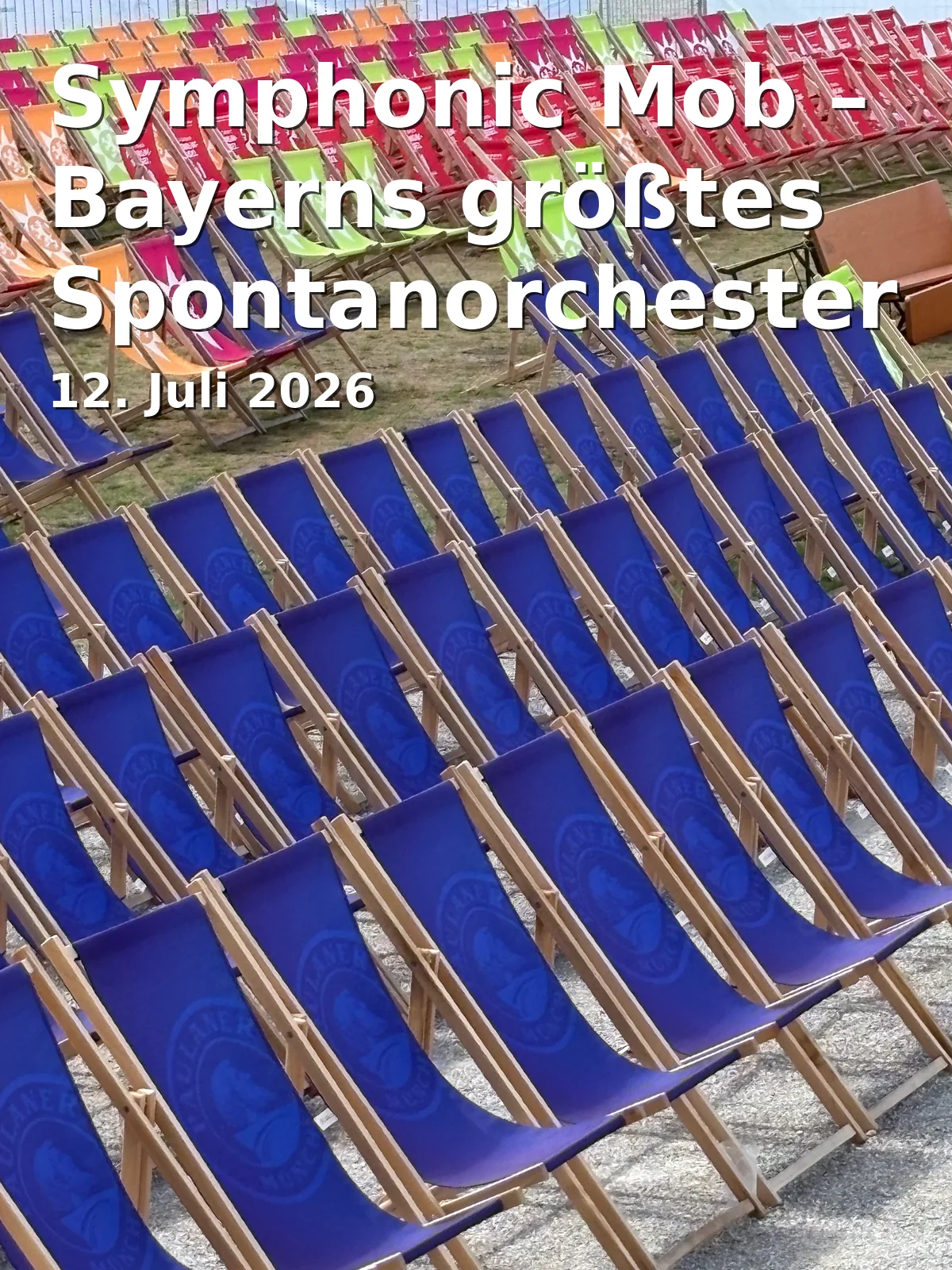
Be part of the Symphonic Mob in Bad Kissingen and see how music enthusiasts perform with a professional orchestra.
Concert of the Staatsbad Philharmonie Kissingen
Experience a concert by the Staatsbad Philharmonie in the Wandelhalle Bad Kissingen, with music from Baroque to modern times.
Special concert of the Rakoczy Support Association
Come on July 18, 2026 to the free concert in Rossini Hall, Bad Kissingen. Experience an unforgettable evening full of music and culture.
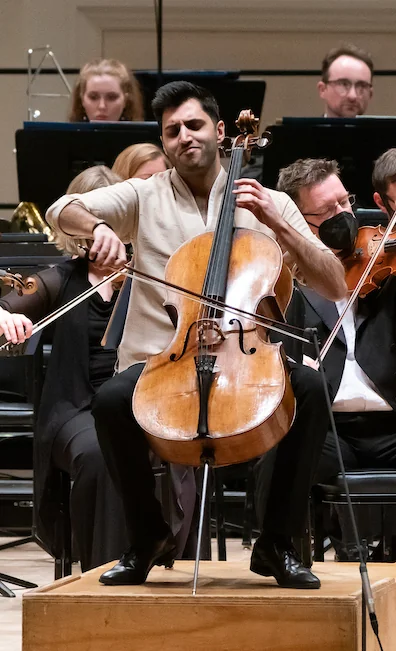
Bamberg Symphony Orchestra II
Enjoy classical masterpieces with the Bamberg Symphony Orchestra and Kian Soltani on July 20, 2026, in the Max-Littmann-Saal.
Frequently Asked Questions
Reviews
Felix Krebs
15. June 2023
Wonderful Time 😁😀 Beautiful Arcades and Castle 🏰, Rose 🌹 Garden. UNESCO Heritage sights. Famous for Spa and Bath and healing Fountain ⛲
Daniel O
24. July 2025
Such a lovely place with the elegant Kur buildings all around fountains and the garden.
Yuriy Ch
21. September 2025
'...Palm trees in the light...' Find a bench and watch the beauty and people passing by. Really cool!
SPIROS ASOS
6. July 2022
Bad Kissingen is a German spa town in the Bavarian region of Lower Franconia and seat of the district Bad Kissingen. Situated to the south of the Rhön Mountains on the Franconian Saale river, it is one of the health resorts, which became famous as a "Weltbad" in the 19th century. In 2021, the town became part of the transnational UNESCO World Heritage Site under the name "Great Spa Towns of Europe", because of its famous mineral springs and its architecture exemplifying the popularity of spa resorts in Europe during the 18th through 20th centuries.
Erika Koenig (HippoCampus)
21. July 2025
It is a beautiful place to stroll through, grab some mineral water, and/or listen to music. From the tourist office to the gardens, this place has something for everyone at least. Consider experiencing it at least once.