
Bad Kissingen
Ob. Saline 20, 97688 Bad Kissingen-Hausen, Deutschland
Museum Obere Saline | Opening Hours & Directions
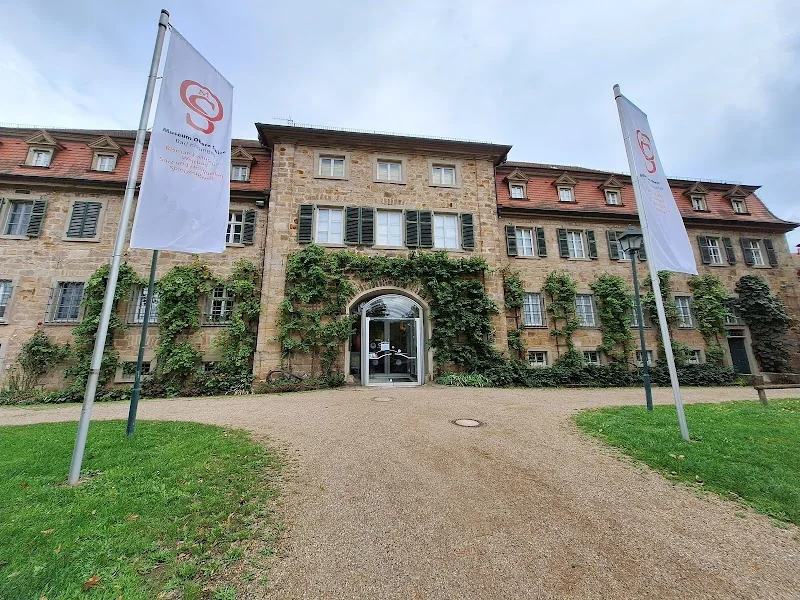
The Museum Obere Saline in Bad Kissingen connects city history, spa culture, and political contemporary history in an unusually dense way. When entering the Obere Saline, one does not move through just any regional museum, but through a place where salt production, Bismarck history, spa development, and the memory of the world spa Kissingen connect into a clear experience arc. The museum is located in a representative residential building of the Obere Saline, which was built and used by the Prince-Bishops of Würzburg in the 18th century; it later served as a spa quarters for Otto Prince of Bismarck and a significant site in the history of Bad Kissingen. Today, the house guides its visitors through several thematic areas, complemented by special exhibitions, events, guided tours, a museum shop, and gastronomy. This mixture is precisely what makes it appealing: the visit is historical, informative, and atmospheric at the same time. Those searching for Museum Obere Saline opening hours, directions, parking, admission prices, or the Bismarck Museum will find not only practical information here but also a place with a distinctive character. With 4.5 stars from 232 reviews, it also shows that the location leaves a very good impression on guests. ([badkissingen.de](https://www.badkissingen.de/kultur/museum-obere-saline/index.html))
Opening Hours and Admission Prices at the Museum Obere Saline
For planning a visit, the opening hours are the most important anchor. The Museum Obere Saline is usually open from Wednesday to Sunday from 2:00 PM to 5:00 PM. These times make the visit well-planned, especially for day trips, weekend tours, or a detour during a spa stay in Bad Kissingen. Additionally, the city of Bad Kissingen publishes special opening hours for holidays and event days; thus, the visit can be combined with special dates throughout the year. The current information from the museum includes special openings around New Year's, Epiphany, Easter, Pentecost, Corpus Christi, the Salinenfest, and other holidays for 2026. Therefore, anyone planning a specific date should check the event calendar and opening hours in advance, as the house regularly deviates from its standard rhythm when special events take place. The admission prices are also clearly structured: adults pay 5 euros, families 10 euros, and children up to 6 years have free admission. In addition, there are discounts for guests with a guest card or premium card, for holders of a volunteer card, as well as for students, pupils, and severely disabled persons with ID. A cheaper price per person also applies to groups of 10 or more. This combination of fair rates and family-friendly conditions is particularly interesting for visitors who want to explore several museum areas in one afternoon. Those planning a compact cultural stop in Bad Kissingen can thus integrate the museum very flexibly into their daily schedule. The afternoon opening hours also fit well with walks along the Saale or a subsequent café visit. ([badkissingen.de](https://www.badkissingen.de/kultur/museum-obere-saline/besuch/46227.Oeffnungszeiten-und-Eintrittspreise.html?utm_source=openai))
Directions, Parking, and Public Transport to the Museum Obere Saline
The Museum Obere Saline is also very visitor-friendly when it comes to directions. The official destination address for the navigation device is Obere Saline 20, 97688 Bad Kissingen. Those arriving by car will find about 100 parking spaces directly at the museum. Additionally, the city of Bad Kissingen mentions the parking lot at the Gradierbau as another option; from there, it is about a 500-meter walk to the Obere Saline. For guests who prefer a flexible mix of parking and a short walk, this is a very practical solution. Public transport is also well integrated: the museum is located directly at the Obere Saline bus stop. The city bus line 6, bus line 700, and the spa bus line 8230 stop there. It is important to note that line 6 does not operate on Sundays and public holidays, and the spa bus only runs between May 1 and October 31. Those who prefer to walk or bike can use the Salinenpromenade along the Franconian Saale; it is about 2 to 3 kilometers from the city center. Furthermore, from spring to autumn, the GeckoBahn runs from the stops Kurgarten or Wild-Park Klaushof to the Gradierbau stop, from where there are still about 600 meters to walk. This combination of car, bus, bike, and walking path makes the journey uncomplicated and flexible. For inquiries such as Museum Obere Saline directions or Museum Obere Saline parking, these are the crucial pieces of information: easily accessible, with its own parking spaces, and additionally connected through spa and leisure transport. ([badkissingen.de](https://www.badkissingen.de/kultur/museum-obere-saline/besuch/46228.So-erreichen-Sie-das-Museum-Obere-Saline.html))
Bismarck Museum and Historical Living Spaces in the Obere Saline
The historical core of the house is the Bismarck Museum. The Obere Saline was already a representative residential building in the 18th century, used by the Prince-Bishops of Würzburg. In the 19th century, it became closely associated with Otto Prince of Bismarck: between 1876 and 1893, the Chancellor resided here during his spa stays in Bad Kissingen. Bismarck's living quarters have been preserved and today belong to the Museum Obere Saline along with the Bismarck Museum. This aspect gives the house its special rank, as it not only commemorates a person but also makes visible a political cosmos that extends far beyond the location. On the pages of the World Heritage and Tourism portal, it becomes clear that Bismarck made Bad Kissingen a political stage; among other things, the Kissinger Dictate and thoughts on social insurance emerged there. This is precisely why it is understandable why Bad Kissingen was so important for German and European history. In the museum, this level is experienced not abstractly, but through historical rooms, original interiors, and exhibition spaces that place Bismarck's work in the context of the world spa. Additionally, there is the special aura of a spa house, originally built for salt masters and later remodeled for political and social elite visits. Therefore, those searching for the Bismarck Museum Obere Saline Bad Kissingen will find more than just a classic biography museum: it is a place where architecture, spa history, and state history intertwine. This connection makes the Obere Saline a strong cultural destination for historically interested visitors, school classes, and groups. ([welterbe.badkissingen.de](https://welterbe.badkissingen.de/welterbe-bad-kissingen/sehenswuerdigkeiten/41614.Obere-Saline.html))
Salt and Salt Production, Spa Kissingen and World Spa Kissingen
Another focus of the museum is the history of salt and spa culture. The exhibition “Salt and Salt Production” shows that Bad Kissingen produced salt for more than 1000 years, from the Carolingian period until 1968. The first gradierwerk (graduation tower) was built in 1562, a technical innovation that quickly spread across Europe. This long development is important because it explains the economic and medical foundations of the city. Therefore, the museum not only tells the story of a raw material but also the story of a city that developed its unique character from salt, brine, and healing springs. In addition, the departments “Spa Kissingen” and “World Spa Kissingen” focus on the development of the spa town. The official museum description makes it clear that the beginnings of the healing springs, spa medicine, and the world spa Kissingen are central to the overall history of the house. The specialized site Museums in Bavaria additionally classifies the department “World Spa Kissingen” as a look at the heyday of the place from 1830 to 1930. This makes the temporal arc particularly clear: from the early salt location to the spa town to the international world spa. This tension arc is one of the reasons why the Obere Saline is so versatile for visitors. Those interested in urban development, medical history, tourism history, or European spa culture receive multiple perspectives in one building. The five museum departments are therefore not randomly arranged next to each other but collectively tell an overarching story. This connection of “white gold” and spa makes it appealing for all those seeking a location with real content depth. The museum is not a place for quick impressions but a house that makes connections understandable and makes Bad Kissingen readable as a historical spa and cultural center. ([badkissingen.de](https://www.badkissingen.de/kultur/kultur/museum-obere-saline/dauerausstellungen/36981.Salz-und-Salzgewinnung.html))
Event Calendar, Special Exhibitions, and Jazz in Bismarck's Basement
The Museum Obere Saline is not only a house of permanent exhibitions but also an active event venue. The city of Bad Kissingen explicitly emphasizes that museum night, museum festival, Salinenfest, jazz concerts in Bismarck’s Basement, guided tours, special exhibitions, art workshops, and participatory offers are part of the museum's profile. Thus, the Obere Saline is much more than a quiet exhibition building: it functions as a cultural quarter with a regular program. The event calendar bundles special tours, themed tours, and offers for families and groups. Particularly exciting is the event cellar Bismarck’s Basement, which serves as a stage for jazz concerts and gives the historical site a modern, lively accent. For 2026, the official site lists among other things the special exhibition “King Ludwig II and Bad Kissingen. Imperial Spa & Franconian Journey.” with a duration from October 29, 2025, to August 30, 2026. Other exhibitions and formats are also listed, including the anniversary exhibition “40 Years Kissinger Summer” in the Orangerie of the Museum Obere Saline. Those specifically searching for Museum Night Museum Obere Saline or Salinenfest Museum Obere Saline will find a house that offers significantly more than standard opening hours throughout the year. The thematic diversity for families and children is also particularly valuable: there are children's studios, participatory programs, holiday offers, children's tours, and children's birthdays. This makes the museum attractive for different target groups, from art-interested individual visitors to school classes. The official calendar thus clearly shows that the Museum Obere Saline not only preserves history but also continually re-stages culture. This is exactly why it is worth taking a look at the current program before visiting. ([badkissingen.de](https://www.badkissingen.de/kultur/museum-obere-saline/index.html))
Museum Café, Museum Shop, Family Offers, and Accessibility
For the actual visit, the service offerings at the Museum Obere Saline are an important plus point. In the entrance area, there is a museum shop that invites browsing during opening hours. Additionally, the house offers a museum café in the foyer and the garden café Bunt. When the garden café is closed, the museum café remains open during the regular opening hours of the museum. This is particularly pleasant for visitors who want to combine their tour with a break or are looking for a drink or a small snack after the exhibition. Families benefit from the fact that the museum has a very wide range of participatory and guided offers, and children up to six years have free admission. At the same time, one should realistically assess the accessibility: due to historical stairs without ramps, the special exhibition room in the former saline chapel, the rooms of the toy world, and the department world spa Kissingen are unfortunately not accessible by wheelchair. This information is important because it can play a role in planning with strollers, mobility restrictions, or group visits. Those looking at the reviews will also find an overall positive echo; with 4.5 stars and 232 reviews, the mix of historical site, good location, café, and versatile program appears particularly convincing. This also fits with the keywords around Museum Obere Saline photos and Museum Obere Saline reviews: the place provides many visual impressions, from the historical building to the Bismarck rooms to the toy world and the outdoor facilities. Overall, the Obere Saline is therefore a destination for visitors seeking not just a museum but a complete cultural experience. Practical, atmospheric, and strong in content at the same time, the house offers enough material for a short detour as well as for an extensive museum afternoon. ([badkissingen.de](https://www.badkissingen.de/kultur/museum-obere-saline/46720.Museumscafe-im-Foyer-und-Gartencafe-Bunt.html))
Sources:
- City of Bad Kissingen - Museum Obere Saline | Current Exhibitions ([badkissingen.de](https://www.badkissingen.de/kultur/museum-obere-saline/index.html))
- City of Bad Kissingen - Museum Obere Saline | Opening Hours and Admission Prices ([badkissingen.de](https://www.badkissingen.de/kultur/museum-obere-saline/besuch/46227.Oeffnungszeiten-und-Eintrittspreise.html))
- City of Bad Kissingen - How to Reach the Museum Obere Saline ([badkissingen.de](https://www.badkissingen.de/kultur/museum-obere-saline/besuch/46228.So-erreichen-Sie-das-Museum-Obere-Saline.html))
- World Heritage Bad Kissingen - Obere Saline ([welterbe.badkissingen.de](https://welterbe.badkissingen.de/welterbe-bad-kissingen/sehenswuerdigkeiten/41614.Obere-Saline.html))
- City of Bad Kissingen - Museum Café in the Foyer and Garden Café Bunt ([badkissingen.de](https://www.badkissingen.de/kultur/museum-obere-saline/46720.Museumscafe-im-Foyer-und-Gartencafe-Bunt.html))
- City of Bad Kissingen - The Bismarck Museum ([badkissingen.de](https://www.badkissingen.de/kultur/kultur/museum-obere-saline/dauerausstellungen/36648.Das-Bismarck-Museum.html))
Show moreShow less
Museum Obere Saline | Opening Hours & Directions
The Museum Obere Saline in Bad Kissingen connects city history, spa culture, and political contemporary history in an unusually dense way. When entering the Obere Saline, one does not move through just any regional museum, but through a place where salt production, Bismarck history, spa development, and the memory of the world spa Kissingen connect into a clear experience arc. The museum is located in a representative residential building of the Obere Saline, which was built and used by the Prince-Bishops of Würzburg in the 18th century; it later served as a spa quarters for Otto Prince of Bismarck and a significant site in the history of Bad Kissingen. Today, the house guides its visitors through several thematic areas, complemented by special exhibitions, events, guided tours, a museum shop, and gastronomy. This mixture is precisely what makes it appealing: the visit is historical, informative, and atmospheric at the same time. Those searching for Museum Obere Saline opening hours, directions, parking, admission prices, or the Bismarck Museum will find not only practical information here but also a place with a distinctive character. With 4.5 stars from 232 reviews, it also shows that the location leaves a very good impression on guests. ([badkissingen.de](https://www.badkissingen.de/kultur/museum-obere-saline/index.html))
Opening Hours and Admission Prices at the Museum Obere Saline
For planning a visit, the opening hours are the most important anchor. The Museum Obere Saline is usually open from Wednesday to Sunday from 2:00 PM to 5:00 PM. These times make the visit well-planned, especially for day trips, weekend tours, or a detour during a spa stay in Bad Kissingen. Additionally, the city of Bad Kissingen publishes special opening hours for holidays and event days; thus, the visit can be combined with special dates throughout the year. The current information from the museum includes special openings around New Year's, Epiphany, Easter, Pentecost, Corpus Christi, the Salinenfest, and other holidays for 2026. Therefore, anyone planning a specific date should check the event calendar and opening hours in advance, as the house regularly deviates from its standard rhythm when special events take place. The admission prices are also clearly structured: adults pay 5 euros, families 10 euros, and children up to 6 years have free admission. In addition, there are discounts for guests with a guest card or premium card, for holders of a volunteer card, as well as for students, pupils, and severely disabled persons with ID. A cheaper price per person also applies to groups of 10 or more. This combination of fair rates and family-friendly conditions is particularly interesting for visitors who want to explore several museum areas in one afternoon. Those planning a compact cultural stop in Bad Kissingen can thus integrate the museum very flexibly into their daily schedule. The afternoon opening hours also fit well with walks along the Saale or a subsequent café visit. ([badkissingen.de](https://www.badkissingen.de/kultur/museum-obere-saline/besuch/46227.Oeffnungszeiten-und-Eintrittspreise.html?utm_source=openai))
Directions, Parking, and Public Transport to the Museum Obere Saline
The Museum Obere Saline is also very visitor-friendly when it comes to directions. The official destination address for the navigation device is Obere Saline 20, 97688 Bad Kissingen. Those arriving by car will find about 100 parking spaces directly at the museum. Additionally, the city of Bad Kissingen mentions the parking lot at the Gradierbau as another option; from there, it is about a 500-meter walk to the Obere Saline. For guests who prefer a flexible mix of parking and a short walk, this is a very practical solution. Public transport is also well integrated: the museum is located directly at the Obere Saline bus stop. The city bus line 6, bus line 700, and the spa bus line 8230 stop there. It is important to note that line 6 does not operate on Sundays and public holidays, and the spa bus only runs between May 1 and October 31. Those who prefer to walk or bike can use the Salinenpromenade along the Franconian Saale; it is about 2 to 3 kilometers from the city center. Furthermore, from spring to autumn, the GeckoBahn runs from the stops Kurgarten or Wild-Park Klaushof to the Gradierbau stop, from where there are still about 600 meters to walk. This combination of car, bus, bike, and walking path makes the journey uncomplicated and flexible. For inquiries such as Museum Obere Saline directions or Museum Obere Saline parking, these are the crucial pieces of information: easily accessible, with its own parking spaces, and additionally connected through spa and leisure transport. ([badkissingen.de](https://www.badkissingen.de/kultur/museum-obere-saline/besuch/46228.So-erreichen-Sie-das-Museum-Obere-Saline.html))
Bismarck Museum and Historical Living Spaces in the Obere Saline
The historical core of the house is the Bismarck Museum. The Obere Saline was already a representative residential building in the 18th century, used by the Prince-Bishops of Würzburg. In the 19th century, it became closely associated with Otto Prince of Bismarck: between 1876 and 1893, the Chancellor resided here during his spa stays in Bad Kissingen. Bismarck's living quarters have been preserved and today belong to the Museum Obere Saline along with the Bismarck Museum. This aspect gives the house its special rank, as it not only commemorates a person but also makes visible a political cosmos that extends far beyond the location. On the pages of the World Heritage and Tourism portal, it becomes clear that Bismarck made Bad Kissingen a political stage; among other things, the Kissinger Dictate and thoughts on social insurance emerged there. This is precisely why it is understandable why Bad Kissingen was so important for German and European history. In the museum, this level is experienced not abstractly, but through historical rooms, original interiors, and exhibition spaces that place Bismarck's work in the context of the world spa. Additionally, there is the special aura of a spa house, originally built for salt masters and later remodeled for political and social elite visits. Therefore, those searching for the Bismarck Museum Obere Saline Bad Kissingen will find more than just a classic biography museum: it is a place where architecture, spa history, and state history intertwine. This connection makes the Obere Saline a strong cultural destination for historically interested visitors, school classes, and groups. ([welterbe.badkissingen.de](https://welterbe.badkissingen.de/welterbe-bad-kissingen/sehenswuerdigkeiten/41614.Obere-Saline.html))
Salt and Salt Production, Spa Kissingen and World Spa Kissingen
Another focus of the museum is the history of salt and spa culture. The exhibition “Salt and Salt Production” shows that Bad Kissingen produced salt for more than 1000 years, from the Carolingian period until 1968. The first gradierwerk (graduation tower) was built in 1562, a technical innovation that quickly spread across Europe. This long development is important because it explains the economic and medical foundations of the city. Therefore, the museum not only tells the story of a raw material but also the story of a city that developed its unique character from salt, brine, and healing springs. In addition, the departments “Spa Kissingen” and “World Spa Kissingen” focus on the development of the spa town. The official museum description makes it clear that the beginnings of the healing springs, spa medicine, and the world spa Kissingen are central to the overall history of the house. The specialized site Museums in Bavaria additionally classifies the department “World Spa Kissingen” as a look at the heyday of the place from 1830 to 1930. This makes the temporal arc particularly clear: from the early salt location to the spa town to the international world spa. This tension arc is one of the reasons why the Obere Saline is so versatile for visitors. Those interested in urban development, medical history, tourism history, or European spa culture receive multiple perspectives in one building. The five museum departments are therefore not randomly arranged next to each other but collectively tell an overarching story. This connection of “white gold” and spa makes it appealing for all those seeking a location with real content depth. The museum is not a place for quick impressions but a house that makes connections understandable and makes Bad Kissingen readable as a historical spa and cultural center. ([badkissingen.de](https://www.badkissingen.de/kultur/kultur/museum-obere-saline/dauerausstellungen/36981.Salz-und-Salzgewinnung.html))
Event Calendar, Special Exhibitions, and Jazz in Bismarck's Basement
The Museum Obere Saline is not only a house of permanent exhibitions but also an active event venue. The city of Bad Kissingen explicitly emphasizes that museum night, museum festival, Salinenfest, jazz concerts in Bismarck’s Basement, guided tours, special exhibitions, art workshops, and participatory offers are part of the museum's profile. Thus, the Obere Saline is much more than a quiet exhibition building: it functions as a cultural quarter with a regular program. The event calendar bundles special tours, themed tours, and offers for families and groups. Particularly exciting is the event cellar Bismarck’s Basement, which serves as a stage for jazz concerts and gives the historical site a modern, lively accent. For 2026, the official site lists among other things the special exhibition “King Ludwig II and Bad Kissingen. Imperial Spa & Franconian Journey.” with a duration from October 29, 2025, to August 30, 2026. Other exhibitions and formats are also listed, including the anniversary exhibition “40 Years Kissinger Summer” in the Orangerie of the Museum Obere Saline. Those specifically searching for Museum Night Museum Obere Saline or Salinenfest Museum Obere Saline will find a house that offers significantly more than standard opening hours throughout the year. The thematic diversity for families and children is also particularly valuable: there are children's studios, participatory programs, holiday offers, children's tours, and children's birthdays. This makes the museum attractive for different target groups, from art-interested individual visitors to school classes. The official calendar thus clearly shows that the Museum Obere Saline not only preserves history but also continually re-stages culture. This is exactly why it is worth taking a look at the current program before visiting. ([badkissingen.de](https://www.badkissingen.de/kultur/museum-obere-saline/index.html))
Museum Café, Museum Shop, Family Offers, and Accessibility
For the actual visit, the service offerings at the Museum Obere Saline are an important plus point. In the entrance area, there is a museum shop that invites browsing during opening hours. Additionally, the house offers a museum café in the foyer and the garden café Bunt. When the garden café is closed, the museum café remains open during the regular opening hours of the museum. This is particularly pleasant for visitors who want to combine their tour with a break or are looking for a drink or a small snack after the exhibition. Families benefit from the fact that the museum has a very wide range of participatory and guided offers, and children up to six years have free admission. At the same time, one should realistically assess the accessibility: due to historical stairs without ramps, the special exhibition room in the former saline chapel, the rooms of the toy world, and the department world spa Kissingen are unfortunately not accessible by wheelchair. This information is important because it can play a role in planning with strollers, mobility restrictions, or group visits. Those looking at the reviews will also find an overall positive echo; with 4.5 stars and 232 reviews, the mix of historical site, good location, café, and versatile program appears particularly convincing. This also fits with the keywords around Museum Obere Saline photos and Museum Obere Saline reviews: the place provides many visual impressions, from the historical building to the Bismarck rooms to the toy world and the outdoor facilities. Overall, the Obere Saline is therefore a destination for visitors seeking not just a museum but a complete cultural experience. Practical, atmospheric, and strong in content at the same time, the house offers enough material for a short detour as well as for an extensive museum afternoon. ([badkissingen.de](https://www.badkissingen.de/kultur/museum-obere-saline/46720.Museumscafe-im-Foyer-und-Gartencafe-Bunt.html))
Sources:
- City of Bad Kissingen - Museum Obere Saline | Current Exhibitions ([badkissingen.de](https://www.badkissingen.de/kultur/museum-obere-saline/index.html))
- City of Bad Kissingen - Museum Obere Saline | Opening Hours and Admission Prices ([badkissingen.de](https://www.badkissingen.de/kultur/museum-obere-saline/besuch/46227.Oeffnungszeiten-und-Eintrittspreise.html))
- City of Bad Kissingen - How to Reach the Museum Obere Saline ([badkissingen.de](https://www.badkissingen.de/kultur/museum-obere-saline/besuch/46228.So-erreichen-Sie-das-Museum-Obere-Saline.html))
- World Heritage Bad Kissingen - Obere Saline ([welterbe.badkissingen.de](https://welterbe.badkissingen.de/welterbe-bad-kissingen/sehenswuerdigkeiten/41614.Obere-Saline.html))
- City of Bad Kissingen - Museum Café in the Foyer and Garden Café Bunt ([badkissingen.de](https://www.badkissingen.de/kultur/museum-obere-saline/46720.Museumscafe-im-Foyer-und-Gartencafe-Bunt.html))
- City of Bad Kissingen - The Bismarck Museum ([badkissingen.de](https://www.badkissingen.de/kultur/kultur/museum-obere-saline/dauerausstellungen/36648.Das-Bismarck-Museum.html))
Museum Obere Saline | Opening Hours & Directions
The Museum Obere Saline in Bad Kissingen connects city history, spa culture, and political contemporary history in an unusually dense way. When entering the Obere Saline, one does not move through just any regional museum, but through a place where salt production, Bismarck history, spa development, and the memory of the world spa Kissingen connect into a clear experience arc. The museum is located in a representative residential building of the Obere Saline, which was built and used by the Prince-Bishops of Würzburg in the 18th century; it later served as a spa quarters for Otto Prince of Bismarck and a significant site in the history of Bad Kissingen. Today, the house guides its visitors through several thematic areas, complemented by special exhibitions, events, guided tours, a museum shop, and gastronomy. This mixture is precisely what makes it appealing: the visit is historical, informative, and atmospheric at the same time. Those searching for Museum Obere Saline opening hours, directions, parking, admission prices, or the Bismarck Museum will find not only practical information here but also a place with a distinctive character. With 4.5 stars from 232 reviews, it also shows that the location leaves a very good impression on guests. ([badkissingen.de](https://www.badkissingen.de/kultur/museum-obere-saline/index.html))
Opening Hours and Admission Prices at the Museum Obere Saline
For planning a visit, the opening hours are the most important anchor. The Museum Obere Saline is usually open from Wednesday to Sunday from 2:00 PM to 5:00 PM. These times make the visit well-planned, especially for day trips, weekend tours, or a detour during a spa stay in Bad Kissingen. Additionally, the city of Bad Kissingen publishes special opening hours for holidays and event days; thus, the visit can be combined with special dates throughout the year. The current information from the museum includes special openings around New Year's, Epiphany, Easter, Pentecost, Corpus Christi, the Salinenfest, and other holidays for 2026. Therefore, anyone planning a specific date should check the event calendar and opening hours in advance, as the house regularly deviates from its standard rhythm when special events take place. The admission prices are also clearly structured: adults pay 5 euros, families 10 euros, and children up to 6 years have free admission. In addition, there are discounts for guests with a guest card or premium card, for holders of a volunteer card, as well as for students, pupils, and severely disabled persons with ID. A cheaper price per person also applies to groups of 10 or more. This combination of fair rates and family-friendly conditions is particularly interesting for visitors who want to explore several museum areas in one afternoon. Those planning a compact cultural stop in Bad Kissingen can thus integrate the museum very flexibly into their daily schedule. The afternoon opening hours also fit well with walks along the Saale or a subsequent café visit. ([badkissingen.de](https://www.badkissingen.de/kultur/museum-obere-saline/besuch/46227.Oeffnungszeiten-und-Eintrittspreise.html?utm_source=openai))
Directions, Parking, and Public Transport to the Museum Obere Saline
The Museum Obere Saline is also very visitor-friendly when it comes to directions. The official destination address for the navigation device is Obere Saline 20, 97688 Bad Kissingen. Those arriving by car will find about 100 parking spaces directly at the museum. Additionally, the city of Bad Kissingen mentions the parking lot at the Gradierbau as another option; from there, it is about a 500-meter walk to the Obere Saline. For guests who prefer a flexible mix of parking and a short walk, this is a very practical solution. Public transport is also well integrated: the museum is located directly at the Obere Saline bus stop. The city bus line 6, bus line 700, and the spa bus line 8230 stop there. It is important to note that line 6 does not operate on Sundays and public holidays, and the spa bus only runs between May 1 and October 31. Those who prefer to walk or bike can use the Salinenpromenade along the Franconian Saale; it is about 2 to 3 kilometers from the city center. Furthermore, from spring to autumn, the GeckoBahn runs from the stops Kurgarten or Wild-Park Klaushof to the Gradierbau stop, from where there are still about 600 meters to walk. This combination of car, bus, bike, and walking path makes the journey uncomplicated and flexible. For inquiries such as Museum Obere Saline directions or Museum Obere Saline parking, these are the crucial pieces of information: easily accessible, with its own parking spaces, and additionally connected through spa and leisure transport. ([badkissingen.de](https://www.badkissingen.de/kultur/museum-obere-saline/besuch/46228.So-erreichen-Sie-das-Museum-Obere-Saline.html))
Bismarck Museum and Historical Living Spaces in the Obere Saline
The historical core of the house is the Bismarck Museum. The Obere Saline was already a representative residential building in the 18th century, used by the Prince-Bishops of Würzburg. In the 19th century, it became closely associated with Otto Prince of Bismarck: between 1876 and 1893, the Chancellor resided here during his spa stays in Bad Kissingen. Bismarck's living quarters have been preserved and today belong to the Museum Obere Saline along with the Bismarck Museum. This aspect gives the house its special rank, as it not only commemorates a person but also makes visible a political cosmos that extends far beyond the location. On the pages of the World Heritage and Tourism portal, it becomes clear that Bismarck made Bad Kissingen a political stage; among other things, the Kissinger Dictate and thoughts on social insurance emerged there. This is precisely why it is understandable why Bad Kissingen was so important for German and European history. In the museum, this level is experienced not abstractly, but through historical rooms, original interiors, and exhibition spaces that place Bismarck's work in the context of the world spa. Additionally, there is the special aura of a spa house, originally built for salt masters and later remodeled for political and social elite visits. Therefore, those searching for the Bismarck Museum Obere Saline Bad Kissingen will find more than just a classic biography museum: it is a place where architecture, spa history, and state history intertwine. This connection makes the Obere Saline a strong cultural destination for historically interested visitors, school classes, and groups. ([welterbe.badkissingen.de](https://welterbe.badkissingen.de/welterbe-bad-kissingen/sehenswuerdigkeiten/41614.Obere-Saline.html))
Salt and Salt Production, Spa Kissingen and World Spa Kissingen
Another focus of the museum is the history of salt and spa culture. The exhibition “Salt and Salt Production” shows that Bad Kissingen produced salt for more than 1000 years, from the Carolingian period until 1968. The first gradierwerk (graduation tower) was built in 1562, a technical innovation that quickly spread across Europe. This long development is important because it explains the economic and medical foundations of the city. Therefore, the museum not only tells the story of a raw material but also the story of a city that developed its unique character from salt, brine, and healing springs. In addition, the departments “Spa Kissingen” and “World Spa Kissingen” focus on the development of the spa town. The official museum description makes it clear that the beginnings of the healing springs, spa medicine, and the world spa Kissingen are central to the overall history of the house. The specialized site Museums in Bavaria additionally classifies the department “World Spa Kissingen” as a look at the heyday of the place from 1830 to 1930. This makes the temporal arc particularly clear: from the early salt location to the spa town to the international world spa. This tension arc is one of the reasons why the Obere Saline is so versatile for visitors. Those interested in urban development, medical history, tourism history, or European spa culture receive multiple perspectives in one building. The five museum departments are therefore not randomly arranged next to each other but collectively tell an overarching story. This connection of “white gold” and spa makes it appealing for all those seeking a location with real content depth. The museum is not a place for quick impressions but a house that makes connections understandable and makes Bad Kissingen readable as a historical spa and cultural center. ([badkissingen.de](https://www.badkissingen.de/kultur/kultur/museum-obere-saline/dauerausstellungen/36981.Salz-und-Salzgewinnung.html))
Event Calendar, Special Exhibitions, and Jazz in Bismarck's Basement
The Museum Obere Saline is not only a house of permanent exhibitions but also an active event venue. The city of Bad Kissingen explicitly emphasizes that museum night, museum festival, Salinenfest, jazz concerts in Bismarck’s Basement, guided tours, special exhibitions, art workshops, and participatory offers are part of the museum's profile. Thus, the Obere Saline is much more than a quiet exhibition building: it functions as a cultural quarter with a regular program. The event calendar bundles special tours, themed tours, and offers for families and groups. Particularly exciting is the event cellar Bismarck’s Basement, which serves as a stage for jazz concerts and gives the historical site a modern, lively accent. For 2026, the official site lists among other things the special exhibition “King Ludwig II and Bad Kissingen. Imperial Spa & Franconian Journey.” with a duration from October 29, 2025, to August 30, 2026. Other exhibitions and formats are also listed, including the anniversary exhibition “40 Years Kissinger Summer” in the Orangerie of the Museum Obere Saline. Those specifically searching for Museum Night Museum Obere Saline or Salinenfest Museum Obere Saline will find a house that offers significantly more than standard opening hours throughout the year. The thematic diversity for families and children is also particularly valuable: there are children's studios, participatory programs, holiday offers, children's tours, and children's birthdays. This makes the museum attractive for different target groups, from art-interested individual visitors to school classes. The official calendar thus clearly shows that the Museum Obere Saline not only preserves history but also continually re-stages culture. This is exactly why it is worth taking a look at the current program before visiting. ([badkissingen.de](https://www.badkissingen.de/kultur/museum-obere-saline/index.html))
Museum Café, Museum Shop, Family Offers, and Accessibility
For the actual visit, the service offerings at the Museum Obere Saline are an important plus point. In the entrance area, there is a museum shop that invites browsing during opening hours. Additionally, the house offers a museum café in the foyer and the garden café Bunt. When the garden café is closed, the museum café remains open during the regular opening hours of the museum. This is particularly pleasant for visitors who want to combine their tour with a break or are looking for a drink or a small snack after the exhibition. Families benefit from the fact that the museum has a very wide range of participatory and guided offers, and children up to six years have free admission. At the same time, one should realistically assess the accessibility: due to historical stairs without ramps, the special exhibition room in the former saline chapel, the rooms of the toy world, and the department world spa Kissingen are unfortunately not accessible by wheelchair. This information is important because it can play a role in planning with strollers, mobility restrictions, or group visits. Those looking at the reviews will also find an overall positive echo; with 4.5 stars and 232 reviews, the mix of historical site, good location, café, and versatile program appears particularly convincing. This also fits with the keywords around Museum Obere Saline photos and Museum Obere Saline reviews: the place provides many visual impressions, from the historical building to the Bismarck rooms to the toy world and the outdoor facilities. Overall, the Obere Saline is therefore a destination for visitors seeking not just a museum but a complete cultural experience. Practical, atmospheric, and strong in content at the same time, the house offers enough material for a short detour as well as for an extensive museum afternoon. ([badkissingen.de](https://www.badkissingen.de/kultur/museum-obere-saline/46720.Museumscafe-im-Foyer-und-Gartencafe-Bunt.html))
Sources:
- City of Bad Kissingen - Museum Obere Saline | Current Exhibitions ([badkissingen.de](https://www.badkissingen.de/kultur/museum-obere-saline/index.html))
- City of Bad Kissingen - Museum Obere Saline | Opening Hours and Admission Prices ([badkissingen.de](https://www.badkissingen.de/kultur/museum-obere-saline/besuch/46227.Oeffnungszeiten-und-Eintrittspreise.html))
- City of Bad Kissingen - How to Reach the Museum Obere Saline ([badkissingen.de](https://www.badkissingen.de/kultur/museum-obere-saline/besuch/46228.So-erreichen-Sie-das-Museum-Obere-Saline.html))
- World Heritage Bad Kissingen - Obere Saline ([welterbe.badkissingen.de](https://welterbe.badkissingen.de/welterbe-bad-kissingen/sehenswuerdigkeiten/41614.Obere-Saline.html))
- City of Bad Kissingen - Museum Café in the Foyer and Garden Café Bunt ([badkissingen.de](https://www.badkissingen.de/kultur/museum-obere-saline/46720.Museumscafe-im-Foyer-und-Gartencafe-Bunt.html))
- City of Bad Kissingen - The Bismarck Museum ([badkissingen.de](https://www.badkissingen.de/kultur/kultur/museum-obere-saline/dauerausstellungen/36648.Das-Bismarck-Museum.html))
Upcoming Events
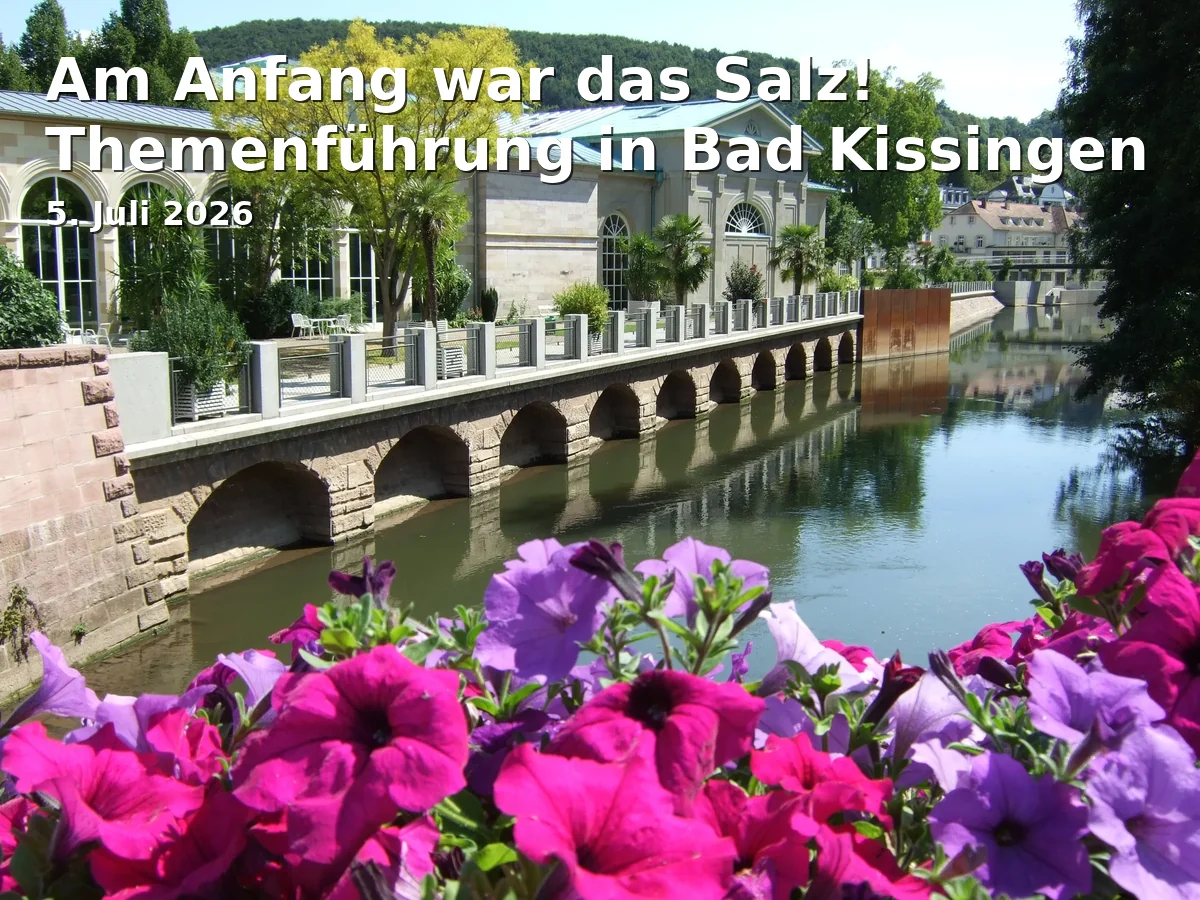
In the Beginning was the Salt! Themed Tour in Bad Kissingen
Experience the exciting history of salt extraction in Bad Kissingen with the tour at the Museum Obere Saline.
Permanent Exhibition Jewish Life in Bad Kissingen
Discover the rich Jewish history of Bad Kissingen in an informative exhibition.
King Ludwig II and Bad Kissingen
Experience the relationship of Ludwig II & Bismarck in this unique exhibition featuring great exhibits and interactive stations.
Frequently Asked Questions
Reviews
Crisma M
31. March 2024
Great museum with a good history and nice toy museum and Bismarck's chambers. Pity only in German. But worth the €5 (€4 if you have guest card from hotel).
Rajat Chohda
10. August 2023
Best museum to know the history and culture of Germany. If you have a chance to be guided by Claudia, feel pleasure about it and you will be very lucky.
Katalin Agoston
30. April 2023
The Bismarck museum is quite good, focused on his later years, connection with Bad Kissingen. The toy museum is a bit eclectic.
Gisela Teply
7. August 2025
A visit to the upper saline is definitely worth it. The museum is well designed. In summer, you can enjoy a drink outside and fresh cake.
Merl 66
26. April 2026
Very informative presentation of the stays of King Ludwig II and Chancellor Bismarck in Bad Kissingen, viewing the authentic rooms of Bismarck and the processes of salt extraction. The museum provides insights into historical processes in Bad Kissingen. Visiting the museum is recommended not just on rainy days!