
Bonnie und Clyde
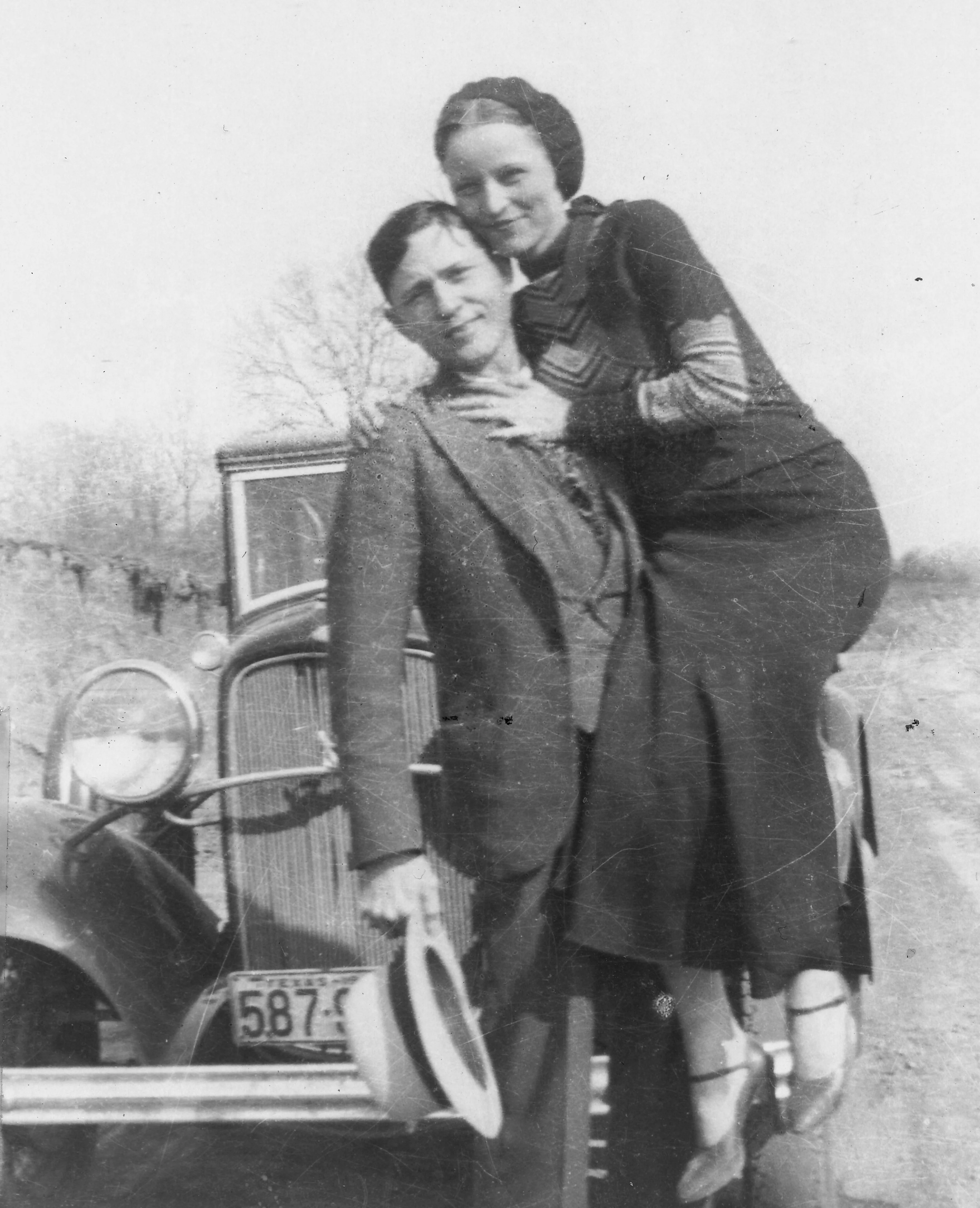
Image from Wikipedia
Image from Wikipedia
Bonnie and Clyde – Icons of Pop Culture between Myth, Music, and Modernity
A Couple, a Legend: How Two Outlaws Became Eternal References in Music and Culture
Bonnie Elizabeth Parker and Clyde Chestnut Barrow are among the most colorful figures in American history. As a notorious criminal couple during the Great Depression, they shaped the "Public Enemy" era in the early 1930s – and became cultural projections far beyond their actions. Their image as a rebellious love couple fueled films, musicals, and especially pop music, which continues to use "Bonnie and Clyde" today as a metaphor for unwavering loyalty, dangerous devotion, and romanticized lawlessness. This artist biography traces their real-life journey, contextualizes their iconic status, and shows how their story inspired a remarkable discography across genres and decades.
Biographical Roots: Poverty, Breakthrough, and the Birth of a Legend
Bonnie Parker was born on October 1, 1910, in Rowena, Texas; Clyde Barrow was born on March 24, 1909, in Telico, Texas. Shaped by social hardship, lack of prospects, and the upheavals of the Great Depression, both found their way early into an environment where petty crime became a perceived survival strategy. In 1932, their joint robbery spree began, which targeted gas stations, grocery stores, and smaller banks in the American Midwest – electrifying newspapers, newsreels, and soon also mass culture. The fact that their actions were linked to violence and caused 14 fatalities is often softened in later mythologization; in reality, their journey ended with a deadly ambush in Louisiana on May 23, 1934, which concluded their real story and initiated their legendary status.
From Wanted Poster to Pop Motif: The Media Invention of "Bonnie & Clyde"
As early as the 1930s, tabloid press and pulp fiction magazines molded the couple into stylized counter-figures to the establishment. Symbolic photographs – such as with cigar and gun – merged into an image of a self-determined, untamed partnership. This image survived the historical context and shaped what one might call "Brand Bonnie & Clyde": archetypes for "ride-or-die" romance, uncompromising loyalty, and an aesthetic of getaway cars, suits, hats, and jazz subtext – a visual grammar that later lives on in music videos, album artworks, and stage productions.
Cinematic Spark for Global Pop: The Cinema Year 1967
The cultural explosion occurred in 1967 with the film "Bonnie and Clyde" (Warren Beatty, Faye Dunaway). The work set an iconographic standard: Fashion, facial expressions, montage, and soundtrack placed the couple as tragic lovers in the center and made the story internationally pop-culturally relevant. The cinematic dramatization shifted the weight of the original crimes into an aestheticized narrative, which musicians worldwide utilized as a template for songs, metaphors, and storytelling. From here on, the music career of the figures Bonnie and Clyde began in popular culture – as subjects, not as real performers.
Discography of References: Songs That Vocalized the Myth
Shortly after the wave of films, Georgie Fame's "The Ballad of Bonnie and Clyde" reached number 1 on the UK Singles Charts in 1968 and marked the first major chart triumph of the motif. The song stylistically relied on rhythm and blues with contemporary orchestral pop and ballad storytelling – an arrangement that brought the fictionalized tragedy into a radio-friendly format and reached a million audiences. In Germany, Die Toten Hosen picked up the motif in 1996 and poured it into rough, anthemic punk rock, with a chorus that sharpens the outsider narrative in the band's style. Internationally, hip-hop set new accents: Jay-Z and Beyoncé updated the motif in 2002 with "'03 Bonnie & Clyde" as a promise of partnership in an urban, sample-based production framework – a prime example of how genre, composition, and production translate the archetype into contemporary language.
Genre Transfer: From R&B Ballad to Hip-Hop Narrative
From a music historical perspective, the "Bonnie and Clyde" motif shows an extraordinary genre resilience. In the late 1960s R&B, orchestral textures and a narrative ballad structure prevail. In the German punk scene of the 1990s, an energetic hook with power chords, fast backbeats, and call-and-response elements dominates – an arrangement that creates collective catharsis. In the US hip-hop of the 2000s, the motif becomes an intimate dual alliance amidst urban risks, driven by sample aesthetics, syncopated drum patterns, and dialogical hook guidance. This polyphony documents how flexible composition, arrangement, and production must be to recode the same story according to the zeitgeist.
Musicalization of the Myth: Broadway and Beyond
The musical theater stage also shaped the narrative. The Broadway musical "Bonnie & Clyde" (Music: Frank Wildhorn, Lyrics: Don Black, Book: Ivan Menchell) premiered in 2011 and translated the outlaw romance into a score between jazz influences, Americana, and pop ballads. Dramaturgically, the musical condenses the artistic development of the characters from lovers to public enemies, and the score elegantly shifts between intimacy and action. Later recordings and tour productions kept the material alive; in Germany, newer productions ensured performance presence until 2024/2025 and illustrate the sustainable stage impact of the material in the German-speaking theater landscape.
Style Analysis: Sound Colors for a Forbidden Love
From a music journalistic perspective, it is remarkable how composers and producers make "danger" and "desire" musically tangible. Typical are minor tonalities with modal hues, dotted rhythms for escape or chase motifs, harmonic sequences with abrupt stop times signaling shock moments, as well as contrasting bridges that musically highlight intimate closeness. In pop and hip-hop, this is reflected in muted timbres, warm basses, and subtle, percussive details; in rock arrangements through drive, double-time fills, and hook-oriented guitar riffs. Thus, an emotional tension arc emerges between adrenaline and tenderness – the essence of the "Bonnie and Clyde" motif.
Cultural Context: Between Romanticization and Responsibility
The artistic processing of Bonnie and Clyde is not value-free. While pop culture often heroizes the couple's relationship, the real biographies conceal violence, suffering, and victims. That is precisely why music history reflection is worthwhile: the allure of the myth lies in the ambivalence between artistic freedom and historical accuracy. Critical receptions – whether regarding the 1967 film icon, the Broadway musical, or pop songs – grapple with this balance. Serious artist biographies and well-curated discographies address both: the aesthetic radiance and the historical context. Only then does music journalism fulfill its task of responsibly conveying cultural value.
Career Milestones of the Motif: Milestones in Charts and Media
Notable milestones in the "career" of the iconography include the international film success of 1967, Georgie Fame's UK number 1 hit in 1968, and the renaissance in mainstream hip-hop through Jay-Z and Beyoncé in 2002 with high Billboard rankings. In Germany, the single by Die Toten Hosen in 1996 anchored the motif in the rock tradition, accompanied by a music video that visually connected to the escape aesthetic. On stage, the Broadway musical from 2011 created an independent musical language. Together, they form a corpus of recordings and productions that establish "Bonnie and Clyde" as a transmedial, transgenerational music theme – with lasting stage presence and enduring streaming relevance.
Awards, Reception, and Lasting Influence
While the songs and stage works have received various critiques – from chart success to ambiguous theater press – the core observation remains: "Bonnie & Clyde" serves as an artistic resonance body for questions of loyalty, freedom, risk, and love. Critics have repeatedly highlighted the powerful imagery and the magnetic narrative that inspires musicians and composers to create poignant hooks and memorable motifs. That this metaphor remains viable over decades attests to its universal readability – a central reason why pop music and musical theater continually reinterpret the material.
Current Visibility: Revival on Stages, References in Playlists
Even without "new albums" in the strict sense, the motif remains active: Repertoire lists, cast recordings, revivals, and national productions in the German-speaking world demonstrate how the material can constantly be transferred into new contexts. At the same time, Bonnie and Clyde songs are curated in thematic playlists – from "Outlaw Ballads" to "Partners in Crime" – which increases discoverability in streaming ecosystems and amplifies organic reach through search terms like "Gangster Romance," "Ride or Die," or "Outlaw Love."
Conclusion: Why "Bonnie and Clyde" Continue to Drive Music and Culture
"Bonnie and Clyde" is much more than a subject from police reports. As a symbol of radical loyalty and dangerous romance, the couple has fueled music culture for decades – from R&B ballads to punk rock to hip-hop manifestos. This artistic development, supported by strong compositions, distinctive arrangements, and charismatic stage presence in musical adaptations, makes the myth immortal. Those who love music discover in the numerous songs and productions ever-new nuances between fascination and doubt. The best place to experience this energy remains the stage: Experience a "Bonnie & Clyde" concert program, a musical revival, or a tribute show – where stories become sound, and legends breathe.
Official Channels of Bonnie and Clyde:
- Instagram: No official profile found
- Facebook: No official profile found
- YouTube: No official profile found
- Spotify: No official profile found
- TikTok: No official profile found
Sources:
- Wikipedia (DE) – Bonnie und Clyde
- Wikipedia (EN) – Bonnie and Clyde
- Encyclopaedia Britannica – Bonnie and Clyde
- Wikipedia – The Ballad of Bonnie and Clyde (Georgie Fame)
- Official Charts Company – Georgie Fame: Ballad of Bonnie and Clyde
- Wikipedia – ’03 Bonnie & Clyde (Jay-Z feat. Beyoncé)
- Los Angeles Times – "Bonnie & Clyde" on Broadway: Reviews (2011)
- Wikipedia – Bonnie & Clyde (Musical) by Frank Wildhorn
- Legends of America – Bonnie & Clyde: Stars of the Public Enemy Era
- TheCollector – Bonnie and Clyde: Infamous Outlaws of the Great Depression
- Wikipedia: Image and text source