
Fatima Daas
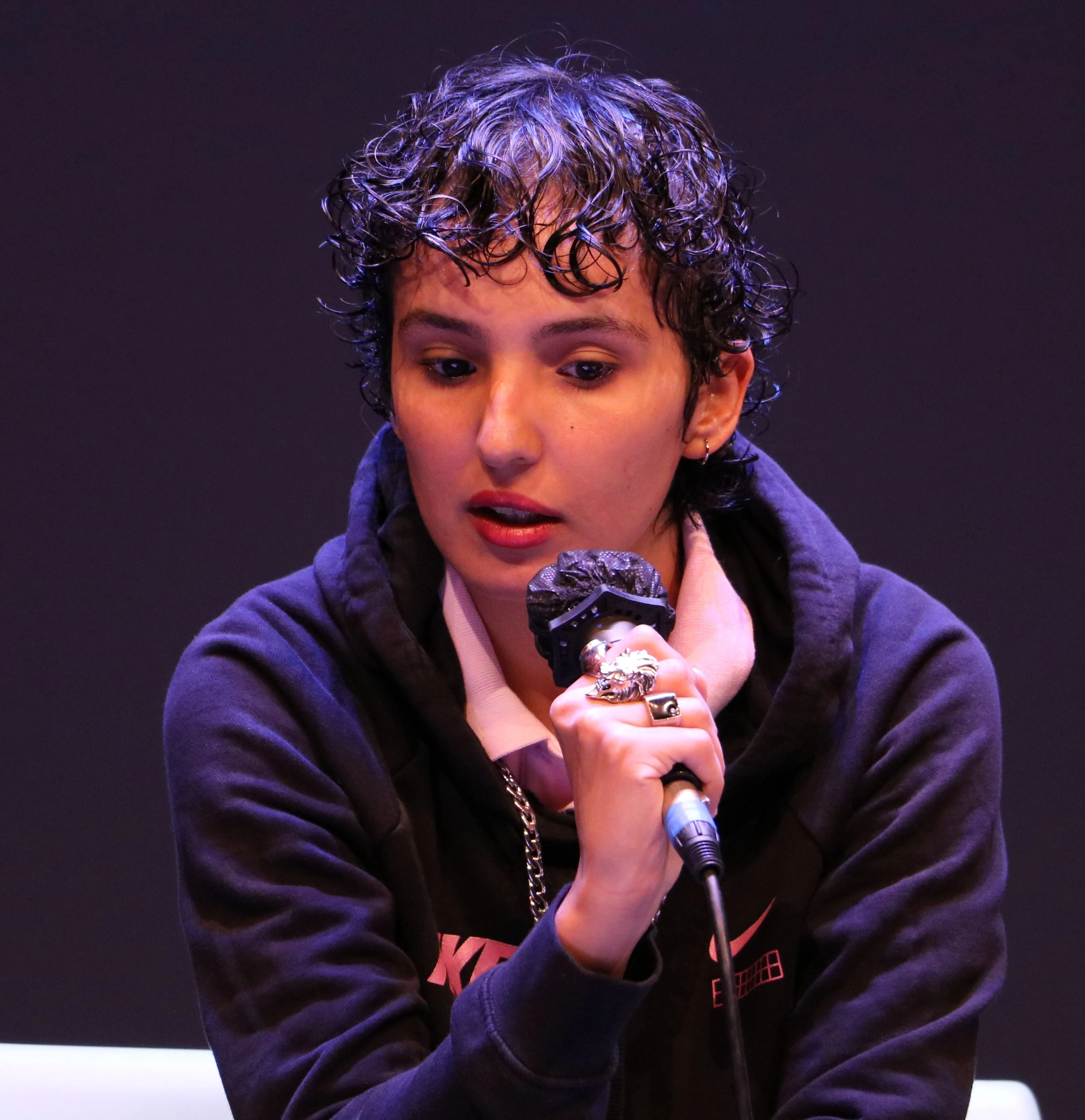
Image from Wikipedia
Image from Wikipedia
Fatima Daas: The Literary Voice Between Identity, Faith, and Queer Self-Assertion
An author who writes with clarity, vulnerability, and poetic power
Fatima Daas is the pseudonym of a French writer, born in 1995 in Saint-Germain-en-Laye as the youngest child of Algerian parents. She gained recognition for her literary voice, which translates personal experience, social tensions, and autobiographical intensity into a precise, compelling form. Her books address origins, religion, sexuality, and social ascent with a directness that transcends the boundaries of a classic debut novel. ([ullstein.de](https://www.ullstein.de/urheberinnen/fatima-daas?utm_source=openai))
Biographical Roots and Literary Framework
Daas comes from a familial and cultural field of tension that significantly shapes her writings: Algerian heritage, French present, Muslim faith, and queer self-identification. From this constellation, she develops her literary energy. Her writing does not rely on distance but rather on closeness, employing a language that makes existential conflicts immediately visible. ([ullstein.de](https://www.ullstein.de/urheberinnen/fatima-daas?utm_source=openai))
The publisher Ullstein describes her as an author whose debut novel stayed on the French bestseller list for weeks, was translated into numerous languages, and has been celebrated by the press. This early resonance shows how strongly Daas struck a chord with her first book. Her work was not perceived as a footnote but as a literary event that initiated debates about identity and representation. ([ullstein.de](https://www.ullstein.de/urheberinnen/fatima-daas?utm_source=openai))
The Breakthrough with "The Youngest Daughter"
With The Youngest Daughter, Fatima Daas presented a debut that draws power from a clear, fragmented, and emotionally dense narrative style. At its center is a young woman grappling with familial expectations, religious upbringing, and the experience of homosexual self-discovery. The novel portrays inner conflict not as a deficit but as the starting point of a self-assured literary form. ([ullstein.de](https://www.ullstein.de/werke/fatima/taschenbuch/9783548066905?utm_source=openai))
Deutschlandfunk called the book an impressive literary debut, and the publisher's voice highlights the linguistic precision. Critical reception particularly emphasizes how Daas does not smooth over the tension between guilt, shame, faith, and desire but makes it productive. This is precisely where the authority of her early work lies: It names the unspeakable without simplifying it. ([ullstein.de](https://www.ullstein.de/werke/fatima/taschenbuch/9783548066905?utm_source=openai))
Style: Concise, Controlled, Uncompromising
Fatima Daas works with concise, rhythmically concentrated prose. Her sentences are often short, direct, and carry a high internal tension. This formal restraint amplifies the impact of the content: The narrative voice remains close to the body, memory, social observations, and the subtle shifts of belonging. ([ullstein.de](https://www.ullstein.de/werke/fatima/taschenbuch/9783548066905?utm_source=openai))
The reviews and publisher quotes consistently underscore the same quality: Daas writes clearly to the point, but never flat; poetically, but never ornamentally; politically, but never didactically. This balance makes her literature accessible yet challenging for readers. Her style embodies the intensity of a generation that refuses to settle for simple identity formulas. ([ullstein.de](https://www.ullstein.de/urheberinnen/fatima-daas?utm_source=openai))
Critical Reception, Award Recognition, and Cultural Impact
The Youngest Daughter was awarded the International Literature Prize in 2021 alongside the German translator Sina de Malafosse. This not only honored a single book but also affirmed the international resonance of a young author who precisely condenses complex contemporary experiences. The award permanently anchored Daas in the canon of widely discussed contemporary literature. ([ullstein.de](https://www.ullstein.de/urheberinnen/fatima-daas?utm_source=openai))
The cultural relevance of her work has not been limited to the book market. In 2025, Hafsia Herzi adapted the novel for the cinema; the international festival landscape embraced the material as a sensitive coming-of-age narrative about religion, desire, and familial expectations. The fact that a literary debut continues to resonate in this way years after its publication showcases the thematic depth and aesthetic durability of Daas’ writing. ([theguardian.com](https://www.theguardian.com/film/2025/may/16/the-little-sister-review-cannes-hafsia-herzi?utm_source=openai))
Current Projects: "Play the Game" and New Literary Presence
With Play the Game, Fatima Daas is once again in literary conversation in 2026. Ullstein announces the book as a novel, directly linking it to themes such as social ascent, power, and familial closeness. The new publication demonstrates that Daas is evolving her perspective and deepening her thematic spectrum without losing her distinct voice. ([ullstein.de](https://www.ullstein.de/veranstaltungen/fatima-daas-buchpremiere-in-berlin?utm_source=openai))
The accompanying event announcements for Berlin, Karlsruhe, and Düsseldorf underscore her current presence in the literary scene. These dates clarify that Daas is perceived not only through her books but also as a public voice, further opening up her texts in dialogue with readers, moderators, and cultural institutions. This strengthens her authority far beyond mere publication. ([ullstein.de](https://www.ullstein.de/veranstaltungen/fatima-daas-buchpremiere-in-berlin?utm_source=openai))
Work Overview Instead of Discography: A Compact but Influential Oeuvre
As a writer, Fatima Daas does not naturally possess a classic discography; her work unfolds through literary publications. Currently, The Youngest Daughter and Play the Game are the focal points, both appearing in German translation from Ullstein. Additionally, there is ongoing media and critical resonance for the debut, which has become a focal point of her career thus far. ([ullstein.de](https://www.ullstein.de/urheberinnen/fatima-daas?utm_source=openai))
This manageable yet clearly defined body of work strengthens her reputation. Daas represents concentrated literary production over quantity, precision over routine. In a culture of oversupply, this consistency serves as an aesthetic stance. ([ullstein.de](https://www.ullstein.de/urheberinnen/fatima-daas?utm_source=openai))
Cultural Influence and Contextualization
Fatima Daas belongs to that generation of female authors who narrate questions of origin, religion, sexuality, and social mobility not abstractly but from the heart of biographical experience. Her work is thus not only literarily significant but also culturally historical. It opens a view into French contemporary literature, where minority perspectives appear not as an addition but as the center. ([ullstein.de](https://www.ullstein.de/urheberinnen/fatima-daas?utm_source=openai))
The impact of her texts is also evident in international translations, award ceremonies, and film adaptations. Daas writes not only about private identity but about the social grammar of belonging. This is where her authority lies: She makes visible how literature can condense and transform social reality. ([ullstein.de](https://www.ullstein.de/werke/fatima/taschenbuch/9783548066905?utm_source=openai))
Conclusion: Why Fatima Daas Remains So Fascinating
Fatima Daas fascinates because she generates maximum emotional and societal tension with minimal means. Her literary voice is clear, bold, and unmistakable; her themes are highly relevant and yet timeless. For those who appreciate contemporary literature with attitude, precision, and depth, she is an author of exceptional caliber. A look at her readings and new releases is certainly worthwhile, as literature is being created here that endures. ([ullstein.de](https://www.ullstein.de/urheberinnen/fatima-daas?utm_source=openai))
Official Channels of Fatima Daas:
- Instagram: No official profile found
- Facebook: No official profile found
- YouTube: No official profile found
- Spotify: No official profile found
- TikTok: No official profile found