
Florian Illies
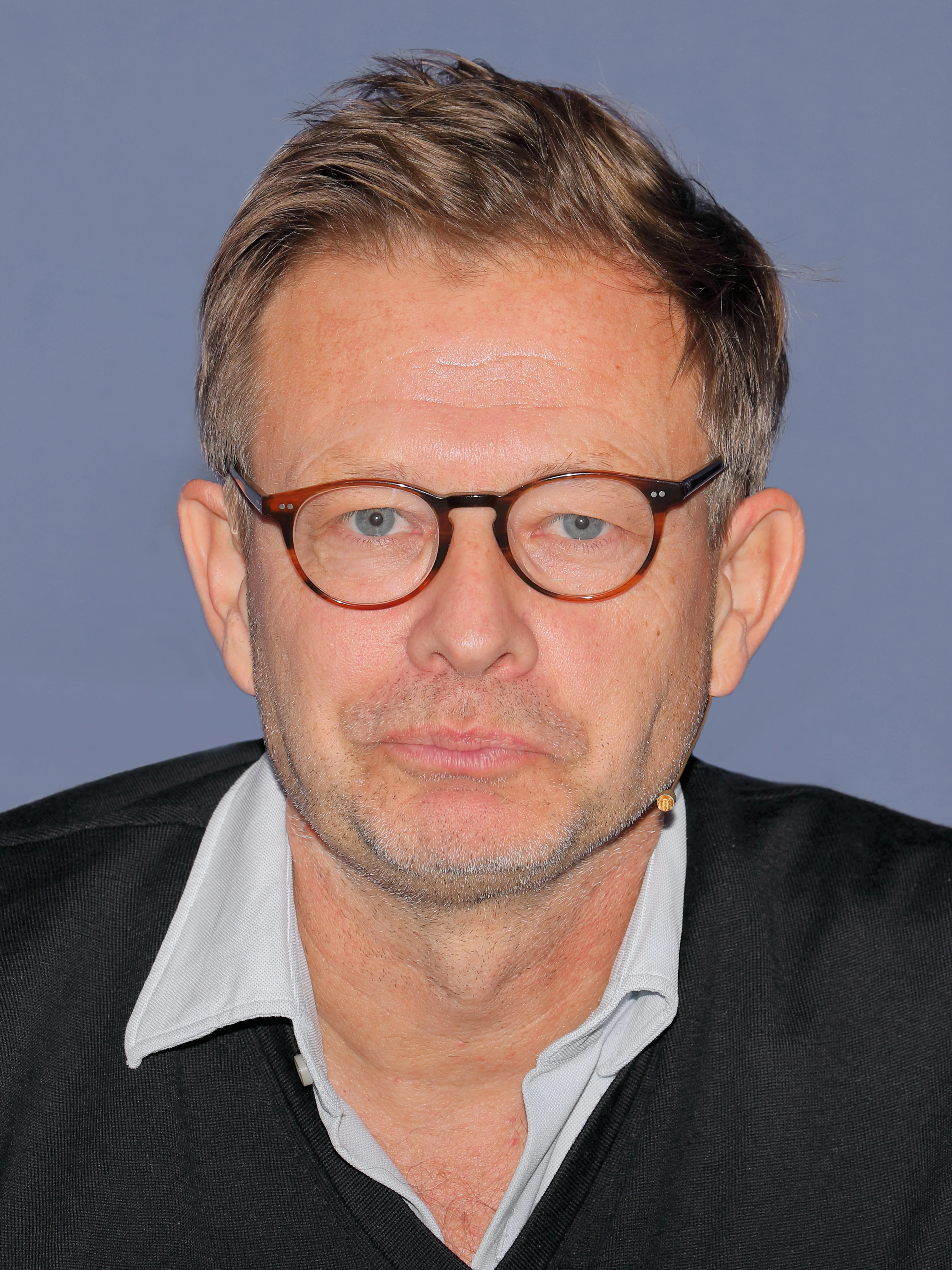
Image from Wikipedia
Image from Wikipedia
Florian Illies – Author, Art Historian, and Esteemed Curator
A Narrator of Eras: How Florian Illies Shapes the Zeitgeist with His Books and Curatorial Work
Florian Illies, born on May 4, 1971, in Schlitz (Hesse), has significantly influenced the German-speaking literary and cultural landscape with pointed bestsellers, insightful essays, and highly regarded exhibitions. His musical career is not the focus; rather, it is his journey as a writer, journalist, art historian, and curator – with a stage presence that comes to life in readings, discussions, and a successful art podcast. Illies’ artistic development ranges from early feuilleton contributions to the founding of an art magazine, leading to major narrative non-fiction works in which he arranges art and cultural history into vibrant contemporary relevance.
Biography: From Provincial Reporter to Influential Cultural Chronicler
Illies grew up as the youngest of four children of a biologist and gained journalistic experience as a local reporter during his school years. After completing an internship, he studied art history and modern history in Bonn and Oxford (Magister Artium 1998). Early on, he was encouraged by influential feuilletonists; from 1997 he worked as an editor for the Frankfurter Allgemeine Zeitung, overseeing the innovative "Berliner Seiten" starting in 1999 and later moving to the editorial board of the Frankfurter Allgemeine Sonntagszeitung. In 2004, he founded the art magazine Monopol, which quickly became a significant voice in contemporary art discourse. In 2008, he joined the weekly newspaper Die Zeit, where he co-directed the feuilleton and has been part of the publisher's board since 2017. Concurrently, he has shaped the art market as a partner at Villa Grisebach (since 2011) and as managing director of Rowohlt Verlag (2019/2020). Today (as of 2025), Illies primarily works as a freelance writer, curator, and moderator.
Artistic Development: From "Generation Golf" to Narrative Cultural History
Illies achieved breakthrough success with “Generation Golf” (2000): a socio-cultural panorama of those born around 1970 that condensed generational sentiment through a precise lens on consumption, brand awareness, and lifestyle. This early work already showcased his talent for composition and arrangement – not of sounds, but of temporal markers. The international bestseller "1913: The Summer of the Century" (2012) perfected this method: a montage of vignettes that weave art, literature, music, and politics into a dense epoch portrait. The dramaturgical production of this book – twelve monthly chapters as a movement score – demonstrates how Illies transforms factual research into narrative flow.
The Books After 2012: Love, Silence, Exile
"Love in Times of Hate" (2021) expands Illies’s narrative technique to the years 1929–1939: famous couples, fractured biographies, emotional and political tensions, composed as cultural-historical dramaturgy. "The Magic of Silence" (2023) focuses on Caspar David Friedrich and the reception history of his images – an epoch portrait of Romanticism in the mirror of modern sensibility. In 2024, the illustrated book "Evening Light" featuring Friedrich's atmospheric sky representations was also released. In October 2025, "When the Sun Sets: The Mann Family in Sanary" followed – a concentrated exile portrait of the summer of 1933, using unpublished material to depict Thomas Mann’s familial cosmos in upheaval. These books mark a clear artistic development: from the chronicling of the zeitgeist to art and literary historical storytelling that combines source work, montage, and scenographic presence.
Curatorial Signature: Oil Studies, Northern Lights, and Clarity
As a curator, Illies has emerged since 2022 with a clear focus on 19th-century art. In Düsseldorf (Kunstpalast), he set new accents in 2023 with "More Light – The Liberation of Nature": oil studies as an independent medium that directly documents the perception of nature. In 2024, "Moments of Clarity – Janus la Cour" opened on Föhr; the curatorial arrangement placed atmospheric transitions, horizons, and light dramaturgy at the center. Curatorially, Illies works as he does literarily: he composes contexts, places works in an aesthetic dialogue, and uncovers temporal layers through precise, sensually perceptible sequences of images. His involvement in an exhibition at the New National Gallery in Berlin is announced for 2026 – once again with a focus on aesthetics from the 1930s and 1940s.
Career Highlights at a Glance: Editing – Publishing – Market – Stage
The musical career is absent, but Illies’ stage presence manifests in other formats: readings, workshop discussions, festival appearances, and moderation. In the editorial teams of FAZ, FAS, and DIE ZEIT, he honed his sensitivity to the tonalities of public discourse. At Villa Grisebach, he developed the "19th Century Art" department – a bridge between the market, history, and contemporary issues. As a publisher at Rowohlt, he initiated publishing impulses before returning to writing and curating. This career demonstrates experience across the entire production cycle of culture: research, editing, production, and mediation.
Works (Selection) – Bibliography Instead of Discography
- Generation Golf (2000) and Generation Golf Two (2003): pointed assessments of a cohort between brand aesthetics and habits of prosperity.
- Locals (2006): memory-saturated provincial panorama, precise in milieu timbre.
- 1913: The Summer of the Century (2012) and 1913. What I Absolutely Wanted to Tell (2018): collage and chronicle – a school for the condensation of contemporary history.
- Just Now the Sky Was Still Blue (2017): essays on artists from Caspar David Friedrich to Andy Warhol – reading works as reading the world.
- Love in Times of Hate (2021): emotional topography of the interwar period, where intimacy and ideology intersect.
- The Magic of Silence (2023) and Evening Light (2024): Romanticism as a resonance space, Friedrich as the tempo-setter of modern sensibilities.
- When the Sun Sets: The Mann Family in Sanary (2025): exile narrative in close-up; summer, heat, danger – and the composition of a family under pressure.
Style and Technique: Narrative Pace, Montage, Presence
Illies prefers documentary storytelling in the present tense. His composition relies on montage, rhythm, and contrast: short scenes, dialogical inserts, an orchestrated exchange of anecdote and analysis. This production technique imbues his work with an acoustic quality – one "hears" the pulse of an era. Professionally precise yet never dry, he uses art historical terminology without excluding readers. The artistic development is also reflected in the sound of the prose: from the ironic understatement of "Generation Golf" to the serious, tension-filled tone of the exile and Romanticism books.
Critical Reception and Cultural Influence
"1913" became an international bestseller, widely translated and featured on German bestseller lists for over 70 weeks. "Love in Times of Hate" received acclaim in the Anglophone press for its clever montages and fresh perspectives. Critics celebrated "The Magic of Silence" as "delightful" and a "wonder book," a success that corresponded with the 250th anniversary of Friedrich in 2024 and re-emphasized themes of landscape, silence, and vision. "When the Sun Sets" (October 2025) drew significant interest from literary houses, book fairs, and feuilletons: the focus on Sanary in 1933 unfolds a precise resonance space of warmth, fear, and political gloom – a family positioning in historical backlight.
Awards and Committee Work
Illies’ work has been widely awarded, including the Hessian Culture Prize and the Ludwig Börne Prize. Jury memberships (e.g., German Reporter Prize; Art Prize NRW) and board work (Cultural Foundation of the Federal States) attest to his authority in the cultural sector. These roles enhance the credibility of his work: he acts not only as an author but also as a mediator between research, the public, and institutions.
Current Projects (2024–2026): Books, Podcasts, Exhibitions
Since 2021, Illies has co-hosted the ZEIT art podcast "Augen zu" with Giovanni di Lorenzo, which highlights outstanding artist biographies monthly. In 2024, he curated "Moments of Clarity – Janus la Cour" on Föhr; that same year, the illustrated book "Evening Light" was published. On October 22, 2025, S. Fischer will publish "When the Sun Sets: The Mann Family in Sanary," accompanied by reading tours, fair appearances, and press discussions. An exhibition project at the New National Gallery in Berlin is announced for 2026. This rhythm indicates continuous artistic production with a clear thematic line: Romanticism, interwar period, exile.
Why Illies Remains Important
Illies’ books function as semantic scores of modernity: they condense heterogeneous voices into a present narrative form. He possesses expertise in art history, has journalistic experience, and grounds his works in solid sources. Thus, he connects knowledge transmission, aesthetic experience, and societal reflection – a rare combination that appeals to both readers and experts. The cultural impact extends to feuilletons, museums, book fairs, and reading rooms: Illies arranges the past so that it resonates in the present.
Conclusion: An Author to Experience
Anyone wanting to understand what eras sound like – from Romanticism to the exile of the 1930s – will find in Florian Illies a knowledgeable, elegant, and inspiring narrator. His books combine research, narrative art, and art historical expertise for compelling readings. Live readings and discussion formats bring this presence to the stage: concentrated, approachable, and knowledgeable. Take the opportunity to experience Illies live – his texts unfold additional resonances in direct encounters.
Official Channels of Florian Illies:
- Instagram: No official profile found
- Facebook: No official profile found
- YouTube: No official profile found
- Spotify: No official profile found
- TikTok: No official profile found
Sources:
- Wikipedia – Florian Illies
- S. Fischer Verlage – Florian Illies: "When the Sun Sets" (Release date 22.10.2025)
- DIE ZEIT – Art podcast "Augen zu"
- Frankfurter Allgemeine Zeitung – Review of "When the Sun Sets" (06.11.2025)
- Wikipedia (EN) – "The Magic of Silence" / S. Fischer: "The Magic of Silence"
- Foundation for Prussian Cultural Heritage – New National Gallery Program 2026 (Exhibition Participation)
- Esslinger Zeitung – Reading Report on "When the Sun Sets" (2025)
- Wikipedia: Image and text source
Upcoming Events
Lecture: Gifts of the Sky – Florian Illies on Clouds in Art
Reading with Florian Illies on the Peacock Island
Florian Illies reads in Potsdam: The Alchemist on Peacock Island