
Jean-Luc Lagarce
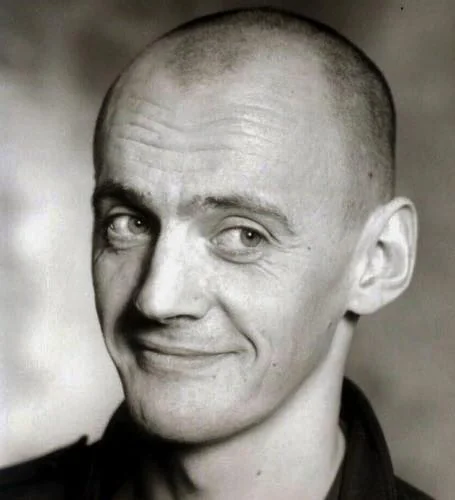
Image from Wikipedia
Image from Wikipedia
Jean-Luc Lagarce: The Playwright Who Permanently Changed the French Theater Landscape
A Precise Chronicler of Language, Conflicts, and Final Truths
Jean-Luc Lagarce is regarded as one of the most significant French playwrights of the late 20th century. Born on February 14, 1957, in Héricourt and died on September 30, 1995, he created a body of work of extraordinary density within just a few decades, which is now considered canonical. His texts combine formal clarity with existential tension and have gained recognition far beyond France. ([fr.wikipedia.org](https://fr.wikipedia.org/wiki/Jean-Luc_Lagarce?utm_source=openai))
Biography: From Provincial Theater to a Defining Voice of the Present
Lagarce grew up in Eastern France and developed an early close bond with theater as a vibrant, political, and linguistic art form. In 1978, he co-founded the amateur theater group Théâtre de la Roulotte with colleagues from the conservatory, a crucial step that shaped his artistic identity. Even before he brought his own plays to the forefront, he directed works by authors such as Marivaux, Labiche, and Ionesco, sharpening his sense of rhythm, sentence structure, and dialogue for the stage. ([fr.wikipedia.org](https://fr.wikipedia.org/wiki/Jean-Luc_Lagarce?utm_source=openai))
This early practice as an actor, director, and troupe leader shaped his entire musical theater career in a metaphorical sense: precise entries, controlled narrative arcs, and a sensitive understanding of ensemble work. His biography illustrates the journey of an artist who did not write from an ivory tower but rather emerged from daily work onstage, rehearsing, and performing. For him, theater work became a form of research in which language, body, and social order were inextricably linked. ([bloomsbury.com](https://www.bloomsbury.com/US/author/jeanluc-lagarce/?utm_source=openai))
The Breakthrough: Late Recognition and International Resonance
The actual breakthrough did not come with loud media hype, but rather through a gradual canonization of his works. Lagarce experienced only limited widespread recognition of his oeuvre during his lifetime; however, following his death, his reputation grew at an impressive pace. Wikipedia raw data notes that in France, he was among the most performed authors in 2001/2002, ahead of Racine and Chekhov, and right behind Shakespeare and Molière; this highlights the extraordinary relevance of his posthumous fame. ([fr.wikipedia.org](https://fr.wikipedia.org/wiki/Jean-Luc_Lagarce?utm_source=openai))
International publishers and theaters also brought his work to light: Bloomsbury describes him as a French actor, theater director, and playwright whose plays have been published and disseminated as audio dramas. This multifaceted utilization is typical of authors whose texts function powerfully both literarily and performatively. Particularly with Lagarce, the effect unfolds in the interplay of language, pauses, repetition, and scenic condensation. ([bloomsbury.com](https://www.bloomsbury.com/US/author/jeanluc-lagarce/?utm_source=openai))
Literary Style: Simplicity, Depth, and Distinct Syntax
What is special about Lagarce is his seemingly simple, yet highly complex language. His texts thrive on repetitions, corrections, displacements, and a syntax that observes thoughts as they are spoken. The French description of his work emphasizes the tension between everyday, sometimes trivial speech and a deliberately placed lyricism. This is precisely what gives his plays their emotional weight. ([fr.wikipedia.org](https://fr.wikipedia.org/wiki/Jean-Luc_Lagarce?utm_source=openai))
His drama does not rely on spectacular plots but rather on condensation: family conversations, returns, farewells, silences, the unspoken. Especially in his later works, language becomes the site of failure, memory, and self-interrogation. This literary rigor explains why Lagarce is today read not only as a playwright but also as a stylistically influential author of contemporary literature. ([books.apple.com](https://books.apple.com/us/book/jean-luc-lagarce-et-le-savoir-vivre/id6502589125?utm_source=openai))
Important Works and Theater Discography: A Body of Work Bridging Stage, Prose, and Libretto
The preserved works of Jean-Luc Lagarce include 25 plays, three stories, and one opera libretto. Key titles include Juste la fin du monde, Les Règles du savoir-vivre dans la société moderne, J’étais dans ma maison et j’attendais que la pluie vienne, and Le Pays lointain. These plays are considered key texts of his later body of work and continue to shape the perception of his oeuvre today. ([fr.wikipedia.org](https://fr.wikipedia.org/wiki/Jean-Luc_Lagarce?utm_source=openai))
His diary is also a central component of the artistic architecture. The two volumes Journal (1977-1990) and Journal (1990-1995) document not only a biography but also a poetics of writing, thinking, and observing. The second volume begins during his stay in Berlin in 1990 and explores the final notebooks of his life; thus, the journal itself becomes a literary laboratory of his work. ([theatre.info](https://theatre.info/en/texts/journal-1990-1995?utm_source=openai))
Career and Institutions: Theater Group, Publishing House, and Artistic Network
A significant step in Lagarce's career was the founding of the publishing house Les Solitaires intempestifs in 1992 together with François Berreur. The establishment of the publishing house illustrates how closely his artistic production and institutional development were intertwined. Thus, he created not only texts but also structures where contemporary drama could be secured and disseminated long term. ([fr.wikipedia.org](https://fr.wikipedia.org/wiki/Les_Solitaires_intempestifs?utm_source=openai))
The international performance history of his plays attests to the reach of this approach. Theater archives document numerous productions in France and beyond, and cultural institutions continue to dedicate performances, discussions, and research formats to him. The Festival d’Avignon and other stages regularly mark Lagarce as a reference point for contemporary theater with classical strength. ([festival-avignon.com](https://festival-avignon.com/index.php/en/edition-2007/programme/jean-luc-lagarce-would-have-been-50-years-old-25348?utm_source=openai))
Cultural Influence: An Author Who Shaped Generations of Theater Makers
Jean-Luc Lagarce became an author whose significance only became fully visible in retrospect. His plays are translated into numerous languages and staged in many countries, highlighting his universal resonance. It is precisely the blend of emotional intimacy and formal rigor that makes him equally interesting to directors, actors, and literary scholars. ([fr.wikipedia.org](https://fr.wikipedia.org/wiki/Jean-Luc_Lagarce?utm_source=openai))
Academic and critical reception consistently highlights his unique language. Recent studies read his later works as a testament, reflecting upon rules, rituals, and the relationship between life and death. The fact that current publications in 2024 and 2025 still connect to Lagarce demonstrates the ongoing relevance of his thinking and writing. ([books.apple.com](https://books.apple.com/us/book/jean-luc-lagarce-et-le-savoir-vivre/id6502589125?utm_source=openai))
Current Relevance: A Living Classic in Contemporary Theater
Even decades after his death, Lagarce remains present on playbills and in academic debates. Festivals, readings, and new publications in 2025 and 2026 indicate that his work continues to generate creative presence. His theater does not function as a museum heritage but serves as an open score for new interpretations and scenic contexts. ([festival-avignon.com](https://festival-avignon.com/index.php/en/edition-2007/programme/jean-luc-lagarce-would-have-been-50-years-old-25348?utm_source=openai))
The modern reception also shows that his texts exist in various aesthetic formats: as staged readings, productions, academic analyses, and published editions. This versatility explains the enduring significance of the author. Lagarce remains a reference point for all those who understand theater as an art of language and existential precision. ([theatre.info](https://theatre.info/en/texts/journal-1990-1995?utm_source=openai))
Conclusion: Why Jean-Luc Lagarce Continues to Fascinate
Jean-Luc Lagarce fascinates because he distills the art of theater to its finest tools: language, pause, repetition, gaze, and memory. His career connects the experience of the stageworker with the authority of a classic contemporary playwright, whose work remains distinctive in structure and expression. Those who read or see Lagarce encounter not a loud effect but rather a precise, emotionally charged theatrical art. ([fr.wikipedia.org](https://fr.wikipedia.org/wiki/Jean-Luc_Lagarce?utm_source=openai))
In this lies his timeless strength: Lagarce writes about closeness and distance, about family, farewells, and the silence between sentences. His texts belong to the works that are not only read but experienced on stage. Anyone with the opportunity to see a production of Jean-Luc Lagarce should definitely experience it live. ([theatre-odeon.eu](https://www.theatre-odeon.eu/en/un-portrait-jean-luc-lagarce?utm_source=openai))
Official Channels of Jean-Luc Lagarce:
- Instagram: No official profile found
- Facebook: No official profile found
- YouTube: No official profile found
- Spotify: No official profile found
- TikTok: No official profile found
Sources:
- Wikipedia - Jean-Luc Lagarce
- Bloomsbury Publishing - Jean-Luc Lagarce
- theatre.info - Journal (1990-1995) ok - Jean-Luc Lagarce
- theatre.info - Music-hall - Jean-Luc Lagarce
- Felix Bloch Erben - Jean-Luc Lagarce
- Odéon Théâtre de l'Europe - A Portrait: Jean-Luc Lagarce
- IMEC - Writing with Lagarce
- Festival d’Avignon - Jean-Luc Lagarce would have been 50 years old
- Wikipedia (FR) - Jean-Luc Lagarce
Upcoming Events
Simply the End of the World - Premiere
Just the End of the World