
Otto Nicolai
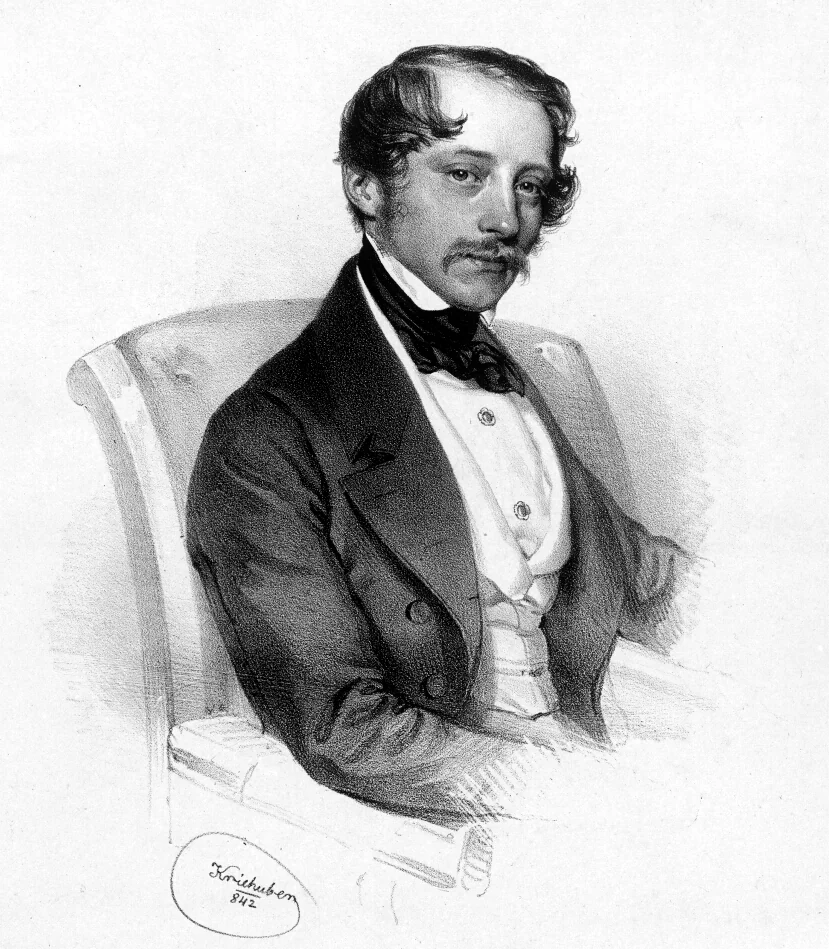
Image from Wikipedia
Image from Wikipedia
Otto Nicolai – Founder Spirit, Opera Poet, and Sound Architect of the 19th Century
A Composer between German Romanticism and Italian Opera Refinement
Otto Nicolai shaped European music culture as a brilliant composer, visionary conductor, and co-founder of an institution that continues to set standards today: the Vienna Philharmonic. Born on June 9, 1810, in Königsberg and died on May 11, 1849, in Berlin, his musical career embodies the dynamic artistic development of an era between Biedermeier, Vormärz, and revolutionary upheavals. His name is inseparably linked to the comic-fantastic opera "Die lustigen Weiber von Windsor" and the idea of a self-determined top orchestra in Vienna. This dual role – as the creator of a repertoire classic and as an organizer of visionary concert practice – makes Nicolai a key figure of the 19th century. ([de.wikipedia.org](https://de.wikipedia.org/wiki/Otto_Nicolai?utm_source=openai))
Early Years and Education: From Königsberg Talent to Berlin Musician
The artistic development of Otto Nicolai was early and rapid. After initial successes in Berlin – including a symphony in 1831 and public concerts – he was drawn to the European music metropolis of Rome, where he served as an organist at the chapel of the Prussian embassy. There, he solidified his profile as a composer of sacred music and a sovereign arranger, whose compositions oscillate between liturgical sound language and concert drama. These years sharpened his stylistic versatility and established an international perspective that significantly influenced his later stage works in Germany and Italy. ([repertoire-explorer.musikmph.de](https://repertoire-explorer.musikmph.de/wp-content/uploads/vorworte_prefaces/1351.pdf?utm_source=openai))
Nicolai's artistic development coincided with an intensive engagement with choral and church music. Works such as Psalm 97 "Der Herr ist König" (1832) and the "Te Deum" demonstrate his command of vocal lines, dense choral writing, and a fine sense of text interpretation. His cycles of psalms illustrate how carefully he thought out composition, vocal balance, and sound architecture; they also anticipate the sovereignty in handling dramatic intensity that characterizes his operas. This connection of spiritual depth and dramatic presence remains a common thread in his discography. ([en.wikipedia.org](https://en.wikipedia.org/wiki/Psalm_97?utm_source=openai))
Italian Years and Opera Successes: "Il templario" – Triumph on the Peninsula
As an opera composer, Nicolai initially found significant resonance in Italy. With "Il templario," based on Walter Scott's "Ivanhoe," he achieved a tremendous success in 1840 at the Teatro Regio in Turin: the work became one of the major crowd-pullers in the 1840 opera season, driven by singable melodies, pointed ensembles, and a clear dramatic arc. In composition and orchestration, Italian vocal culture, nuanced harmonies, and coloristic transparency combine – a signature that would later influence his German comic opera. ([de.wikipedia.org](https://de.wikipedia.org/wiki/Il_templario?utm_source=openai))
Nicolai's Italian operatic aesthetics proved that he not only imitated bel canto ideals such as line shaping and declamation but also transformed them into his own dramatic narrative. "Il templario" established him across Europe as a serious stage composer – a career milestone that facilitated his subsequent engagements in Vienna and opened up new artistic scopes for him both as a conductor and as a composer. Thus, Nicolai set standards in dealing with literary sources and in reconciling vocal brilliance with orchestral precision. ([de.wikipedia.org](https://de.wikipedia.org/wiki/Il_templario?utm_source=openai))
Vienna Years: The Visionary Orchestra Founder
In 1841, Nicolai took the position of chief conductor at the theater next to the Kärntnertor in Vienna – the breeding ground for one of the most significant orchestral ideas of the 19th century. On March 28, 1842, he conducted the first Philharmonic Concert in Vienna, thereby establishing a professional concert orchestra that embraced artistic, organizational, and financial independence as its fundamental principle. This "philharmonic idea" – self-management, democratic decision-making processes, and a claim to excellence – became the core identity of the institution that would later be known as the "Wiener Philharmoniker." ([wienerphilharmoniker.at](https://www.wienerphilharmoniker.at/en/orchestra/history/early-history?utm_source=openai))
Nicolai's stage presence as a conductor combined authority with a communicative joy in music-making. He shaped sound balance, phrasing culture, and stylistic contour into an orchestral overall picture that set standards in Vienna and had a lasting impact well beyond his tenure. The fact that the young project nearly collapsed after his departure in 1847 shows how heavily the artistic and organizational burden initially rested on his shoulders – a hint at Nicolai's leadership style and his extraordinary competence in building orchestras. ([wienerphilharmoniker.at](https://www.wienerphilharmoniker.at/en/orchestra/history/early-history?utm_source=openai))
Berlin and the Masterpiece: "Die lustigen Weiber von Windsor"
Back in Berlin, Nicolai's operatic creation reached its zenith in 1849: on March 9, 1849, "Die lustigen Weiber von Windsor" premiered at the Royal Opera House Unter den Linden under his own musical direction. This "Singspiel" with spoken dialogues and richly orchestrated numbers encapsulates humorous character portrayal, lyrical intimacy, and romantic colors – an elegant synthesis of German comic opera with Shakespearean comedic logic. The work quickly became a favorite in the repertoire and remains Nicolai's most famous stage work to this day. ([de.wikipedia.org](https://de.wikipedia.org/wiki/Die_lustigen_Weiber_von_Windsor_%28Oper%29?utm_source=openai))
The score stylistically moves between Carl Maria von Weber's romantic sound world and the popular comedic tradition of Albert Lortzing. Characters such as Falstaff receive musical profiles that shift between buffoonish wit, satirical tension, and lyrical charm. At the same time, the love scenes unfold a finely crafted cantilena, while choral and ensemble numbers mark dramatic key points – exemplary patterns of Nicolai's sensitivity for composition, arrangement, and theatrical economy. ([de.wikipedia.org](https://de.wikipedia.org/wiki/Die_lustigen_Weiber_von_Windsor_%28Oper%29?utm_source=openai))
Sacred Works, Symphony, and Vocal Art: The Second Pillar of the Discography
In addition to opera, Nicolai's choral music was a central field of his discography: settings of psalms, motets, and liturgical pieces showcase his ability to create architectures from voices – with tight counterpoint, expressive harmonies, and subtle text treatment. Psalm 97 and "Ehre sei Gott in der Höhe" document a sound language that combines sacred gravity with melodic brilliance. In new editorial editions and performances, this aspect of his art continues to live on. ([carus-verlag.com](https://www.carus-verlag.com/en/music-scores-and-recordings/otto-nicolai-psalm-97-2332900.html?utm_source=openai))
His symphonic works – such as in C major (1831) or in D major – also demonstrate a composer who rigorously consolidates orchestral energy and thematic work. Such works illustrate how Nicolai confronts sound groups, weighs brass and woodwinds differentiatively, and layers string registers dynamically. Historical reports and modern prefaces to scores paint the picture of an artist who merges formal consciousness with dramatic impulsivity into a convincing unity. ([repertoire-explorer.musikmph.de](https://repertoire-explorer.musikmph.de/prefaces/4776.html?utm_source=openai))
Reception, Critique, and Cultural Influence
Nicolai's authority in music history is grounded in a dual radiance: as the inventor of an institutional DNA for symphonic music in Vienna and as the creator of one of the most enduringly successful German comic operas. The Vienna Philharmonic considers the concert of March 28, 1842, as the birth of their tradition – a cultural anchor point that continues to shape performance practice to this day. In Berlin, on the other hand, "Die lustigen Weiber von Windsor" serves as a repertoire piece and returns in modern productions to the site of its premiere. ([deutschegrammophon.com](https://www.deutschegrammophon.com/de/kuenstler-innen/wiener-philharmoniker/biografie?utm_source=openai))
Music critics highlight the psychological portrayal, the balance between romantic setting and comedic intensity, and the elegant orchestration in "Windsor." In the European context, Nicolai marks the bridge between German Romanticism and Italian theatricality – a synthesis that makes his work particularly accessible for international opera houses. His church music continues to be nurtured by choirs; editions keep the repertoire present and facilitate a source-close performance practice. ([de.wikipedia.org](https://de.wikipedia.org/wiki/Die_lustigen_Weiber_von_Windsor_%28Oper%29?utm_source=openai))
Conducting Aesthetics and Artistic Development: Sound as Lived Practice
As a conductor, Nicolai combined precise rehearsal work with a clear sound concept: articulatory rigor, bowing in the strings, bright woodwind colors, and structural transparency. This stage presence not only sharpened his orchestra – it also fueled his compositional thinking, which always seems to be conceptualized from the perspective of the performance event. Stylistically, his scores reflect a secure sense of formal dramaturgy, instrumental register dramaturgy, and colorfully nuanced production. ([wienerphilharmoniker.at](https://www.wienerphilharmoniker.at/en/orchestra/history/early-history?utm_source=openai))
His artistic development culminated tragically early: just two months after the Berlin premiere of "Windsor," Nicolai died on May 11, 1849, from a brain hemorrhage. Nevertheless, he left behind a body of work that extends beyond opera and has made lasting marks in choral aesthetics, orchestral culture, and concert life. It is precisely this connection of work, impact, and institutional building that explains his lasting presence in performance schedules, editions, and sound archives. ([de.wikipedia.org](https://de.wikipedia.org/wiki/Otto_Nicolai?utm_source=openai))
Work Profile and Discography – An Overview
Opera: "Die lustigen Weiber von Windsor" (1849, Berlin) as the main work of German comic opera; Italian stage works such as "Il templario" (1840, Turin) demonstrate his competence in bel canto-influenced drama. Choral/Sacred: Psalm cycles, motets, and liturgical pieces (including Psalm 97; "Ehre sei Gott in der Höhe") as core components of choral practice. Orchestra: Symphonies and overtures that attest to his mastery of form, motifs, and sound balance. Critical reception regularly appreciates the connection of melodic invention, instrumental elegance, and dramatic rigor. ([de.wikipedia.org](https://de.wikipedia.org/wiki/Die_lustigen_Weiber_von_Windsor_%28Oper%29?utm_source=openai))
Recordings and Editions: Numerous label and edition entries document the performance practice of his operatic and choral works, including publishers and orchestral archives. Digital concert archives and catalogs also refer to the role of the Vienna Philharmonic and Berlin institutions in nurturing his repertoire – an indication of the sustainable embedding of his music in the canon. ([wph-live.s3.amazonaws.com](https://wph-live.s3.amazonaws.com/media/filer_public/96/70/96709c32-e2a1-46eb-af05-7c1abcca9409/karg_ha_de_v01.pdf?utm_source=openai))
Conclusion: Why Otto Nicolai Captivates Today
Nicolai remains fascinating because he sovereignly combines aesthetic worlds: German romanticism, Italian vocal art, sacred sound poetry, and orchestral modernization. His "artistic development" led from early Berlin beginnings through Italian highlights to the founding of a new concert culture in Vienna. This experience as a conductor and organizer granted him a distinctive "stage presence," which artistically culminates in "Die lustigen Weiber von Windsor." Those who listen to his works experience a music that succinctly conveys emotion, form, and color – it unfolds its full magic when performed live.
Call to Action: Discover Nicolai's opera and psalms in the concert hall – and experience how his music ignites sparks between humor, heart, and craftsmanship. His scores open windows into an era of upheaval while sounding remarkably fresh.
Official Channels of Otto Nicolai:
- Instagram: No official profile found
- Facebook: No official profile found
- YouTube: No official profile found
- Spotify: No official profile found
- TikTok: No official profile found
Sources:
- Wikipedia – Otto Nicolai
- Wiener Philharmoniker – Early History (Official Website)
- Wiener Philharmoniker – Der Beginn (Official Website, German)
- Staatsoper Unter den Linden – Die lustigen Weiber von Windsor (Schedule/Portal)
- Wikipedia – Die lustigen Weiber von Windsor (Opera)
- Wikipedia – Il templario
- Repertoire Explorer – Preface to Nicolai, Symphony in D Major
- Carus Verlag – Otto Nicolai, Psalm 97
- IMSLP – Ehre sei Gott in der Höhe
- Deutsche Biographie – Nicolai, Otto
- Wikipedia: Image and text source