
Peter August Böckstiegel
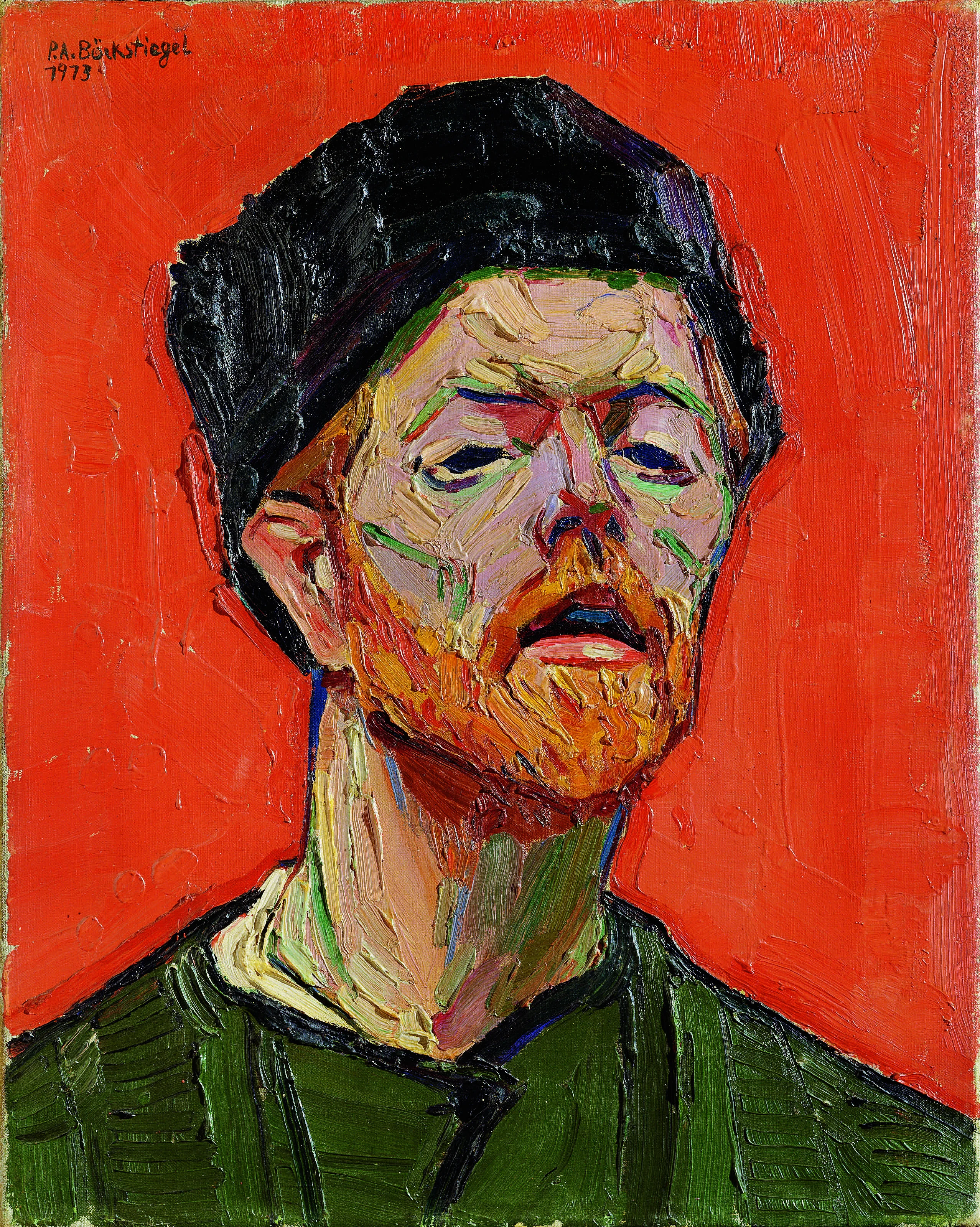
Image from Wikipedia
Image from Wikipedia
Peter August Böckstiegel – Westphalian Expressionist Between Home and Modernity
A Life of Color, Form Power, and Down-to-Earth Quality
Peter August Böckstiegel (April 7, 1889 – March 22, 1951) shaped the visual language of Westphalian Expressionism as a painter, graphic artist, and sculptor. There is no musical career to speak of, but his artistic development tells of a consistent commitment to a unique, root-infused visual world. Emerging from the rural realities of his childhood, he developed an unmistakable style: dense compositions, bold color chords, an energetic brushstroke, and an emphatic yet respectful portrayal of people, landscapes, and labor. His stage presence lay in the studio, in the material, in the light of the fields around Werther, and in the studios of Dresden – where modernity met tradition.
Background and Early Years: Arrode as the Starting Point of an Artistic Identity
Böckstiegel grew up in Arrode, now a district of Werther (Westphalia), in a small farming and linen-weaving family as the fifth of six children. This background profoundly influenced his artistic development: he knew the rhythm and harshness of rural life, understood gestures, body postures, and tools of labor – observations that would later flow into his painting and sculpture. In 1909, he was deeply impressed by encounters with the works of French Impressionists and Vincent van Gogh at the Folkwang Museum; in 1912, he intensely studied Cézanne, Gauguin, van Gogh, Munch, and the Bridge artists at the Sonderbund exhibition in Cologne. These experiences sharpened his sense for vibrant color fields, expressive simplification, and an emotionally charged yet always concretely anchored visual language. ([museumpab.de](https://www.museumpab.de/boeckstiegel-erleben/biografie/))
Study Years in Dresden: Academic Influence, Friendships, Early Successes
In the winter semester of 1913, Böckstiegel transferred to the Royal Saxon Academy of Fine Arts in Dresden. He studied under Oskar Zwintscher and later became a master student of Otto Gussmann. In Dresden, he encountered a lively avant-garde scene, formed lifelong friendships – especially with Conrad Felixmüller – and deepened his understanding of composition, arrangement, and color dramaturgy. His connection to the Felixmüller family led to his marriage to Hanna Müller in 1919; witnesses at the wedding were Conrad Felixmüller and his wife Londa. This merged artistic networks and personal happiness – a constellation that gave an additional boost to his work in the early 1920s. ([museumpab.de](https://www.museumpab.de/boeckstiegel-erleben/biografie/))
World War I and Artistic Continuity: Working Under Extraordinary Conditions
On January 2, 1915, Böckstiegel was conscripted. Despite serving in Silesia, Belarus, Romania, and Ukraine, he continued to produce artistically: he drew, lithographed, maintained contact with colleagues, and remained aesthetically attuned to the times. Field post letters to Hanna and Felixmüller testified to his struggle for artistic orientation in a state of emergency. The fact that his works were exhibited during the war years demonstrates his assertiveness and the relevance of his vision – even far from the studio, he remained a producer of images with a stance. ([museumpab.de](https://www.museumpab.de/boeckstiegel-erleben/biografie/))
The Interwar Period: Public Presence, New Techniques, and Sculptural Work
After returning to Dresden in 1919, Böckstiegel quickly became involved in the art scene: exhibitions, acquisitions by museums, and a growing network characterized these years. From 1928/29, he turned his attention more intensely to sculpture; in 1929, he created his first major sculpture, a portrait of his mother made of fired clay. Concurrently, painting remained the center of his color musicality: vibrant reds, yellows, and blues, set in tension, created expressive pictorial spaces where figures, floral still lifes, and rural scenes equally appeared to be substantial. This phase also marked his engagement in Westphalian artist associations – a testament to his authority as a regionally rooted yet nationally recognized artist. ([museumpab.de](https://www.museumpab.de/boeckstiegel-erleben/biografie/))
Between Freedom and Dictatorship: 1933–1945 Amidst Pressure to Conform and Independence
Böckstiegel sensed the interventions of Nazi cultural policy early on. In 1933, a painting was removed from display in Dresden; in 1937, authorities confiscated at least 92 of his works from German museums as "degenerate" – losses that have marked his oeuvre to this day. Nevertheless, he remained artistically active, expanding his repertoire to include stained glass windows, mosaics, and reliefs made of fired clay, as well as developing designs for graves. Compositional experimentation with light, line rhythm, and material effect continued without giving up his content-oriented focus on landscapes and human representations. This productivity despite adverse circumstances demonstrates his artistic resilience and loyalty to an ethically grounded conception of art. ([museumpab.de](https://www.museumpab.de/boeckstiegel-erleben/biografie/))
Loss and New Beginnings: Night of Bombs, Return to Arrode, and Late Works
The air raids on Dresden during the night of February 13/14, 1945, destroyed Böckstiegel's apartment and studio; hundreds of paintings, sculptures, drawings, printing plates, and etching plates were lost. After returning to Arrode, he built a new studio adjacent to his parents' house in 1946/47 and continued to work focusedly. In 1949/50, he briefly returned to the Dresden art scene, received an honorary studio at the Academy, and held a large solo exhibition at the State Art Collections. Pastels of war refugees, portraits, and large-format paintings document the breadth of this late, urgent phase before he died on March 22, 1951, in Arrode. ([museumpab.de](https://www.museumpab.de/boeckstiegel-erleben/biografie/))
Visual Language and Style: Expressionistic Intensity with Westphalian Grounding
Böckstiegel's genre focuses – portrait, landscape, still life, and scenes of rural labor – unfold in a visual language that straddles expressive colorfulness and archaic calm. His compositions clearly arrange surfaces, create contrasts, and sculpt volumes through color temperatures. He expanded his repertoire with glass works, ceramic reliefs, and sculptures made of clay, thereby highlighting materiality and tactility. Art historically, he belongs to the "second generation" of German Expressionism, but his work departs from urban nervousness and finds a distinct, respectful tone in rural everyday life. This artistic development connects emotive density with precise observation – a hallmark of his authority. ([nrw-stiftung.de](https://www.nrw-stiftung.de/entdecken/foerderprojekte/museum-peter-august-boeckstiegel.html?utm_source=openai))
Work Groups, Techniques, and Production: From Etching to Clay
Even before attending the academy, Böckstiegel exhibited early etchings and lithographs in Bielefeld. In graphic printing, he cultivated a clear line work and intensified light-dark dynamics for the sake of plastic effect. In the 1920s, fired clay sculpture opened new avenues: modeled heads, powerful bodies that remained true to the expressive surface. In stained glass and mosaics, he experimented with colorful light architectures that extended his painting into space. The transfer between media – painting, graphic art, sculpture – attests to his expertise in composition, arrangement, and production, aiming for a condensation of expression and substance. ([museumpab.de](https://www.museumpab.de/boeckstiegel-erleben/biografie/))
Reception, Exhibitions, and Research: From Artist House to Museum
Böckstiegel's birthplace in Werther has been preserved as an authentic place of work and life; since 2018, a modern museum has complemented this historical site, making his work and context accessible. The Peter-August-Böckstiegel Foundation (recognized in 2008) ensures the care of his estate, work catalogs, and outreach. New exhibitions – such as thematic shows on nudes and floral motifs – as well as collaborations with regional and national partners enhance the visibility of his oeuvre. Rediscoveries of lost works also demonstrate how dynamic research on Böckstiegel has been in recent years. ([stadt-werther.de](https://www.stadt-werther.de/entdecken/peter-august-boeckstiegel/boeckstiegel-haus/museum?utm_source=openai))
Current Perspectives: Programs in Werther and Cultural Context
Even decades after his death, Böckstiegel remains part of a vibrant cultural program in Werther. The museum will show thematic exhibitions in 2026 that reframe his motifs and place them in dialogue with modernist classics. In this way, his artistic development will be discussed within the context of a broader modernity narrative – amid Picasso dialogues, regional networks, and the legacy of expressionist formal language. For visitors, his work opens up a concept of home that is not folkloric but understood as an experiential space for color, form, and a humanistic stance. ([museumpab.de](https://www.museumpab.de/das-museum-erleben/vorschau/?utm_source=openai))
Cultural Impact: An Empathetic View on Human Dignity and Landscape
Böckstiegel's significance extends beyond the narrower canon of Expressionism. His visual world honors rural labor, family ties, and the topography of Westphalia – not as a sentimental retrospection, but as a presence in which dignity and community become visible. It is precisely this attitude that lends credibility to his work to this day: themes of closeness, resilience, and solidarity remain readable, even as historical constellations change. Thus, Böckstiegel serves as a mediator between modern aesthetics and societal experience in exhibitions, museum education, and research. ([nrw-stiftung.de](https://www.nrw-stiftung.de/entdecken/foerderprojekte/museum-peter-august-boeckstiegel.html?utm_source=openai))
Conclusion: Why Peter August Böckstiegel is Fascinating Today
Peter August Böckstiegel combines expressive form power with grounded humanity. His images resonate in vibrant color hues, carrying traces of labor, seasons, and light. Those who view his works experience artistic development as a consistent struggle for authenticity – and discover how an artist translated modernity into his own convincing language between Westphalia and Dresden. Recommendation: Visit the museum in Werther, experience the spaces, pathways, and horizons of the images – and encounter Böckstiegel live in the immediate vicinity of his work. ([museen.de](https://museen.de/peter-august-boeckstiegel-haus-werther.html?utm_source=openai))
Official Channels of Peter August Böckstiegel:
- Instagram: No official profile found
- Facebook: No official profile found
- YouTube: No official profile found
- Spotify: No official profile found
- TikTok: No official profile found
Sources:
- Wikipedia – Peter August Böckstiegel
- Museum Peter August Böckstiegel – Biography
- Museum Peter August Böckstiegel – Exhibition Preview 2026
- City of Werther – Böckstiegel House/Museum
- NRW Foundation – Museum Peter August Böckstiegel
- Westfalenspiegel – Rediscovery of a Böckstiegel Painting
- German Digital Library – Peter August Böckstiegel
- Ketterer Kunst – Biography Peter August Böckstiegel
- Wikipedia (en) – Peter August Böckstiegel
- Wikipedia: Image and Text Source
Upcoming Events
Böckstiegel: Nudes and Flower Destinies
Public Tour: Böckstiegel – Nudes and Floral Fates
Böckstiegel: Nudes and Flower Destinies
Public Tour (Artists' House) at the Peter August Böckstiegel Museum
Public Tour (Museum & Artist House) at the Peter August Böckstiegel Museum
Public Tour (Museum & Artist House) at the Peter August Böckstiegel Museum
Böckstiegel with Leisure: Slow Art
PrintTraces – Step by Step to Art
Dialogical Tour at the Museum Peter August Böckstiegel