
Rainer Maria Rilke
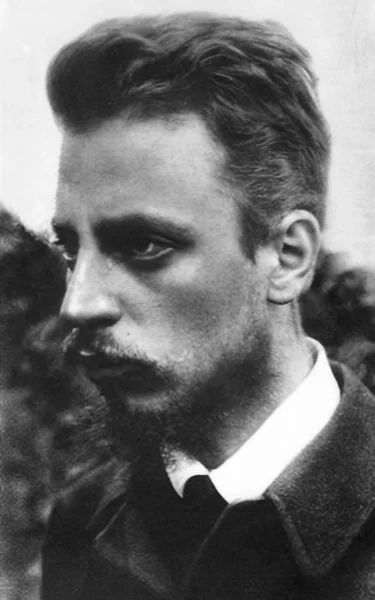
Image from Wikipedia
Image from Wikipedia
Rainer Maria Rilke – Voice of Literary Modernism that Continues to Inspire Musicians, Composers, and Readers Today
A Poet Who Moves Generations: Life, Work, and Lasting Impact
Rainer Maria Rilke was born on December 4, 1875, in Prague and died on December 29, 1926, at the Valmont Sanatorium near Montreux. As an Austrian poet writing in German and French, he shaped literary modernism with his unmistakable imagery, philosophical depth, and an aesthetic attitude that dialogically links beauty and transience. His music career in the strict sense did not exist – yet his work became a reverberating space for composition, arrangement, and spoken word music that resonates far into the present. The audience appreciates his stage presence in a metaphorical sense: in readings, music-literature projects, and sound visualizations where the poet's artistic development becomes newly audible.
Early Years and Artistic Development: From Prague to Paris
Rilke grew up in Prague, studying literature, art history, and philosophy for a time, and sought early on to break away from predetermined life paths. Travels to Russia and Italy, intensive readings, and formative encounters – such as with Lou Andreas-Salomé – opened him up to metaphysical and existential questions. With the "Book of Hours" (1905), he found a tone that fused spirituality, existential search, and modern sensitivity in dense, often religiously tinted images. In Paris, starting in 1902, inspired by his studies of Rodin, he developed a concentrated "thing poetry" that reached its formal climax in the "New Poems," crafting a new poetics with precise thematic labor, plasticity, and strict composition.
Breakthrough and Maturity Phase: Book of Images, New Poems, and Poetic Object Art
The "Book of Images" expanded Rilke's themes to transcendence, farewell, and memory; his stylistic profile sharpened through an almost sculptural approach to the body of the poem. Under the influence of the fine arts, Rilke developed a poetry that intertwines perception, naming, and shaping – a poetics that can be described in musical vocabulary as clear vocal leadership, refined motif arrangement, and finely balanced tempo. The critical reception attested to the poetry's innovative balance of inner movement and outer form, which is still regarded as a model of modern composition today.
Prose Work and Narrative Modernism: Malte Laurids Brigge and Narrative Experiments
With "The Notebooks of Malte Laurids Brigge," Rilke explored the possibilities of a modern narrative style: fragmentary, broken in perspective, and deepened psychologically. His prose balances lyrical condensation and narrative expansion, creating a unique rhythmic structure. In "The Way of Love and Death of Cornet Christoph Rilke," he blended elements of ballads and prose into a popular form that reached wide readerships and similarly seeped like a melodic line into mass culture.
Late Work and Completion: Duino Elegies and Sonnets to Orpheus
Between 1922 and 1923, Rilke's work culminated in the "Duino Elegies" and the "Sonnets to Orpheus." Both cycles combine metaphysical tensions – finiteness, ecstasy, angels, art – with formal mastery. Like a complex choral piece, the cycles bring together voices, registers, and semantic motifs: the sublime nature of angels, the painful aspect of human existence, and the comforting work of art. These texts are considered canonical works of modernity, whose awareness of form has inspired composers, musicians, and spoken word artists worldwide to create new arrangements.
Catalogue of Works Instead of Discography: Books, Cycles, and Letters that Resonate
Rilke's "Book of Hours," "Book of Images," and "New Poems" mark his first major phase of work. The pinnacle of his art consists of the "Duino Elegies" and the "Sonnets to Orpheus." His novel "Malte Laurids Brigge" is among the key texts of narrative modernism in the German-speaking world, complemented by prose pieces and an impressive body of letters. "Letters to a Young Poet" has become an intergenerational guide for artistic development, composition of one's own life, and poetic self-assurance – a long-seller whose sentences are frequently quoted in concert moderations, liner notes, and stage statements.
Style, Technique, and Poetics: Form as Sound Architecture
Rilke's poetry employs precise sound figures, syntactical delicacy, and thematic recurrence. His "thing poems" function like finely orchestrated miniatures, whose imagery materializes the imaginary. In the elegies, the register shifts between recitative address, lyrical arioso, and dramatic crescendo. The composition of his poems reveals strict architecture: enjambments as flow lines, semantic ostinati, dynamic arcs of tension. In terms of musical historical classification, Rilke stands between symbolism and modernity, with clear resonances to Nietzsche, Rodin, and the arts of the turn of the century.
Cultural Influence: From Literature to Music – Rilke in Compositions, Projects, and Stages
Rilke's texts have repeatedly served as templates for compositions, song cycles, and crossover productions. Contemporary cycles that reinterpret his poetry for choir, solo voices, and orchestra are particularly prominent, as well as song works, chamber music, and spoken word arrangements that transfer his language music into the present. Popular literature-music projects also stage his poems with prominent speakers and singers; their dramaturgical concepts combine readings, music production, and light direction into atmospheric evenings that make Rilke's poetic spaces sensually tangible.
Reception and Lasting Popularity: From Canonization to Social Media Presence
Since the early 20th century, Rilke has been part of the international literary canon. Literary archives, museums, and editions secure and expand the source material; new exhibitions compile manuscripts, letters, and materials. At the same time, readings, podcasts, and musical productions create a continuous performance tradition. On social media, quotes and new translations circulate, introducing younger audiences to Rilke's language – a testament to how timeless his themes are: love, solitude, transformation, art as a means of coping with existence. Awards in a strict sense are absent due to his early death; the cultural authority derives from editorial diligence, ongoing academic engagement, and vibrant performance practices.
Current Projects and Commemorative Years: 150th Birthday in 2025 and 100th Death Anniversary in 2026
For the 150th birthday in 2025, institutions, festivals, and concert halls will dedicate special programs to Rilke – from literary-musical stage evenings to newly curated exhibitions. Anniversary publications will compile recitations and compositions of his poems, supplemented by new contributions from established artists. In 2026 – on the occasion of the 100th anniversary of his death – festivals will continue the engagement, partly with premieres that transfer Rilke's language music into contemporary ensemble forms. These projects demonstrate the interdisciplinary power of his work and how fruitfully it connects with modern production, sound design, and staged readings.
Authority of Sources: Archives, Editions, and International Research
The authority of Rilke research is based on specialized archives and foundations that make primary sources, estates, and editions accessible. Significant institutions maintain collections, publish scholarly catalogs, and facilitate international collaborations. Renowned reference works and literary portals offer carefully curated biographies and overviews of his work that contextualize the musical historical reception – particularly the significance of the "thing poems" as formally strict templates for songs and sound installations. This infrastructure ensures the reliability and long-term availability of the materials.
Why Rilke Remains Artistically Relevant Today
Rilke remains relevant because his texts translate the existential background noise of our time into a language that is both sensual and precise. In the composition, arrangement, and production of modern projects, this creates a catalyst: musicians, actors, speakers, and curators draw dramaturgical energy from Rilke's images. His poems serve as scores for inner movements – they compel precise listening, empathetic imagination, and engagement with questions of transience. In this way, Rilke creates an aesthetic experiential space that organically unites literature, music, and stage.
Conclusion: The Poet as Sound Architect – Rediscover Him Now
Rainer Maria Rilke combines linguistic mastery with an artistic development that continues to unleash creative energy to this day. Those who read his verses or experience them in readings and music projects encounter a rare blend of intimacy and expansiveness, concentration, and ecstasy. That is exactly what makes him so exciting for contemporary art and music production. Recommendation: Experience Rilke's works live – in literary-musical evenings, exhibitions, and new compositions that translate his language music into contemporary sound.
Official Channels of Rainer Maria Rilke:
- Instagram: No official profile found
- Facebook: No official profile found
- YouTube: No official profile found
- Spotify: No official profile found
- TikTok: No official profile found
Sources:
- Wikipedia – Rainer Maria Rilke
- Encyclopaedia Britannica – Rainer Maria Rilke
- Poetry Foundation – Rainer Maria Rilke: Biography
- German Literature Archive Marbach – Rilke Archive Gernsbach
- DLA Marbach – Exhibition "Rilke's Worlds"
- Festival Rainer Maria Rilke 2026 – Program Overview
- Elbphilharmonie – "The Rilke Project" (Concert Announcement 2025)
- Anniversary Album "So Much Heaven" – The Rilke Project (Release Info 2025)
- rilke.de – Biography Index
- Wikipedia: Image and Text Source
Upcoming Events
R. M. Rilke: Poems to the Night
Rilke in the Park – Picturesque Walk
Rilke in the Park
Rilke in the Park
Rilke in the Park – Picturesque Walk
Rilke in the Park – picturesque walk
Rilke in the Park
Rilke in the Park
Rilke in the Park: Literary Walk at Schloss Fachsenfeld