
Richard Strauss
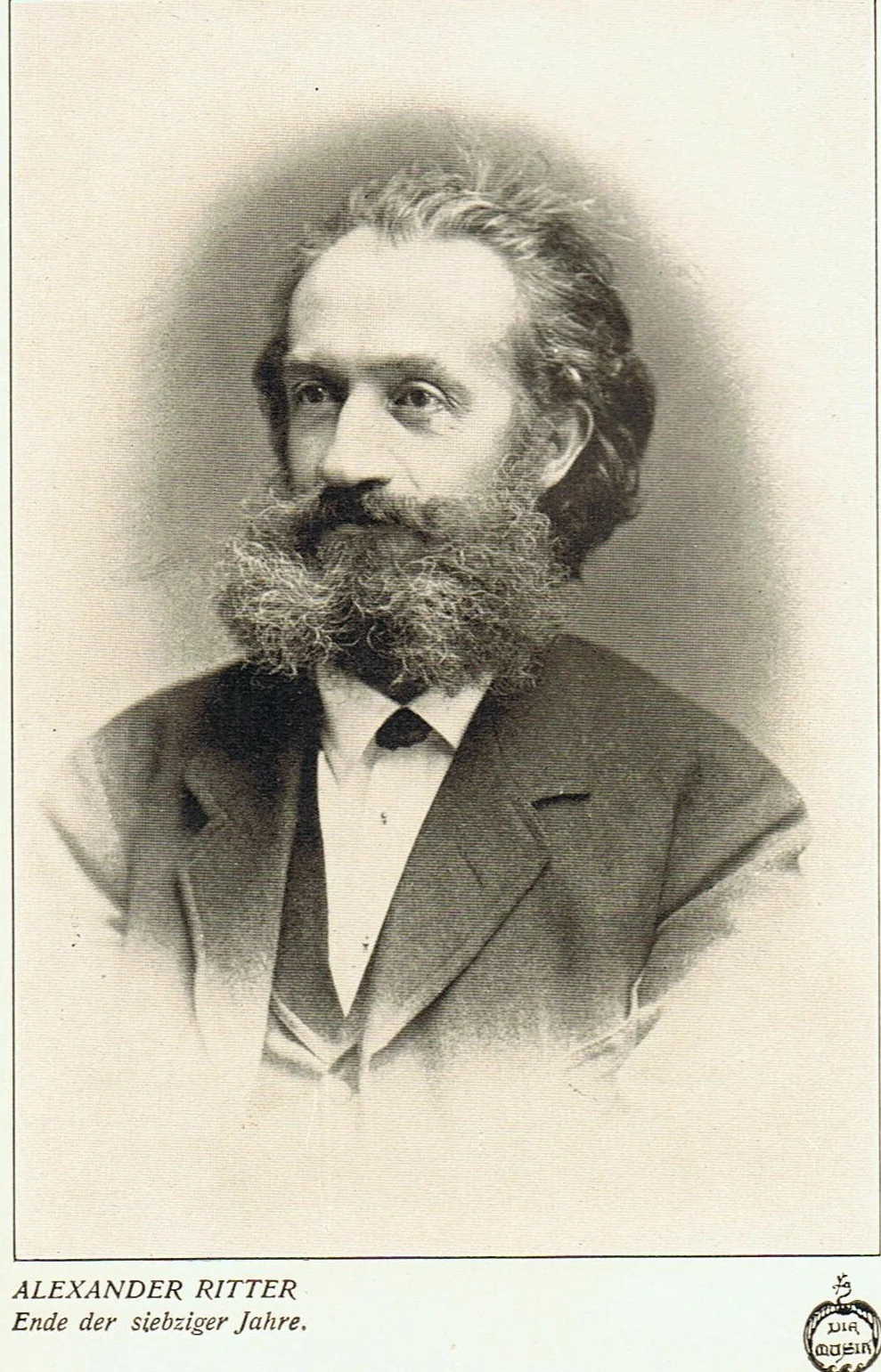
Image from Wikipedia
Image from Wikipedia
Richard Strauss – Sound Dramaturge, Opera Visionary, and Master of Tone Poem
A Life Devoted to Musical Drama and Orchestral Colors – Why Richard Strauss Continues to Fascinate Today
Richard Georg Strauss (born June 11, 1864, in Munich, died September 8, 1949, in Garmisch-Partenkirchen) is regarded as one of the defining composers between late Romanticism and modernity. His musical career combined outstanding artistic development with an international stage presence as a conductor and opera director. Strauss became globally known through symphonic poems such as "Also sprach Zarathustra" and operas like "Salome," "Elektra," and "Der Rosenkavalier." In addition to his compositional work, he ardently advocated for the copyright of artists – a commitment that underscores his reliability and responsibility within the musical world.
Early Influences: Munich, Family Values, and the Discovery of Orchestral Colors
Growing up in a family of musicians – his father Franz Strauss was the solo horn player at the court opera – Richard became acquainted with the language of the orchestra at a young age. Early compositions, songs, and chamber music document his quick perception of sound balance, melodic profile, and harmonic density. These experiences seamlessly transitioned into his later orchestral style, characterized by brilliant brass, fluid woodwinds, and a sophisticated network of strings. By the 1880s, Strauss stood at the podium as a young conductor – the stage became his laboratory for sound dramaturgy.
Breakthrough with the Tone Poem: From "Don Juan" to "Ein Heldenleben"
Through his symphonic poems, Strauss positioned himself at the forefront of the European music scene. "Don Juan" connects psychologically nuanced themes with virtuosic orchestration and marks a stylistic departure. "Till Eulenspiegels lustige Streiche" demonstrates a narrative humor that sparkles in the instrumentation, while "Tod und Verklärung" encapsulates the themes of death and transcendence in a grand architecture. "Don Quixote" experiments with forms of variation and concertation, while "Ein Heldenleben" reflects self-conception and musical life in thematic condensation. Later, Strauss created a day-topography in "Alpensinfonie" as program music – a prime example of narrative orchestration and spatial sound illusion.
Opera as Comprehensive Art: Drastic, Irony, and Conversation
In music theater, Strauss bridged the gap between expressive shock and refined conversation. "Salome" (1905) caused opera stages to tremble with its glaring harmonic tensions, sharply defined leitmotivic figures, and relentlessly driving dramaturgy. "Elektra" (1909) pushed orchestral brilliance to an expressionistic edge, before "Der Rosenkavalier" (1911) presented a popular yet artistically crafted counter-proposal with waltz euphoria, social critique, and sophisticated ensemble artistry. "Ariadne auf Naxos," "Die Frau ohne Schatten," "Arabella," "Die Liebe der Danae," and "Capriccio" demonstrate how Strauss continuously intertwined composition, arrangement, and stage economy with the libretto – sometimes as a mythological parable, sometimes as a social panorama, and sometimes as a metatheatrical "conversation piece for music."
Librettists, Partnerships, Production
Collaboration with Hugo von Hofmannsthal is one of the most fruitful author-composer partnerships in opera history: The precision of words and orchestral semantics intertwine in "Elektra," "Der Rosenkavalier," "Ariadne auf Naxos," and "Die Frau ohne Schatten." After Hofmannsthal's death, Strauss worked with Stefan Zweig and later with Joseph Gregor – a phase in which his style shifted between late Romantic opulence, classical references, and subtle irony. In "Capriccio," text, form, and production reflect the relationship between word and sound – a music-historical classification that affirms Strauss's compositional and dramaturgical expertise.
Conductor and Opera Director: Stage Presence and Artistic Leadership
Alongside composition, Strauss established himself as a conductor of international acclaim. His career led him to court and state operas, as well as major orchestras, where he interpreted works by Mozart, Wagner, Liszt – and of course, his own scores. This dual perspective from podium and score strengthened his authority in issues of casting, sound balance, and rehearsal methodology. His stage presence shaped performance traditions that continue to accompany the interpretive canon of Strauss's works today.
Late Mastery: Chamber Focus and Farewell Works
In his later years, Strauss focused on the genre of song and reduced chamber music forms – without giving up orchestral splendor. The "Vier letzten Lieder" gathers vocal artistry, melodic lines, and harmonic transparency into a poetic sum. "Metamorphosen" for 23 solo strings models grief, memory, and structural change as a polyphonic fabric. The Oboe Concerto and the Duett-Concertino showcase neoclassical brightness and a refined, breathing phrasing. These works represent an artistic development that – following the major operas and tone poems – finds the essence of expression.
Style, Sound Language, and Technique: From Leitmotif to Sound Direction
Strauss's compositions link leitmotiv work with highly advanced orchestration: Doubling techniques, instrumental register blends, and dramatic color accents create plastic spaces. His production is based on thematic condensation, harmonic daring (with an expanded understanding of tonality), and a sense of scenic time. In the arrangement of voices, he uses polyphony as a carrier of tension; in opera, this leads to multifaceted ensembles, while in symphonic works, it results in narrative developments with clear dramatic hinge points. This expertise underpins the enduring cultural influence of his oeuvre.
Discography, Reception, and Cultural Influence
The discography of Strauss is extraordinarily extensive: His tone poems, operas (from "Salome" to "Capriccio"), and song cycles have formed a fundamental part of recording catalogs for decades. Critical reception emphasizes both the orchestral virtuosity and dramatic impact, as well as the complexity between pathos, irony, and reflections on music theater. Chart successes in a popular sense are less significant for the classical sector; nevertheless, iconic sound signatures – foremost the introduction from "Also sprach Zarathustra" – are globally recognized for their cinematic and media effectiveness. Concert programs, opera schedules, and recordings underscore the lasting presence of his works in international musical life.
Music Historical Classification: Late Romanticism, Modernity, and Opera Tradition
Strauss stands at the intersection of Romanticism and Modernity. In the 1890s, he propelled symphonic poetry toward narrative and harmonic intensification. In his opera works, he negotiates traditional lines – from music drama following Wagner to conversation pieces – while simultaneously crafting modern stage language with psychological depth. This dual competence – as innovator and custodian – explains the radiance of his oeuvre into the 20th century: Conductors, directing teams, and orchestras derive standards for sound direction, phrasing, and scenic-musical economy from Strauss's scores.
Rights, Institutions, Legacy
As a prominent voice in the musical landscape, Strauss advocated for author and copyright rights. Archives, institutes, and festivals today maintain his legacy, uncover sources, publish scholarly editions, and position his music within current discourses. Performances, recordings, and new productions keep the engagement with his works alive – from major opera premieres to chamber music song evenings. This institutional embedding fosters trust and authority as well as a long-term foundation for research, reception, and mediation.
Current Presence: Performance Schedules, Festivals, New Recordings
Even long after his death, Strauss remains present in the schedules of leading houses and festivals. New productions of "Der Rosenkavalier," "Ariadne auf Naxos," or "Salome," symphonic cycles with "Don Juan," "Till Eulenspiegel," "Ein Heldenleben," or "Eine Alpensinfonie," as well as ongoing new releases and reissues document how dynamically his works are received. Reviews from renowned music media and critiques of concerts underscore the enduring attractiveness of this music – both for experts and for a broad, curious audience.
Conclusion: Why Listen to Richard Strauss – and Experience Him Live?
Richard Strauss transforms music into a theater of hearing: His orchestral colors shine, his themes breathe, and his dramaturgy captivates. When one listens to Strauss, artistic development is experienced as a dramaturgy of feelings – oscillating between upheaval and contemplation, between highlight and nuance. In opera, word and tone merge into psychological precision; in tone poems, the production opens acoustic perspectives like camera movements. This blend of virtuosity, depth, and stage presence explains his unbroken fascination – in concert halls, opera houses, and on recordings.
Official Channels of Richard Strauss:
- Instagram: No official profile found
- Facebook: No official profile found
- YouTube: No official profile found
- Spotify: No official profile found
- TikTok: No official profile found
Sources:
- Wikipedia – Richard Strauss (German)
- Encyclopaedia Britannica – Richard Strauss
- Richard Strauss Institute – Official Information and Research Center
- OperaWire – Concert Review "Also sprach Zarathustra" (New York Philharmonic)
- American Symphony Orchestra – Season Announcement 2024/25 (with Strauss program point)
- AllMusic – Richard Strauss: Biography and Overview of Works
- Wikipedia: Image and Text Source
Upcoming Events
Elektra (Premiere)
Strauss! Discover People & Music
Opera "Elektra" by Richard Strauss
Enoch Arden - Melodrama by Richard Strauss
Permanent Exhibition on Richard Strauss
Salome
Richard Strauss Days 2026 in Garmisch-Partenkirchen
Open-Air Concert "Strauss in the Park"
Chamber Concert I – Opening Concert