Wildpark Klaushof – Animal Experience in Bad Kissingen
Wildpark Klaushof in Bad Kissingen: Your Nature and Animal Experience for the Coming Months
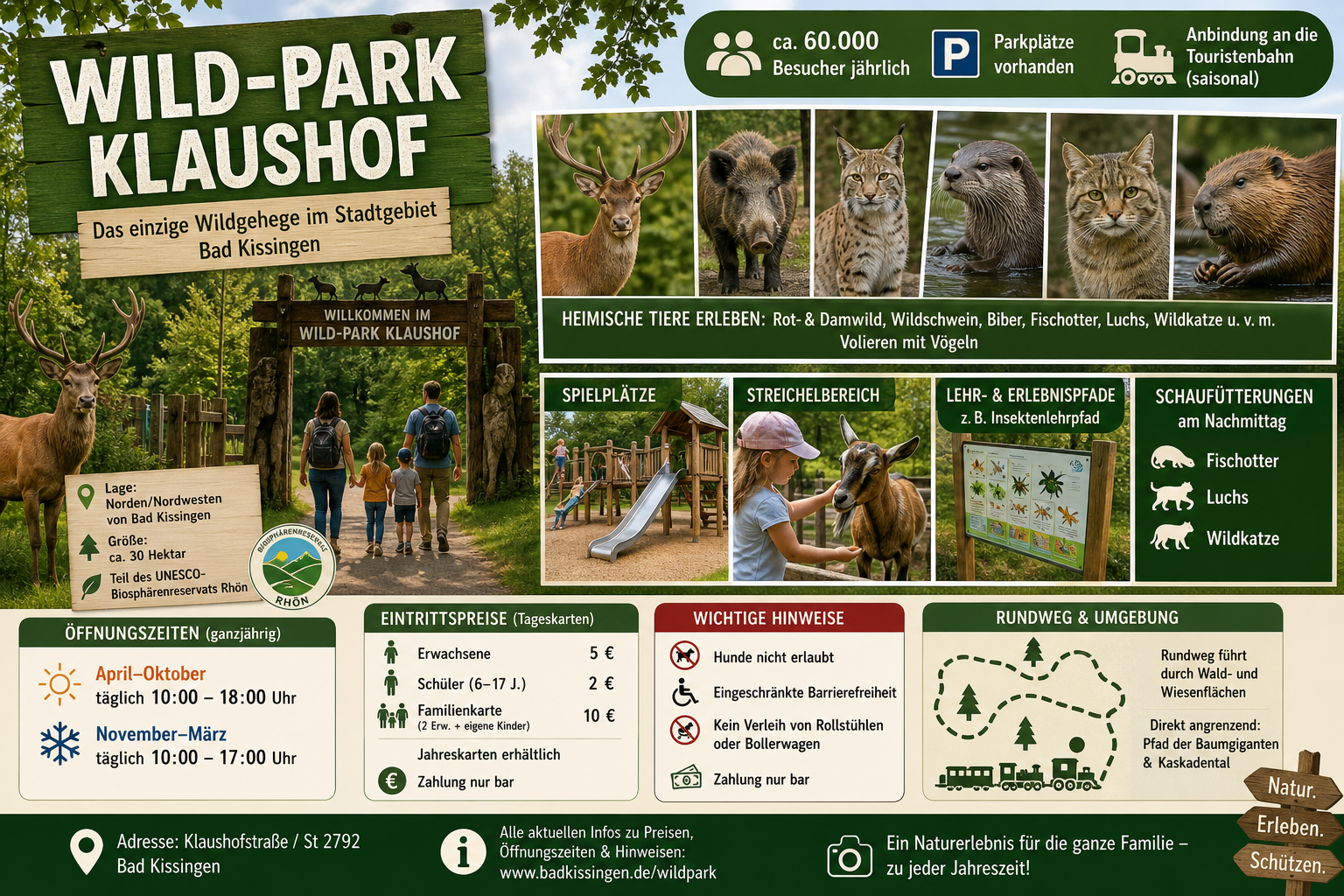
Are you planning a trip to Bad Kissingen and want to observe native animals in a natural environment in the coming weeks or next season? Wildpark Klaushof offers a peaceful, family-friendly destination on the outskirts of town – with enclosures, nature trails, and experience stations, making it especially suitable for a half or full day.
Animals You Can Discover with Some Patience
At Wildpark Klaushof, the focus is on animal species native to Central Europe or closely connected to the regional cultural landscape. Especially with shy species, the following applies for your future visit: Observation is most successful if you stay quiet, walk slowly, and linger at spots with good visibility.
Typical Animal Groups
- Hoofed animals: e.g., red and fallow deer (often easily visible in clearings).
- Wild boars: often active at feeding spots or in shady areas.
- Water and shore dwellers: e.g., beavers and otters (chances of observation increase if you spend time near water areas).
- Predators: e.g., lynx and wildcat (sometimes only briefly visible; patience pays off).
- Birds: depending on the keeping concept and season, in aviaries or enclosures.
For families, a visit in the coming months can be especially exciting, as children can experience animal behavior “for real”: tracks on the ground, sounds in the undergrowth, different movement patterns, and retreats. This promotes attentiveness and respectful interaction with wildlife, without creating a “program pressure.”
Experience Offers: Feedings, Trails, and Play Areas
Feedings and Guided Animal Observation
Many visitors plan their next trip so that it coincides with a feeding or a guided program point. Such times can change seasonally and are sometimes adjusted due to weather or operations. If you want to visit specifically for this, check the announced times shortly before your visit via the official channels (see Sources).
The added value for your upcoming visit: You receive context about the animals’ behavior, activity times, and ecological connections (habitat, food, retreat behavior). This improves observation chances and makes the tour equally understandable for children and adults.
Nature and Theme Trails
For a visit in the next few weeks, it’s worth choosing a circular route that connects enclosures with learning stations. Topics such as insects, deadwood, soil life, or tree species can be picked up “on the side” – ideal if you want nature knowledge without frontal teaching.
Play and Activity Areas
If you are traveling with children, play and activity areas are a crucial component for a relaxed day. They allow for breaks, reduce “congestion” at enclosures, and give children a meaningful change of pace before heading to the next observation station.
Plan Your Visit: Times, Tickets, Arrival, and Rules
Opening Hours (check in advance)
For planning your future visit: Opening hours are usually listed seasonally (summer/winter times) and may change. Please rely on the currently published information from the city or the wildlife park shortly before your arrival (see Sources).
Admission & Payment
To avoid surprises on the day of your visit, check the current admission prices in advance. If certain payment methods are preferred on site (e.g., cash), you can prepare accordingly. Official information about fees and tickets is usually available via the city website or notices at the entrance (see Sources).
Arrival & Parking
Wildpark Klaushof is located in the Klaushofstraße area (Bad Kissingen) and is easy to plan for day trips by car. If you want to travel more environmentally friendly, it’s worth checking current public transport options or seasonal tourist connections in Bad Kissingen in advance.
Terrain Profile, Accessibility, and Pace
Since the terrain is natural, you should plan for sturdy footwear and enough time for your upcoming visit. Strollers are often practical on main paths, while some sections may be more challenging depending on slope and surface. If you are traveling with mobility restrictions, a brief inquiry in advance about the currently best-suited routes is recommended.
Rules for Animal and Nature Protection
- Keep your distance: Do not harass animals and respect retreat zones.
- Feeding only as instructed: Please feed only where and how it is posted or explained by staff.
- Move quietly: This increases your chances of animal observation and reduces stress for the animals.
- Dogs & other pets: Please check the currently valid rules in advance, as regulations may differ depending on protection and operational concepts.
Why the Wildlife Park Remains Important for Nature Understanding and the Region
If you are looking for a place in the coming months that combines relaxation and learning, a wildlife park is particularly effective: It makes ecological connections visible without you having to plan a long journey to remote protected areas.
In the context of the Rhön as a model region (UNESCO Biosphere Reserve), environmental education plays a central role. A visit can help make typical questions tangible:
- How do forest and meadow habitats differ in biodiversity and use?
- Why do some species need retreats and structurally rich areas (deadwood, water, hedges)?
- Which behaviors of wild animals are normal, which are stress reactions?
This way, your planned trip becomes not just a walk, but a practical foundation for understanding nature – especially if you are traveling with children or a learning group.
Suggestion for Your Future Day Schedule
- Arrive and orient yourself (approx. 10–15 minutes): Look at the site map, take a short restroom/snack break, set your route.
- Tour at a relaxed pace (approx. 60–90 minutes): Start with easily visible enclosures, then slowly work your way to shyer species.
- Use breaks strategically (approx. 20–40 minutes): Use play or rest areas; especially with children, this prevents overtiredness.
- Plan a program point (optional): If a feeding/commentary takes place on your visit day, time your tour accordingly (check times in advance).
- Final round (approx. 30–60 minutes): Visit favorite stations again – often you see animals better on the second try.
If you want to combine your trip with other nature destinations in Bad Kissingen, a further walk in the area is suitable afterwards – ideally so that there is enough time for the return journey and relaxation.
Sources
- City of Bad Kissingen (official website) — Information on municipal facilities and visitor information (accessed 2026-05-13)
- German UNESCO Commission — Background on UNESCO programs, including biosphere reserves (accessed 2026-05-13)
- UNESCO Biosphere Reserve Rhön (official regional site) — Context on the Rhön model region and environmental education (accessed 2026-05-13)