How Bad Kissingen Is Changing – New Cultural Venues
How Bad Kissingen Can Change: Upcoming Cultural Venues, City Ideas, and New Paths Through the City Center
Bad Kissingen is entering a phase in which public spaces, cultural venues, and city center offerings are to be further developed. Many initiatives aim to make the city center more attractive during the day and more atmospheric in the evening, to keep historic buildings usable in a contemporary way, and to test new uses to counteract vacancies.
Tournament Building: Perspective for an Additional Event Venue
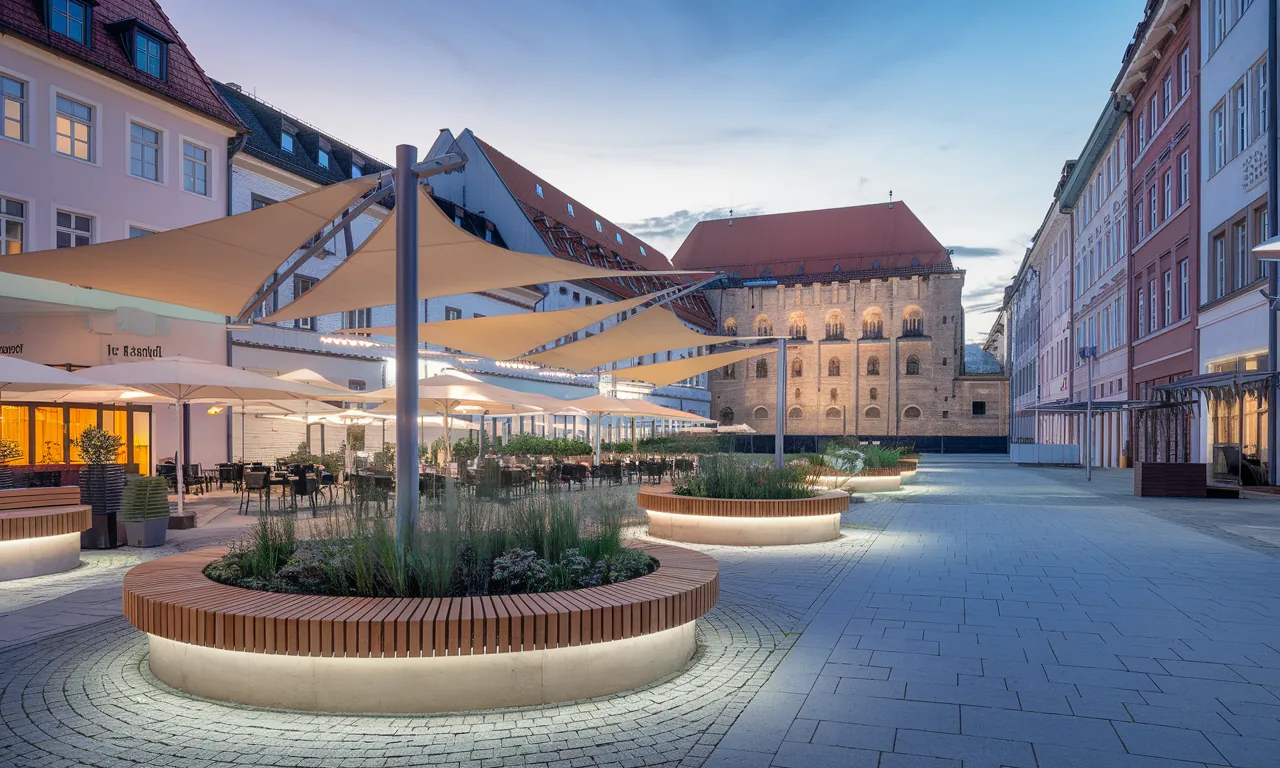
A particularly exciting building block for the future is the idea of using historic buildings more as contemporary cultural and event venues. In Bad Kissingen, the tournament building stands out as a possible location where additional formats could take place in the future—from concerts to social events.
For such use in listed or historically sensitive areas, three things are typically central:
- Building Structure and Safety: The supporting structure, escape routes, fire protection, roof, and access must meet today's standards.
- Monument Compatibility: Interventions should preserve the historical statement and favor reversible, gentle solutions.
- Operational Concept: Acoustics, technology, logistics, concerns of local residents, and the usage calendar must be realistically planned.
When these points come together, a historic building can become more than just a "backdrop"—it can become an active part of cultural life, a place where world heritage identity and today's event needs complement each other meaningfully.
The strongest cultural venues often emerge where a city does not preserve its history in stasis, but continues to use it responsibly.
Market Hall and Reuse Ideas: Rethinking Retail and Gastronomy
Even beyond major construction projects, a city center can change—for example, through reuse and interim use of existing properties. For Bad Kissingen, a market hall idea stands as an exemplary model for an approach pursued by many municipalities: not "preserving" vacancies, but transforming them into a new mosaic of uses.
A well-conceived market hall or marketplace solution can serve several goals at once in the future:
- Bring foot traffic to the pedestrian zone, even outside classic shopping peaks.
- Make small providers (regional, artisanal, culinary) more visible.
- Connect everyday life and visits: breakfast, shopping, encounters, cultural program.
- Strengthen city center vibrancy without relying solely on the classic branch logic.
Whether market hall, food concept, or mixed use: what matters is a viable operator and quality concept (opening hours, hygiene and delivery logistics, noise protection, space mix, price and offer level). If this succeeds, a new anchor point can emerge, which can be well combined with future cultural formats and the evening city center atmosphere.
Cultural Networks, Building Culture, and Housing: Collaboration as a Driver
So that new places and formats do not stand isolated next to each other, reliable collaboration is needed—between cultural creators, urban development, property owners, gastronomy, retail, and civil society. For the coming years, three levers are particularly decisive:
- Networking of cultural actors: Visibility, cooperation, joint program lines, and suitable funding advice can accelerate projects.
- Building culture in the existing stock: Reuse, renovation, and inner development are often more sustainable than new construction on greenfield sites—if they are professionally planned.
- New forms of housing in central locations: More housing near amenities stabilizes foot traffic, strengthens local supply, and can enliven the city center even outside peak times.
In this logic, cultural venues, public spaces, and housing are directly connected: Where distances are short, there is more time for city life—and where city life takes place, culture and gastronomy are more likely to be sustained in the long term.
Outlook: World Heritage, Infrastructure, and Next Steps
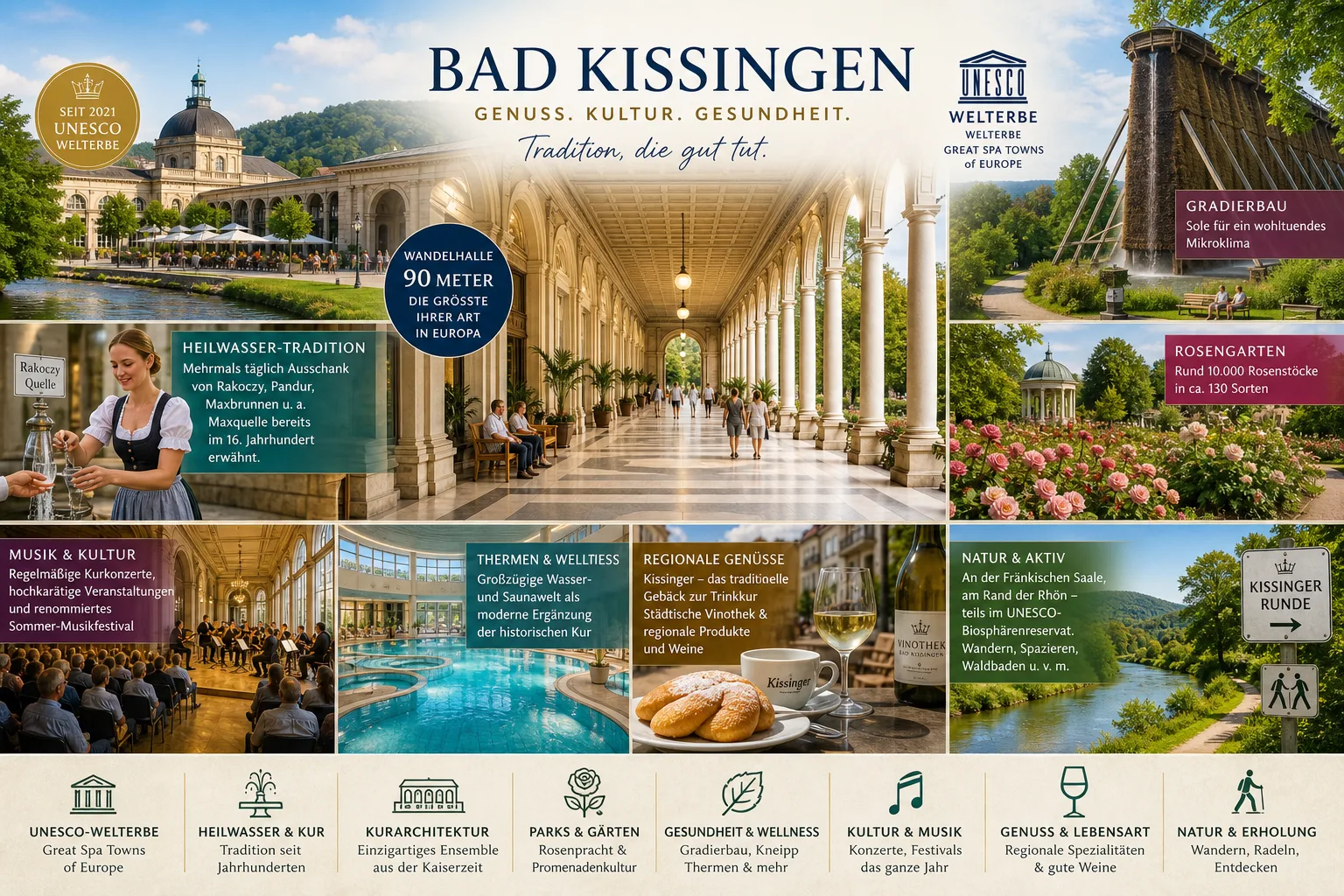
As part of the UNESCO context of the "Great Spa Towns of Europe," Bad Kissingen is under special attention. For the future, this means: development must not only work, but also be appropriate to the location—in the cityscape, in use, and in dealing with historical substance.
In the coming years, projects that fulfill several goals at once are likely to be particularly convincing:
- Suitability for everyday use (clear paths, safety, orientation, accessibility).
- Climate and quality of stay (shade, greenery, heat-resistant design, water-conscious planning).
- Cultural usability (spaces that enable programming—indoors and outdoors).
- Economic viability (operational concepts that work in the long term, not just at opening).
If these building blocks are brought together, Bad Kissingen can further develop its profile as a spa, cultural, and world heritage site—not as a one-off measure, but as an ongoing process that creates new places and better connects existing strengths.